8 Thoracic Spine Mobility Exercises for a Stiff Upper Back
Quick answer: The best thoracic spine (upper back) mobility exercises are foam roller extensions, open books, thread-the-needle, quadruped rotations, cat-cow and wall slides. They help your upper back extend and rotate, which can make overhead pressing, squatting and good posture feel easier, especially if you sit a lot. Do 5–10 minutes, 3–5 times a week, or as a warm-up before upper-body and squat days. Move slowly and stay in a pain-free range.
Key takeaways
- Your thoracic spine is the middle and upper back, between your neck and lower back.
- It should rotate and extend; desk work tends to stiffen it.
- Keep the lower back still during these drills; the goal is upper-back movement.
- A foam roller is the most useful tool.
- Little and often works better than one long session.
Why thoracic mobility matters
- Overhead lifts: a stiff upper back makes people arch their lower back to get the bar overhead. See our overhead press guide.
- Squats: helps you keep your chest up under the bar. See squat form.
- Posture: counteracts rounded shoulders from sitting.
- Rotation sports: golf, tennis and pickleball all rely on upper-back rotation.
- Neck and shoulder comfort: many people find their shoulders move more freely.
Quick self-test
Sit cross-legged or on a chair with a stick across your shoulders. Rotate to each side without moving your hips. Many people aim for about 45° each way. If one side is noticeably stiffer, or you can't turn well, these drills will likely help.
8 best thoracic spine mobility exercises
| Exercise | How | Reps |
|---|---|---|
| Foam roller thoracic extension | Lie with the roller across your upper back, hands behind head, hips down. Gently extend back over it, then move it an inch and repeat | 3–4 spots × 5 reps |
| Foam roller upper-back rolling | Hips lifted, roll from mid-back to shoulder blades | 60 seconds |
| Open book | Lie on your side, knees bent at 90° (roller under top knee), arms out front; rotate the top arm open toward the floor behind you | 8 per side |
| Thread-the-needle | On hands and knees, slide one arm under your body, then rotate it up toward the ceiling | 8 per side |
| Quadruped rotation (hand behind head) | On hands and knees, one hand behind your head, rotate the elbow down then up | 8 per side |
| Cat-cow | On hands and knees, round and arch your spine slowly | 10 reps |
| Wall slides | Back against a wall, arms in a "W," slide up to a "Y" while keeping contact | 10 reps |
| Child's pose with side reach | Walk hands to one side and breathe into the opposite ribs | 30 sec per side |
10-minute upper back mobility routine
- Foam roller upper-back rolling: 60 seconds
- Foam roller thoracic extensions: 3 spots × 5 reps
- Cat-cow: 10 reps
- Thread-the-needle: 8 per side
- Open book: 8 per side
- Wall slides: 10 reps
Use it as a warm-up before pressing and squat days, or on its own on rest days. For lower-body tightness, add our full-body foam rolling routine.
Strength exercises that support a mobile upper back
Mobility lasts longer when you also strengthen the muscles that hold good posture:
- Seated cable rows and barbell rows
- Face pulls with a rope on a cable
- Lat pulldowns through a full range
- Cable woodchops and lifts for rotation strength
A rack with cables such as the G5, V6 or X6 covers all of these at home.
Equipment
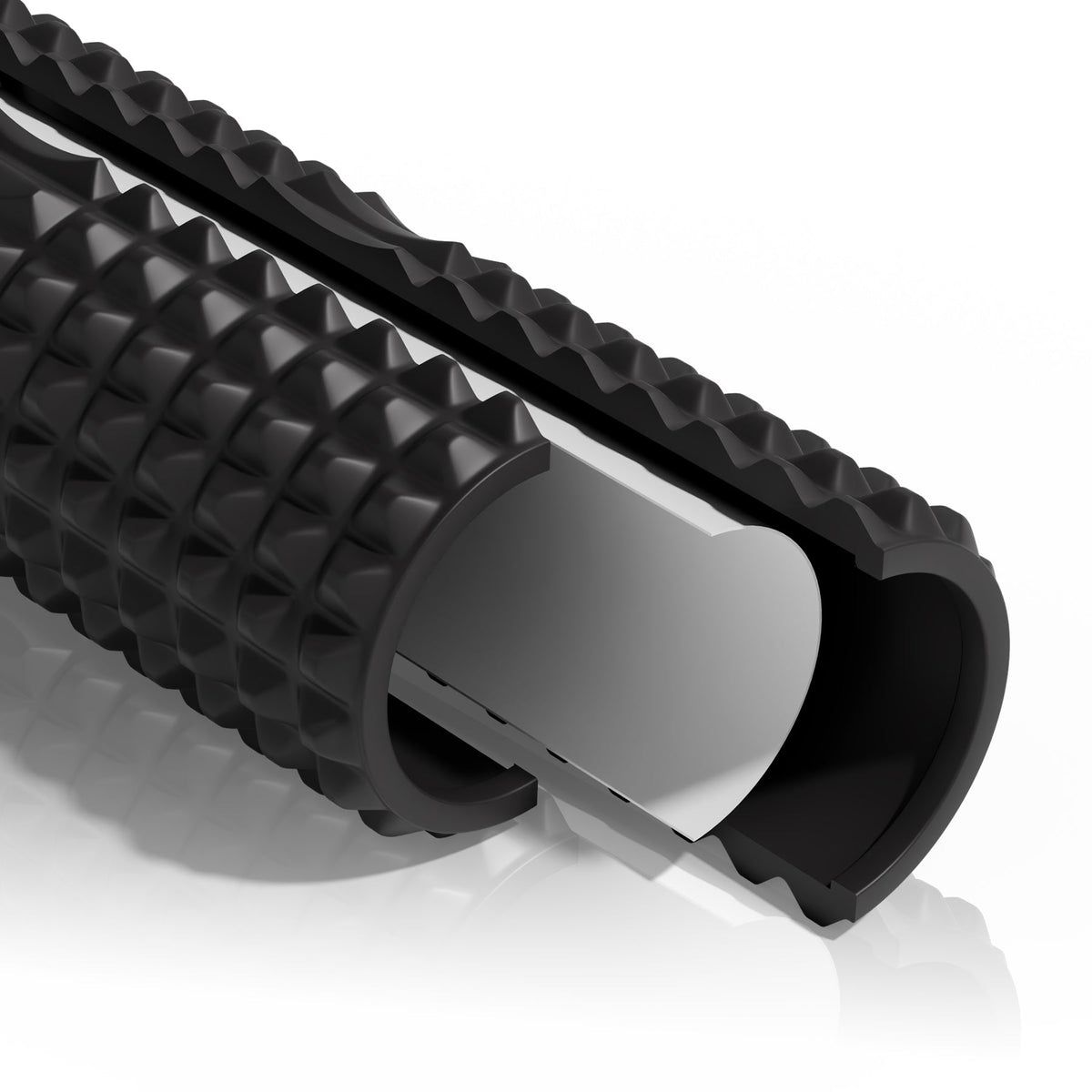
- Foam roller: a longer roller is easiest for upper-back work. The 24" Solid Grid roller ($89.99) spans your whole back; the 17.3" Hollow Crescent ($69.99) is firmer and still long enough for the upper back. See the foam roller buying guide.
- Mat: a GXMMAT yoga mat or large exercise mat for floor drills.
- Kneeling pad: a kneeling pad makes hands-and-knees drills comfortable.
Safety tips
- Stay in a comfortable range; stretching should never be sharp.
- Keep foam rolling on the upper and middle back, not the lower back.
- Support your head with your hands during extensions.
- If you have osteoporosis, a spinal condition, or pain that travels down your arms, check with a healthcare professional first.
FAQ
What is thoracic spine mobility?
The ability of your upper and middle back to rotate, extend and bend. Good thoracic mobility helps with overhead movements, posture and rotation.
How do I improve thoracic mobility?
Do foam roller extensions, open books, thread-the-needle and quadruped rotations 3–5 times a week, and strengthen your upper back with rows.
How long does it take to improve thoracic mobility?
Many people feel looser right after a session, and lasting changes often build over several weeks of regular practice.
Can a stiff upper back cause shoulder pain?
It can contribute, since a stiff upper back changes how the shoulder blades move. If you have ongoing shoulder pain, see a professional.
Is it safe to crack my back on a foam roller?
Gentle extensions over a roller are generally fine. Don't force it, and avoid rolling the lower back.
Written by Yuvien Royer for GXMMAT. This article is general fitness information, not medical advice.