How to Do a Barbell Row: Form, Variations and Programming
Quick answer: To do a barbell row, deadlift the bar to standing, then hinge forward until your torso is about 30–45° above parallel with a flat back and soft knees. Let the bar hang at arm's length, then pull it to your lower ribs or upper belly, driving your elbows back and squeezing your shoulder blades together. Lower it under control. Beginners do well with 3–4 sets of 8–12 reps, 1–2 times a week, using a weight they can row without swinging their body.
Key takeaways
- Hinge, don't squat: hips back, back flat, knees slightly bent.
- Pull to the belly, elbows at about 45° from your body.
- No body English: if your torso bounces up, the weight is too heavy.
- Grip changes the focus: overhand for upper back, underhand for more lats and biceps.
- Balance your pressing: rows are the perfect pair for bench press.
Muscles worked
| Muscle | Role |
|---|---|
| Lats | Pull your arms back toward your hips |
| Rhomboids and middle traps | Squeeze the shoulder blades together |
| Rear delts | Pull the upper arms back |
| Biceps and forearms | Bend the elbows and hold the bar |
| Lower back, glutes and hamstrings | Hold the hinged position |
How to do a barbell row
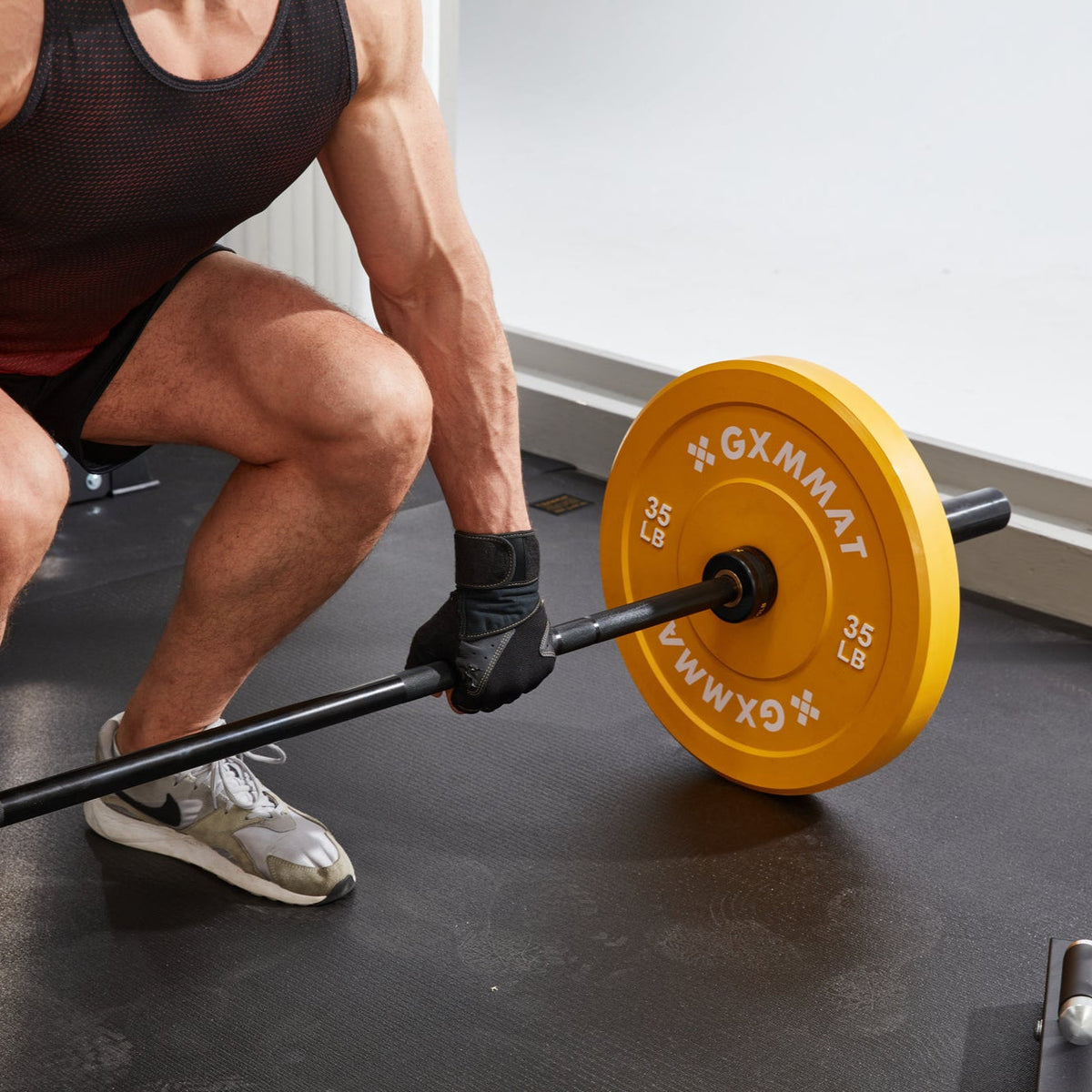
- Pick up the bar from the floor with a deadlift, or unrack it from J-hooks set at mid-thigh.
- Grip slightly wider than shoulder width, overhand.
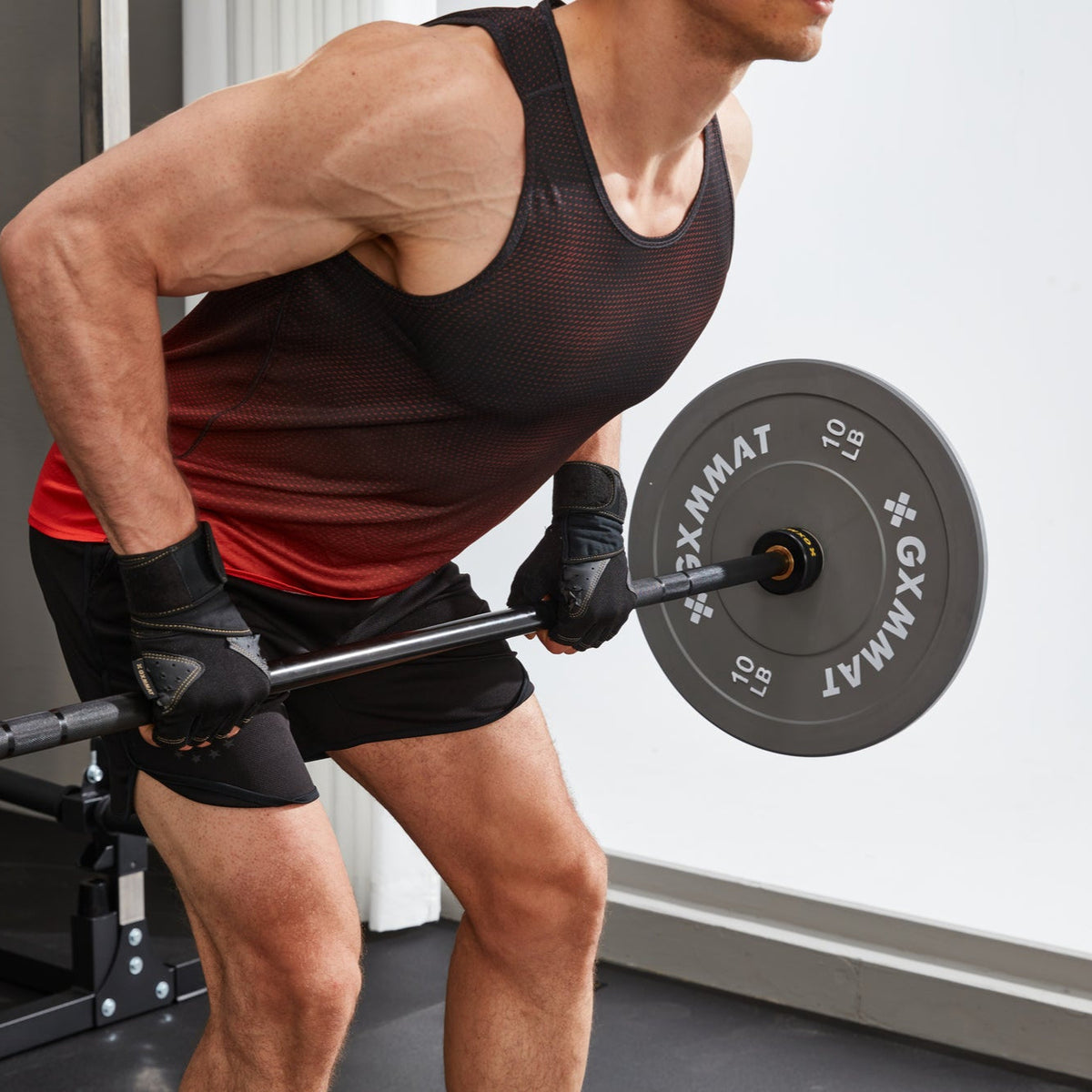
- Hinge by pushing your hips back until your torso is around 30–45° above parallel. Keep a slight knee bend.
- Brace your core and set your shoulders down, away from your ears.
- Row the bar to your lower ribs, leading with your elbows.
- Pause briefly at the top, then lower under control until your arms are straight.
Can't keep your back flat? Learn the hinge first with deadlift form basics.
Common mistakes
| Mistake | Fix |
|---|---|
| Standing too upright | Hinge further; an upright row turns into a shrug |
| Jerking the weight with the hips | Lower the load and keep your torso still |
| Rounded back | Brace harder, lift your chest, and shorten the range if needed |
| Elbows flared straight out | Keep elbows around 45° for a balanced back workout |
| Pulling to the chest | Aim for the lower ribs or belly button area |
Barbell row variations
| Variation | How it differs | Good for |
|---|---|---|
| Pendlay row | Torso parallel to the floor; each rep starts from the floor | Explosive strength, strict form |
| Underhand (Yates) row | Palms up, more upright torso | Lats and biceps; easier on the lower back |
| Seal row | Lying face-down on a raised bench | Zero lower-back stress |
| T-bar / landmine row | One end of the bar anchored | Middle back; easy to learn. See landmine exercises |
| Seated cable row | Seated, cable resistance | Constant tension, no lower-back fatigue. See seated cable row form |
Sets, reps and programming
| Goal | Sets × reps | Notes |
|---|---|---|
| Muscle building | 3–4 × 8–12 | Controlled reps, 1–2 second squeeze at the top |
| Strength | 4–5 × 5–6 | Strict torso; Pendlay rows work well |
| Beginners | 3 × 10 | Start with the empty bar or light plates |
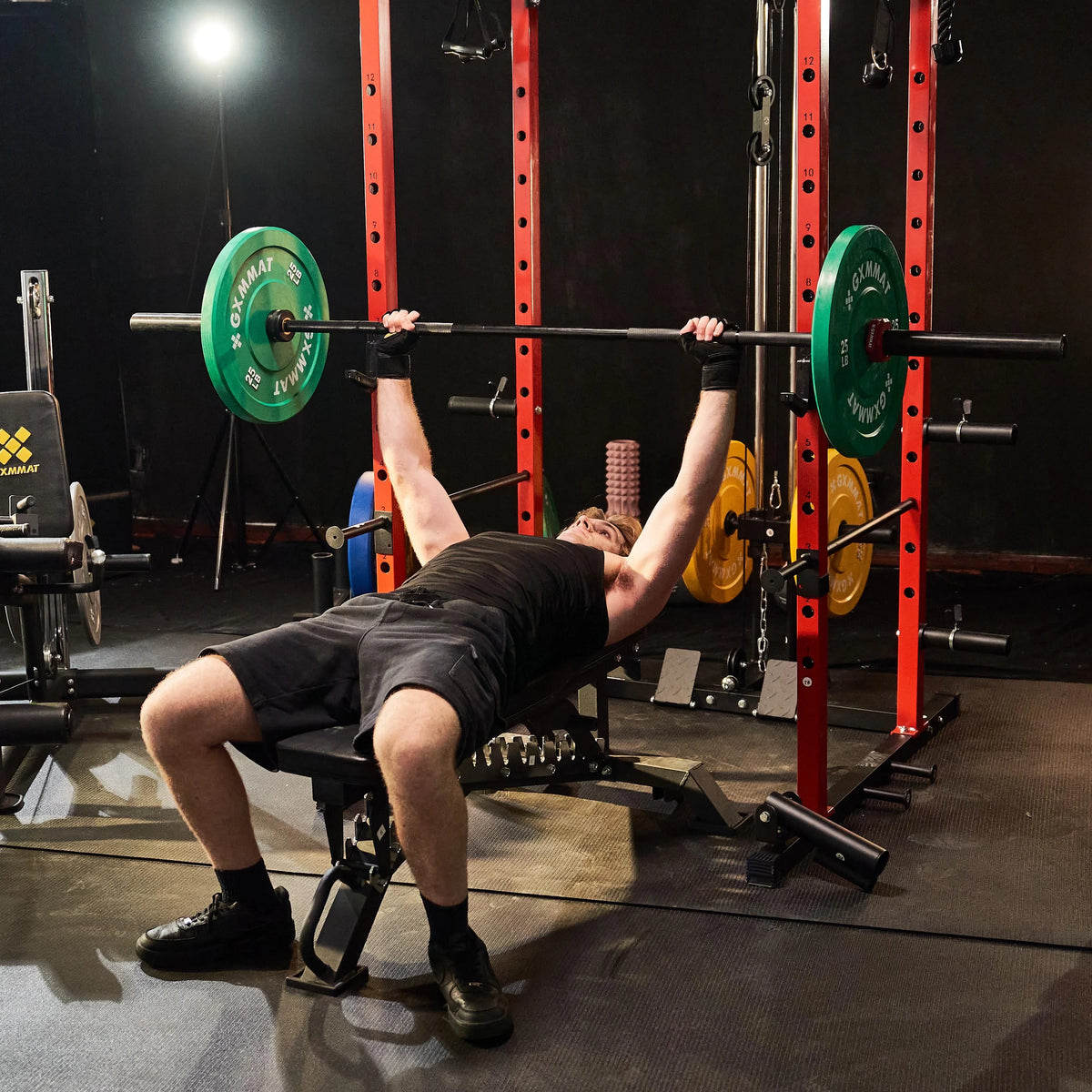
- Pair with pressing: row on the same day as bench press or alternate them as a superset.
- Progress in small steps: add reps first, then 5 lb. Change plates allow 2.5 lb jumps. See progressive overload.
- Rest 1.5–2 minutes between heavy sets. More in how long to rest between sets.
Barbell rows at home
- Unrack from the rack: set J-hooks at mid-thigh height in a G5, V6 or X6 so you don't need to deadlift the bar up for every set.
- Bar and plates: a 20 kg Olympic bar with bumper plates makes Pendlay rows from the floor quieter.
- Collars: magnetic collars stop plates from shifting.
- Gloves: optional workout gloves for higher-rep sets.
- Floor: a non-slip large exercise mat keeps your feet planted and protects the floor.
FAQ
What muscles do barbell rows work?
Mainly the lats, rhomboids, middle traps and rear delts, plus the biceps, forearms and the muscles that hold your hinge position.
Should I row overhand or underhand?
Both work. Overhand targets more upper back; underhand lets you stand a little more upright and uses more lats and biceps.
How far should I bend over for barbell rows?
Most people do well with a torso angle about 30–45° above parallel. Bending lower makes it harder on your back but gives a longer range of motion.
Are barbell rows bad for your lower back?
Not with a flat back and sensible weights. If your lower back tires first, try chest-supported or seated cable rows.
Barbell row vs dumbbell row: which is better?
Barbell rows let you lift heavier; dumbbell rows work each side separately and are easier on the lower back. Using both is ideal.
Written by Yuvien Royer for GXMMAT. This article is general fitness information, not medical advice.