Progressive Overload Explained: 7 Ways to Keep Getting Stronger
Quick answer: Progressive overload means gradually making your training harder over time so your body keeps adapting. The most common ways are adding weight, adding reps, adding sets, or improving form and range of motion. A simple beginner method is double progression: pick a rep range (e.g., 8–12), stay at the same weight until you hit the top of the range on every set, then add the smallest weight jump available (2.5–5 lb for upper body, 5–10 lb for lower body) and start again at the bottom of the range.
Key takeaways
- No overload, no progress: doing the same workout forever leads to a plateau.
- Small jumps win: 2.5–5 lb at a time keeps progress going for months.
- Reps count too: adding a rep at the same weight is progress.
- Track every workout, or you can't tell whether you're overloading.
- Recovery is part of the plan: sleep, food and deload weeks let you keep progressing.
7 ways to apply progressive overload
| Method | Example | Best for |
|---|---|---|
| Add weight | Squat 135 lb → 140 lb for the same 3 × 5 | Strength, all levels |
| Add reps | Bench 3 × 8 → 3 × 9 at the same weight | Muscle building, beginners |
| Add sets | 3 sets → 4 sets of rows | Muscle building |
| Improve range of motion | Half-depth squats → full-depth squats | Technique, mobility |
| Slow the tempo | 3-second lowering on every rep | Home gyms with limited weights |
| Shorter rest | Same work in less time | Conditioning, endurance |
| Harder variation | Knee push-ups → push-ups → feet-elevated | Bodyweight training |
Double progression: the easiest method
- Pick a rep range, e.g., 3 sets of 8–12.
- Choose a weight you can lift for 8 reps with 2–3 reps left in the tank.
- Add reps each session at the same weight until you get 12 on every set.
- Add the smallest weight jump and drop back to 8 reps.
- Repeat.
| Week | Weight | Reps (3 sets) |
|---|---|---|
| 1 | 95 lb | 8, 8, 8 |
| 2 | 95 lb | 10, 9, 9 |
| 3 | 95 lb | 11, 11, 10 |
| 4 | 95 lb | 12, 12, 12 ✔ |
| 5 | 100 lb | 9, 8, 8 |
How much weight to add
| Lift | Beginner jump | Intermediate jump |
|---|---|---|
| Squat, deadlift | 5–10 lb per session | 5 lb per week or less |
| Bench press, barbell row | 5 lb per session | 2.5–5 lb per week |
| Overhead press | 2.5–5 lb per session | 2.5 lb every 1–2 weeks |
| Isolation and cable moves | Add reps first | Add reps, then the next stack or plate |
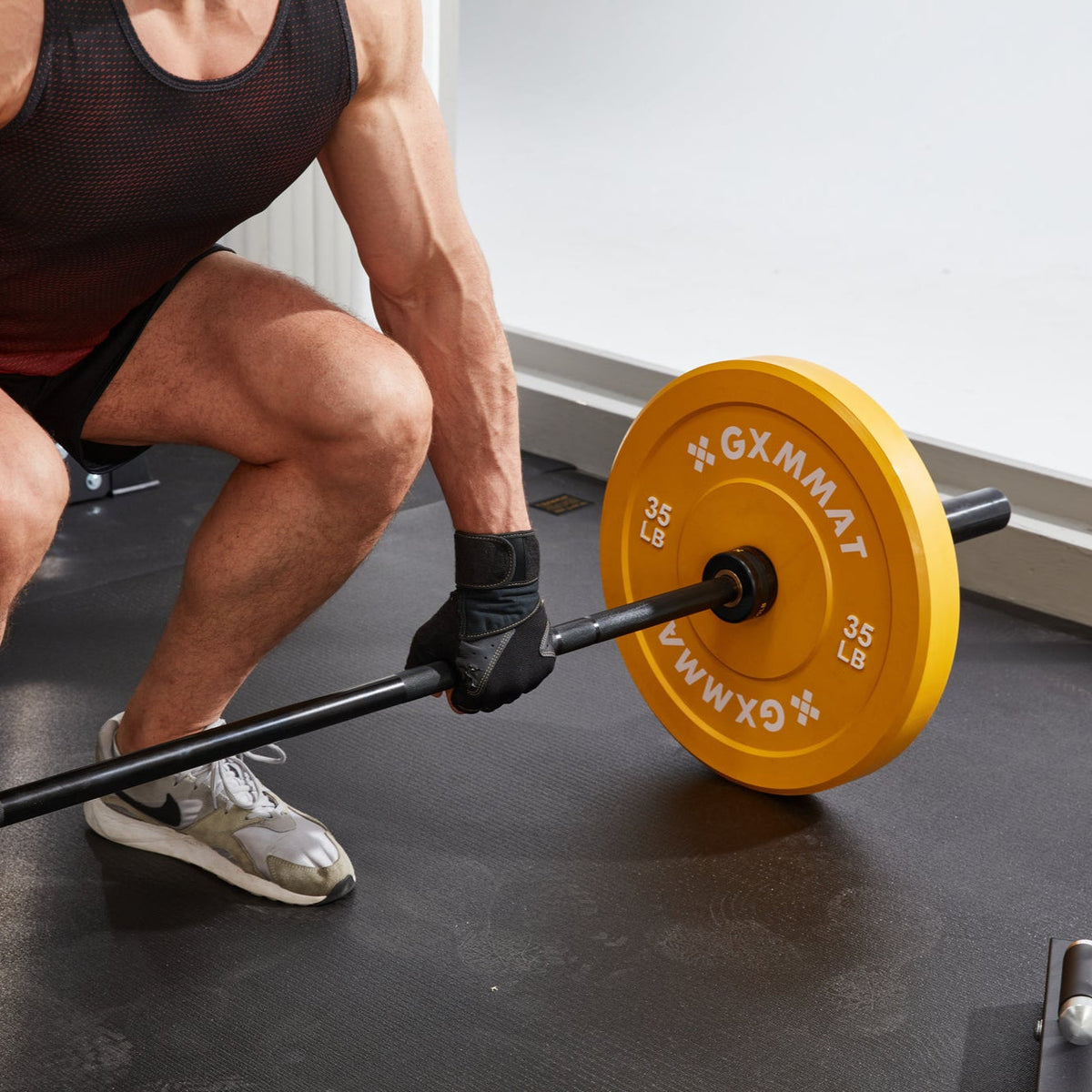
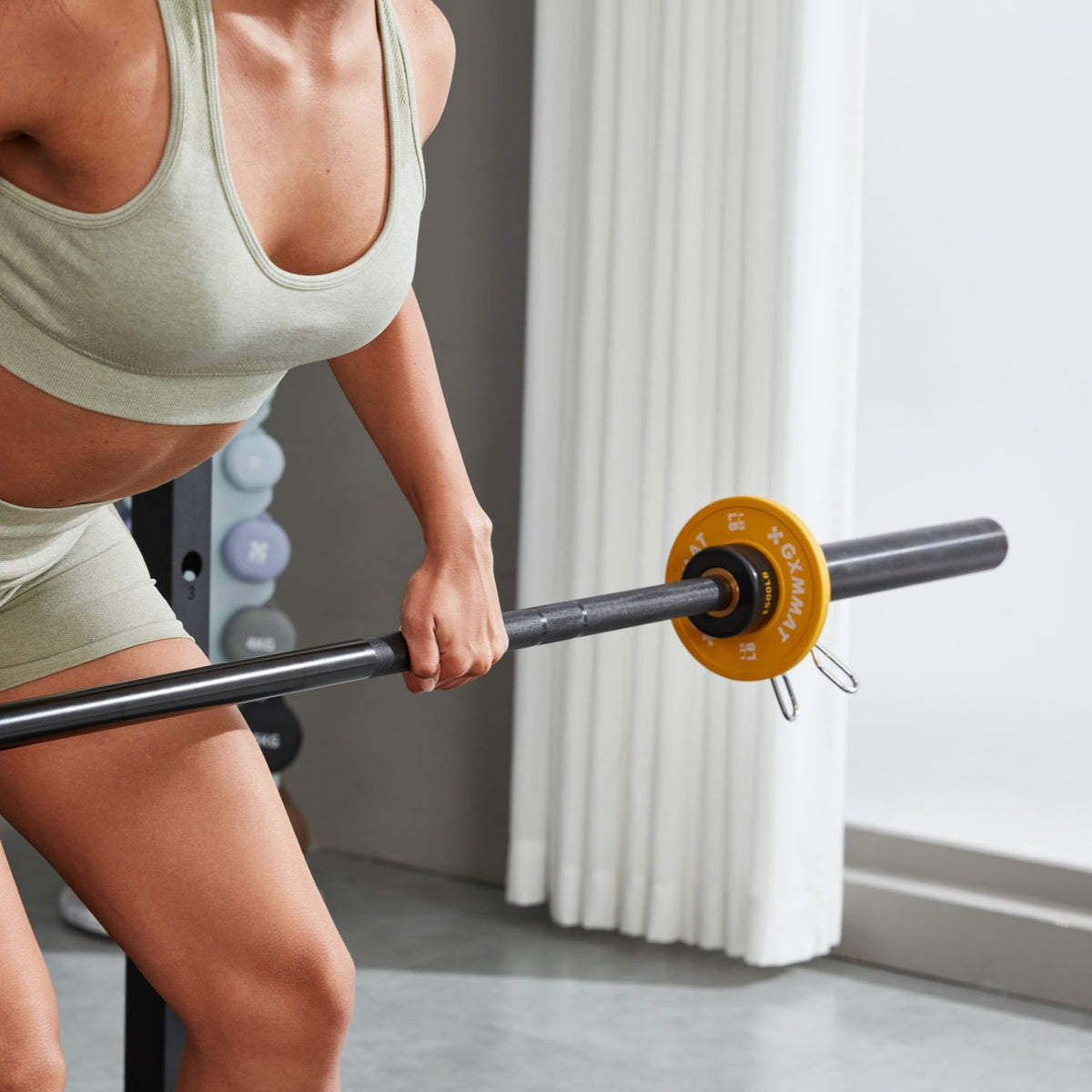
Most standard plate sets jump 10 lb at a time (two 5s). That's often too much for presses. GXMMAT change plates (pairs of 1.25, 2.5 and 5 lb) let you add as little as 2.5 lb to the bar. Use our plate math chart to load it correctly.
Sample 8-week beginner plan
| Weeks | Squat / deadlift | Bench / row / press |
|---|---|---|
| 1–3 | 3 × 5, add 5–10 lb each session | 3 × 8, add 5 lb when all reps feel solid |
| 4 | Repeat week 3 weights (consolidation) | Repeat week 3 weights |
| 5–7 | 3 × 5, add 5 lb each session | Double progression 3 × 8–10 |
| 8 | Deload: same reps at about 60–70% of the weight | Deload |
Need the full workouts? Follow our 3-day beginner power rack plan and learn when to deload.
Progressive overload with limited equipment
- Kettlebells: add reps, sets or slower tempo before jumping to the next bell. GXMMAT soft kettlebells step up in 5 lb increments (10, 15, 20, 25 lb).
- Bodyweight: progress to harder variations, add pauses or wear a weighted vest.
- Cables: use pauses and slow lowering. A 2:1 pulley (like the V6) makes each plate feel lighter, which gives you smaller effective jumps.
- Pull-ups: add reps, then add weight. See pull-up progressions.
Why progress stalls (and fixes)
| Cause | Fix |
|---|---|
| Jumps too big | Use smaller plates or add reps first |
| Training to failure every set | Stop 1–3 reps short. See our RPE and RIR guide |
| Poor sleep or too little food | Aim for 7–9 hours of sleep and enough protein |
| Not tracking | Log weight, sets and reps every session |
| Accumulated fatigue | Take a lighter week every 4–8 weeks |
| Changing programs constantly | Stick with a plan for at least 8–12 weeks |
Set up your home gym to keep progressing
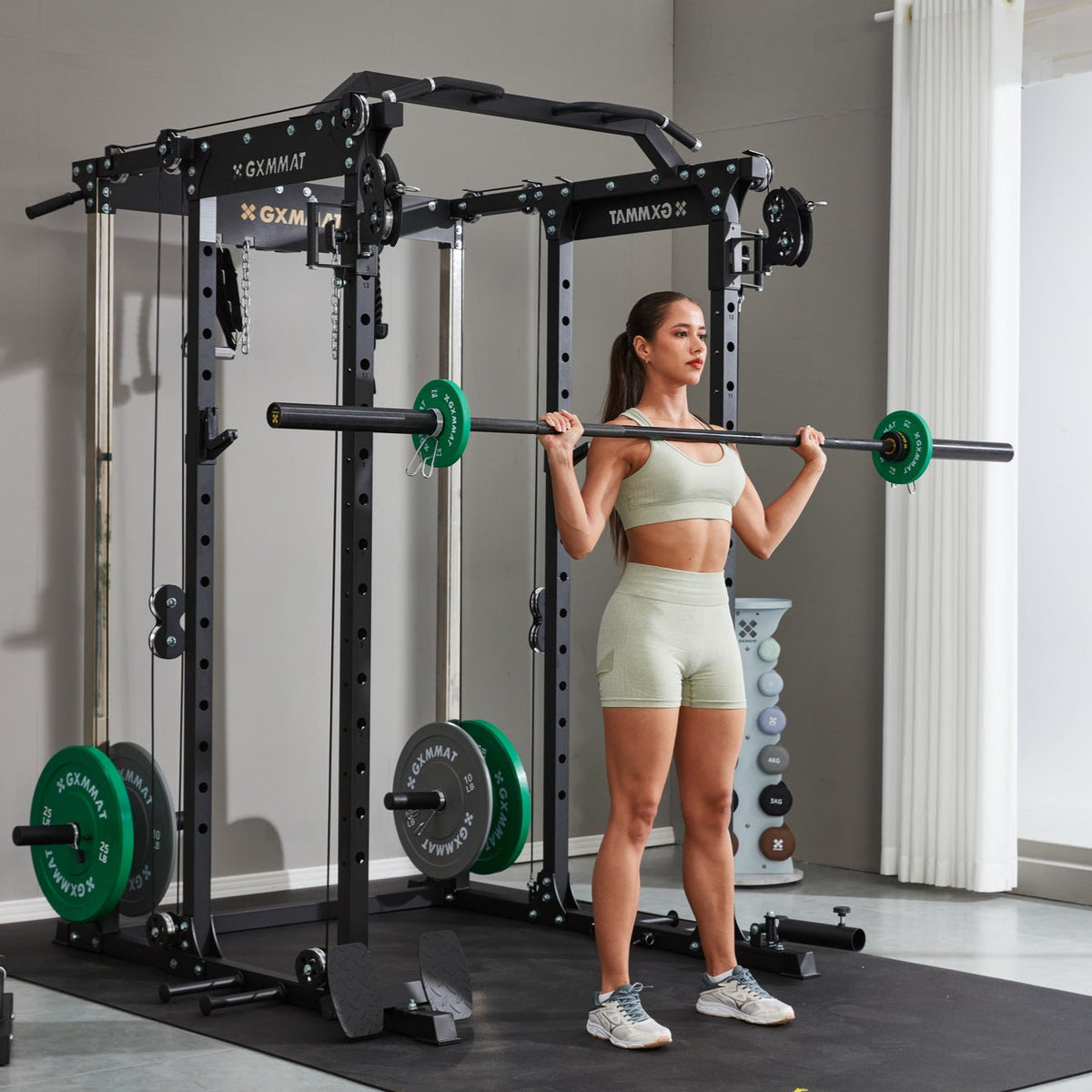
- Rack with safety arms: pushing heavier weights alone is safer inside a rack like the G5, V6 or X6. Set the safety arms before every heavy set.
- Enough plates: the GXMMAT 230 lb bumper plate set gives most beginners years of room to grow.
- Small plates: change plates for micro-jumps.
- Organized storage: a plate rack keeps every plate easy to grab.
Starting from scratch? A home gym package bundles the rack, bench, bar and plates.
FAQ
What is progressive overload?
Gradually increasing the demands of your training, usually by adding weight, reps or sets, so your muscles keep getting stronger and bigger.
How often should I increase weight?
Beginners can often add weight every session or every week. Intermediates progress more slowly, often every 1–4 weeks.
Can you do progressive overload without adding weight?
Yes. Add reps or sets, slow the tempo, increase range of motion or move to harder variations.
What is double progression?
Working within a rep range at the same weight until you reach the top of the range on all sets, then adding weight and starting again at the bottom.
Why am I not getting stronger?
Common causes are weight jumps that are too large, poor recovery, not tracking workouts, or training to failure too often. Smaller jumps and a deload week often help.
Written by Yuvien Royer for GXMMAT. This article is general fitness information, not medical advice.