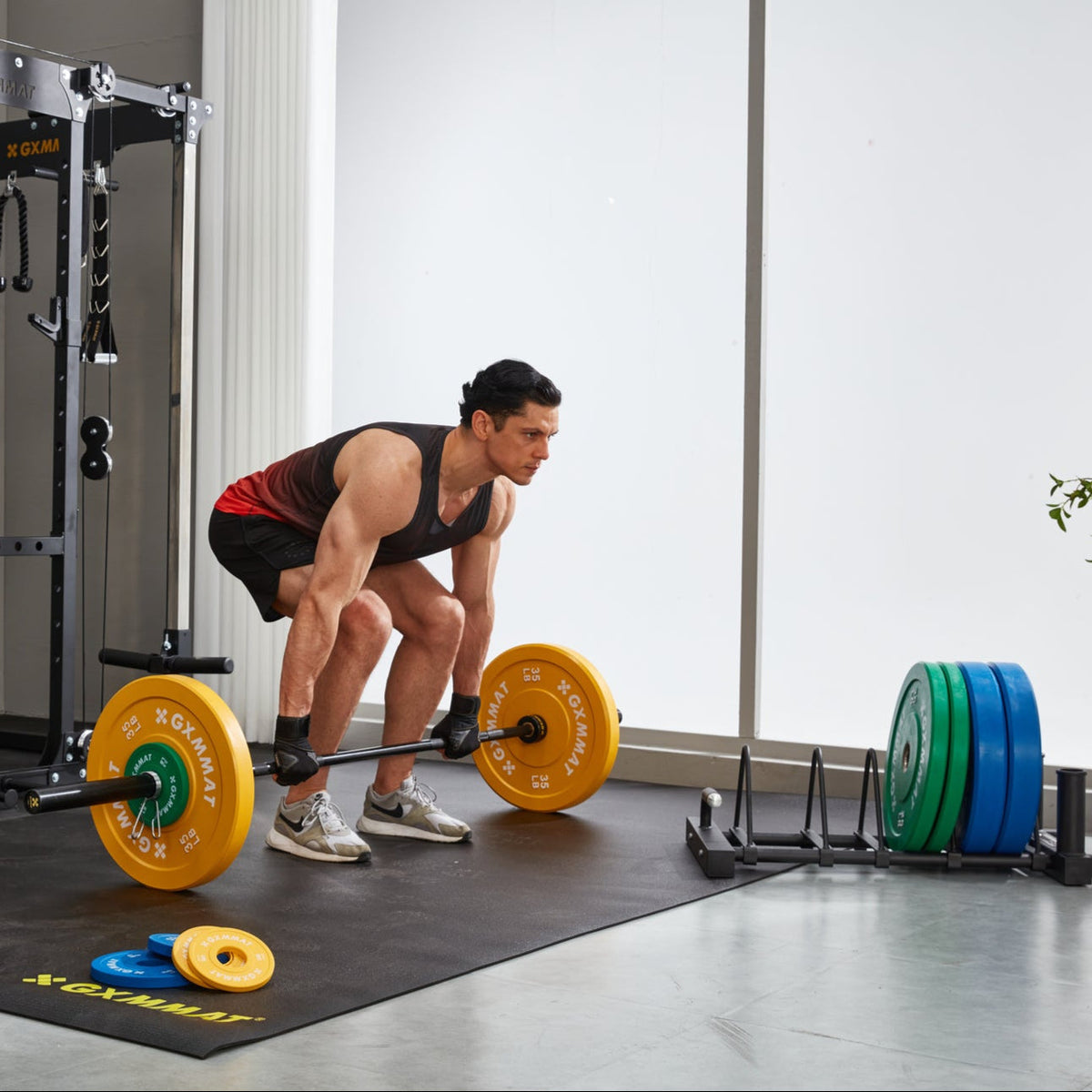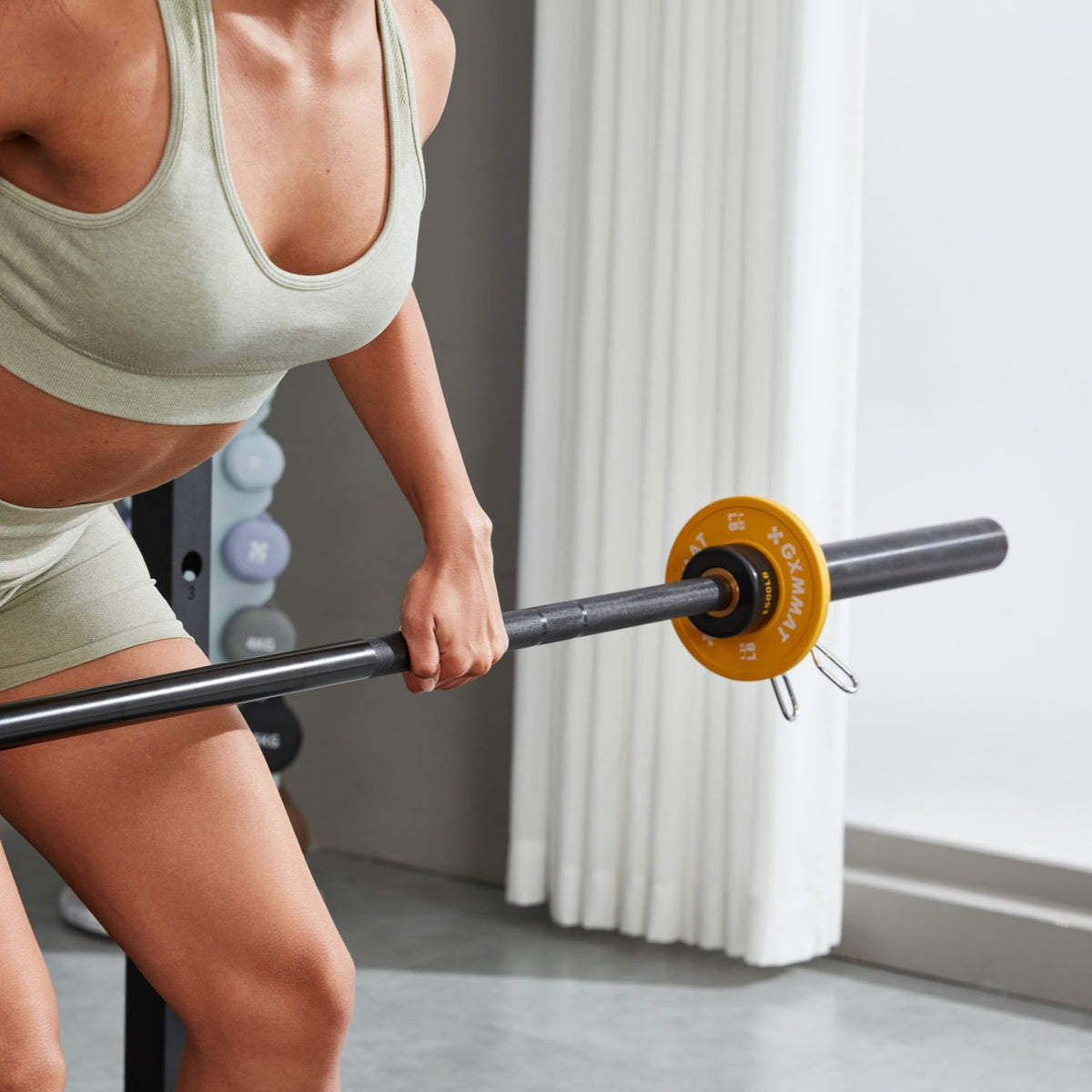
How to Overhead Press: Form, Program and Home Gym Setup
Quick answer: To do a barbell overhead press, unrack the bar at upper-chest height and hold it on the front of your shoulders with your hands just outside shoulder width. Squeeze your glutes and brace your core, then press the bar straight up, moving your head back slightly so the bar clears your chin, then push your head "through the window" so the bar finishes over your midfoot. Lower it under control to your upper chest. Beginners can start with 3 sets of 5–8 reps, twice a week, adding small amounts of weight as form stays solid. Check your ceiling height before pressing at home.
Key takeaways
- Squeeze glutes and brace so your lower back doesn't arch.
- Bar path is a straight line; move your head, not the bar.
- Finish with the bar over your midfoot and your biceps by your ears.
- Progress in small jumps; the press moves up slower than squats or deadlifts.
- Check ceiling clearance before you press in a home gym.
Muscles worked
| Muscle | Role |
|---|---|
| Front and side delts | Main movers that drive the bar overhead |
| Triceps | Lock out the elbows at the top |
| Upper chest | Helps start the press off the shoulders |
| Traps and upper back | Support the bar overhead and keep the shoulder blades moving |
| Core and glutes | Keep your body rigid so force goes into the bar |
How to overhead press: step by step
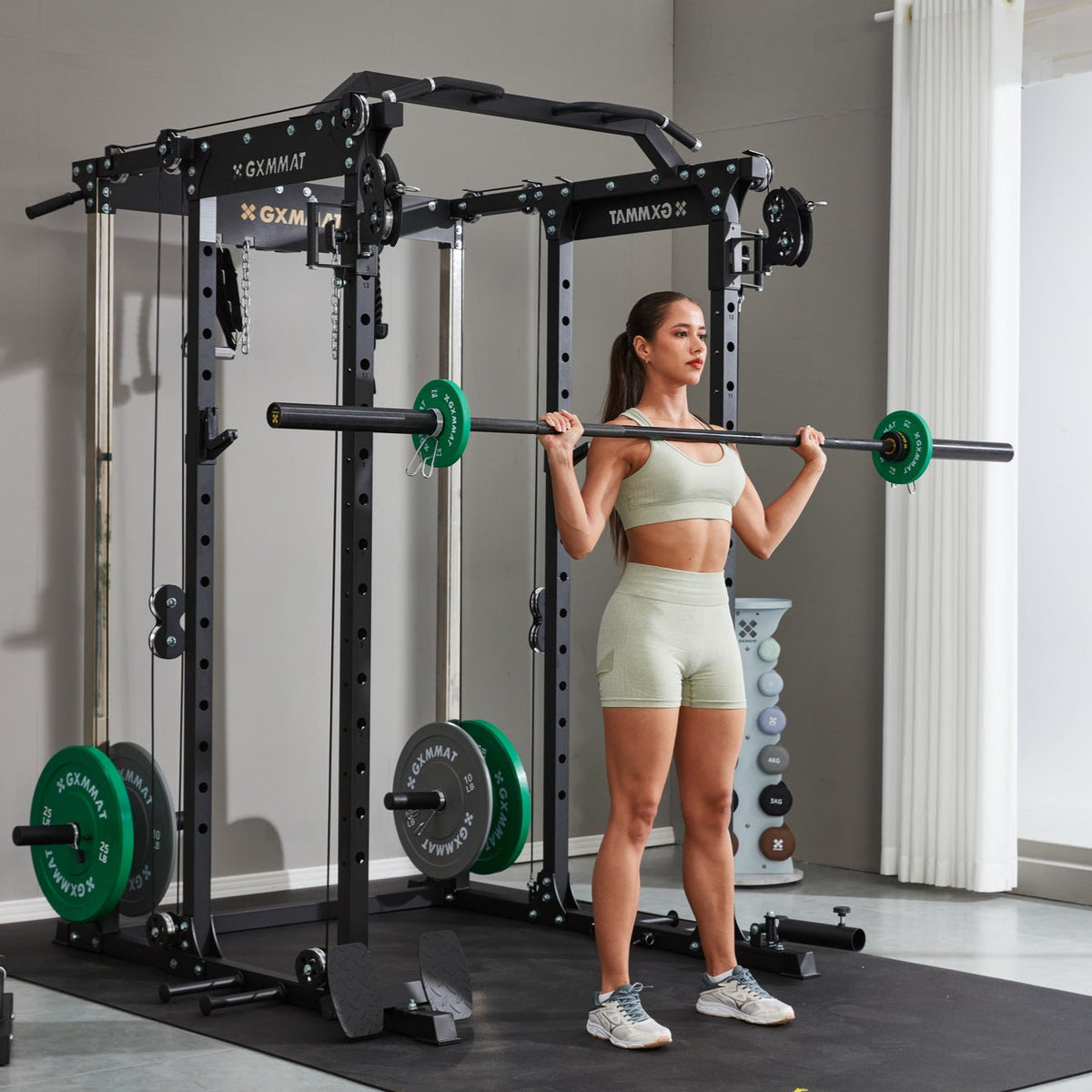
- Set the J-hooks at upper-chest height so you can unrack with a small knee bend.
- Grip the bar just outside shoulder width, with wrists stacked over elbows and the bar low in your palms.
- Unrack and take one or two small steps back. Stand with feet about hip-width apart.
- Brace: take a deep breath, squeeze your glutes and tighten your abs.
- Press: pull your chin back slightly and drive the bar straight up past your face.
- Head through: once the bar passes your forehead, move your head forward under it.
- Lock out with the bar over your midfoot, arms straight, and shrug up slightly at the top.
- Lower under control to your upper chest and repeat. Exhale at the top or between reps.
Common mistakes
| Mistake | Fix |
|---|---|
| Leaning back and arching the lower back | Squeeze your glutes, brace, and use a lighter weight |
| Pressing the bar forward around the face | Pull your head back and keep the bar close |
| Flared or tucked elbows at the start | Keep elbows slightly in front of the bar |
| Bent wrists | Grip the bar lower in your palm, over your forearm |
| Big weight jumps | Add 2.5–5 lb at a time |
Overhead press variations
| Variation | Why use it |
|---|---|
| Seated barbell press | Less lower-back involvement; needs less ceiling height |
| Push press | Small leg drive lets you handle heavier weights |
| Kettlebell or dumbbell press | Each arm works on its own; easier on the shoulders |
| Half-kneeling landmine press | Angled path for people whose shoulders don't like straight overhead pressing |
| Z press | Seated on the floor, legs straight; strict core and shoulder work |
If straight overhead pressing bothers your shoulders, try the landmine press first. Every GXMMAT rack includes a landmine attachment.
Overhead press program for beginners
| Weeks | Sets × reps | Effort | Progression |
|---|---|---|---|
| 1–4 | 3 × 8 | 2–3 reps in reserve | Add 2.5–5 lb when all reps feel solid |
| 5–8 | 4 × 5 | 2 reps in reserve | Add 2.5 lb per week or as able |
| 9+ | 5 × 3 heavy + 2 × 8 light | 1–2 reps in reserve | Rotate rep ranges every few weeks |
Press twice a week, for example on the same days as your bench press or as part of our 3-day beginner plan. Rate your effort using our RPE and RIR guide, and pair it with pull-ups for balance; see how to do a pull-up.
Why small jumps matter
The shoulders are smaller muscles than your legs or back, so overhead press numbers climb slowly. A 10 lb jump (5 lb per side) can be too much. GXMMAT change plates let you add as little as 2.5 lb to the bar, which keeps progress steady for months. Use the plate math chart to load the right weight.
Pressing overhead in a home gym
- Ceiling height: add your height plus your arm reach and a few inches for the bar and plates. Many people need roughly 8 ft or more for standing presses. If your ceiling is low, press seated or use kettlebells. See how much space a home gym needs.
- Press inside the rack: set J-hooks at upper-chest height and the safety arms just below them, so you can bail safely. Closer hole spacing helps you find the right height; the V6 and X6 use 3.94" spacing and the G5 uses 4.3".
- Bar: a 20 kg GXMMAT Olympic bar fits standard 2" plates. Lock plates on with collars.
- Flooring: a stable, non-slip large exercise mat under the rack keeps your feet planted.
- Kettlebell option: GXMMAT soft kettlebells (10–25 lb) are good for single-arm presses and for learning the movement.
FAQ
What muscles does the overhead press work?
Mainly the front and side shoulders and triceps, with help from the upper chest, upper back, traps and core.
Is the overhead press better standing or seated?
Standing trains more core and full-body stability. Seated takes stress off the lower back and needs less ceiling height. Both build strong shoulders.
How much should I overhead press?
It varies widely. Many people press roughly 60–70% of their bench press. Focus on adding weight slowly with good form rather than hitting a number.
Why is my overhead press not improving?
Common reasons are weight jumps that are too big, too little weekly practice, poor bracing or not enough recovery. Try smaller increments and pressing twice a week.
Is overhead press bad for your shoulders?
Not for most people with good technique and sensible loads. If it hurts, try a landmine press or neutral-grip kettlebell press and see a professional if pain persists.
Written by Yuvien Royer for GXMMAT. This article is general fitness information, not medical advice.