How to Do a Lat Pulldown: Proper Form, Grips and Workouts
Quick answer: To do a lat pulldown, sit with your thighs locked under the pad and grip the bar slightly wider than shoulder width. Lean back slightly (about 10–20°), chest up. Pull the bar down to your upper chest by driving your elbows down and back toward your hips, squeeze your back for a second, then let the bar rise slowly until your arms are straight and you feel a stretch in your lats. Beginners can start with 3 sets of 10–12 reps, 1–2 times a week, at a weight that lets them pull without swinging.
Key takeaways
- Pull to the upper chest, never behind the neck.
- Think "elbows to hips" rather than pulling with your hands.
- Slight lean back only; big swings turn it into a row.
- Full stretch at the top for better lat growth.
- Great pull-up builder if you can't do pull-ups yet.
Muscles worked
| Muscle | Role |
|---|---|
| Lats | Pull the upper arms down and back; main mover |
| Teres major | Works alongside the lats |
| Rhomboids and lower traps | Pull the shoulder blades down and together |
| Biceps and forearms | Bend the elbows and hold the bar |
| Rear delts | Assist, especially with a wide grip |
How to do a lat pulldown: step by step
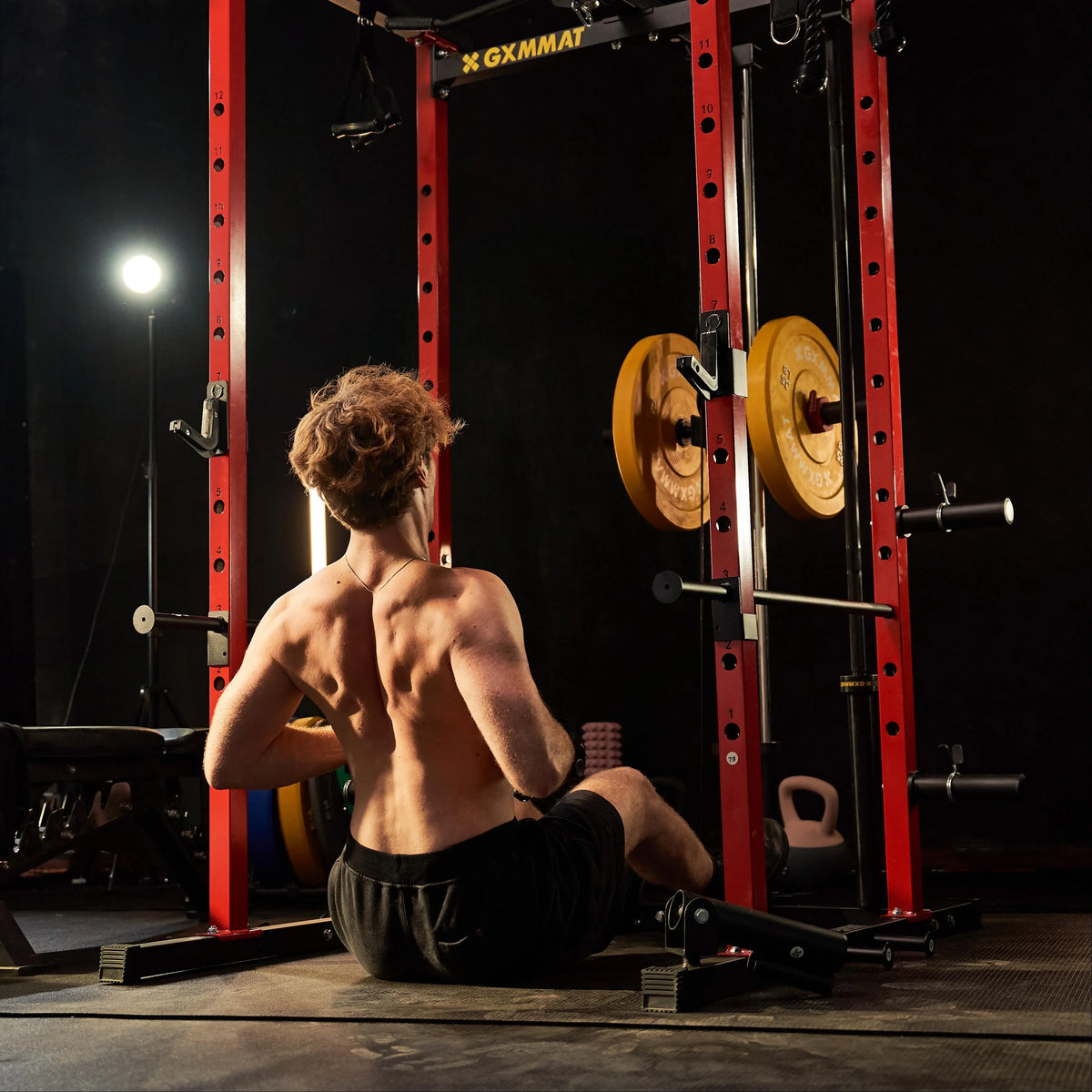
- Set your position: if your station has a thigh pad, adjust it so your thighs are locked in; otherwise sit on a sturdy bench or kneel directly under the pulley. Feet flat.
- Grip the bar slightly wider than shoulders, palms facing away.
- Sit down with straight arms and lean back about 10–20°, chest up.
- Start the pull by pulling your shoulder blades down, then drive your elbows toward your hips.
- Bring the bar to your upper chest, just below your collarbones.
- Squeeze for one second.
- Return slowly (2–3 seconds) until your arms are straight and your lats are stretched.
Common mistakes
| Mistake | Fix |
|---|---|
| Leaning way back and yanking | Lower the weight and keep the lean small |
| Pulling behind the neck | Pull to the front of the chest; it's safer for the shoulders |
| Shrugging at the top of the pull | Start each rep by pulling the shoulders down |
| Arms doing all the work | Use a thumbless grip and think "elbows to pockets" |
| Letting the stack slam | Control the return on every rep |
| Short range at the top | Let arms straighten fully for a stretch |
Grip variations
| Grip | Attachment | Focus |
|---|---|---|
| Wide overhand | Long lat bar | Lats and upper back; classic width builder |
| Close neutral | V-bar | Lats through a longer range; often strongest |
| Underhand (supinated) | Short or long bar | Lats and more biceps |
| Single-arm | Handle | Fixing imbalances, full stretch |
| Straight-arm pulldown | Bar or rope, standing | Lats without biceps; great finisher |
Lat pulldown vs pull-up
| Lat pulldown | Pull-up | |
|---|---|---|
| Load | Any weight, easy to adjust | Your body weight (plus or minus) |
| Best for | Beginners, high reps, precise progress | Relative strength, core engagement |
| Equipment | Cable with a high pulley | Pull-up bar |
Use both: pulldowns to build strength and pull-ups to test it. See our pull-up progression.
Sample back workout
| Exercise | Sets × reps | Rest |
|---|---|---|
| Barbell row | 4 × 6–8 | 2 minutes |
| Wide-grip lat pulldown | 3 × 8–12 | 90 seconds |
| Seated cable row | 3 × 10–12 | 90 seconds |
| Straight-arm pulldown | 2 × 12–15 | 60 seconds |
Form guides: barbell row and seated cable row. Rest guidance: rest between sets.
Lat pulldowns at home
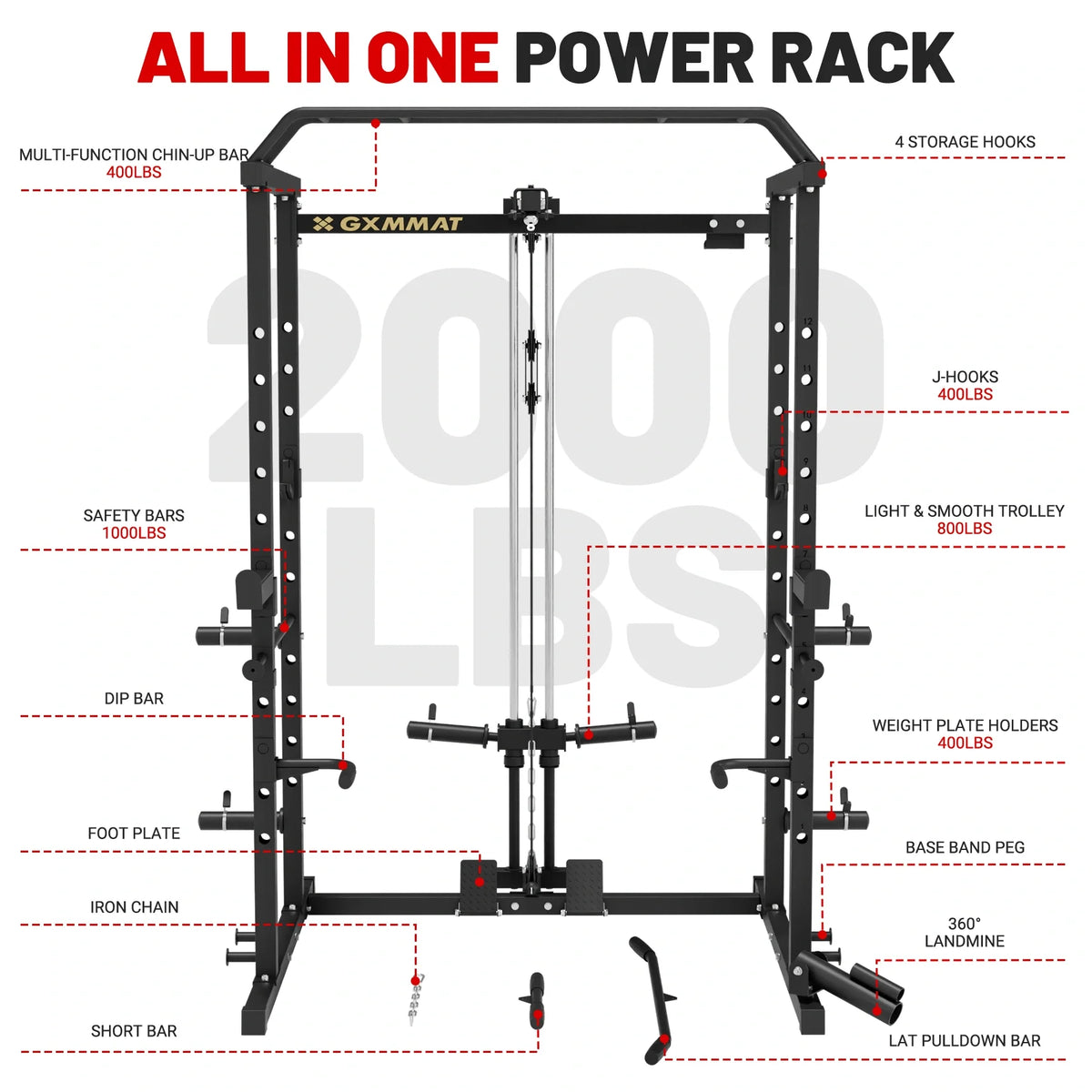
- GXMMAT G5: a squat rack with a built-in lat pulldown and low-row station and a 1:1 pulley. It includes a long bar, short bar, handles and a double-head rope.
- GXMMAT V6: dual 2:1 cables. With a 2:1 ratio, the bar feels about half the weight loaded on the post, which helps beginners make small jumps.
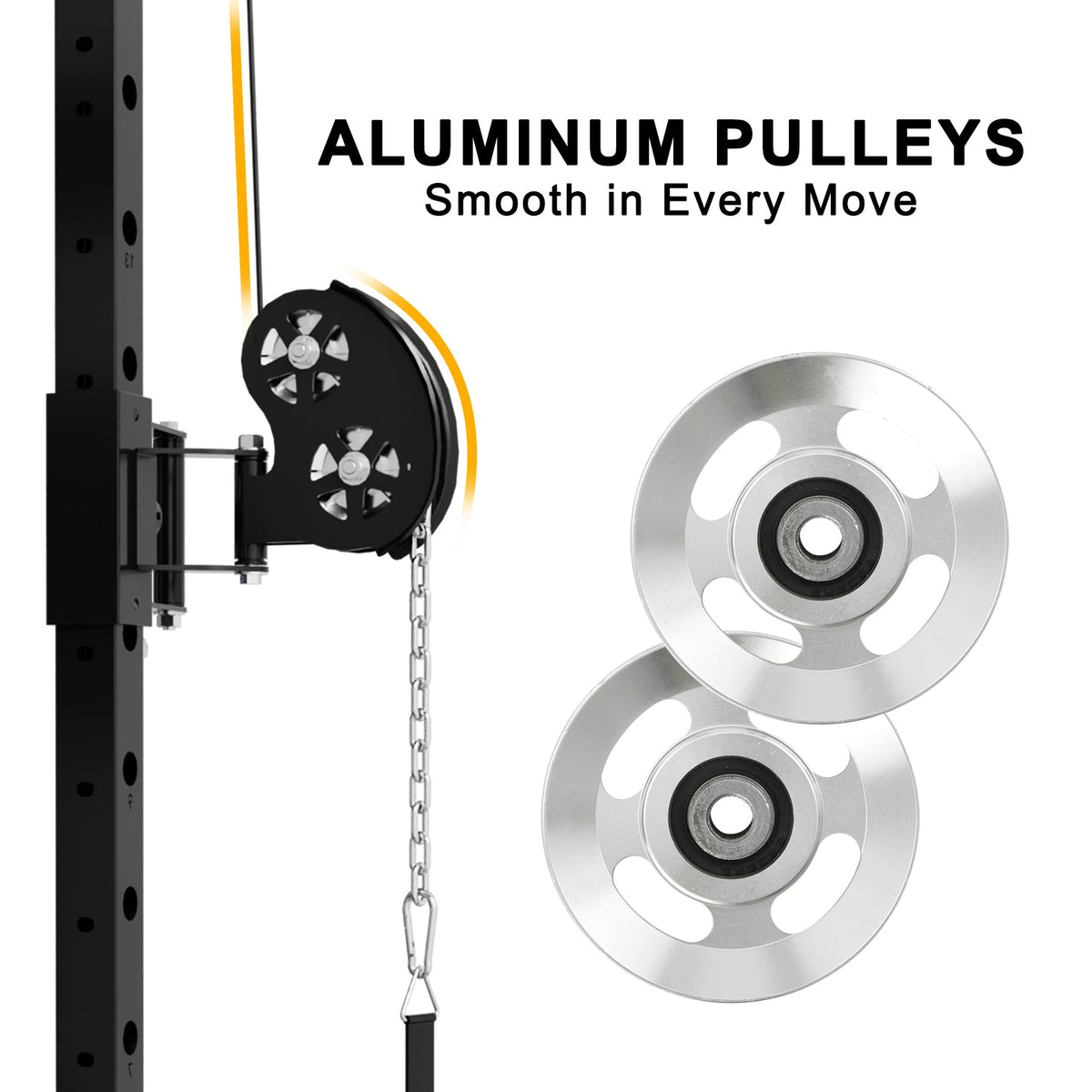
- GXMMAT X6: dual independent 1:1 cables on 20 aluminum pulleys; includes long and short bars and a V-bar.
Sit on a sturdy bench or seat in front of the pulley, and use a kneeling pad for kneeling pulldowns. Load with bumper plates and change plates. Compare all three racks in X6 vs V6 vs G5.
FAQ
What muscles does the lat pulldown work?
Mainly the lats, plus the teres major, rhomboids, lower traps, rear delts, biceps and forearms.
Where should the bar touch on a lat pulldown?
Your upper chest, just below the collarbones. Avoid pulling behind the neck.
Wide or close grip: which is better?
Both work the lats well. Wide grip adds upper back; close neutral grip allows a longer range and often heavier weights. Rotate them.
How much should I lean back on lat pulldowns?
About 10–20°. Leaning much further turns the exercise into a row and usually means the weight is too heavy.
Will lat pulldowns help me do a pull-up?
Yes. They build the same muscles. Combine them with negatives and band-assisted pull-ups for the fastest progress.
Written by Yuvien Royer for GXMMAT. This article is general fitness information, not medical advice.