Frog Jumps: How to Do Them for Power and Conditioning
Quick answer: To do frog jumps, stand with your feet wider than shoulder width and toes turned out. Squat down deep until your fingertips touch the floor between your feet, chest up. Explode upward and forward, swinging your arms, then land softly back in the deep squat with your hands reaching to the floor. Reset and repeat. Do 3 sets of 6–10 jumps. Frog jumps build explosive power in the glutes, quads and calves and add a cardio challenge, all with just your body weight.
Key takeaways
- Wide stance, deep squat, fingertips to the floor.
- Jump up and forward, swinging the arms.
- Land softly back into the squat.
- Chest stays up; don't round the back to reach the floor.
- Quality reps, not fast sloppy ones.
Muscles worked
| Muscle | Role |
|---|---|
| Glutes | Explosive hip extension |
| Quads | Drive out of the deep squat |
| Adductors | Work in the wide stance |
| Calves | Final push off |
| Core | Stabilizes landing |
Benefits
- Lower body power and jumping ability.
- Deep squat mobility through the hips and ankles.
- Conditioning that raises your heart rate fast.
- No equipment needed.
How to do frog jumps
- Stance: feet wider than shoulder width, toes out.
- Squat: sink deep, hips low, fingertips touching the floor between the feet.
- Jump: drive through the feet and swing the arms up, jumping up and slightly forward.
- Land: on the balls of the feet, then heels, sinking back into the deep squat.
- Reset and repeat.
Variations
| Variation | Level | Description |
|---|---|---|
| Frog squat (no jump) | Beginner | Deep wide squat with hands on the floor, stand up |
| Frog jump in place | Intermediate | Jump straight up |
| Forward frog jumps | Intermediate | Jump forward several times in a row |
| Frog jump to tuck | Advanced | Add a tuck jump at the top |
Frog jumps vs other jumps
| Exercise | Focus |
|---|---|
| Frog jumps | Deep squat, glutes and adductors |
| Jump squats | Vertical power, quads |
| Broad jumps | Horizontal power |
| Box jumps | Power with lower landing impact |
Common mistakes
| Mistake | Fix |
|---|---|
| Rounding the back to touch the floor | Sink the hips lower; chest up |
| Knees caving on landing | Push the knees out over the toes |
| Hard, loud landings | Land softly and absorb with the hips |
| Too many reps | Stop when jumps get sloppy |
Sample plyometric workout
| Exercise | Sets × reps |
|---|---|
| Frog jumps | 3 × 8 |
| Skater jumps | 3 × 10 per side |
| Jump lunges | 3 × 8 per side |
| Burpees | 3 × 8 |
New to jumping? Start with plyometric exercises for beginners.
Who should be careful
- Knee or ankle issues: start with frog squats, no jump.
- Hip mobility limits: narrow the stance and go less deep; see groin stretches.
- Pregnancy or pelvic floor concerns: avoid jumping unless cleared.
Frog jumps at home
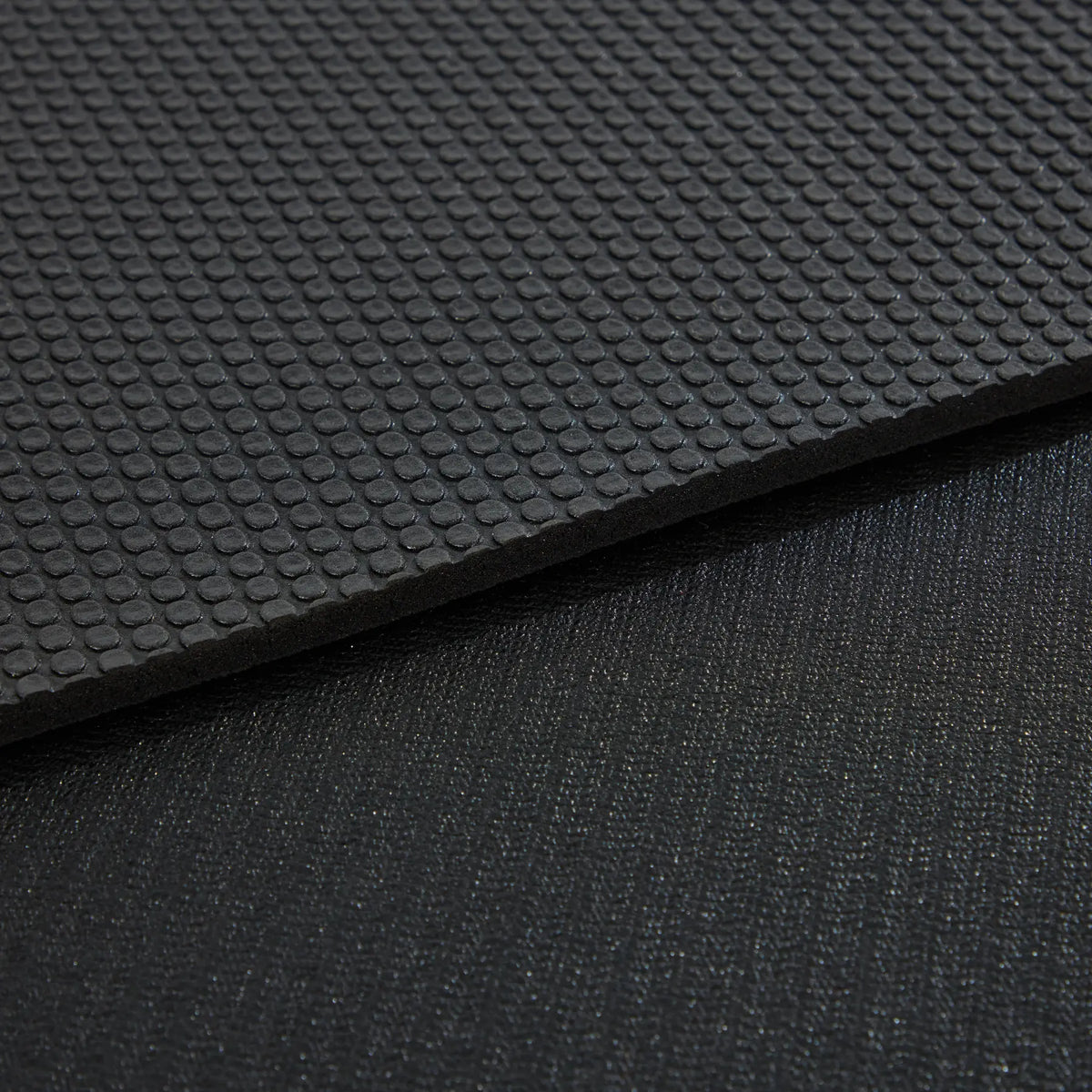
Frog jumps need space to move forward and a surface that cushions landings. A GXMMAT 6'x12' exercise mat gives you 12 feet for forward frog jumps, and its high-density foam reduces impact and noise. See all large exercise mats.
FAQ
What do frog jumps work?
The glutes, quads, adductors, calves and core.
Are frog jumps good for beginners?
Start with frog squats and a few jumps in place, then build up.
How many frog jumps should I do?
3 sets of 6–10 quality jumps.
Are frog jumps cardio?
Yes. In higher reps or circuits they raise your heart rate quickly.
Do frog jumps build glutes?
They train the glutes explosively; combine them with strength work like squats and bridges for growth.
Written by Yuvien Royer for GXMMAT. This article is general fitness information, not medical advice.