Box Jumps: How to Do Them, Box Height and Common Mistakes
Quick answer: To do box jumps, stand facing a sturdy box about a foot away, feet hip width apart. Swing your arms back as you drop into a quarter squat with your knees slightly bent, then swing your arms forward and explode upward, driving through your hips, knees and ankles. Land softly on the box with both feet flat, knees bent and hips back, in the same quarter squat position. Stand up tall, then step down one foot at a time. Do 3–5 sets of 3–5 reps with full rest. Box jumps are a plyometric exercise that builds explosive power in the glutes, quads, hamstrings and calves, and the box lets you train jumping with less landing impact than jumping on the floor.
Key takeaways
- Pick a box you can land on easily, not the tallest one you can reach.
- Land softly in the same position you took off from.
- Step down, don't jump down, to protect the knees and Achilles.
- Low reps with full rest: box jumps train power, not endurance.
- Use a stable box on a non-slip surface.
Muscles worked
Box jumps train the major muscles of the lower body, plus the core and shoulders:
| Muscle | Role |
|---|---|
| Glutes and hamstrings | Explosive hip extension |
| Quads | Knee extension at takeoff; control on landing |
| Calves | Final push off the floor |
| Core | Keeps the body stable in the air and on landing |
| Shoulders | Arm swing for extra height |
Benefits of box jumps
- Explosive power: plyometric training teaches fast twitch muscle fibers to produce force quickly.
- Better vertical jump for basketball, volleyball and other sports.
- Athletic performance: speed, coordination and balance carry over to sprinting and changing direction.
- Lower landing impact than jumping from the floor and landing back on the floor, because you land at the top of the jump.
- Raises your heart rate and burns calories when used in circuits.
Why box jumps work
Box jumps are a plyometric movement. On the quick dip, your leg muscles stretch, then they contract hard to jump. Training this stretch-and-explode cycle teaches your legs and whole body to produce force fast, which builds explosiveness, a higher vertical jump and better athletic performance in sports. Because each jump is performed onto the box instead of back down to the floor, there's less impact on your joints, which makes box jumps a friendly way for a beginner to start plyometric training. They aren't mainly an endurance exercise: keep reps low so every jump is fast, and you train power and coordination rather than just raising your heart rate.
How to do box jumps with proper form
- Set up: stand about a foot from a sturdy box, feet hip width apart.
- Load: swing your arms back and bend into a quarter squat, hips back, chest up.
- Jump: swing the arms forward and explode upward, fully extending the hips, knees and ankles.
- Tuck: pull the knees up so your feet clear the edge.
- Land: on the middle of the box with both feet flat, knees bent and tracking over the toes.
- Stand tall to finish the rep, then step down carefully one foot at a time.
- Reset before the next jump.
How to land softly and protect your knees
Most injury risk in box jumps comes from the landing, not the jump. Land softly with your whole foot on the box, knees bent and pushed out over the toes, hips back and chest up. Keep your core engaged and your glutes engaging as you land so your body stays in control and balanced. Aim to land quietly; a loud landing usually means the box is too high or your legs are tired.
How high should the box be?
| Level | Box height (guide) |
|---|---|
| Beginner | 12–16 inches |
| Intermediate | 18–24 inches |
| Advanced | 24–30 inches or more |
If you land in a deep squat, the box is too high. Your landing position should look like your takeoff position. A lower box with a clean landing builds more power than a high box with a scramble.
Box jump variations
| Variation | Level | Focus |
|---|---|---|
| Step-ups | Beginner | Strengthen the legs before you jump |
| Low box jump | Beginner | Learn to jump and land with control |
| Seated box jump | Intermediate | Jump from a seated start; removes momentum, trains pure power |
| Lateral box jump | Intermediate | Side-to-side movement, balance and coordination for sports |
| Single-leg box jump | Advanced | Single-leg power and balance (use a low box) |
Common mistakes
| Mistake | Fix |
|---|---|
| Box too high | Choose a lower box and focus on controlled landings |
| Landing in a deep squat | Lower the box; land in a quarter squat |
| Knees caving on landing | Push the knees out over the toes |
| Jumping down off the box | Step down to reduce impact on the joints |
| Rushing reps for speed | Reset between reps; quality over quantity |
| Landing on the edge | Aim for the middle of the box |
Beginner progression
- Squat strength: master bodyweight squats and box squats.
- Landing drills: drop into a quarter squat and stick it.
- Floor jumps: jump squats and broad jumps.
- Low box jumps (12 inches), then raise the height slowly.
For more ideas, see plyometric exercises for beginners.
Sample lower body power workout
| Exercise | Sets × reps |
|---|---|
| Warm up: dynamic stretches and easy jumps | 5–10 min |
| Box jumps | 4 × 4 |
| Kettlebell swings | 3 × 12 |
| Goblet squats | 3 × 10 |
| Calf raises | 3 × 15 |
Do box jumps early in the workout while you're fresh, 1–2 times a week, with at least 48 hours of recovery between plyometric sessions.
Who should be careful
- Knee, ankle or Achilles injuries: start with step-ups and landing drills.
- Pregnancy or pelvic floor concerns: avoid jumping unless cleared.
- Beginners: build squat strength and balance first.
Box jumps at home
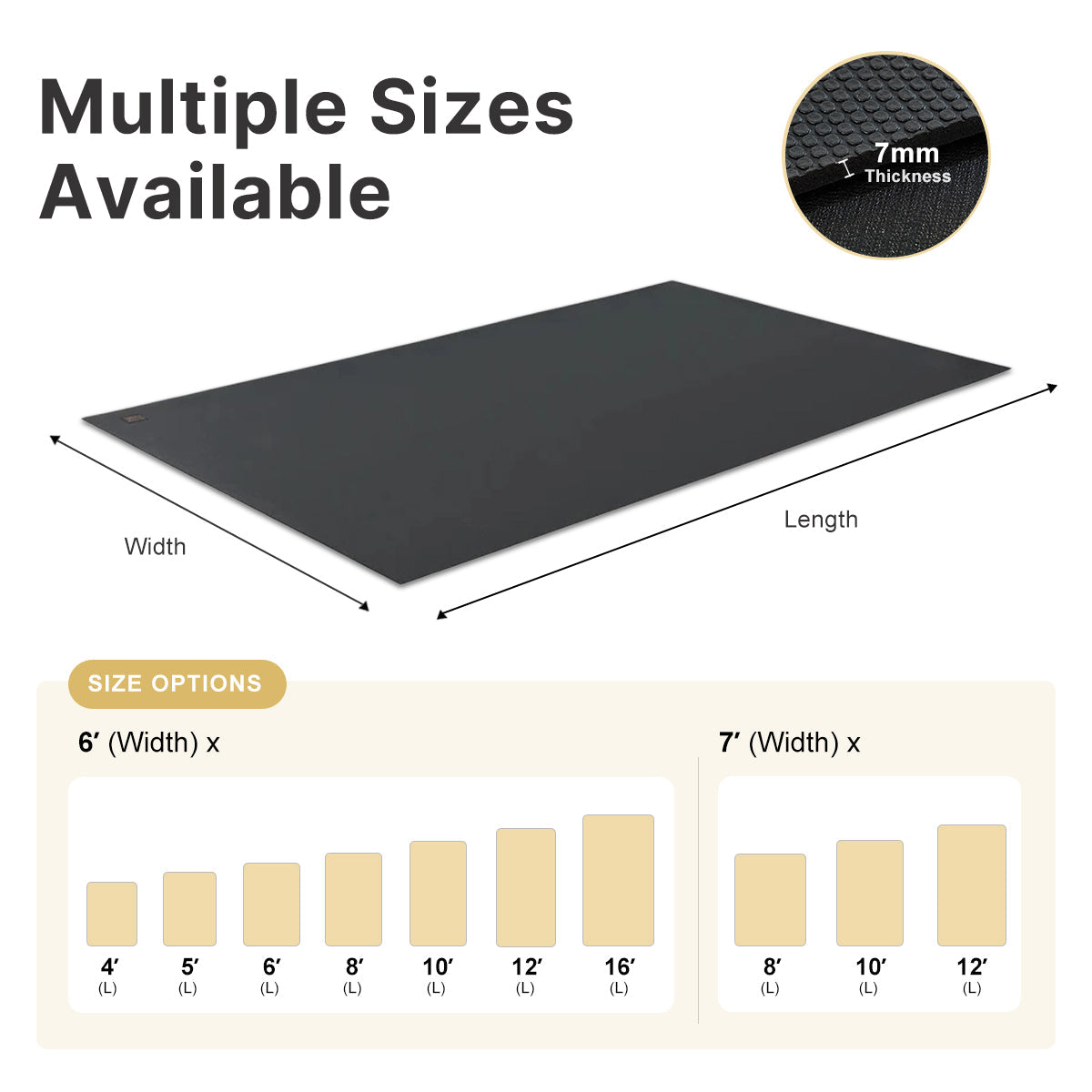
Use a sturdy, purpose-built box that won't tip or slide, and place it on a non-slip surface. A GXMMAT large exercise mat gives the box and your feet a grippy base, cushions step-downs and missed jumps, and reduces noise. The 6'x12' exercise mat leaves room for the box plus floor drills like broad jumps. Wear supportive training shoes, not socks.
FAQ
What do box jumps work?
The glutes, quads, hamstrings, calves and core, with a focus on explosive lower body power.
Are box jumps good for beginners?
Yes, with a low box (12–16 inches) and good squat form. Focus on soft landings and stepping down.
How many box jumps should I do?
3–5 sets of 3–5 reps with full rest for power. Stop when your jumps slow down or landings get sloppy.
Should I jump or step down from the box?
Step down. Jumping down adds impact to the knees and Achilles without improving power.
Do box jumps improve vertical jump?
They can, especially combined with squats, deadlifts and other plyometric training.
Written by Yuvien Royer for GXMMAT. This article is general fitness information, not medical advice.