Lower Back Stretches: 10 Gentle Stretches for a Stiff Back
Quick answer: The best lower back stretches are gentle movements that relax tight back muscles and the muscles around the hips. Try this sequence: knee-to-chest stretch, child's pose, cat cow, supine spinal twist, pelvic tilts and the cobra stretch. Hold static stretches for 20–30 seconds, repeat 2–3 times, and move slowly with deep breaths. Many people find a short daily routine eases low back stiffness from sitting. Stretching should feel mild, never sharp. If you have severe, worsening or radiating back pain, see a doctor or physical therapist first.
Key takeaways
- Gentle stretches only: mild tension, no sharp pain.
- Move slowly and breathe deeply; don't bounce.
- Stretch the hips too: tight hips and tight hamstrings often affect the low back.
- 5–10 minutes daily beats one long session a week.
- Add core strength for longer-lasting results.
Why the lower back gets tight
- Sitting for long periods and a sedentary lifestyle.
- Poor posture at a desk or on the phone.
- Repetitive motions like lifting, bending or twisting.
- Tight hips and hamstrings that pull on the pelvis.
- Weak core and glutes, so the lower back muscles overwork.
Benefits of lower back stretches
- Relief from everyday stiffness: many people with mild low back pain from sitting feel looser after gentle back stretches.
- Spinal mobility: moving the spine through its range helps you bend, twist and extend more comfortably.
- Release tension in the back muscles, hips and glutes.
- Better movement in workouts: a mobile low back and hips make squats and deadlifts easier to set up.
Research on stretching for lower back pain is mixed, and exercise programs that combine stretching with strengthening tend to be recommended over stretching alone. Think of these lower back stretches as one part of staying active.
10 lower back stretches
1. Knee-to-chest stretch
Lie on your back with knees bent and feet flat on the floor. Bring your right knee toward your chest, hands behind the thigh or on the shin, keeping the left foot flat on the ground. Hold 20–30 seconds, then switch sides and repeat with the other leg. For a deeper low back stretch, pull both knees in together and gently rock side to side.
2. Child's pose
Kneel, sit your hips back toward your heels and walk your hands forward with arms extended, resting your chest toward the floor. Breathe into your low back. Hold 30–60 seconds. See the full child's pose guide.
3. Cat cow stretch
On hands and knees, with knees directly under the hips, slowly round your spine toward the ceiling (cat), then let your belly button drop and lift your chest (cow). Repeat 8–10 slow, controlled movements. This builds spinal mobility rather than holding a static position. See cat cow pose.
4. Supine spinal twist
Lie on your back with arms extended out to the sides in a T. Bend your knees with feet flat, then let both knees fall to the right while your shoulders stay on the ground. Turn your head to the other side if comfortable. Hold 20–30 seconds, then switch to the other side. See supine spinal twist.
5. Pelvic tilts
Lie on your back with knees bent and feet flat. Gently flatten your lower back into the floor by tightening your abs and tilting the pelvis, then relax. Repeat 10–15 times. A good starting point when the low back feels stiff, and one of the gentlest back stretches for lower back pain.
6. Cobra stretch
Lie face down with hands under the shoulders. Press up gently, lifting the chest while keeping the hips on the floor and elbows slightly bent. Hold 15–30 seconds. Skip it if bending backward increases pain. See cobra pose.
7. Figure-4 stretch
Lie on your back, cross the right ankle over the left knee and pull the left leg toward your chest. Stretches the glutes and deep hip muscles that connect to the lower spine. See the piriformis stretch.
8. Seated forward fold
Sit with legs extended and gently fold forward from the hips, sliding your hands toward your feet. Bend your knees if your hamstrings are tight, and avoid forcing it. See hamstring stretches for gentler options.
9. Seated spinal twist
Sit on the floor with both legs straight. Bend your right knee and cross the right foot over the left leg, foot flat. Place your right hand on the floor behind you and hug the bent knee with your left arm, then slowly rotate your torso to the right. Hold 20–30 seconds; switch sides.
10. Sphinx stretch
A gentler version of cobra. Lie on your stomach with legs extended and forearms on the floor, elbows under the shoulders. Lift your chest and let the low back relax. Hold 30–60 seconds with deep breaths. Skip it if extending your back increases pain.
10-minute routine for low back pain and stiffness
| Stretch | Time |
|---|---|
| Pelvic tilts | 10 reps |
| Cat cow | 10 slow reps |
| Child's pose | 60 sec |
| Knee-to-chest | 30 sec per side |
| Supine spinal twist | 30 sec per side |
| Figure-4 stretch | 30 sec per side |
| Cobra (if comfortable) | 3 × 15 sec |
Do it in the morning, after long periods of sitting, or after a workout.
Don't forget the hips and mid back
The low back often takes over when nearby areas are stiff. Add hip flexor stretches for tight hips, thoracic spine mobility for the mid back, and a doorway chest stretch to open the upper body if you sit hunched forward.
Strengthen your core to support your back
Stretching helps release tension; strength helps keep it away. Good starting exercises:
Common mistakes
| Mistake | Fix |
|---|---|
| Pushing into pain | Stretch to mild tension only |
| Holding your breath | Take slow, deep breaths |
| Bouncing | Hold steady or use slow, controlled movements |
| Only stretching the back | Include hips, hamstrings and core work |
Lower back pain: when to see a professional
Lower back stretches are for everyday stiffness and mild low back pain, not a replacement for care. See a doctor or physical therapist if you have:
- Severe back pain, or pain after a fall or injury.
- Pain, numbness or tingling down one or both legs (this can involve the sciatic nerve).
- Weakness in the legs, or changes in bladder or bowel control: seek care right away.
- Back pain with fever or unexplained weight loss.
- Pain that doesn't improve after a few weeks.
Stretching at home
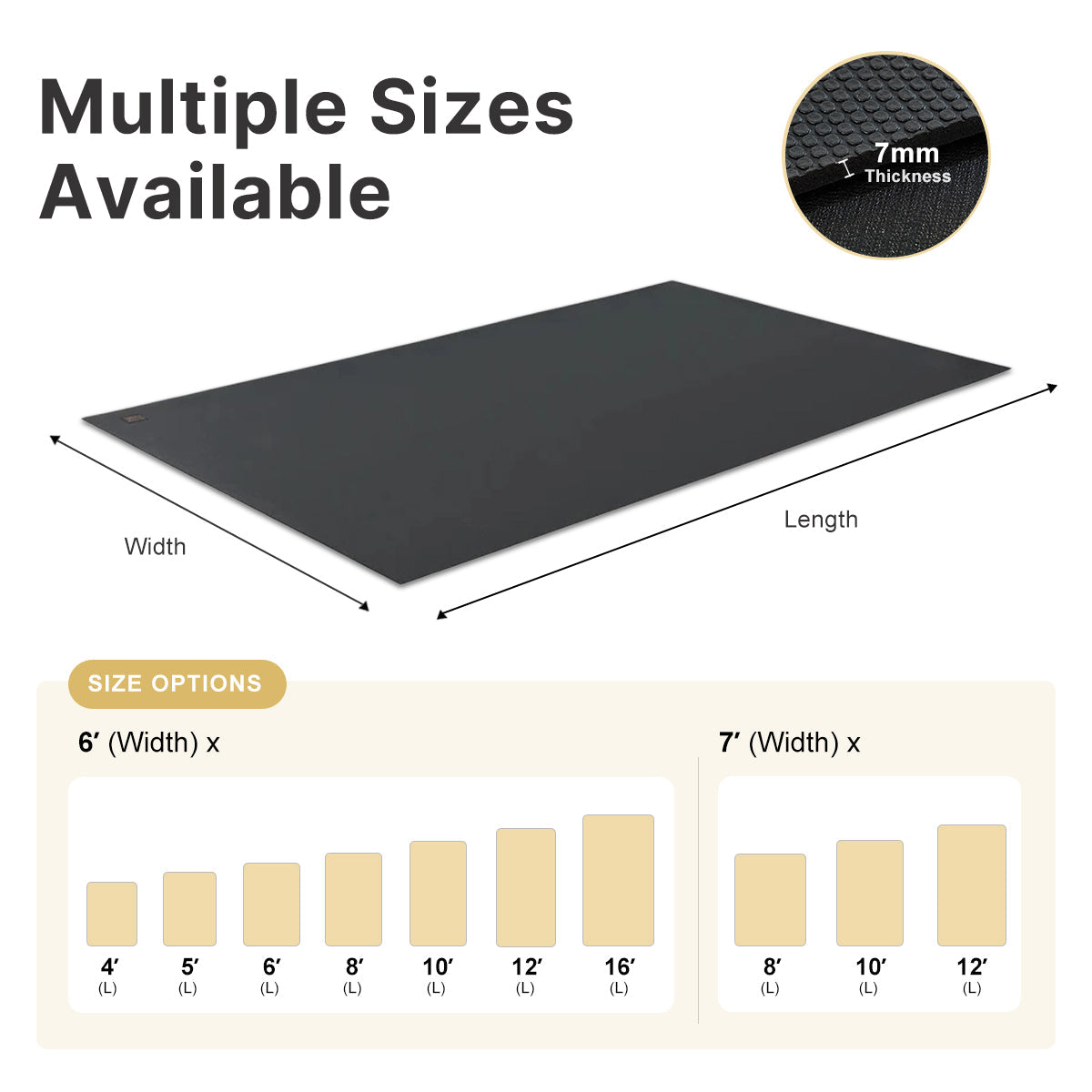
Most lower back stretches are done lying on the floor or on hands and knees, so cushioning matters. A GXMMAT large yoga mat or large exercise mat gives you room to lie flat with arms extended for twists and child's pose without sliding off. Add a kneeling pad for cat cow if your knees are sensitive, and a foam roller for the mid back and glutes (avoid rolling directly on the low back).
FAQ
What is the best stretch for lower back pain?
There's no single best stretch. Knee-to-chest, child's pose and cat cow are gentle starting points for many people. Choose the ones that feel relieving rather than painful.
How long should I hold lower back stretches?
20–30 seconds per stretch, 2–3 times, or 8–10 slow reps for moving stretches like cat cow.
Should I stretch my lower back every day?
Gentle daily stretching is fine for most people with everyday stiffness. Stop if pain increases.
Can stretching make back pain worse?
It can if you force a stretch or the pain has a cause that needs treatment. Keep stretches gentle and see a professional if pain persists.
Do tight hamstrings cause lower back pain?
Tight hamstrings and hips can contribute to low back stiffness, so many routines include them, but back pain usually has several causes.
Written by Yuvien Royer for GXMMAT. This article is general fitness information, not medical advice.