
Supine Spinal Twist: How to Do It, Benefits and Variations
Quick answer: To do a supine spinal twist, lie on your back on your mat with your knees bent and feet flat. Stretch your arms out to the sides in a T position, palms facing down. Lift your hips and shift them about an inch to the right, then let both knees drop slowly to the left side while your shoulders stay on the floor. Turn your head to the right if your neck is comfortable. Relax and breathe for 30–60 seconds, letting gravity deepen the twist, then bring the knees back to center and repeat on the opposite side. This gentle yoga pose stretches the lower back, glutes, chest and obliques, improves spine mobility, and is a relaxing way to end a workout or start the morning.
Key takeaways
- Shoulders stay down; twist only as far as they allow.
- Shift the hips first so the spine stays aligned.
- Pillow under the knees if they don't reach the floor.
- No forcing: let gravity do the work.
- Both sides, equal time.
Muscles stretched
| Area | Effect |
|---|---|
| Lower back and spine | Gentle rotation and release of tension |
| Glutes and outer hip | Stretched on the top side |
| Obliques and trunk | Lengthened |
| Chest and shoulders | Opened by the arms in a T |
Benefits of the supine spinal twist
- Spine mobility: rotation that's often missing from daily movement.
- Releases tension in the lower back and hips after sitting or lifting.
- Chest opening that helps posture.
- Relaxing: lying down with slow breathing helps you wind down.
- Easy to incorporate into any routine, morning or evening.
How to do a supine spinal twist
- Lie on your back, knees bent, feet flat, arms out in a T position.
- Shift: lift the hips slightly and move them an inch to the right.
- Drop: exhale and lower both knees to the left side. Keep the knees stacked.
- Shoulders: keep both shoulders on the floor. If the right shoulder lifts, bring the knees up higher or put a pillow under them.
- Head: turn your gaze to the right, opposite the knees, if comfortable.
- Breathe: hold 30–60 seconds, relaxing deeper with each exhale.
- Switch: inhale and bring the knees back to center, then repeat on the opposite side.
Variations
| Variation | How | Why |
|---|---|---|
| Knee-to-chest twist | One leg straight, cross the other knee over | Deeper twist for the outer hip and glutes |
| Supported twist | Pillow or blanket under the top knee | Tight backs; restorative |
| Knees higher toward the chest | Knees closer to the armpits | More upper back rotation |
| Knees lower toward the hips | Knees at hip level | More lower back rotation |
| Eagle legs twist | Wrap the legs before dropping them | Stronger outer hip stretch |
Can a supine twist help lower back pain?
Many people find gentle twists relieve stiffness and tension in the lower back, especially after sitting. But back pain has many causes, and twisting isn't right for every condition, such as some disc injuries. Move slowly, stay in a pain-free range, and consult a healthcare provider if pain is persistent, sharp or travels down the leg. A twist is a stretch, not a treatment for injuries.
Common mistakes
| Mistake | Fix |
|---|---|
| Forcing the knees to the floor | Support them with a pillow |
| Shoulder lifting off the floor | Twist less; bring the knees higher |
| Pushing the knee down with the hand | Let gravity do it; no pressure |
| Holding the breath | Long, slow exhales |
| Rushing between sides | Return to center slowly |
A 5-minute floor routine
| Pose | Time |
|---|---|
| Cat-cow | 5 rounds |
| Bridge pose | 3 × 5 breaths |
| Supine spinal twist | 45 sec per side |
| Happy baby | 1 min |
| Legs up the wall | 2–5 min |
After a workout, it pairs well with hip flexor stretches and thoracic spine mobility exercises.
Who should be careful
- Disc injury or recent back surgery: avoid twisting unless cleared by your doctor or physical therapist.
- Sacroiliac (SI) joint pain: keep the twist small and supported.
- Pregnancy: twist gently from the upper back, and avoid lying flat later in pregnancy.
- Neck problems: keep the head centered.
Practicing at home
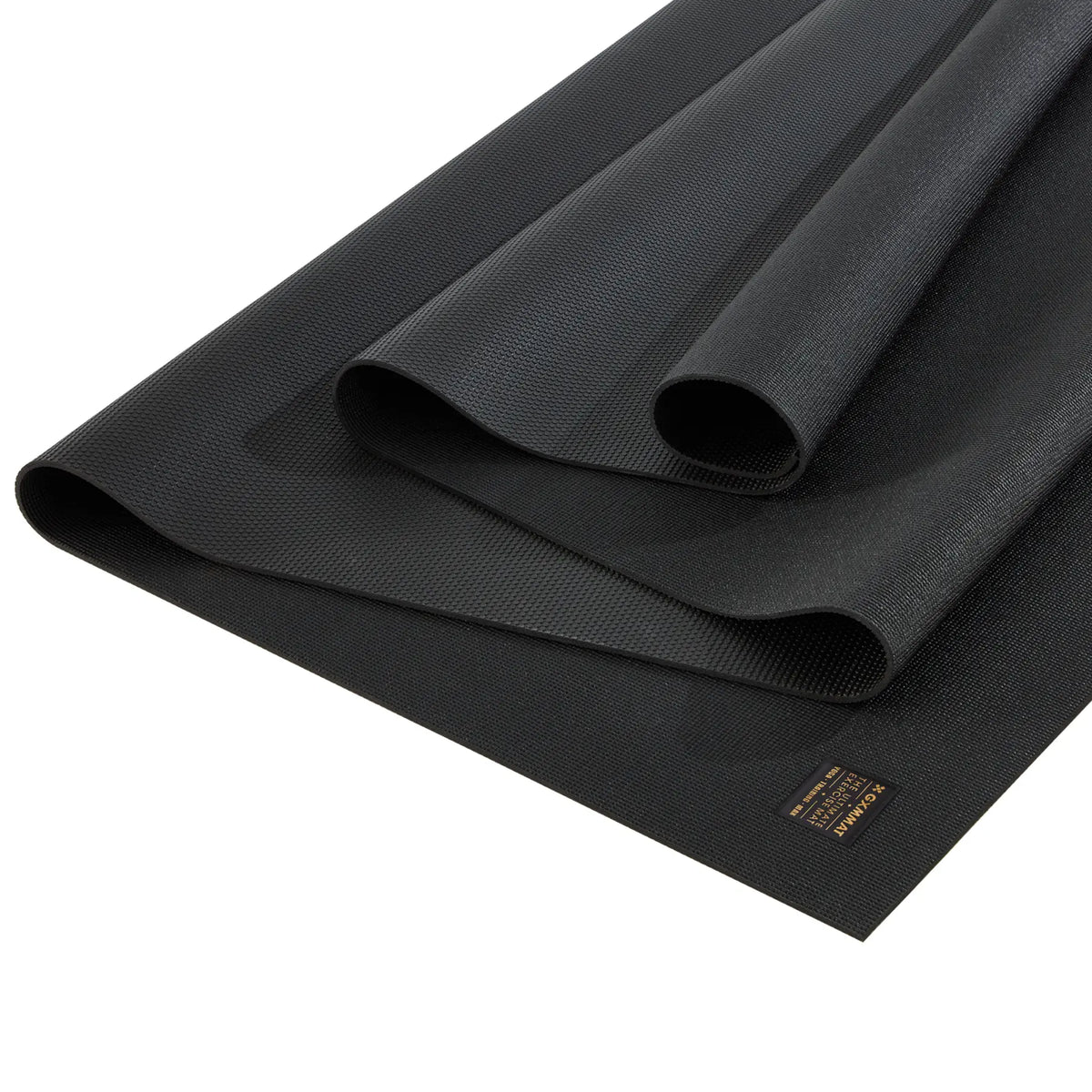
You'll lie on your back with your arms stretched wide, so a mat that's wide and cushioned makes this twist more comfortable. A standard 24-inch mat leaves your hands on the floor; GXMMAT large yoga mats start at 4 feet wide, so your arms rest fully on the mat in the T position. See the yoga mat thickness guide.
FAQ
What does the supine spinal twist stretch?
The lower back, glutes, outer hips, obliques, chest and shoulders.
How long should I hold a supine twist?
30–60 seconds per side, or longer in a restorative practice.
Is the supine twist good for lower back pain?
Many people find it relieves stiffness. If pain is sharp, persistent or radiates down the leg, see a healthcare provider first.
Should my knees touch the floor?
No need. Rest them on a pillow if they don't reach, and keep the shoulders down.
When is the best time to do a supine spinal twist?
In the morning to loosen up, after a workout, or before bed to relax.
Written by Yuvien Royer for GXMMAT. This article is general fitness information, not medical advice.


