Legs Up the Wall Pose: How to Do It and What It Helps With
Quick answer: To do legs up the wall pose (Viparita Karani), sit sideways on your mat with one hip touching the wall. Lie back and swing your legs up the wall as you turn, so your back rests on the floor and your legs extend up the wall. Scoot your seat close to the wall (or a few inches away if your hamstrings are tight). Rest your arms by your sides, palms up, close your eyes and breathe slowly. Stay for five to ten minutes. To come out, bend your knees, roll to one side and pause before sitting up. Legs up the wall is a gentle, restorative pose that many people use to relax, wind down before bed, or rest tired legs after standing or a workout.
Key takeaways
- Get in sideways: sit with one hip touching the wall, then swing the legs up.
- Distance from the wall is adjustable: move away if your hamstrings feel tight.
- Use props: a folded blanket under the hips or head adds comfort.
- Stay 5–10 minutes and breathe slowly.
- Roll to the side before sitting up.
What the pose does
| Area | Effect |
|---|---|
| Hamstrings and calves | Gentle stretch |
| Lower back | Rests flat; can ease lower back tension |
| Legs | Gravity helps tired legs feel lighter |
| Breathing | Lying still makes slow belly breathing easy |
Benefits of legs up the wall
- Relaxation: lying still with slow breathing can help your body relax and wind down. Many people say it helps them feel calm.
- Tired legs: after standing all day, running or leg day, elevating the legs often feels relieving.
- Gentle hamstring stretch.
- No strength or flexibility needed: one of the most accessible yoga poses.
- Before bed: a calming way to end the day.
Claims that the pose improves circulation, digestion or other health conditions are mostly based on experience rather than strong evidence. Enjoy it as a restorative pose, not a treatment.
How to do legs up the wall pose step by step
- Set up: place your mat with the short end against a wall. Have a folded blanket nearby.
- Sit sideways: sit with your right hip touching the wall, knees bent.
- Swing: lie back onto your elbows and swing your legs up the wall as you turn your torso so you're lying on your back.
- Scoot: wiggle your seat close to the wall, or move back until the hamstrings feel comfortable.
- Settle: rest the arms out to the sides, palms facing up. Let the legs relax; they don't need to be perfectly straight.
- Breathe: close your eyes and breathe into the belly for five to ten minutes.
- Exit: bend the knees, press the soles into the wall, roll onto your side, pause, then sit up slowly.
Variations and props
| Variation | How | Why |
|---|---|---|
| Supported | Folded blanket or bolster under the hips | Gentle inversion; more lower back release |
| Knees bent | Soles against the wall, knees bent | Tight hamstrings |
| Butterfly legs | Soles together, knees open, outer feet on the wall | Inner thigh stretch |
| Wide legs | Legs open in a V up the wall | Inner thigh stretch |
| Strap around the thighs | Loop a strap so the legs can fully relax | Deeper rest |
| Calves on a chair or bed | No wall needed | Easier option for travel or limited mobility |
Common mistakes
| Mistake | Fix |
|---|---|
| Forcing the hips against the wall | Move away until the legs and back are comfortable |
| Neck strain | Small folded blanket under the head |
| Legs tingling or going numb | Bend the knees, or come out sooner |
| Sitting up too fast | Roll to your side and pause |
When to use it
- At the end of a yoga practice, before or instead of final rest.
- After running, walking or leg workouts like split squats.
- In the evening as part of a bedtime routine with happy baby and a supine spinal twist.
Who should be careful
- High blood pressure, glaucoma or eye conditions: ask your doctor before practicing inversions, even gentle ones.
- Heart conditions: check with your doctor first.
- Later pregnancy: lying flat on the back may not be advised; try the chair version and follow your healthcare provider's advice.
- Neck or back injury: use props and stop if anything hurts.
- Menstruation: some traditions avoid inversions during menstruation; do what feels comfortable for you.
Practicing legs up the wall at home
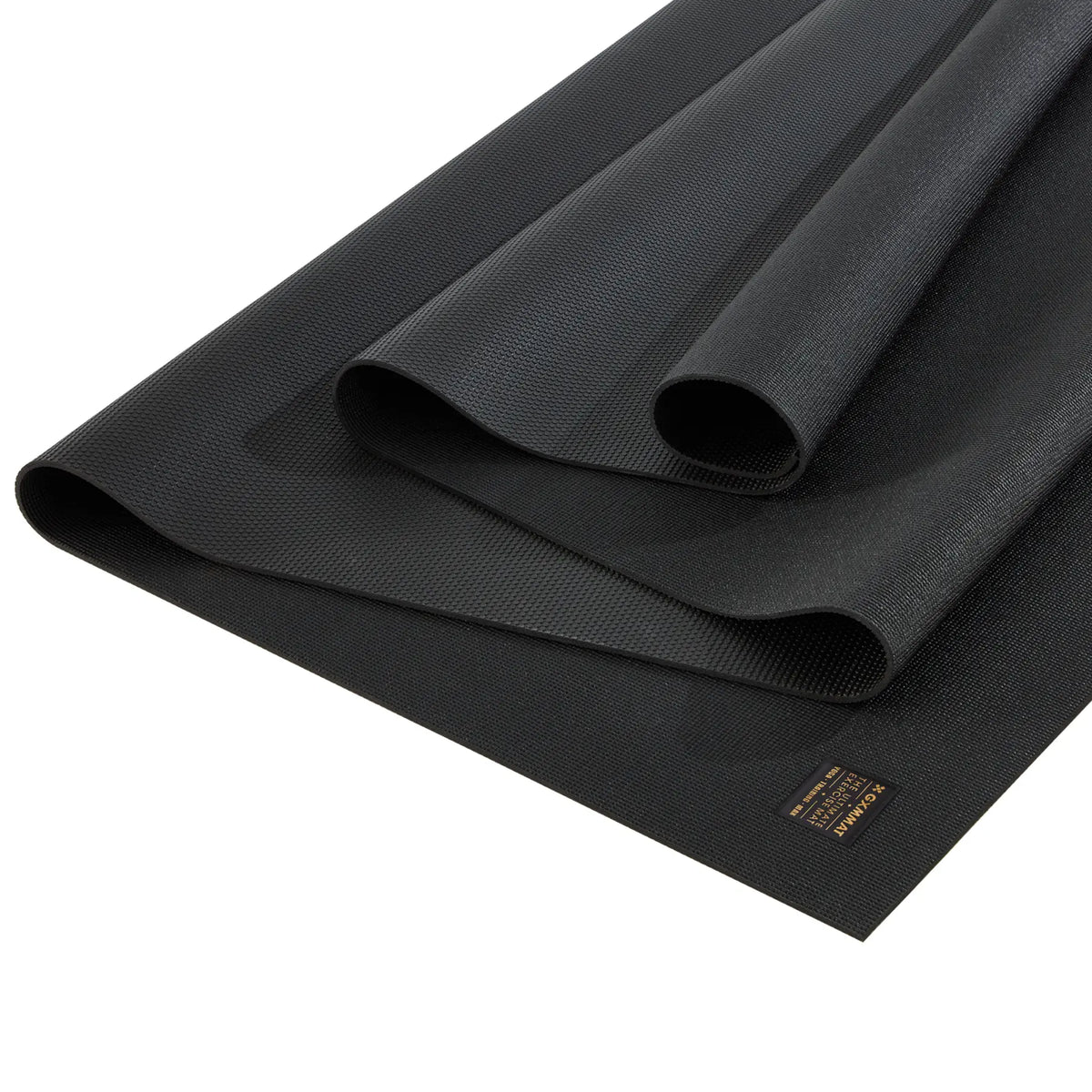
You'll lie on your back for several minutes, so cushioning under the spine and head matters. Place a GXMMAT large yoga mat with the short end against the wall; at 7 mm thick (9 mm for the 7x5) it's comfortable on hard floors, and it's wide enough for the butterfly and wide-leg variations. See the yoga mat thickness guide.
FAQ
How long should I do legs up the wall?
Five to ten minutes is common. Even 2–3 minutes can feel relaxing.
What is legs up the wall good for?
Relaxation, resting tired legs and a gentle hamstring stretch. It's a calming way to end a practice or the day.
Is legs up the wall an inversion?
Yes, a gentle one, since the legs are above the heart.
What is the Sanskrit name for legs up the wall?
Viparita Karani.
Can I do legs up the wall in bed?
Yes, against a headboard or wall next to the bed, though a firmer surface supports the back better.
Written by Yuvien Royer for GXMMAT. This article is general fitness information, not medical advice.