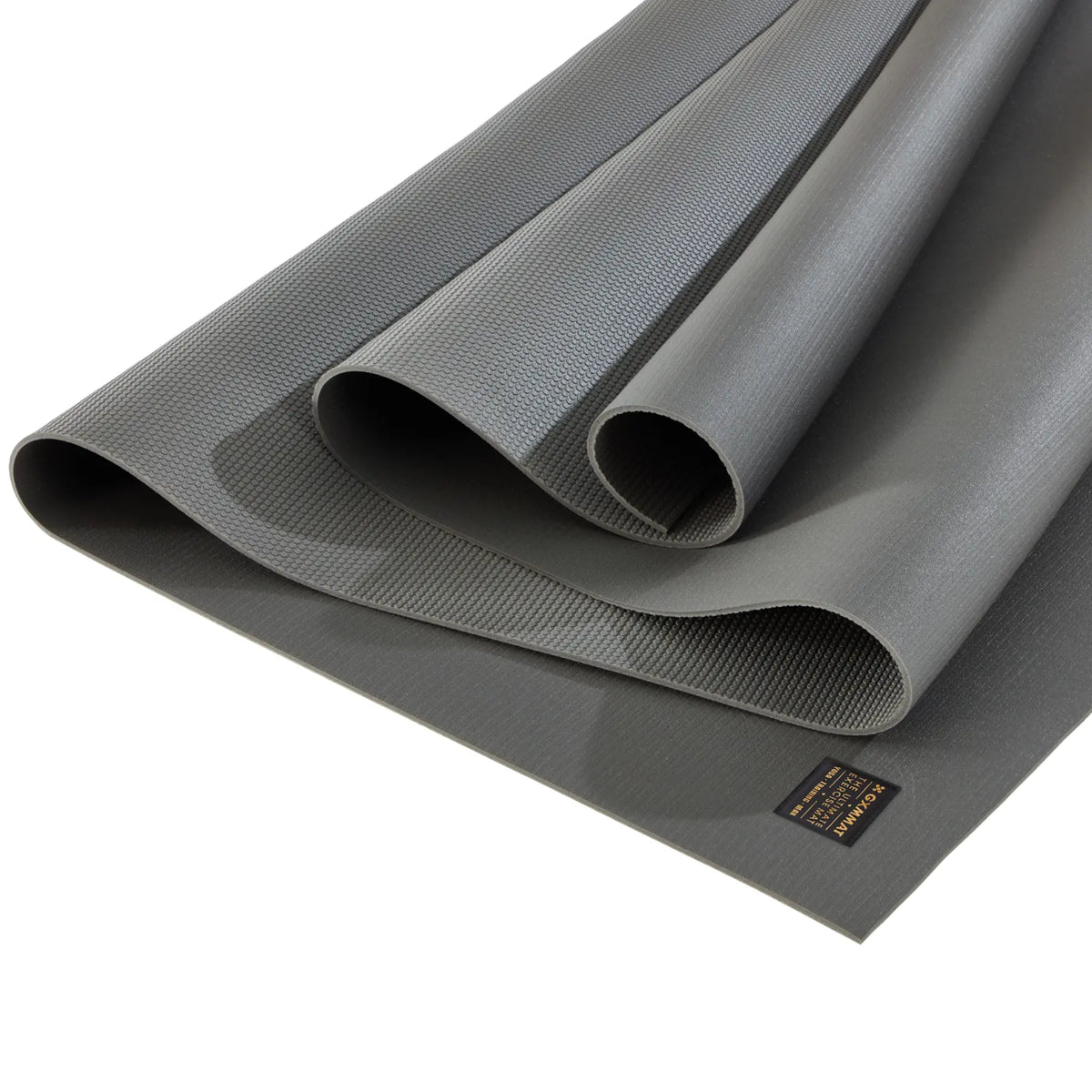
Yoga Mat Thickness Guide: What Thickness Is Best for You?
Quick answer: The best yoga mat thickness for most people is 4–6 mm (about 3/16" to 1/4"): thick enough to cushion knees and wrists, thin enough to balance on. Choose 1.5–3 mm for travel and strong balance work, and 7–9 mm if you have sensitive joints, practice on hard floors, or do mostly floor-based, restorative or Pilates-style work. Thickness is only half the story: a dense 7 mm mat feels more stable than a soft, squishy 10 mm one.
Key takeaways
- Thin (1.5–3 mm): best floor feel and balance, least cushion.
- Standard (4–6 mm): the all-round choice.
- Thick (7–9 mm): joint comfort for knees, wrists, hips and spine.
- Very thick (10 mm+): soft foam for floor exercise; harder to balance on.
- Density matters as much as thickness.
Yoga mat thickness chart
| Thickness | Inches (approx.) | Feel | Best for |
|---|---|---|---|
| 1.5–2 mm | 1/16" | Very thin, foldable | Travel; laying over a studio mat |
| 3 mm | 1/8" | Firm, close to the floor | Balance-heavy and flowing styles |
| 4–5 mm | 3/16" | Balanced cushion and stability | Most yoga styles; everyday practice |
| 6 mm | 1/4" | Noticeably cushioned | Beginners; hard floors; mixed yoga and fitness |
| 7–9 mm | 1/4"–3/8" | Extra cushion | Sensitive joints; restorative yoga; Pilates; stretching |
| 10–13 mm | 3/8"–1/2" | Soft and plush | Floor exercises and physical therapy; not ideal for standing balance |
How thickness changes your practice
| Thinner mat | Thicker mat | |
|---|---|---|
| Balance in standing poses | Easier | Harder if the foam is soft |
| Knee, wrist and hip comfort | Less | More |
| Weight and portability | Light, easy to carry | Heavier, bulkier |
| Floor protection and noise | Less | More |
| Warmth on cold floors | Less | More |
Best thickness by yoga style and use
| Practice | Recommended thickness |
|---|---|
| Vinyasa, power, Ashtanga | 3–5 mm |
| Hot yoga | 3–5 mm with a towel |
| Hatha and general classes | 4–6 mm |
| Yin and restorative | 6–9 mm |
| Mat Pilates | 7–10 mm |
| Stretching, mobility, core work | 6–9 mm |
| Sensitive knees or wrists | 7–9 mm, dense foam |
| Travel | 1.5–2 mm |
Routines to try: mat Pilates for beginners and somatic exercises.
Why density matters
- Low-density foam compresses under your hands and feet, so wrists bend more and balance is harder, even when the mat is thick.
- High-density foam supports your weight without bottoming out, so a 7 mm mat can feel both cushioned and stable.
- Quick test: press your thumb into the mat. If you feel the floor easily, it's too soft to protect your joints.
How to choose in four questions
- Do your knees or wrists hurt on the floor? Go to 6 mm or more, in dense foam.
- Do you do a lot of standing balance poses? Stay at 6 mm or less, or pick a dense 7 mm mat.
- Will you carry it to class? Choose 3–5 mm. For a mat that stays at home, weight doesn't matter.
- What's your floor? Tile, concrete and hardwood call for more cushion than carpet.
Don't forget size
A standard yoga mat is about 24" × 68". That's fine for class, but at home a larger mat lets you move freely without stepping off the edge, and gives room for a partner or kids. See partner workouts at home.
GXMMAT yoga mat thickness options
| Mat | Thickness | Sizes | Best for |
|---|---|---|---|
| GXMMAT Large Yoga Mat | 7 mm high-density foam | 6'×4', 6'×6', 6'×8', 6'×10', 6'×12' | Barefoot yoga, Pilates, stretching, meditation |
| GXMMAT Extra Thick Large Yoga Mat | 9 mm high-density foam | 7'×5' | Extra joint cushioning on hard floors |
- Made for bare feet, with a soft textured surface and non-slip on both sides.
- Works on carpet or hard floors.
- Training in shoes or doing HIIT? Use a large exercise mat instead; see yoga mat vs exercise mat.
- Care: how to clean a yoga mat.
Browse all sizes in the large yoga mat collection.
FAQ
What thickness yoga mat is best for beginners?
About 5–6 mm. It cushions the knees and wrists while still feeling stable in standing poses.
Is a 4 mm or 6 mm yoga mat better?
Choose 4 mm for better balance and portability, and 6 mm for more joint comfort, especially on hard floors.
Is a thicker yoga mat better for bad knees?
Usually, yes. Look for 7–9 mm in dense foam so your knees are cushioned without the mat feeling wobbly.
Is a 10 mm yoga mat too thick?
For standing balance poses it can be, especially if the foam is soft. It works well for floor exercises and stretching.
What thickness is best for Pilates?
About 7–10 mm, because Pilates has a lot of rolling and lying on the spine.
Written by Yuvien Royer for GXMMAT. This article is general fitness information, not medical advice.