
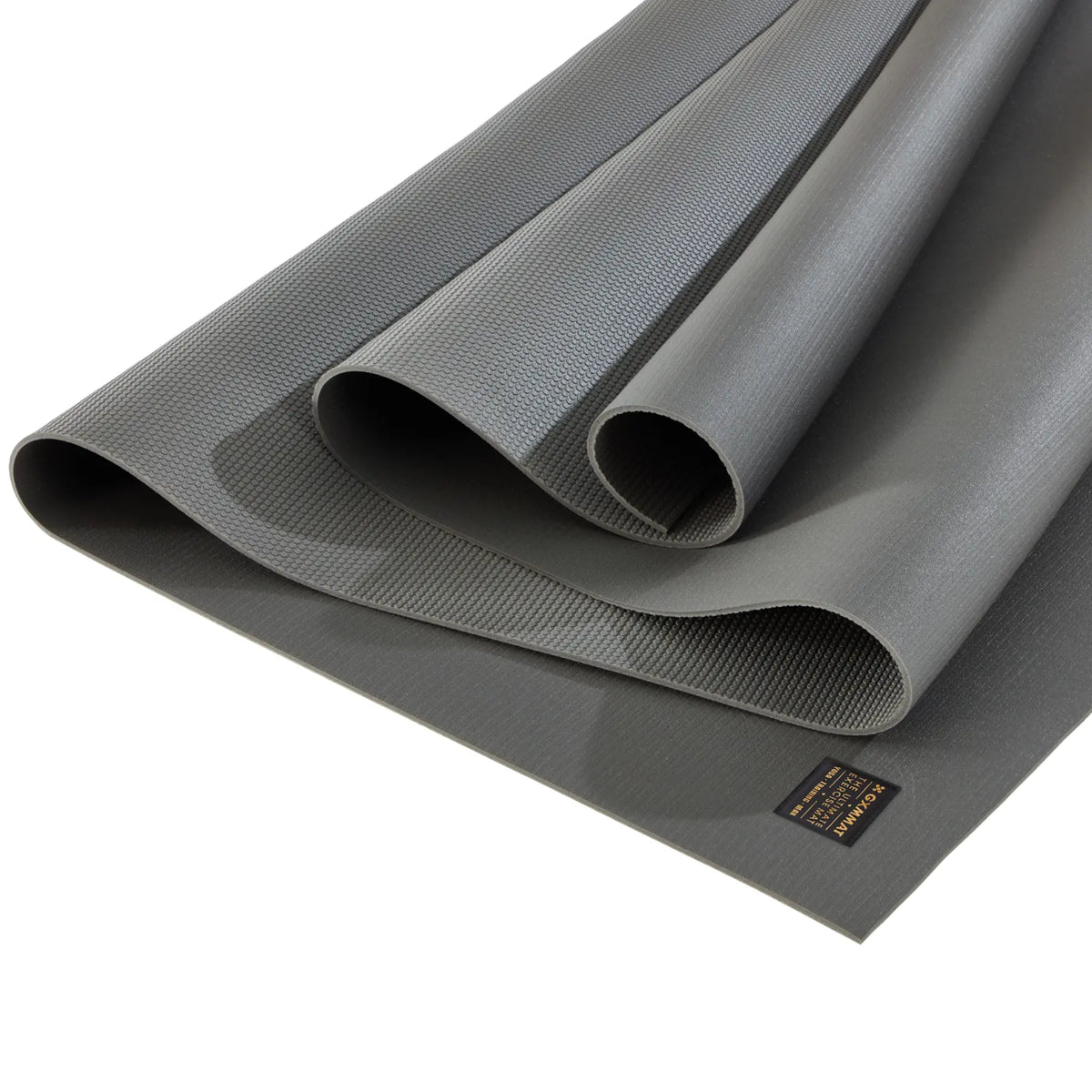
Yoga Mat vs Exercise Mat: What's the Difference and Which Do You Need?
Quick answer: A yoga mat is made for barefoot grip and floor feel in yoga, Pilates and stretching. An exercise mat (workout mat) is tougher, usually larger, and built for shoes, jumping, and equipment. Use a yoga mat if you train barefoot and mostly hold poses or stretch. Use an exercise mat if you wear shoes, do HIIT or cardio, lift weights, or need to protect the floor. Using a yoga mat for shoe workouts wears it out quickly.
Key takeaways
- Yoga mat: barefoot, softer surface, grip for hands and feet.
- Exercise mat: shoe-proof surface, impact absorption, floor protection.
- Shoes are the deciding factor.
- Size matters: cardio and HIIT need more room than a 2-foot-wide mat.
- Many home gyms use both.
Yoga mat vs exercise mat at a glance
| Yoga mat | Exercise / workout mat | |
|---|---|---|
| Made for | Bare feet | Shoes and bare feet |
| Surface | Softer, grippy texture | Tougher, wear-resistant |
| Typical thickness | 3–6 mm (up to 9 mm) | 6–10 mm, denser |
| Typical size | About 2' × 6' | Often much larger |
| Impact absorption | Low to medium | Medium to high |
| Floor protection | Limited | Good |
| Best for | Yoga, Pilates, stretching, meditation | HIIT, cardio, strength, jump rope, under equipment |
Which mat for which workout?
| Activity | Best mat | Why |
|---|---|---|
| Yoga | Yoga mat | Grip and floor feel |
| Mat Pilates | Yoga mat (thicker) | Cushion for the spine |
| Stretching and mobility | Either | Comfort matters most |
| HIIT and cardio in shoes | Exercise mat | Shoes tear soft yoga mats |
| Jumping and plyometrics | Exercise mat | Impact and noise absorption |
| Dumbbell and kettlebell work | Exercise mat | Protects floors from set-downs |
| Core work (planks, dead bugs) | Either | Elbow and back comfort |
| Under a bike, rower or treadmill | Exercise mat | Stability, vibration and sweat protection |
Workouts to try: mat Pilates, plyometrics, plank variations and mountain climbers.
Can you use a yoga mat for workouts?
- Yes for barefoot strength moves, core work and stretching.
- Not ideal for shoes: twisting and jumping scuff and tear the softer surface.
- Too small for burpees, lateral moves and most cardio routines.
- Can slide on hard floors during fast movements.
Can you do yoga on an exercise mat?
- Yes. A dense, non-slip exercise mat works for most yoga, with plenty of room.
- Trade-off: the surface is firmer and less "sticky" than a dedicated yoga mat, and some people prefer a softer feel under bare skin.
How to choose
- Shoes or barefoot? Shoes: exercise mat. Barefoot: yoga mat.
- High impact? Jumping and fast footwork need a dense exercise mat.
- How much space do you move through? Measure your widest move (a lunge or lateral shuffle) and add a foot on each side.
- Protecting a floor? Choose an exercise mat, especially on hardwood or in an apartment. See quiet apartment workouts.
- Equipment on top? See the mat size guide for bikes and rowers.
GXMMAT yoga mat vs GXMMAT exercise mat
| GXMMAT Large Yoga Mat | GXMMAT Large Exercise Mat | |
|---|---|---|
| Designed for | Soft barefoot workouts | High-intensity workouts, with shoes |
| Thickness | 7 mm; 9 mm in the 7'×5' | 7 mm high-density |
| Sizes | 6'×4' to 6'×12', plus 7'×5' | 6'×4' to 6'×16', plus 7'×8', 7'×10', 7'×12' |
| Surface | Soft texture, non-slip on both sides | Durable texture, non-slip on both sides |
| Best for | Yoga, Pilates, meditation, stretching, planks | Cardio, HIIT, strength training, floor protection |
| Works on | Carpet or hard floors | Carpet or hard floors |
Both are far larger than a standard 2' × 6' mat, so you can move in any direction without stepping off. Not sure about thickness? Read the yoga mat thickness guide. For care, see how to clean an exercise or yoga mat.
FAQ
What is the difference between a yoga mat and an exercise mat?
A yoga mat is softer and grippier for bare feet. An exercise mat is tougher and usually larger, made for shoes, impact and floor protection.
Can I use a yoga mat as an exercise mat?
For barefoot strength and core work, yes. For shoes, jumping or cardio, an exercise mat lasts longer and gives you more room.
Is a workout mat thicker than a yoga mat?
Usually. Workout mats are typically 6–10 mm and denser, while most yoga mats are 3–6 mm.
Can I wear shoes on a yoga mat?
It's best not to. Shoes scuff and tear the softer surface. Use an exercise mat for shoe workouts.
Which mat is best for a home gym?
A large exercise mat for training and floor protection, plus a yoga mat if you do regular barefoot practice.
Written by Yuvien Royer for GXMMAT. This article is general fitness information, not medical advice.


