Plyometric Exercises for Beginners: 10 Moves and a 6-Week Plan
Quick answer: Plyometric exercises are jumping and explosive movements, such as squat jumps, skater hops and plyo push-ups, that train your muscles to produce force quickly. Beginners should start with low-impact plyometrics, about 40–80 total foot contacts per session, 1–2 times a week, with full rest between sets and a focus on soft, quiet landings. Train on a stable, cushioned surface and build a base of strength (like comfortable bodyweight squats and lunges) first.
Key takeaways
- Quality over quantity: every rep fast and explosive, every landing soft.
- Count foot contacts to control volume.
- Rest fully: plyometrics are about power, not cardio.
- Learn to land before you learn to jump.
- Use a non-slip, cushioned surface.
Benefits of plyometric training
- Power and speed for sports, running and everyday movement.
- Better jumping and landing mechanics.
- Athleticism: coordination, balance and reaction time.
- Efficient: short sessions that complement strength training.
- Bone and tendon loading when progressed gradually.
Are you ready for plyometrics?
- You can do 15–20 controlled bodyweight squats and lunges.
- You can hold a single-leg balance for 30 seconds.
- You have no current knee, ankle or back pain.
Not there yet? Build strength for a few weeks with our beginner strength plan. If you have joint problems or are pregnant, check with a healthcare professional first.
How to land safely
- Land softly on the balls of your feet, rolling to the whole foot.
- Bend hips and knees to absorb the landing.
- Knees track over toes; don't let them cave in.
- Chest up, eyes forward.
- Stick it: pause for a second after each landing when learning.
Practice "snap-downs": rise onto your toes, then drop quickly into a quarter squat and freeze. 2 × 5.
10 plyometric exercises for beginners
| Exercise | Level | How |
|---|---|---|
| Pogo hops | Easy | Small, quick bounces on the balls of your feet with stiff ankles |
| Jumping jacks | Easy | Classic low-height jumps for rhythm |
| Squat jumps | Easy–moderate | Quarter squat, jump up, land softly and reset |
| Lateral line hops | Easy | Hop side to side over a line |
| Skater hops | Moderate | Bound sideways from one leg to the other and stick the landing |
| Broad jumps | Moderate | Jump forward as far as you can, land in a squat |
| Split squat jumps | Moderate | From a lunge, jump and switch legs |
| Tuck jumps | Harder | Jump and bring knees toward chest |
| Incline plyo push-ups | Easy–moderate | Hands on a bench, push explosively so hands leave it briefly |
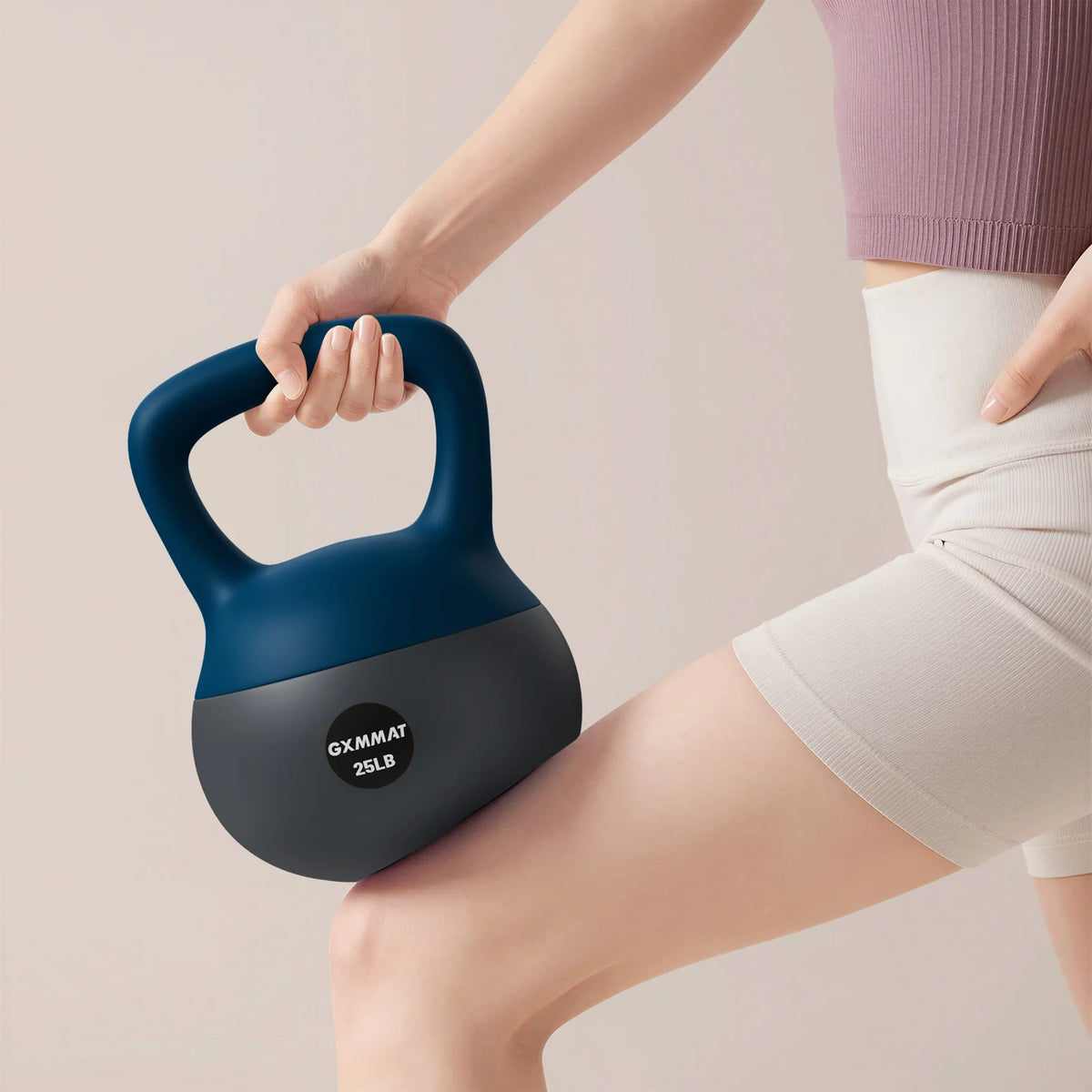
| Kettlebell swings | Easy–moderate | Explosive hip drive without jumping; a soft kettlebell keeps it floor-friendly |
Beginner plyometric workout
After a 10-minute warm-up (marching, leg swings, bodyweight squats, lunges):
| Exercise | Sets × reps | Foot contacts |
|---|---|---|
| Snap-downs | 2 × 5 | 10 |
| Pogo hops | 2 × 10 | 20 |
| Squat jumps | 3 × 5 | 15 |
| Skater hops | 2 × 4 per side | 16 |
| Incline plyo push-ups | 3 × 5 | — |
Total: about 60 foot contacts. Rest 60–90 seconds between sets. Do plyometrics early in your workout while you're fresh, then follow with strength work.
6-week progression
| Weeks | Sessions/week | Foot contacts | Focus |
|---|---|---|---|
| 1–2 | 1–2 | 40–60 | Landing, pogo hops, squat jumps |
| 3–4 | 2 | 60–80 | Add skater hops and broad jumps |
| 5–6 | 2 | 80–100 | Add split squat jumps and tuck jumps |
Leave at least 48 hours between plyometric sessions.
Where to do plyometrics at home
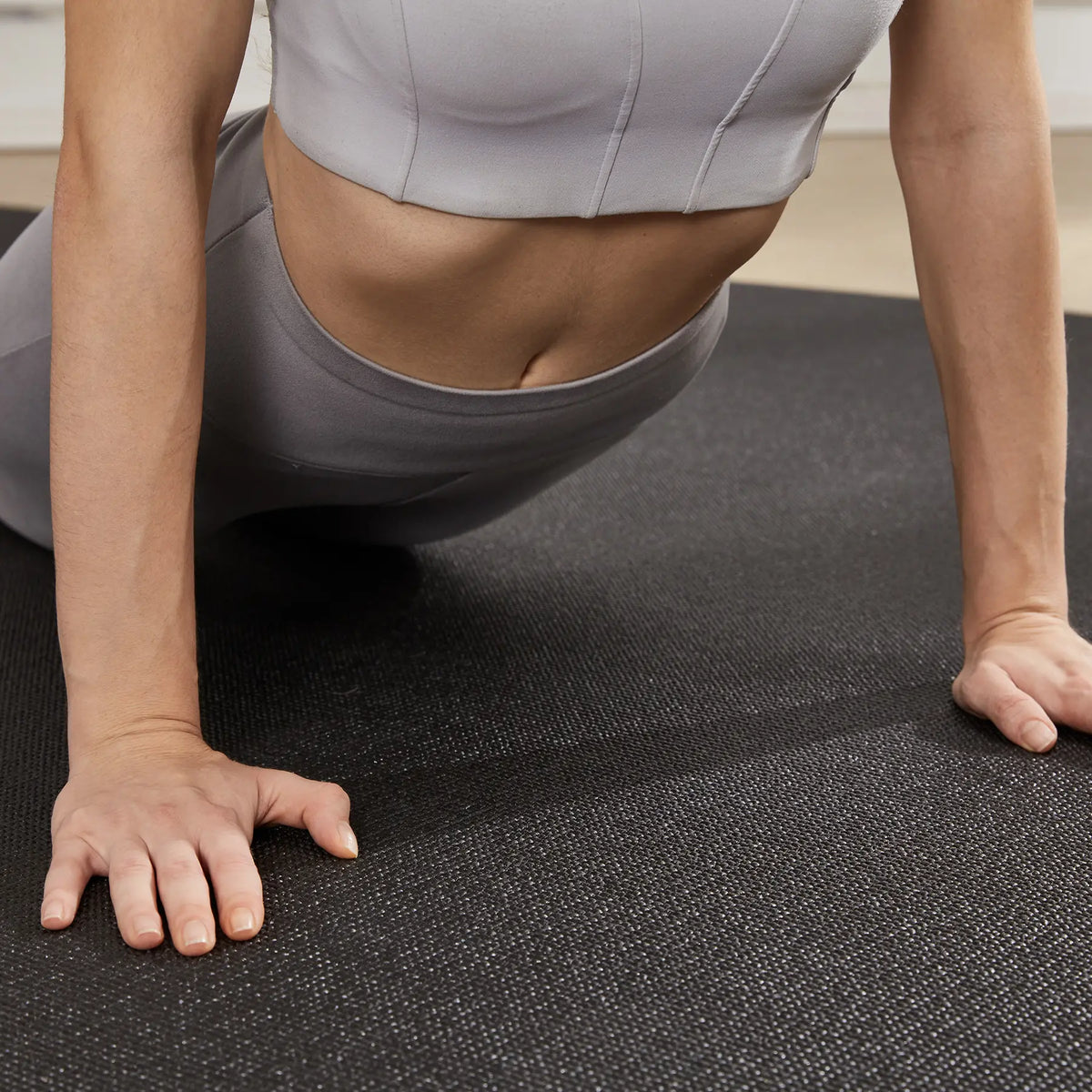
- Surface: avoid concrete and slippery floors. A dense, non-slip large exercise mat gives grip and cushioning. A 7'-wide mat gives room for lateral hops and broad jumps.
- Space: at least 6 ft × 8 ft of clear floor and enough ceiling height for jumps.
- Neighbors: upstairs or in an apartment? Stick to low-amplitude hops or swap jumps for fast step-ups. See our upstairs home gym guide.
- Shoes: supportive training shoes, not socks.
Prefer rhythm-based jumping? Try our jump rope workout, and read up on preventing shin splints as you add more impact.
FAQ
What are plyometric exercises?
Explosive movements, usually jumps, hops and bounds, that train muscles to produce force quickly by combining a fast stretch with a powerful contraction.
Are plyometrics good for beginners?
Yes, if you start with low-impact moves, low volume and good landing technique, and already have basic leg strength.
How many times a week should I do plyometrics?
Beginners do well with 1–2 sessions a week, with at least 48 hours between sessions.
How many jumps should a beginner do?
About 40–80 foot contacts per session is a common starting range. Increase gradually over several weeks.
Can I do plyometrics on a mat?
Yes. A dense, non-slip exercise mat is a good surface. Avoid soft, squishy foam that makes landings unstable.
Written by Yuvien Royer for GXMMAT. This article is general fitness information, not medical advice.