Shin Splints: Causes, Home Treatment and Prevention Exercises
Quick answer: Shin splints cause pain along the inner edge of the shin bone, usually after a sudden increase in running, jumping or walking. Most cases improve with a break from the activity that hurts, gradual return, calf and shin strengthening, supportive shoes and softer surfaces. To prevent them, increase training slowly (a common guideline is about 10% more per week), mix in low-impact cardio and strength-train your lower legs. See a doctor if pain is sharp, focused on one spot, worse at rest, or doesn't improve, since it could be a stress fracture.
Key takeaways
- Too much, too soon is the most common cause.
- Rest from the painful activity, but stay active with low-impact options.
- Strengthen calves, shins and hips to handle impact.
- Surface and shoes matter: avoid hard floors, replace worn shoes.
- Pinpoint, worsening pain needs a doctor's check.
What causes shin splints?
- Sudden jumps in training: new running plans, jump rope, HIIT or weighted vest walking.
- Hard surfaces: concrete, tile and bare floors at home.
- Worn-out or unsupportive shoes.
- Weak calves, shins or hips that can't absorb load.
- Running form: overstriding and heavy heel strikes.
- Not enough recovery between high-impact sessions.
Shin splints vs stress fracture
| Shin splints | Possible stress fracture | |
|---|---|---|
| Pain area | Spread along a few inches of the inner shin | One specific, very tender spot |
| When it hurts | At the start of activity; may ease as you warm up | Gets worse with activity; may hurt at rest or at night |
| Swelling | Mild or none | Sometimes localized swelling |
| What to do | Rest from impact, gradual return | Stop impact activity and see a doctor |
How to treat shin splints at home
- Reduce or pause the activity that causes pain for a period, often 1–3 weeks or more depending on severity.
- Stay fit with low-impact cardio: cycling, rowing, swimming or the elliptical. See our bike and rower mat guide.
- Ice for 10–15 minutes after activity if it helps the discomfort.
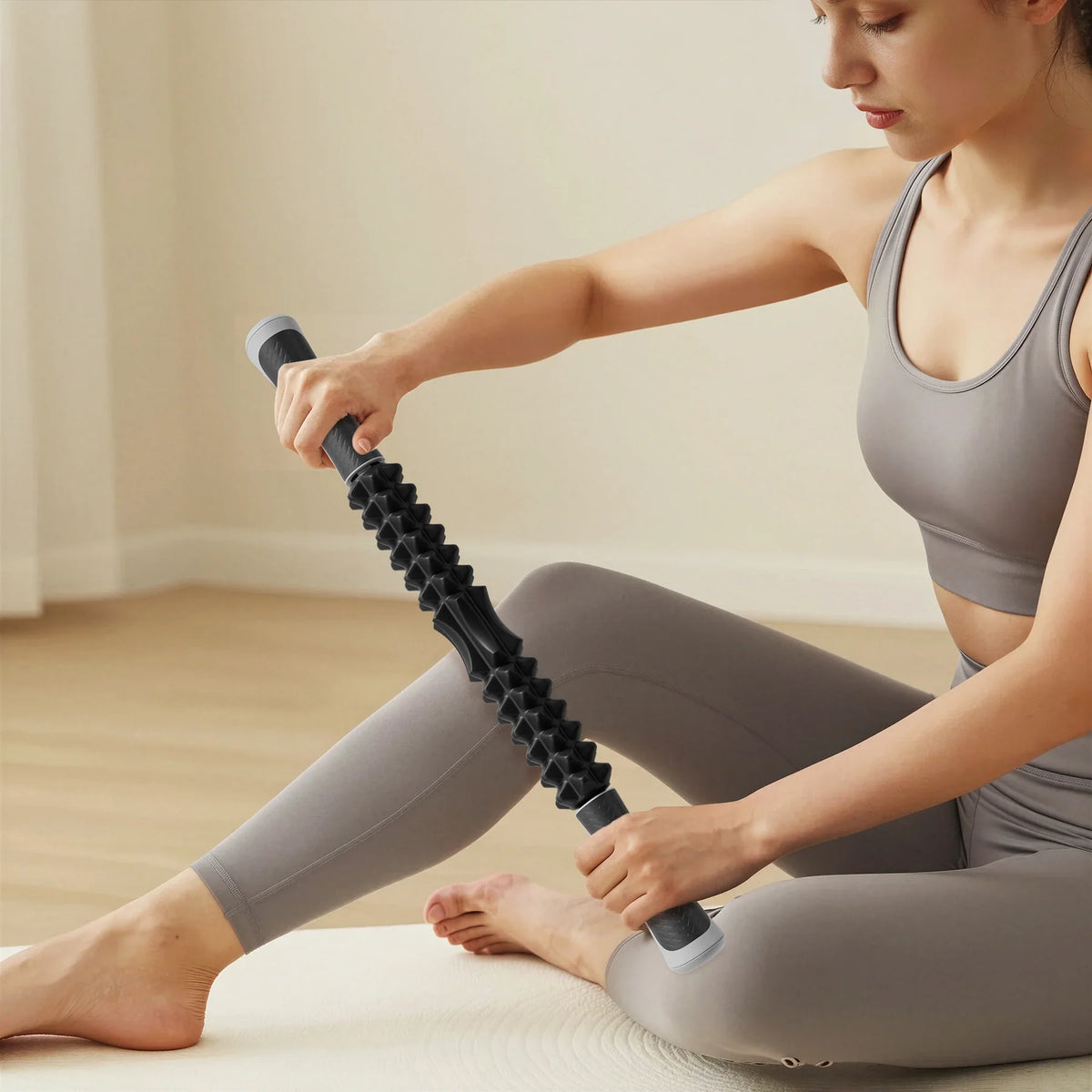
- Gently massage the muscles beside the shin bone and the calves with a massage roller stick, avoiding the bone. Here's how to use one.
- Start strengthening once everyday walking is pain-free (below).
- Return gradually: begin with short, easy sessions on soft surfaces.
Exercises to prevent shin splints
| Exercise | How | Sets × reps |
|---|---|---|
| Calf raises (straight knee) | Rise onto your toes and lower slowly | 3 × 15 |
| Bent-knee calf raises | Same with knees slightly bent | 3 × 15 |
| Tibialis raises | Lean back against a wall, heels forward, lift toes toward shins | 3 × 15–20 |
| Heel walks | Walk on your heels with toes up | 3 × 20 steps |
| Single-leg balance | Stand on one leg; progress to eyes closed | 3 × 30 sec per leg |
| Glute bridges | Drive hips up, squeeze glutes | 3 × 12 |
| Side-lying leg raises | Lift top leg slowly for hip strength | 2 × 15 per side |
Do these 2–3 times a week on a non-slip exercise mat. For more lower-body strength, add squats and lunges from our beginner strength plan.
How to prevent shin splints
- Build up slowly: increase weekly running or jumping time by about 10%.
- Alternate hard and easy days, and mix in low-impact cardio.
- Choose softer surfaces: tracks, trails, treadmills or a cushioned mat at home.
- Jump rope on a mat: a jump rope mat softens landings compared to bare floors. See our beginner jump rope plan.
- Replace running shoes when the cushioning feels flat.
- Shorten your stride and land softly under your hips.
- Add weight gradually for weighted vest walking or rucking.
When to see a doctor
- Pain is sharp or focused on one spot.
- It hurts at rest, at night or when walking normally.
- There's noticeable swelling, redness or warmth.
- Pain doesn't improve after a couple of weeks of rest.
- You have numbness, tingling or a cold or pale foot.
FAQ
How long do shin splints take to heal?
Mild cases often improve within a few weeks of reduced activity. More severe cases can take longer. Return gradually to avoid flare-ups.
Can I keep exercising with shin splints?
Yes, with low-impact activities like cycling, swimming or strength training that don't cause pain. Pause running and jumping until symptoms settle.
What is the fastest way to heal shin splints?
Rest from impact, keep fit with low-impact cardio, gently massage the surrounding muscles and start lower-leg strengthening once walking is pain-free.
Do calf raises help shin splints?
Calf raises and tibialis raises strengthen the lower leg so it handles impact better, which helps prevent shin splints from coming back.
Can jumping rope cause shin splints?
It can, especially if you start with long sessions on hard floors. Use short intervals, low jumps, supportive shoes and a cushioned mat.
Written by Yuvien Royer for GXMMAT. This article is general information, not medical advice. See a healthcare professional for diagnosis and treatment of leg pain.