Article: Rucking for Beginners: How Much Weight, Benefits and a 4-Week Plan
Rucking for Beginners: How Much Weight, Benefits and a 4-Week Plan
Quick answer: Rucking means walking with a weighted backpack or vest. Beginners should start with about 10% of body weight (often 10–20 lb), walking 20–30 minutes, 2–3 times a week, then add weight or distance gradually, not both at once. It's lower impact than running, makes walking harder, and builds endurance in your legs, back and core. Pair it with strength training for the best results.
Key takeaways
- Start light: about 10% of body weight, carried high and tight on your back.
- Progress slowly: increase either weight or distance by about 10% a week.
- Lower impact than running, with more effort than regular walking.
- Posture matters: stand tall, brace your core, short steps.
- Strength training makes rucking easier, especially for your legs, back and core.
What is rucking?
Rucking comes from military training, where soldiers march long distances carrying loaded packs ("rucksacks"). It's become popular with everyday exercisers because it turns an ordinary walk into a full-body workout without running. Longevity-focused trainers and podcasts have promoted it as a simple way to combine cardio with loaded carrying, and it has gone viral on social media.
Benefits of rucking
- Harder than walking: carrying extra load raises the energy cost and heart rate of every step. Moderate loads at a brisk pace often put people in Zone 2.
- Lower impact than running: one foot is always on the ground.
- Strength endurance: your legs, glutes, upper back and core work to carry and stabilize the load.
- Easy to start: all you need is a sturdy backpack, some weight and good shoes.
How much weight should you ruck with?
| Level | Pack weight | Session |
|---|---|---|
| Beginner | ~10% of body weight (10–20 lb for most) | 20–30 min, 2–3×/week |
| Intermediate | 15–20% of body weight | 30–60 min |
| Advanced | Up to ~25–30% of body weight | 60+ min, varied terrain |
Heavier isn't always better. Many people get the most benefit from moderate loads they can carry with good posture. If you have back, knee or heart conditions, check with a healthcare professional first.
How to pack a ruck
- Use compact, dense weight: purpose-made ruck plates, sandbags or water bottles.
- Carry it high and close to your upper back so it doesn't pull you backward.
- Secure it so the weight doesn't bounce.
- Avoid bulky gym plates in a backpack. A standard 450 mm bumper plate is too wide and rigid to carry comfortably.
- A weighted vest is another option that spreads the load across your torso.
Rucking form tips
- Stand tall, with your chest up and shoulders back and down.
- Brace your core lightly, as if about to be poked in the stomach.
- Take slightly shorter steps than normal, landing under your hips.
- Keep a brisk but sustainable pace, about 15–20 minutes per mile for most beginners.
- Wear supportive shoes with good grip.
4-week beginner rucking plan
| Week | Pack weight | Sessions |
|---|---|---|
| 1 | 10 lb | 2 × 20 min |
| 2 | 10 lb | 3 × 25 min |
| 3 | 15 lb | 3 × 25 min |
| 4 | 15 lb | 2 × 30 min + 1 × 45 min |
Strength training makes you a better rucker
Rucking loads your legs, hips, upper back and core for long periods. Strengthening those areas 2 days a week helps you carry more comfortably and reduces aches:
| Exercise | Why it helps |
|---|---|
| Back squat or goblet squat | Leg strength for hills and stairs |
| Romanian deadlift | Hamstrings and lower back for posture |
| Walking lunges | Single-leg strength and balance |
| Seated cable row and face pulls | Upper back to hold the pack upright |
| Farmers carry | Grip, core and loaded posture |
| Plank and side plank | Core stability |
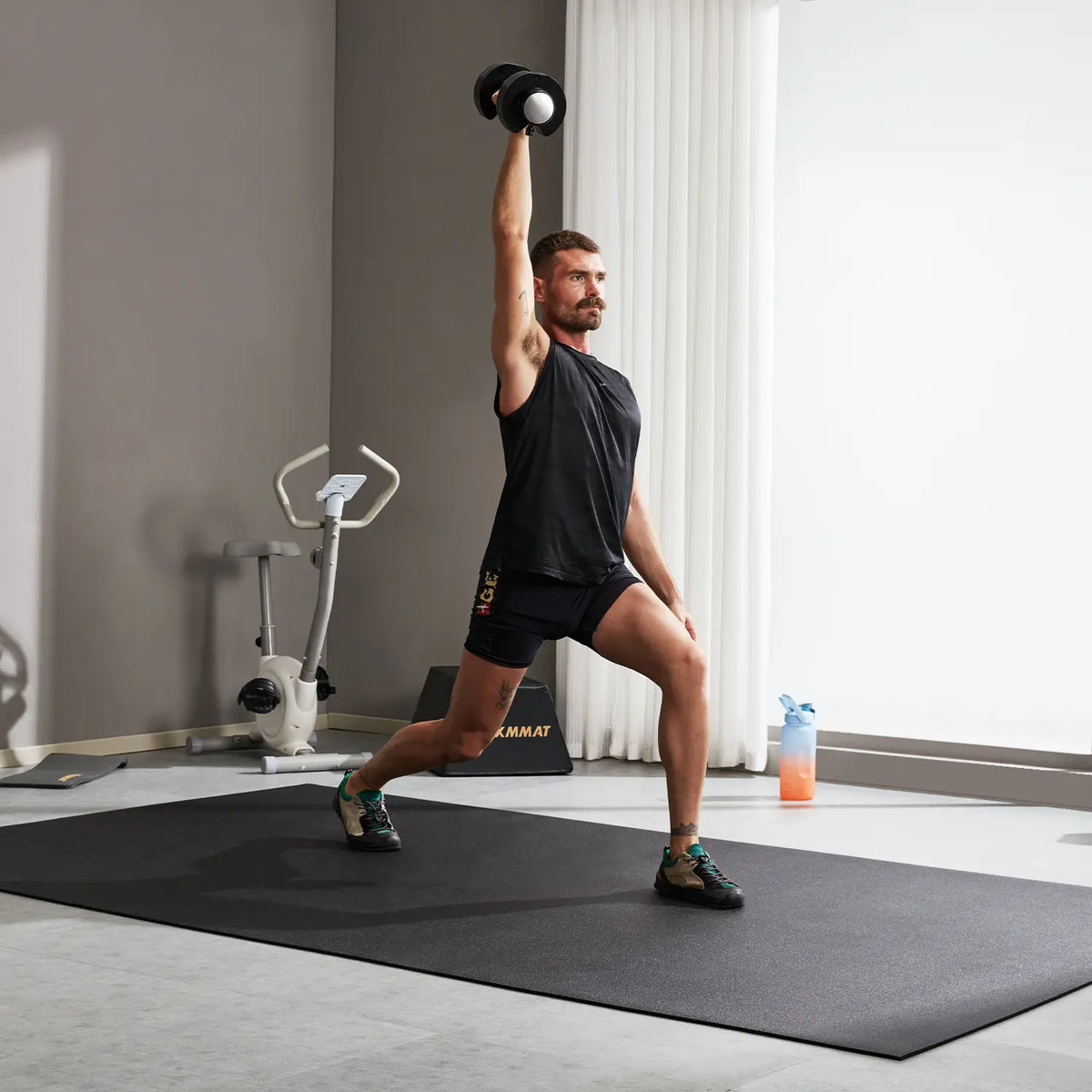
A cable rack like the GXMMAT X6 or the compact G5 covers squats, RDLs, rows and face pulls in one footprint. Use bumper plates on the bar and a large exercise mat for planks and lunges. If the weather turns, carry your pack on a treadmill at a moderate incline instead.
FAQ
What is rucking?
Walking with a weighted backpack or vest. It comes from military training and turns a regular walk into a harder, full-body workout.
How much weight should a beginner ruck with?
About 10% of body weight, often 10–20 lb, for 20–30 minutes. Increase weight or distance gradually.
Is rucking better than running?
Neither is better for everyone. Rucking is lower impact and adds loaded strength endurance; running builds higher-end cardio fitness. Many people do both.
How often should you ruck?
2–3 times a week is a good start for beginners, with strength training on 2 other days.
Can I use gym weight plates in a rucksack?
Full-size bumper plates are too large and rigid to carry comfortably. Use purpose-made ruck plates, a sandbag or water bottles, packed high and secured.
Written by Yuvien Royer for GXMMAT. This article is general fitness information, not medical advice.