Zone 2 Cardio: Heart Rate Chart, Benefits and How to Train It at Home
Quick answer: Zone 2 cardio is steady, easy-to-moderate exercise at about 60–70% of your maximum heart rate, a pace where you can still hold a conversation. For a 40-year-old, that's roughly 108–126 beats per minute (using 220 − age as an estimate of max heart rate). Aim for 150+ minutes a week, through brisk walking, incline walking, cycling or rowing.
Key takeaways
- Zone 2 = easy-moderate effort: 60–70% of max heart rate, conversational pace.
- Quick formula: max HR ≈ 220 − age, then multiply by 0.6 and 0.7.
- Why people do it: it builds an aerobic base you can sustain and recover from easily.
- How much: 150–300 minutes of moderate activity a week matches public health guidelines.
- Combine it with strength training 2+ days a week.
What is Zone 2?
Heart rate training is often split into five zones based on a percentage of your maximum heart rate. Zone 2 is the second-easiest: harder than a stroll, easier than a tempo run. Physiologically, it's often described as the intensity just below your first lactate threshold, where your body relies heavily on fat for fuel and you can keep going for a long time.
| Zone | % of max HR | Feels like |
|---|---|---|
| 1 | 50–60% | Very easy, warm-up |
| 2 | 60–70% | Easy-moderate, can talk in full sentences |
| 3 | 70–80% | Moderate-hard, short sentences |
| 4 | 80–90% | Hard, a few words |
| 5 | 90–100% | All-out |
How to find your Zone 2 heart rate
Estimate max HR: 220 − your age. Zone 2: max HR × 0.60 to max HR × 0.70.
| Age | Estimated max HR | Zone 2 range (bpm) |
|---|---|---|
| 30 | 190 | 114–133 |
| 40 | 180 | 108–126 |
| 50 | 170 | 102–119 |
| 60 | 160 | 96–112 |
Age-based formulas are only estimates and can be off by 10+ beats for some people. Medications like beta blockers also change heart rate. That's why the talk test is a useful cross-check: in Zone 2 you can speak in full sentences, but you'd rather not sing.
Benefits of Zone 2 training
- Builds aerobic fitness at a pace you can recover from, so you can train more often.
- Supports heart health: regular moderate aerobic exercise is linked to lower cardiovascular risk.
- Pairs well with strength training: easy cardio doesn't interfere much with lifting recovery.
- Sustainable: it's easy to start and hard to overdo.
Endurance athletes often spend most of their training time at easy intensities, which is one reason Zone 2 became popular with longevity and fitness podcasts.
Best Zone 2 workouts at home
| Activity | How to stay in Zone 2 |
|---|---|
| Incline treadmill walk | Moderate incline (5–10%) at a steady speed. The 12-3-30 may push some people into Zone 3. |
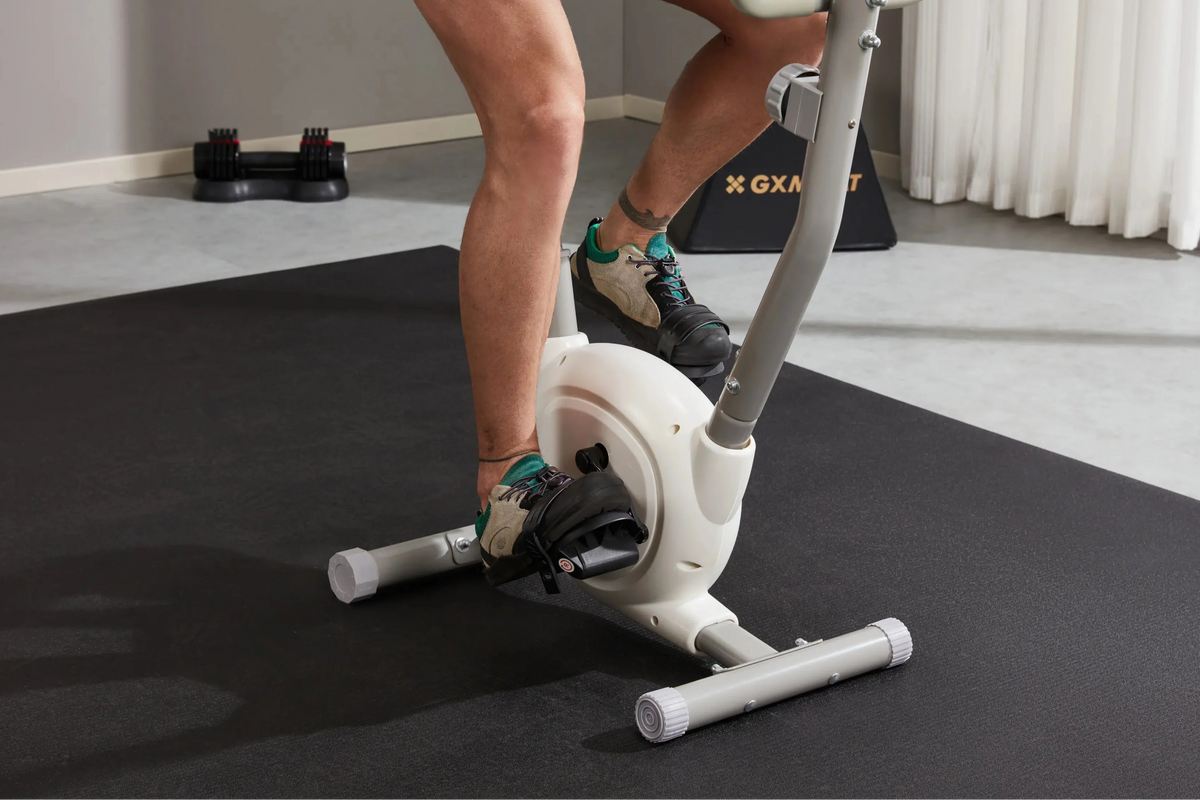
| Stationary bike | Steady cadence, light-moderate resistance |
| Rowing machine | Long, smooth strokes at a conversational pace |
| Brisk outdoor walk or ruck | Walk briskly. Adding a light backpack raises effort. |
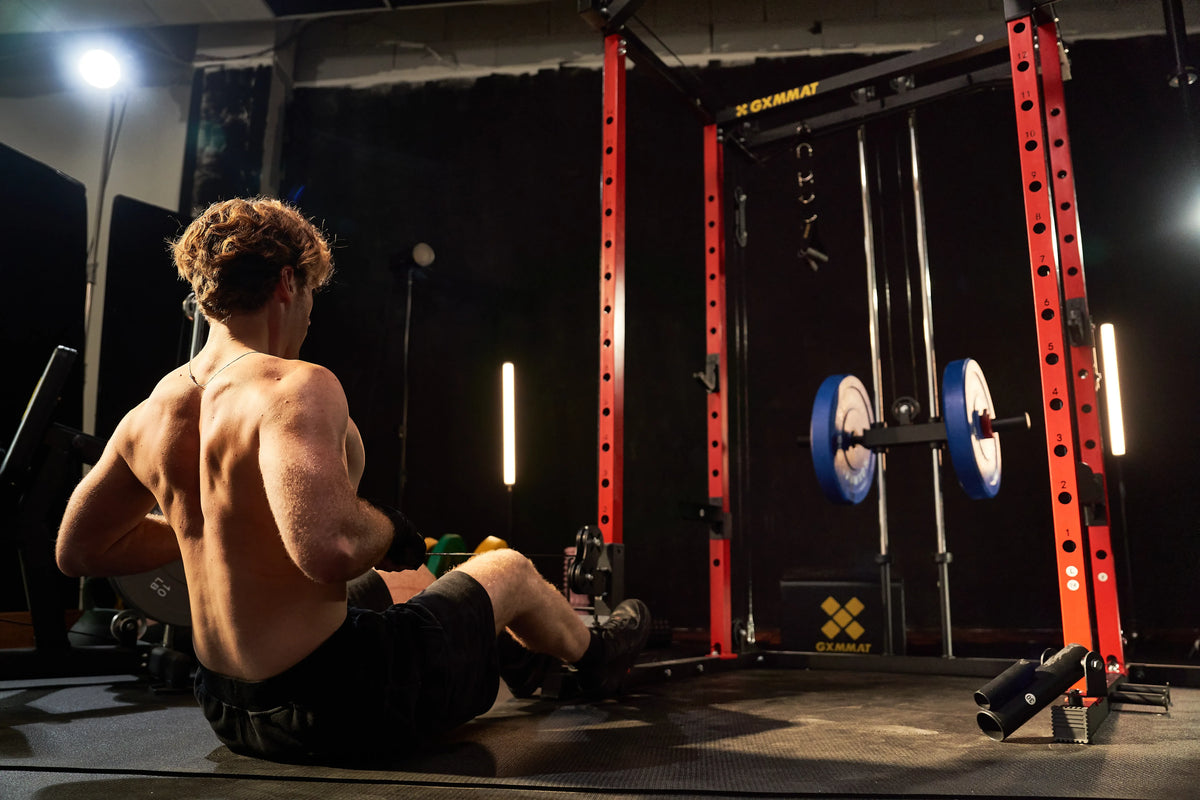
| Light cable circuit | Continuous light cable rows, pulldowns and presses, moving steadily for 20–30 min |
Cardio machines run for long periods, so put them on a dense large exercise mat. It protects the floor, reduces vibration and keeps the machine from shifting.
A weekly plan: Zone 2 + strength
| Day | Session |
|---|---|
| Mon | Strength (full body) + 15 min Zone 2 |
| Tue | Zone 2: 45 min |
| Wed | Strength (full body) |
| Thu | Zone 2: 45 min |
| Fri | Strength + 15 min Zone 2 |
| Sat | Zone 2: 60 min (walk, hike or bike) |
| Sun | Rest or mobility |
That's roughly 180 minutes of Zone 2 plus three strength days. For the strength side, try our 3-day power rack plan. A cable rack like the GXMMAT X6 also works for the light cable circuit option.
Common Zone 2 mistakes
- Going too hard. If you can't talk in full sentences, slow down.
- Only doing Zone 2. Some harder intervals (like Japanese walking) and strength training still matter.
- Trusting the formula blindly. Use the talk test too.
FAQ
What is Zone 2 heart rate?
About 60–70% of your maximum heart rate. Using 220 − age to estimate max HR, a 40-year-old's Zone 2 is roughly 108–126 bpm.
How long should Zone 2 workouts be?
Typically 30–60 minutes per session, adding up to 150 minutes or more a week.
Is walking Zone 2?
Brisk walking or incline walking often puts people in Zone 2, especially beginners. Fitter people may need a steeper incline, a light backpack or cycling to reach it.
How do I know if I'm in Zone 2 without a heart rate monitor?
Use the talk test: you can speak in full sentences but feel you're working. If you can only manage a few words, you're above Zone 2.
Can Zone 2 help with weight loss?
Zone 2 burns calories and is easy to do often. Combined with strength training and good nutrition, it supports weight management.
Written by Yuvien Royer for GXMMAT. Heart rate formulas are estimates. Check with a healthcare professional before starting a new exercise program if you have a heart condition or take heart-rate-affecting medication.