Jump Rope Workout for Beginners: Form, Workouts and a 4-Week Plan
Quick answer: Start jump rope with short intervals: 30 seconds of jumping, 30 seconds of rest, for 5–10 rounds, 2–3 times a week. Keep jumps low (about an inch off the floor), land softly on the balls of your feet and turn the rope with your wrists, not your arms. Choose a rope that reaches about armpit height when you stand on the middle, and jump on a cushioned mat rather than concrete or tile to protect your joints and your floor.
Key takeaways
- Small jumps, soft landings: low and quiet is the goal.
- Wrists turn the rope; elbows stay close to your sides.
- Start with intervals and build up gradually.
- Surface matters: a cushioned mat is easier on shins and floors.
- Mistakes are normal. Count total jumping time, not perfect streaks.
Benefits of jumping rope
- Efficient cardio: gets your heart rate up quickly in a small space.
- Coordination and footwork: improves rhythm, balance and agility.
- Lower-leg strength: builds calves, ankles and feet.
- Portable and cheap: a rope fits in any bag.
- Great finisher: a few minutes after strength training adds conditioning.
How to choose a jump rope
| Rope type | Best for |
|---|---|
| Beaded or PVC rope | Beginners: easy to see and time |
| Speed (cable) rope | Faster jumping and tricks once you have rhythm |
| Weighted rope | Upper-body and grip challenge; slower turns |
Length: stand on the middle of the rope; the handles should reach about your armpits. Shorter ropes are faster but less forgiving.
How to jump rope: proper form
- Stand tall with feet hip-width apart and the rope behind your heels.
- Hands at hip height, slightly in front, elbows close to your body.
- Turn the rope with your wrists, not big arm circles.
- Jump about an inch, just enough for the rope to pass.
- Land on the balls of your feet with soft knees. Heels barely touch.
- Breathe steadily and keep your gaze forward.
Beginner jump rope workouts
Workout 1: 10-minute intervals
30 seconds jumping, 30 seconds rest, 10 rounds. Use a basic two-foot bounce.
Workout 2: Jump rope and strength circuit (20 minutes)
3–4 rounds:
- Jump rope: 45 seconds
- Bodyweight squats: 15
- Jump rope: 45 seconds
- Push-ups (knees or full): 8–12
- Jump rope: 45 seconds
- Plank: 30 seconds
Workout 3: Strength-day finisher
After lifting, do 5 rounds of 40 seconds on, 20 seconds off.
4-week beginner jump rope plan
| Week | Sessions | Workout |
|---|---|---|
| 1 | 2–3 | 30 sec on / 30 sec off × 6–8 |
| 2 | 3 | 30 sec on / 30 sec off × 10 |
| 3 | 3 | 45 sec on / 30 sec off × 8; try alternate-foot steps |
| 4 | 3 | 60 sec on / 30 sec off × 8, or a 20-minute circuit |
Shins sore? Take an extra rest day and keep jumps lower. Jump rope also works as interval training to improve fitness; see how to improve VO2 max.
Where to jump rope at home
| Surface | Verdict |
|---|---|
| Concrete or tile | Hard on joints and wears out ropes quickly |
| Hardwood | Better, but can scratch and gets loud |
| Thick carpet | Unstable and catches the rope |
| Cushioned jump rope mat | Best: softer landings, protects floor and rope, defines your space |
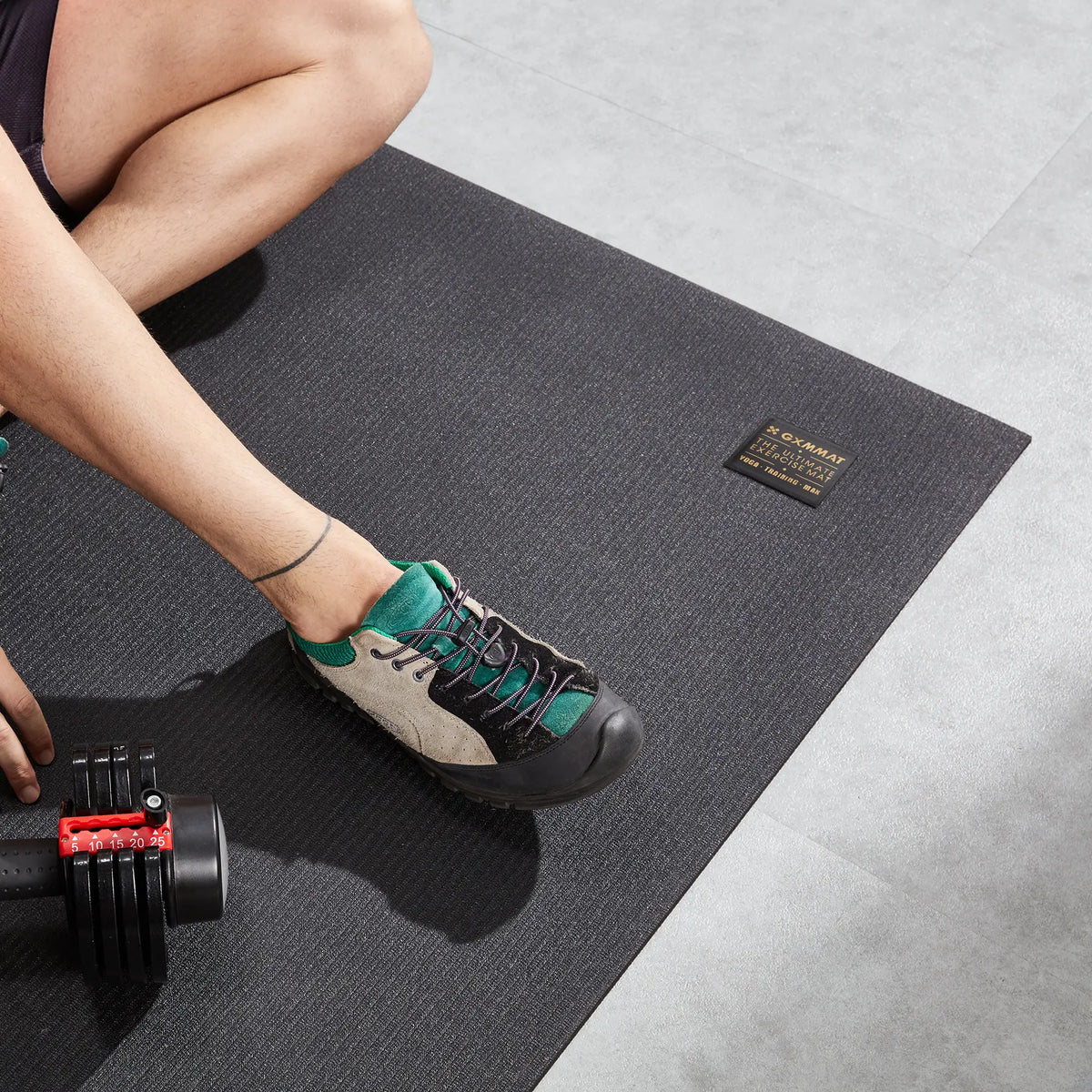
The GXMMAT jump rope mat measures 48" × 36" with a three-layer build: a smooth fabric top that lets the rope glide, a resilient rubber middle and an anti-slip tire-pattern base. It rolls up for storage. For a bigger area that also covers floor exercises, choose a large exercise mat.
Ceiling check: you'll need enough clearance for the rope's arc, usually about a foot or more above your head. Apartment or upstairs room? Keep jumps low and read our quiet apartment workout guide.
Common beginner mistakes
- Jumping too high and landing hard.
- Swinging from the shoulders instead of the wrists.
- Wrong rope length: too long slows you down, too short trips you up.
- Doing too much too soon, which leads to sore shins and calves.
- Jumping in socks or barefoot on hard floors. Wear supportive shoes.
FAQ
How long should a beginner jump rope?
Start with 5–10 minutes total in short intervals, such as 30 seconds on and 30 seconds off, and build up over a few weeks.
Is jumping rope good for weight loss?
It's an efficient cardio workout that burns calories in a short time. Combined with strength training and good eating habits, it can support fat loss.
Is jump rope bad for your knees?
With low jumps, soft landings and a cushioned surface, jump rope is usually well tolerated. Start gradually, and check with a professional if you have knee problems.
What is the best surface to jump rope on?
A firm but cushioned surface like a jump rope mat or exercise mat. Avoid bare concrete and very thick carpet.
How do I choose the right jump rope length?
Stand on the middle of the rope; the handles should reach about your armpits. Beginners usually prefer a slightly longer rope.
Written by Yuvien Royer for GXMMAT. This article is general fitness information, not medical advice.