Weighted Vest Walking: Benefits, How Heavy and a 4-Week Plan
Quick answer: Walking with a weighted vest makes an ordinary walk harder, raising heart rate and calorie burn without running. Most beginners start with a vest of about 5–10% of body weight (roughly 8–15 lb for a 150 lb person), for 20–30 minutes. It's been heavily promoted for bone health, especially for women over 40. Research suggests it can help, but mainly when you stay active in it, and it works best combined with strength training.
Key takeaways
- Start light: about 5–10% of body weight, then progress slowly.
- More effort, same impact as walking: a lower-impact way to make cardio harder.
- Bone health: promising, but the evidence points to movement plus load, and strength training is still the strongest tool.
- Fit matters: a snug vest that spreads weight across your chest and back is more comfortable than a backpack.
- Check with your doctor first if you have osteoporosis, back, joint or heart problems.
Why is weighted vest walking trending?
Weighted vests went viral on social media as a simple upgrade to daily walks, especially among women in perimenopause and menopause looking to protect bone density. Walking is the most popular form of exercise, and a vest adds load without a gym. Our earlier review, I tested 10 weight vest uses, covers other ways to use one.
Benefits of walking with a weighted vest
- Higher energy cost: carrying extra weight increases the work of every step, similar to walking uphill.
- Lower impact than running: you keep the joint-friendly pattern of walking.
- Posture and core: your upper back and trunk work to stay upright under load.
- Bone loading: bones respond to load. A 2026 one-year randomized trial from Wake Forest University in older adults found that bone benefits from wearing a vest tracked with how much time people spent standing and walking in it, not with simply owning one.
How heavy should a weighted vest be?
| Body weight | Starting vest (5–10%) | After 6–8 weeks (up to ~15%) |
|---|---|---|
| 130 lb | 6–13 lb | Up to ~20 lb |
| 150 lb | 8–15 lb | Up to ~22 lb |
| 180 lb | 9–18 lb | Up to ~27 lb |
| 210 lb | 10–21 lb | Up to ~30 lb |
These are practical starting ranges, not medical prescriptions. If your posture breaks down, your back aches or your pace drops sharply, the vest is too heavy.
4-week weighted vest walking plan
| Week | Vest weight | Walks |
|---|---|---|
| 1 | ~5% of body weight | 3 × 20 min, flat route |
| 2 | ~5% | 3 × 30 min |
| 3 | ~8–10% | 3 × 30 min, add a gentle hill or treadmill incline |
| 4 | ~8–10% | 2 × 30 min + 1 × 45 min |
Increase either weight or time each week, not both. Once comfortable, try Japanese interval walking with the vest or a gentler version of the 12-3-30 treadmill workout at a lower incline.
Weighted vest vs rucking
| Weighted vest | Rucking (backpack) | |
|---|---|---|
| Weight placement | Spread around the torso | On the back |
| Posture | Balanced front and back | Pulls slightly backward |
| Use indoors and for exercises | Easy (squats, step-ups, push-ups) | Awkward |
| Heavier loads | Limited by vest design | Easier to load heavy |
Form and safety tips
- Wear it snug and high. A loose vest bounces and rubs.
- Walk tall: chest up, short steps, don't lean forward.
- Don't run or jump in it until you've built up, and avoid heavy vests if you have spine or pelvic floor issues.
- Stay hydrated: vests trap heat.
- Talk to your doctor before using a vest if you have osteoporosis or a history of fractures.
Add strength training for bones and muscle
A vest adds load to walking, but lifting progressively heavier weights loads bones and muscles far more. Two strength sessions a week pair perfectly with vest walks:
- Squats, deadlifts and overhead presses on a power rack like the GXMMAT G5 or X6, with bumper plates for safe, quiet lifting at home.
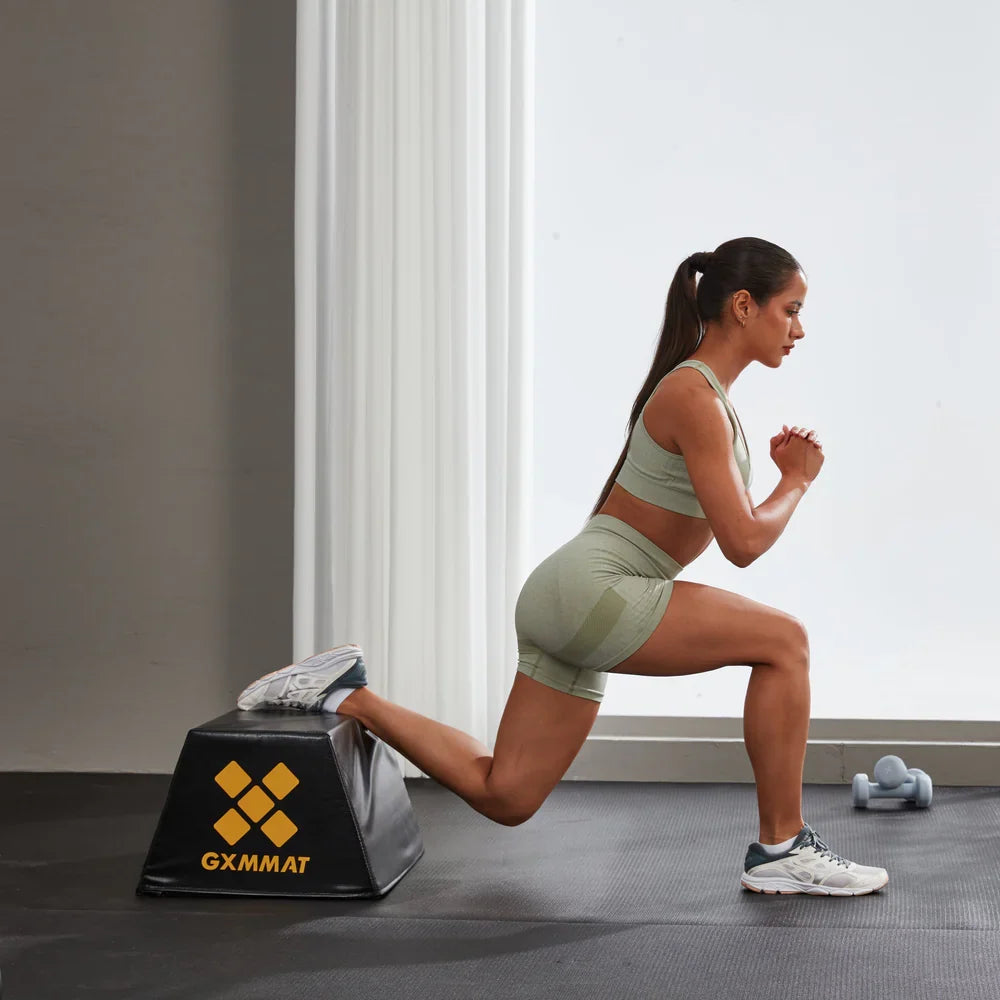
- Vest exercises at home: step-ups, squats, lunges and push-ups on a large exercise mat, which also cushions the floor and keeps your shoes from slipping.
Read our guide to strength training for menopause for a full bone-focused routine.
FAQ
Is walking with a weighted vest good for you?
For most healthy adults, yes. It makes walking harder without adding impact and loads your bones and muscles. Start light and progress gradually.
How heavy should my weighted vest be?
Start at about 5–10% of your body weight, roughly 8–15 lb for a 150 lb person. Many people work up to around 15% over several weeks.
Does a weighted vest help bone density?
It may help, especially when you spend a lot of time standing and walking in it. Strength training with progressively heavier weights is still considered the most effective exercise for bone density.
How long should I walk with a weighted vest?
Begin with 20–30 minutes, 2–3 times a week, then build to 30–45 minutes.
Is a weighted vest better than rucking?
Neither is better for everyone. A vest spreads weight evenly around your torso and works for indoor exercises; a ruck is easier to load heavy for long outdoor walks.
Written by Yuvien Royer for GXMMAT. This article is general fitness information, not medical advice. Consult a healthcare professional before using a weighted vest if you have osteoporosis, joint, back or heart conditions.