Winter Arc Challenge: Rules, Habits and a 60-Day Home Workout Plan
Quick answer: The Winter Arc is a viral self-improvement challenge where you use the last months of the year, usually October 1 to January 1, to build better habits instead of waiting for New Year's resolutions. There's no official rulebook. Most people pick a short list of daily goals such as training, walking, sleep, water and reading. Starting late? A 60-day Winter Arc from November 1 to December 31 works just as well.
Key takeaways
- No fixed rules: you choose your own goals. That flexibility is why it caught on.
- Pick 4–6 habits, not 10. Fewer goals you actually keep beat a long list you abandon.
- Make it sustainable: ask whether you could keep each habit for six months.
- Winter favors home training: dark evenings and cold weather are the biggest streak-breakers.
- Use the 60-day plan below if you didn't start in October.
What is the Winter Arc?
"Arc" comes from a story's character arc. The idea, popularized on TikTok by creator @carlyupgraded and others, is to treat the quiet, dark months as a "main character" transformation period: lock in, build discipline and finish the year stronger. Goals can cover fitness, money, sleep, study or anything else, though fitness is the most common focus.
Winter Arc vs 75 Hard vs New Year's resolutions
| Winter Arc | 75 Hard | New Year's resolution | |
|---|---|---|---|
| Length | About 60–90 days | 75 days | Open-ended |
| Rules | Self-chosen | 5 fixed daily rules | Self-chosen |
| Missed a day? | Keep going | Restart at Day 1 | Often quit |
| Best for | Building habits before January | People who want strict structure | Long-term goals |
Choose your Winter Arc habits
Pick one or two from each group. Write them down and track them daily.
| Area | Example habits |
|---|---|
| Training | Strength train 3–4 days a week; 20 minutes of movement on other days |
| Cardio | 7,000–10,000 steps, or 30 minutes of Zone 2 |
| Recovery | 7–9 hours of sleep; 10 minutes of mobility or foam rolling |
| Nutrition | Protein at every meal; a fruit or vegetable with lunch and dinner |
| Mind | Read 10 pages; 10 minutes without your phone after waking |
The 60-day Winter Arc workout plan (Nov 1 – Dec 31)
Four strength days a week with progressive overload, plus easy cardio. Each block builds on the last.
| Weeks | Focus | Strength | Cardio |
|---|---|---|---|
| 1–2 | Build the routine | 3 full-body sessions, 3 × 10 at an easy-moderate weight | Walk 20–30 min on 3 days |
| 3–5 | Get stronger | 4 sessions (upper/lower split), 4 × 6–8, add a little weight each week | 2 × 30 min Zone 2 |
| 6–7 | Push | 4 sessions, 5 × 5 on squat, bench and deadlift; accessories 3 × 10–12 | 2 × 30 min Zone 2 + 1 interval walk |
| 8 | Deload (holiday week) | 2–3 lighter sessions at about 60% of your normal weights | Walks; try the 12 Days of Christmas workout |
| 9 | Test and finish | Retest a lift (see our 1RM chart) | Your choice |
Sample upper/lower week (weeks 3–7)
| Day | Session |
|---|---|
| Mon | Lower: back squat, Romanian deadlift, split squat, leg curl, plank |
| Tue | Upper: bench press, lat pulldown, overhead press, cable row, curls |
| Wed | Zone 2 cardio + mobility |
| Thu | Lower: deadlift, front squat or leg press alternative, hip thrust, calf raises |
| Fri | Upper: incline press, pull-ups, dips, face pulls, triceps |
| Sat | Long walk or easy ruck |
| Sun | Rest |
New to barbell training? Start with our 3-day beginner power rack plan for weeks 1–5.
Why a home gym wins the Winter Arc
Most winter streaks die on the drive to the gym, in the dark, in the cold. Training at home removes the commute:
- All lifts in one station: the GXMMAT G5 fits squats, presses, pull-ups, lat pulldowns and low rows in a compact footprint. The X6 adds dual independent cables for more exercise variety. Compare them in X6 vs V6 vs G5.
- Small jumps for progressive overload: change plates (1.25–5 lb pairs) let you add weight every week without stalling.
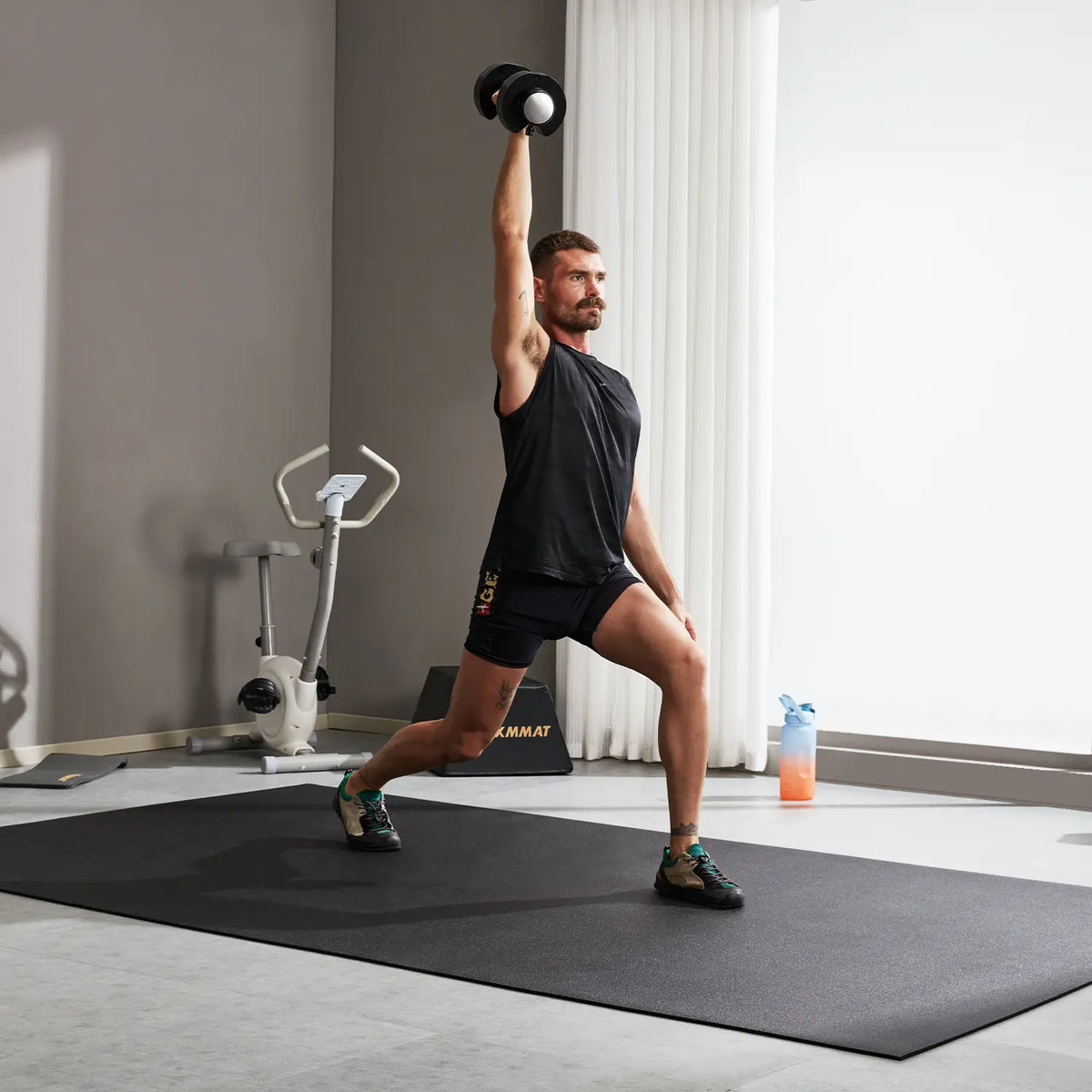
- A warm, quiet floor: a large exercise mat insulates you from cold concrete and protects the floor. Training in the garage? Read our cold garage gym guide.
How to not quit your Winter Arc
- Never miss twice. One missed day is life; two is the start of a new habit.
- Plan for Thanksgiving and Christmas. Do a short session like our Thanksgiving workout instead of skipping.
- Train earlier in the day before darkness and fatigue set in.
- Avoid extremes. Crash diets and two-a-days aren't required. Experts warn all-or-nothing challenges can backfire.
- Get daylight. A morning walk helps with energy during short winter days.
FAQ
What is the Winter Arc challenge?
A self-improvement trend where you spend the final months of the year, usually October 1 to January 1, building habits like training, sleep, reading and better nutrition, so you start the new year ahead.
What are the Winter Arc rules?
There are no official rules. Most people choose a handful of daily goals, such as a workout, a step count, a sleep target, water and reading, and track them every day.
Is it too late to start a Winter Arc in November?
No. A 60-day Winter Arc from November 1 to December 31 is long enough to build habits and see strength progress.
What workouts should I do for a Winter Arc?
Strength training 3–4 days a week with progressive overload, plus easy cardio like walking or Zone 2. Include a lighter week around the holidays.
Is the Winter Arc better than 75 Hard?
It's more flexible. 75 Hard has fixed rules and a restart penalty, while the Winter Arc lets you choose your goals and keep going after a missed day, which many people find more sustainable.
Written by Yuvien Royer for GXMMAT. This article is general fitness information, not medical advice. Check with a healthcare professional before starting a new exercise program if you have a health condition.