How to Work Out in a Cold Garage Gym: Winter Heating, Warm-Up and Rust Prevention
Quick answer: To train in a cold garage gym, deal with three things: you, the space and the equipment. Dress in layers and warm up longer. Insulate the garage door, cover the concrete with mats and use a safe electric heater. Protect your barbell from rust caused by condensation. Never run an unvented fuel-burning heater in a closed garage, and always keep a carbon monoxide alarm installed.
Key takeaways
- Warm up 10–15 minutes in the cold. Muscles and joints need longer to get ready.
- Get off the concrete. Mats insulate your feet and equipment from cold slab floors.
- Insulate before you heat. The garage door is usually the biggest source of heat loss.
- Heat safely: electric heaters plugged directly into the wall, a CO alarm, and no fuel-burning heaters without ventilation.
- Fight rust: temperature swings cause condensation on steel bars and racks.
Is it bad to work out in a cold garage?
Not if you prepare. Cold doesn't make lifting dangerous by itself, but cold muscles and joints feel stiff, your grip is worse on a cold bar, and cold air can bother people with asthma or heart conditions. If you have a health condition, check with your doctor about training in the cold. For most people, the fix is simple: a longer warm-up, the right clothing and a less frigid space.
Part 1: Keep yourself warm
Dress in layers
- Base layer: moisture-wicking (not cotton) so sweat doesn't chill you.
- Mid layer: a hoodie or fleece you can remove after your warm-up.
- Extremities: a beanie, warm socks and lifting gloves between sets. GXMMAT workout gloves have a silicone grip that helps on a cold bar.
Warm up longer: 10–15 minutes
- 5 minutes of easy cardio: jump rope, a rower, or marching on the mat
- Dynamic mobility: leg swings, hip circles, arm circles, inchworms
- Foam roll tight areas. A foam roller helps here.
- Ramp-up sets: the empty bar, then 2–3 lighter sets before working weight
Stay warm between sets
Keep rest periods active (walk around, do band pull-aparts) and put a layer back on during longer rests. Superset exercises so you're moving more of the time. A cable rack lets you alternate barbell and cable work without standing still.
Part 2: Make the garage warmer
Insulate the garage door first
Most garage doors are thin metal with little insulation. Foam board or garage door insulation panels, plus new weather stripping along the bottom and sides, make a noticeable difference. Our garage gym insulation and flooring guide walks through doors, walls and ceilings.
Cover the concrete
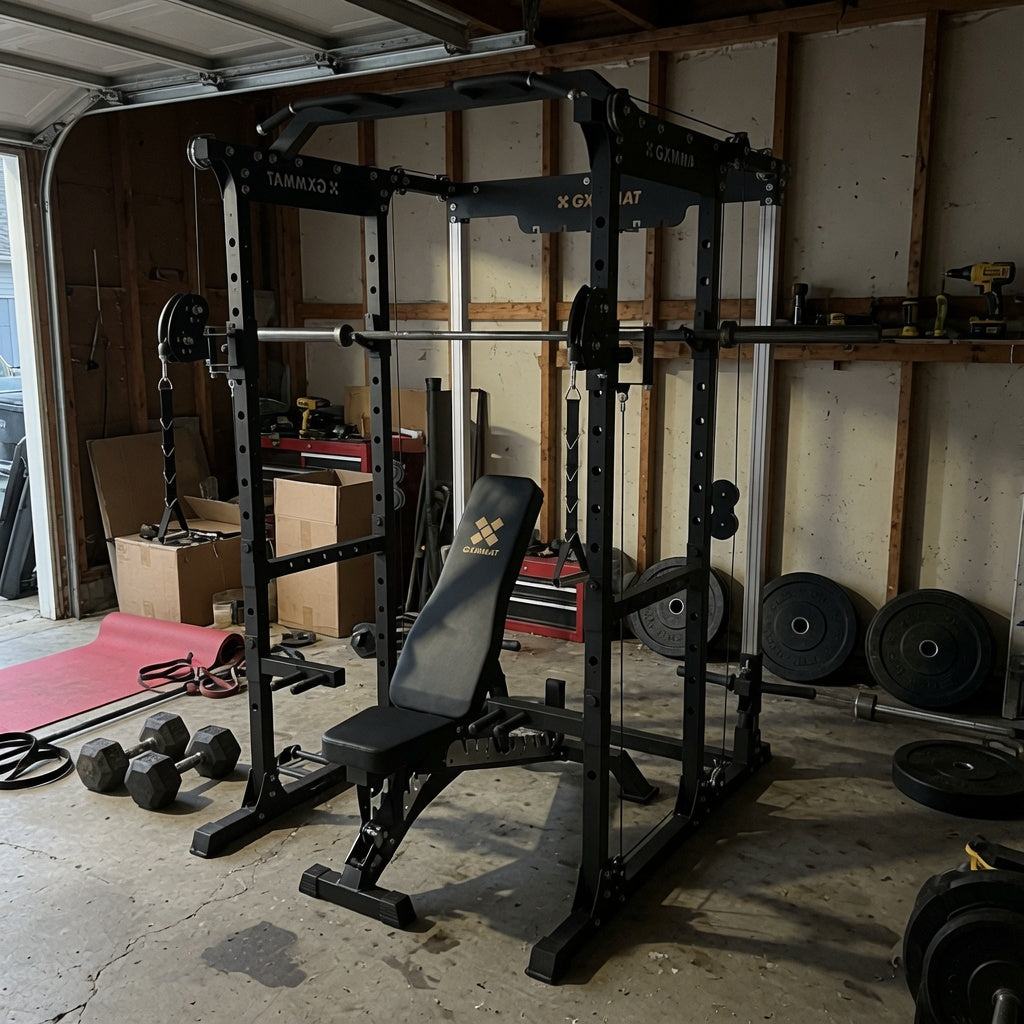
A concrete slab pulls heat from anything touching it, including your feet, your bench and you when you lie down for floor work. A layer of high-density mat insulates you from the slab, adds grip and protects the floor. Cover your whole training zone:
- 6' × 8' exercise mat for under a power rack
- 6' × 10' or 6' × 12' for the rack plus a lifting area
- Large yoga mats for stretching and floor work
Choose a safe heater
| Heater type | Pros | Watch out for |
|---|---|---|
| Infrared / radiant electric | Warms you directly, so it works even in a drafty space | Only heats what it points at |
| Oil-filled radiator (electric) | Quiet, steady heat with no open element | Slow to warm a large space |
| Fan / ceramic space heater | Cheap, fast | Keep away from mats, towels and clutter |
| Hardwired garage heater | Most powerful, permanent | Needs an electrician and a dedicated circuit |
| Propane / kerosene (unvented) | Powerful, no outlet needed | Carbon monoxide risk. Avoid in a closed garage. |
Heater safety basics: plug space heaters directly into a wall outlet (not an extension cord or power strip), keep at least 3 feet of clearance around them, never leave them running unattended, and install a carbon monoxide alarm in any attached garage.
Part 3: Protect your equipment
Stop barbell rust
When cold steel meets warmer, moist air, for example when you heat the garage or open the door on a mild day, condensation forms on bars, plates and racks. Over time that means rust.
- Brush the knurling after sessions to remove chalk and sweat, which hold moisture.
- Wipe on a light coat of oil (such as 3-in-1 oil) on the shaft every few weeks in humid or freezing months.
- Store bars horizontally on the rack's barbell holders, not leaning on the floor.
- Run a dehumidifier if your garage gets damp.
The GXMMAT Olympic bar has a hard chrome shaft and black ceramic sleeves, both corrosion-resistant finishes, but any steel bar benefits from basic care.
Bumper plates in the cold
Rubber gets firmer when it's very cold. Store bumper plates on a rack or a horizontal plate rack rather than directly on frozen concrete, and drop them on a mat, not bare concrete.
Cables and pulleys
Check cables for fraying and pulleys for smooth rotation at the start of winter. Wipe away condensation and dust. Sealed-bearing and aluminum pulleys, like those on GXMMAT racks, resist corrosion better than open bearings.
Cold garage workout checklist
- ☐ Garage door insulated and weather-stripped
- ☐ Mats covering the whole training zone
- ☐ Safe electric heater plugged directly into the wall
- ☐ CO alarm installed
- ☐ Layers, beanie and gloves ready
- ☐ 10–15 minute warm-up before heavy sets
- ☐ Barbell brushed and oiled, stored horizontally
- ☐ Dehumidifier if the space is damp
FAQ
Is it OK to lift weights in a cold garage?
Yes, for most healthy people. Warm up longer (10–15 minutes), dress in layers and keep rest periods active. If you have asthma or a heart condition, check with your doctor first.
How do I keep my garage gym warm in winter?
Insulate and weather-strip the garage door, cover the concrete with mats, and use a safe electric heater such as an infrared or oil-filled radiator, plugged directly into the wall.
Is it safe to use a propane heater in a garage gym?
Unvented propane and kerosene heaters produce carbon monoxide and are unsafe in a closed garage. Use electric heat, and install a CO alarm in any attached garage.
How do I stop my barbell from rusting in the garage?
Brush chalk out of the knurling after workouts, apply a thin coat of oil every few weeks, store the bar horizontally on a rack, and use a dehumidifier if the garage is damp.
Do mats help keep a garage gym warm?
Yes. Mats insulate you and your equipment from the cold concrete slab, which makes floor work, standing lifts and bench work noticeably more comfortable.
Written by Yuvien Royer for GXMMAT. Follow your heater manufacturer's safety instructions and local codes.