Can Your Floor Hold a Home Gym? Upstairs and Second-Floor Guide
Quick answer: In most modern homes, a typical upstairs floor can hold a home gym with a power rack, bench and a few hundred pounds of plates, because that weight is spread over the rack's footprint. The bigger risks are dropped weights, concentrated loads (like all your plates stacked in one spot) and older or damaged floors. Place heavy equipment near load-bearing walls, use a dense mat to spread the load, lower weights with control, and consult a structural engineer if you plan very heavy loads or your house is old.
Key takeaways
- Spread-out weight is rarely the problem; impact and point loads are.
- Don't drop weights upstairs. Lower deadlifts and cleans with control.
- Put the rack and plate storage near load-bearing walls or along a beam, not in the middle of a long span.
- Use a dense mat to protect the floor, reduce noise and spread the load.
- Get professional advice for old homes, sagging floors or very heavy setups.
How much weight can a floor hold?
US residential floors are commonly designed for a live load of about 40 pounds per square foot in living areas (often lower for bedrooms), with additional capacity built into the design. "Live load" is the weight of people, furniture and things you bring into the room, spread across the floor.
That number is about distributed weight. A 40 psf floor doesn't mean one square foot will fail at 41 lb. It means the floor system is designed for that load across the room. What matters for a home gym is how concentrated your load is and whether it lands as a sudden impact.
This is general guidance, not an engineering assessment. Floors vary with joist size, spacing, span, age and condition. If in doubt, ask a structural engineer or a licensed contractor to look at your floor.
Example: how much does a power rack setup weigh?
| Item | Approximate weight |
|---|---|
| GXMMAT X6 power rack | 261 lb |
| Bumper plate set | 230 lb |
| Olympic barbell | 44 lb |
| Adjustable bench | 82 lb |
| Lifter | 200 lb |
| Total | About 817 lb |
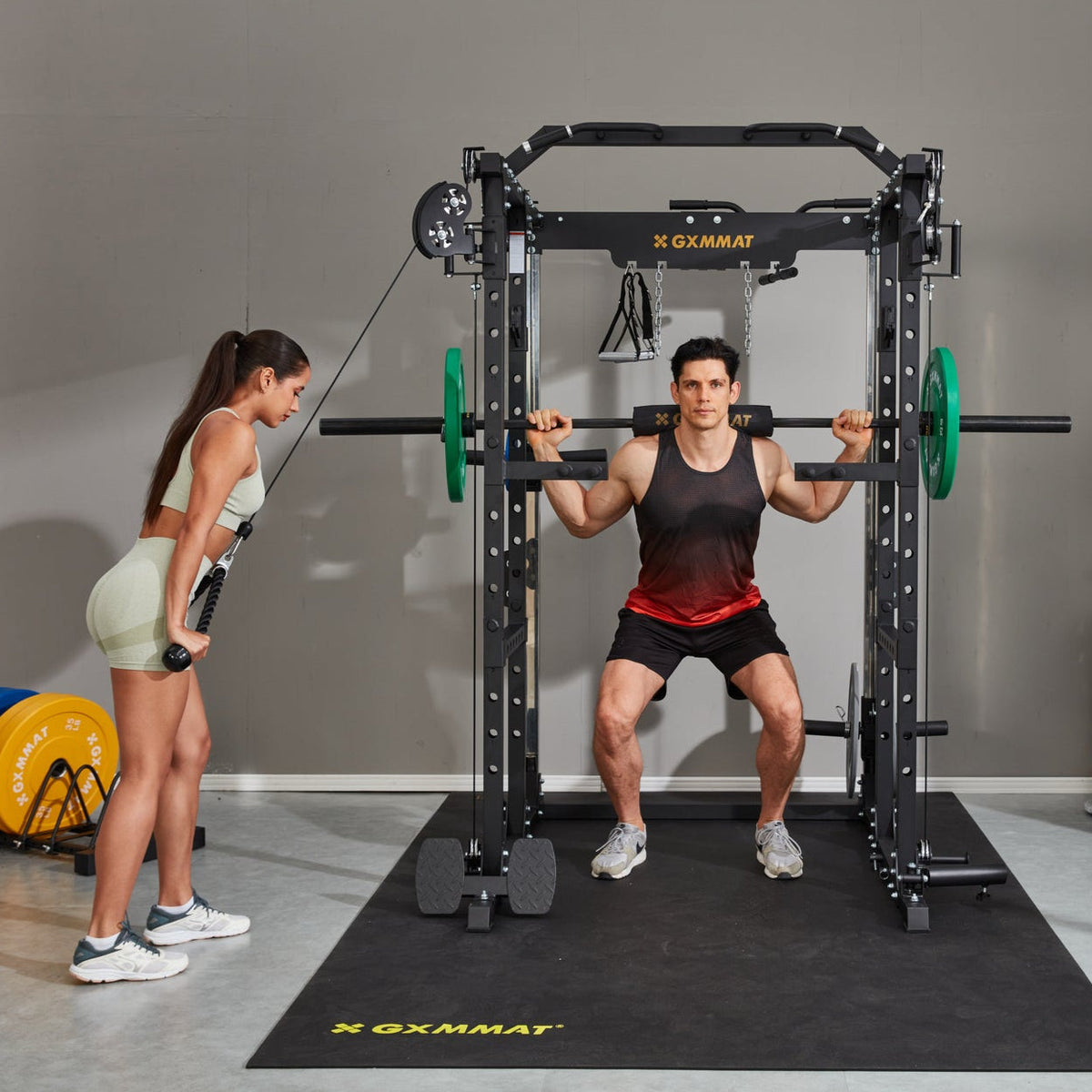
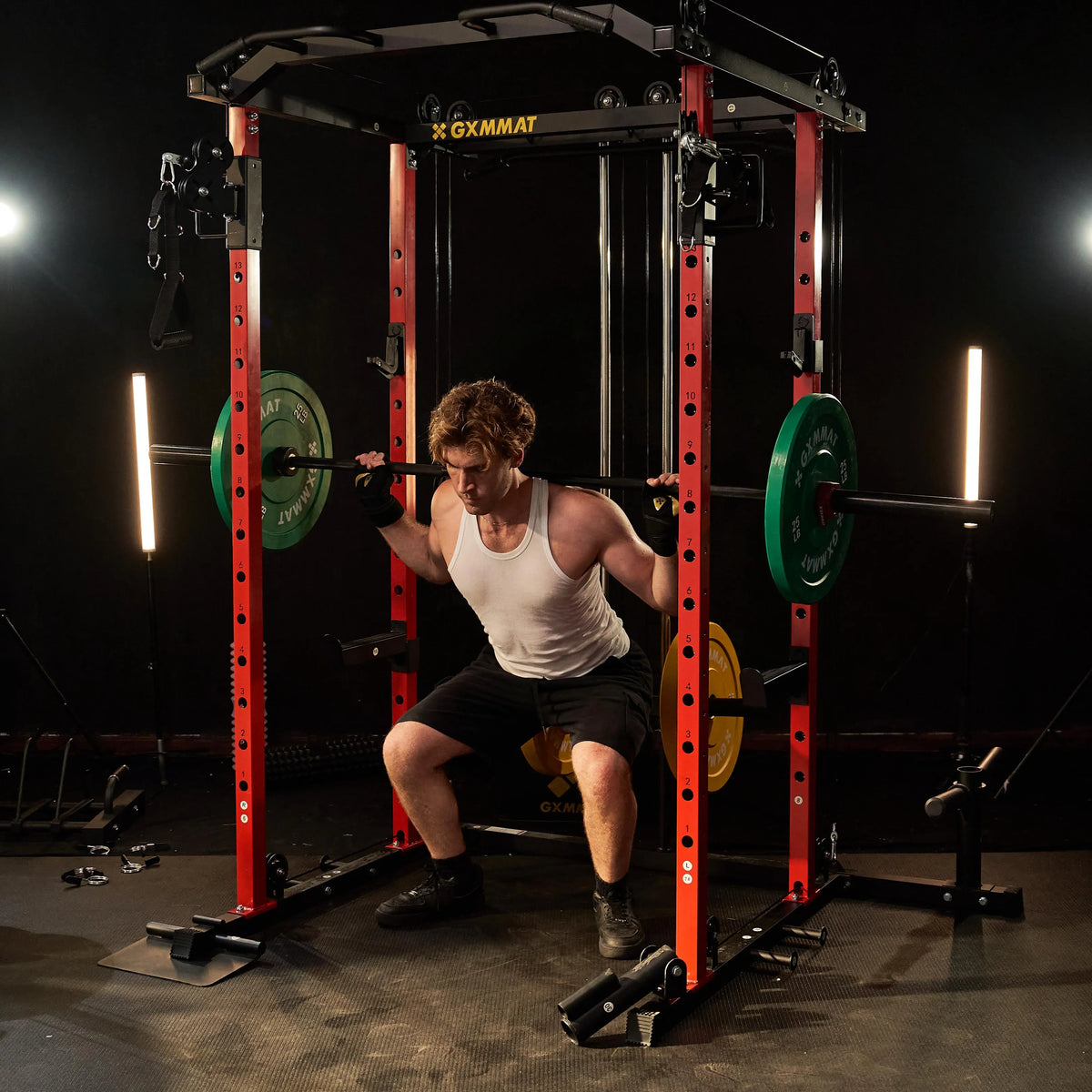
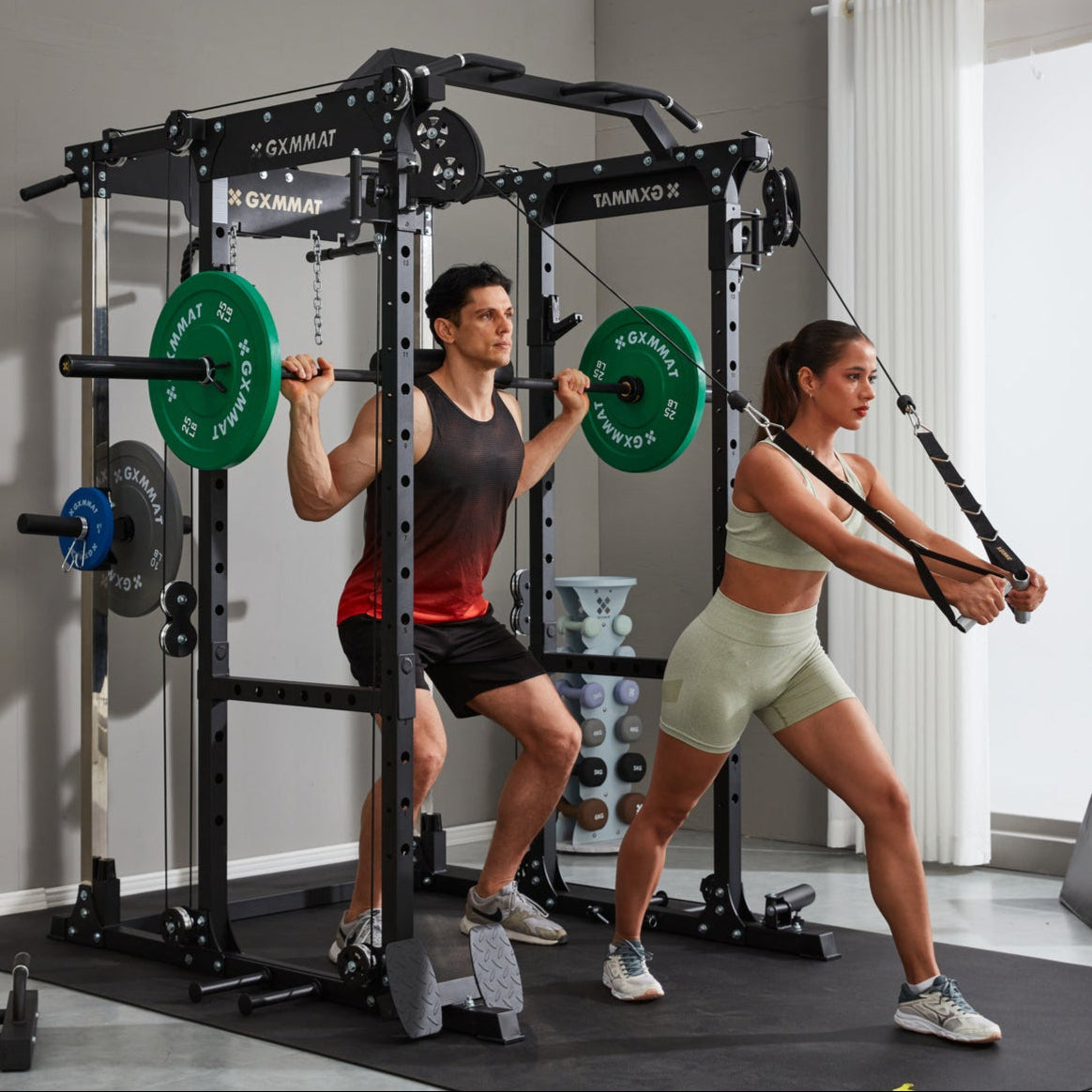
The X6's footprint is about 64.6" × 64.2", or roughly 29 sq ft. Spread over that area, 817 lb works out to about 28 lb per square foot. That's a rough illustration, not a guarantee, but it shows why a rack setup on a sound modern floor is usually fine when weights aren't dropped.
What actually stresses an upstairs floor
- Dropped weights: a barbell dropped from hip or overhead height hits with many times its static weight, and the shock travels through joists and ceilings below.
- Concentrated storage: all your plates on one tree or rack in the middle of the room puts hundreds of pounds on a small spot.
- Long joist spans: the middle of a long span flexes more than the area near a wall or beam.
- Old, damaged or notched joists: water damage, previous renovations or older framing can reduce capacity.
- Vibration: repeated jumping, running or machines can loosen fixtures and annoy everyone downstairs.
How to set up a home gym on the second floor
- Find the load-bearing walls and the joist direction. Place the rack and plate storage close to a load-bearing wall or over a beam, and avoid the middle of long spans.
- Lay a dense mat first. A full-size mat under the rack and bench spreads the load from the rack feet, protects the subfloor and finish, and cuts noise. GXMMAT large exercise mats are 7 mm high-density with a non-slip base, from 6' × 4' up to 6' × 16', plus 7'-wide sizes that fit under a rack and bench together.
- Store plates along a wall. A horizontal plate rack (holds up to 330 lb) or the plate posts on your rack keep plates off the floor and near the wall.
- Use bumper plates instead of iron. They're quieter and gentler if a plate tips or touches down hard. See bumper vs iron plates.
- Lift with control. Lower deadlifts to the floor, don't drop from overhead, and set the safety arms in the rack for squats and bench press.
- Check ceiling height for pull-ups and overhead presses. See our space and ceiling height guide.
Exercises to avoid or modify upstairs
| Exercise | Upstairs-friendly option |
|---|---|
| Dropped deadlifts, cleans, snatches | Controlled deadlifts lowered to the mat; Romanian deadlifts |
| Box jumps and burpee jumps | Step-ups, squat-to-calf-raise, low-impact intervals |
| Heavy kettlebell drops | Soft kettlebells, set down gently |
| Jump rope on a bare floor | Jump on a cushioned jump rope mat, or skip the rope and march in place |
| Treadmill sprints | Incline walking; see the 12-3-30 workout |
Live in an apartment? Our quiet apartment workouts guide has more ways to keep the peace with neighbors.
When to call a professional
- The floor already sags, bounces or squeaks a lot.
- The house is old, has had water damage or major renovations.
- You plan to store well over 500 lb of plates or add heavy selectorized machines.
- You want to train Olympic lifts with drops.
- You're unsure where the joists and load-bearing walls are.
If the floor can't be upgraded, a garage or basement on a concrete slab is the better spot for heavy lifting. Training in a cold garage? See our winter garage gym guide.
FAQ
Can I put a power rack on the second floor?
Usually, yes, on a sound modern floor. Place it near a load-bearing wall, use a dense mat, keep plate storage along a wall and avoid dropping weights. Ask a structural engineer if your floor or house raises concerns.
How much weight can a second floor hold?
Residential floors in the US are commonly designed for about 40 lb per square foot of live load in living areas, spread across the room. Actual capacity depends on joist size, spacing, span and condition.
Will deadlifts damage my upstairs floor?
Controlled deadlifts lowered to a mat are generally fine. Repeatedly dropping a loaded barbell can damage flooring and stress the structure, so avoid drops upstairs.
Where should I put a home gym in a two-story house?
A ground floor, garage or basement on concrete is best for heavy lifting. Upstairs, choose a spot near load-bearing walls and away from the middle of long floor spans.
Do gym mats help distribute weight?
A dense mat spreads the pressure from rack feet and plates, protects the floor surface and reduces noise and vibration. It doesn't increase the floor's structural capacity.
Written by Yuvien Royer for GXMMAT. This article is general information, not structural or engineering advice. Weights are approximate; consult a qualified professional about your floor.