Farmer's Carry: Benefits, How to Do It and 3 Home Workouts
Quick answer: The farmer's carry (also called the farmer's walk) means picking up a heavy weight in each hand and walking tall for a set distance or time. It builds grip strength, core stability, upper back and shoulder strength, and overall work capacity, and it takes almost no skill to learn. Beginners can start with 3–4 walks of 30–40 seconds holding a pair of kettlebells or dumbbells, resting 60–90 seconds between rounds, 1–2 times a week. At home you only need two weights and a clear, non-slip path.
Key takeaways
- Stand tall, walk slow: ribs down, shoulders back, short controlled steps.
- Grip is usually the limit, so carries build real hand strength fast.
- Time or distance both work: 30–60 seconds or 40–100 feet per set.
- Four main variations: farmer's, suitcase (one side), front-rack and overhead carries.
- Finish workouts with carries, not start, so your grip is fresh for heavy lifts.
Farmer's carry benefits
- Grip strength: stronger hands help with deadlifts, rows, pull-ups and carrying groceries.
- Core stability: your trunk resists bending and twisting with every step.
- Upper back and traps: holding heavy weight keeps your shoulders working the whole time.
- Posture: the cue "walk tall" trains you to stand upright under load.
- Conditioning: heavy carries raise your heart rate quickly without jumping.
- Everyday strength: few exercises carry over more directly to real life.
How to do a farmer's carry
- Set two weights beside your feet. Kettlebells are easiest to pick up.
- Hinge down with a flat back, grip the handles in the center and stand up like a deadlift.
- Get tall: chest up, shoulders down and back, eyes forward, ribs stacked over hips.
- Walk with short, smooth steps. Don't let the weights swing or bang your legs.
- Breathe in short, controlled breaths while keeping your midsection braced.
- Set the weights down by hinging again, not by rounding your back and dropping them.
Short on space? Walk 10–15 steps, turn carefully and walk back. Turning adds a little extra core and balance work.
Common mistakes
| Mistake | Fix |
|---|---|
| Leaning forward or to one side | Lighten the load and think "stand tall, head over hips" |
| Shrugging shoulders up to the ears | Pull your shoulders down and back before you walk |
| Long, fast strides | Take shorter steps and slow down; control beats speed |
| Rounding the back to pick up or set down | Hinge at the hips like a deadlift every time |
| Walking on a slippery floor | Use a non-slip surface and supportive shoes |
5 loaded carry variations
| Variation | How | Main focus |
|---|---|---|
| Farmer's carry | A weight in each hand at your sides | Grip, traps, total body |
| Suitcase carry | One weight in one hand only; stay perfectly upright | Obliques, anti-lean core strength |
| Front-rack carry | Kettlebells held at chest height, elbows tucked | Core, upper back, breathing under load |
| Overhead carry | One or two light weights locked out overhead | Shoulder stability, posture |
| Plate carry (bear hug) | Hug a bumper plate to your chest and walk | Upper back, core, arms |
Start overhead carries very light and only if you can lift your arms fully overhead without arching your lower back.
How heavy should a farmer's carry be?
| Level | Starting load (per hand) | Sets × time |
|---|---|---|
| Beginner | Light to moderate: something you could hold for about 60 seconds | 3 × 30 sec |
| Intermediate | Heavier: hard to hold past 40 seconds | 4 × 30–40 sec |
| Advanced | Heavy: total load near or above your body weight | 4–5 × 20–30 sec |
The right weight lets you keep perfect posture for the whole set. If you start to lean, shuffle or lose your grip early, go lighter.
Farmer's carry workouts
1. Beginner grip and core finisher (10 minutes)
- Farmer's carry: 3 × 30 seconds
- Suitcase carry: 2 × 20 seconds per side
- Rest 60 seconds between sets
2. Kettlebell carry circuit (15 minutes)
- 10 kettlebell deadlifts
- Farmer's carry: 30 seconds
- 8 goblet squats
- Front-rack carry: 30 seconds
Repeat 3 rounds. New to kettlebells? See our beginner kettlebell workout.
3. Carry EMOM (12 minutes)
Every minute: walk a heavy farmer's carry for 25–30 seconds, then rest for the rest of the minute. Alternate with suitcase carries on odd minutes. More formats in our EMOM guide.
Farmer's carry at home: equipment
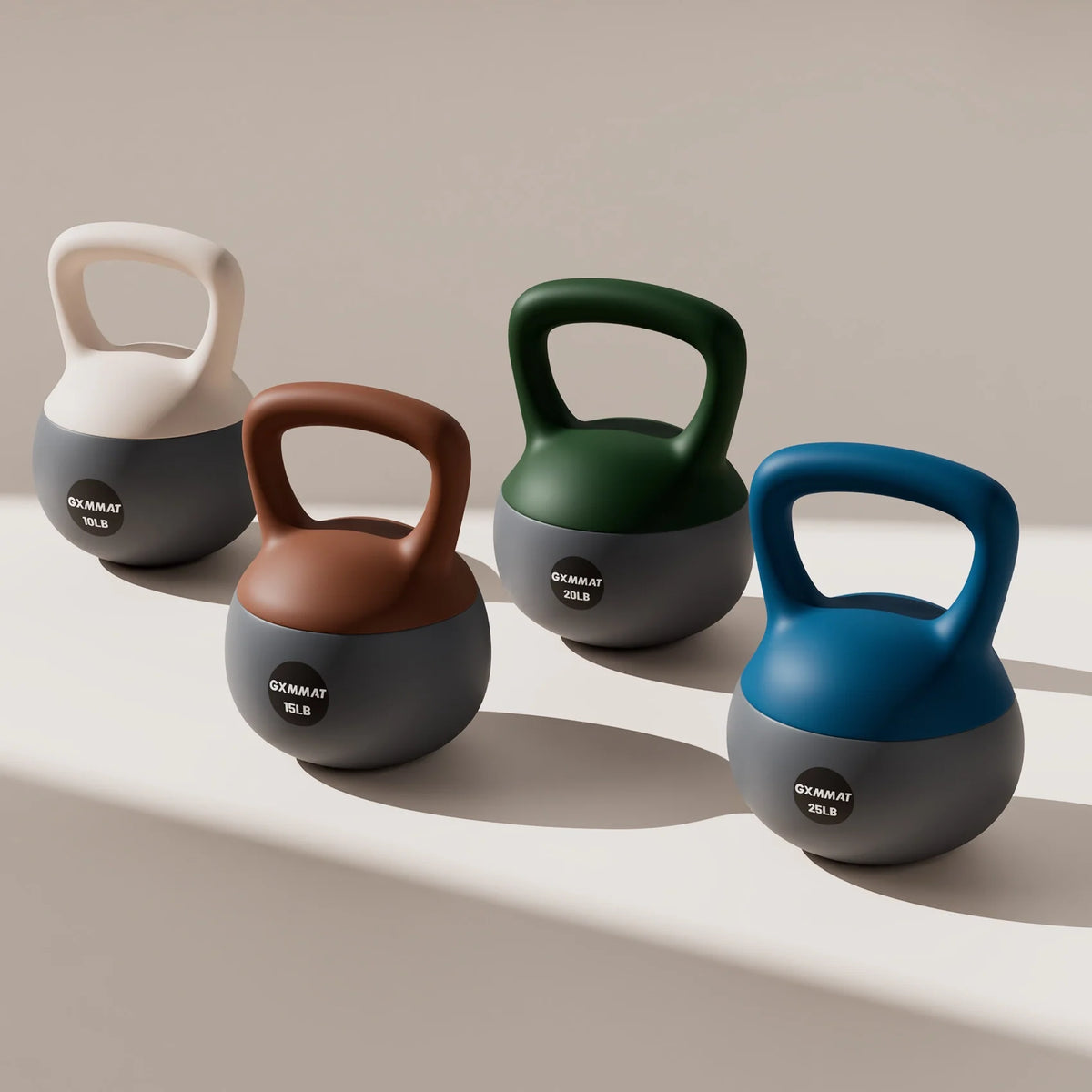
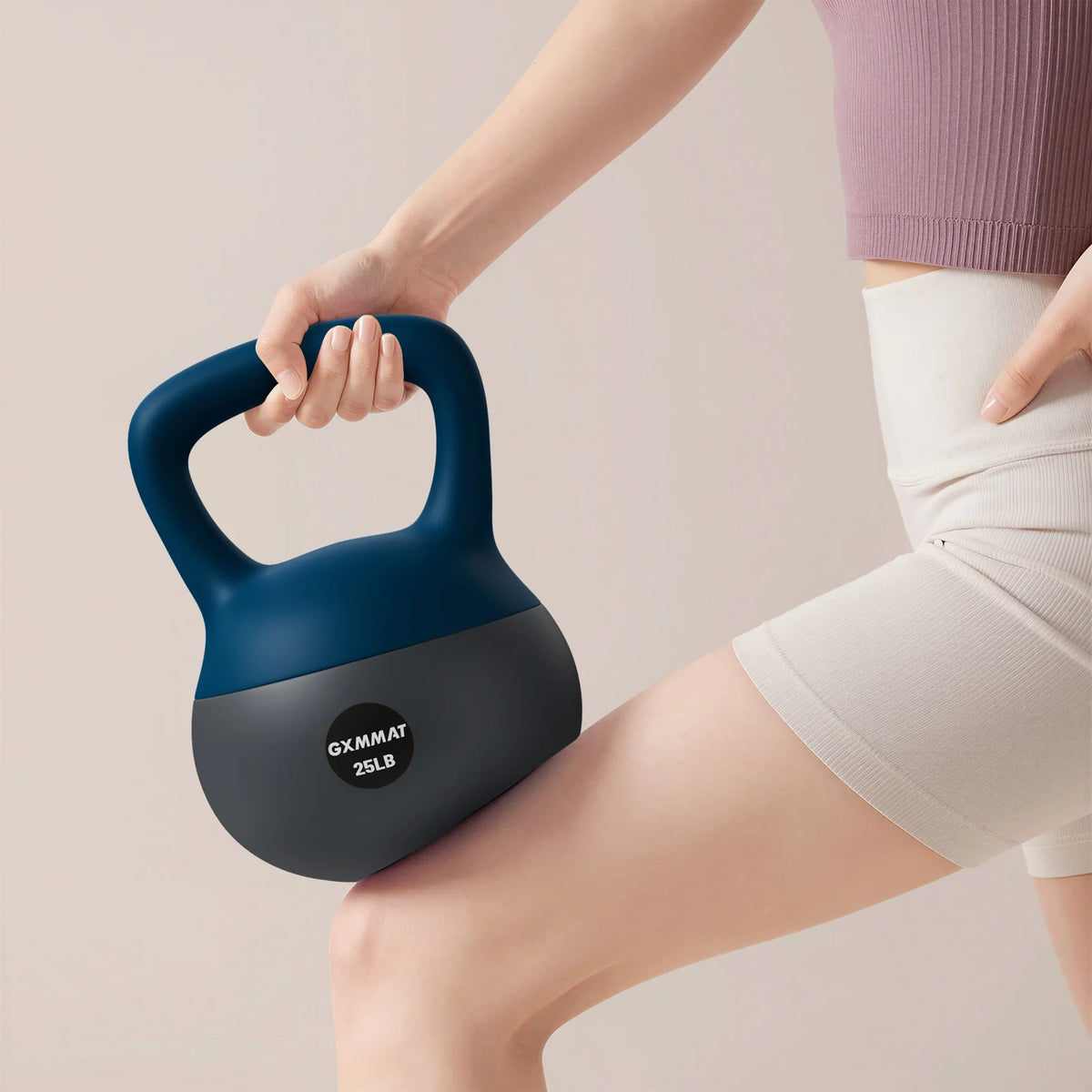
- Kettlebells: the easiest tool. GXMMAT soft kettlebells (10, 15, 20 and 25 lb, or a 10+15+20 lb set) have a wide textured handle and a soft shell, so a bump against your leg or the floor is far less harsh than with cast iron. They're ideal for beginners, suitcase carries and front-rack carries.
- Bumper plates: great for bear-hug plate carries. See our bumper vs iron plates guide or the GXMMAT bumper plate set.
- Gloves (optional): GXMMAT workout gloves add palm cushioning and a wrist wrap if handles irritate your hands. Bare hands build more grip, so many people use gloves only for higher-volume sessions.
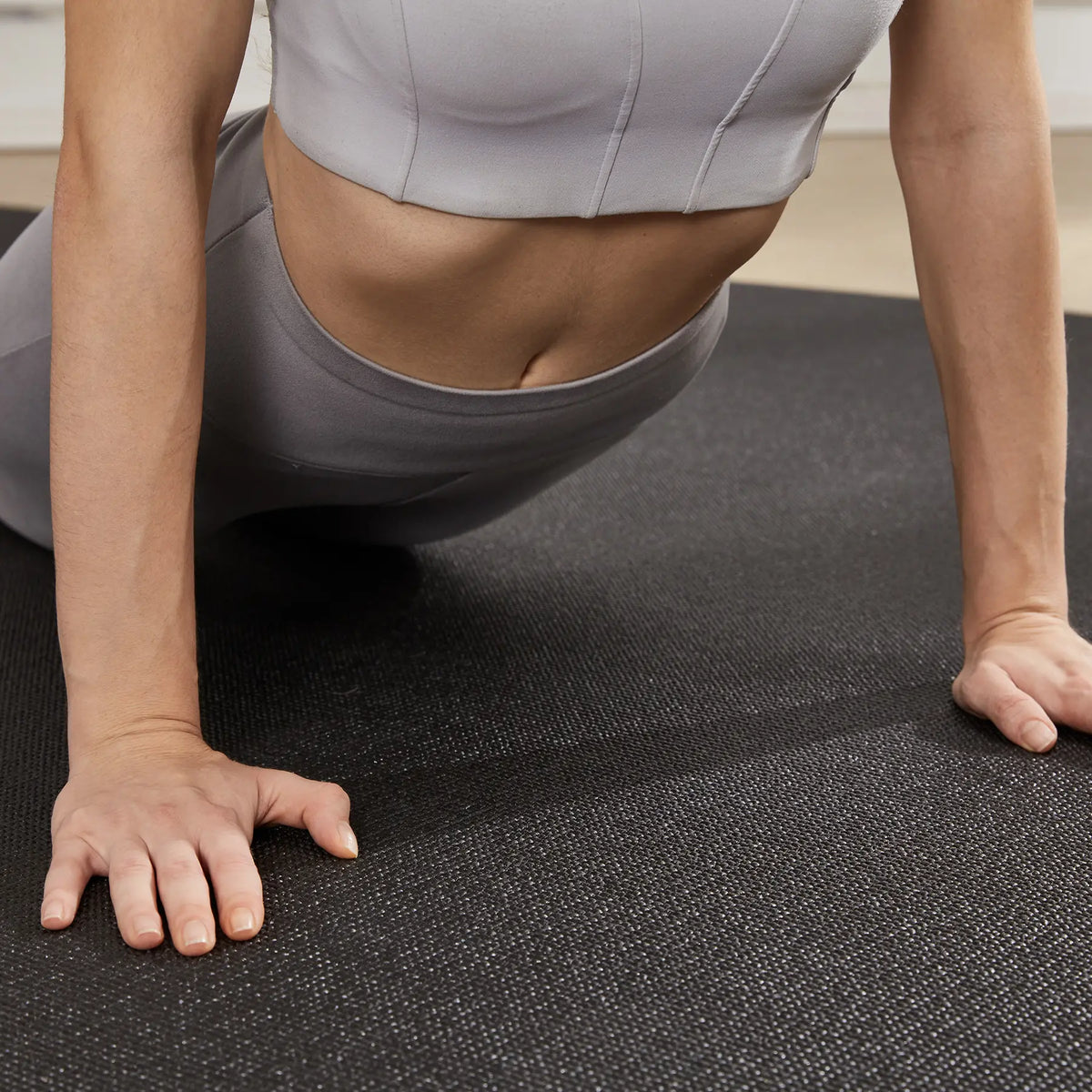
- Flooring: carry on a non-slip surface. A long large exercise mat such as a 6×12 ft mat gives you a walking lane and protects the floor when you set weights down.
Where carries fit in your week
- Add them at the end of 1–2 strength sessions per week.
- Pair farmer's carries with deadlift or back days, and suitcase carries with core days.
- Following a full-body plan? Slot carries after the last lift in our 3-day beginner plan.
- Training for fitness races with carries? See our Hyrox training at home plan.
FAQ
What muscles does the farmer's carry work?
Your forearms and grip, traps and upper back, shoulders, core and glutes, plus your legs as you walk. It's one of the most complete exercises you can do.
How long should I do a farmer's carry?
Most people do 3–5 sets of 20–60 seconds, or 40–100 feet per set. Heavier weights mean shorter sets.
Can I do farmer's carries with kettlebells?
Yes. Kettlebells are one of the best tools because the handle sits close to your body and they're easy to pick up and set down.
Do farmer's carries build muscle?
Yes, especially in the traps, forearms and upper back. They work best as a finisher alongside regular strength training.
Can I do farmer's carries in a small space?
Yes. Walk a short lane and turn around, or march in place holding the weights. A non-slip mat keeps your footing secure.
Written by Yuvien Royer for GXMMAT. This article is general fitness information, not medical advice. Check with a healthcare professional before starting if you have back, shoulder or heart problems.