Broad Jump: How to Do the Standing Long Jump for Power
Quick answer: To do a broad jump (standing long jump), stand with your feet hip width apart, toes behind a line. Swing your arms back as you hinge your hips and bend your knees into a quarter squat. Then swing your arms forward hard and drive through your feet, extending your hips, knees and ankles to jump forward as far as you can. Bring your knees forward, land softly on both feet with your knees bent and hips back, and stick the landing without falling forward. Walk back and reset. Do 3–5 sets of 3–5 jumps with full rest. The broad jump builds horizontal power in the glutes, hamstrings and quads and is a common athletic test of lower body explosiveness.
What is a standing broad jump?
The standing broad jump is a plyometric exercise where you jump forward as far as you can from a standing start, taking off and landing on both feet. There's no run-up, so all of the distance comes from your hips, legs and arm swing. Coaches use the standing broad jump to test lower body power in athletes from many sports, and it's a great exercise for everyday people too, because it teaches the whole body to produce force and then absorb it safely on landing.
Key takeaways
- Arm swing adds distance: back on the load, forward on the jump.
- Full hip extension at takeoff.
- Stick the landing: soft knees, hips back, no stumbling.
- Reset between reps for quality and power.
- Low reps, full rest: it's power training, not cardio.
Muscles worked
| Muscle | Role |
|---|---|
| Glutes and hamstrings | Explosive hip extension forward |
| Quadriceps | Knee extension and landing |
| Calves | Final push off the floor |
| Core | Transfers force and controls the landing |
| Shoulders | Arm swing |
Benefits of broad jumps
- Horizontal power for athletes in sprinting and field sports.
- Posterior chain explosiveness that carries over to deadlifts and cleans.
- Landing mechanics that help protect the knees.
- Simple test to track power over time.
- No equipment.
How to do a standing broad jump
- Stand with feet hip width apart, toes behind a line.
- Load: swing the arms back and hinge into a quarter squat, chest over the knees.
- Explode: swing the arms forward and up while extending the hips, knees and ankles.
- Fly: pull the knees forward toward the chest.
- Land: on both feet, knees bent, hips back, arms forward for balance.
- Stick the landing for 2 seconds, then walk back.
How to measure your broad jump
Measure from the starting line to the back of your heel at landing. If you fall backward or step back, measure to the closest point of contact. Test every 4–6 weeks to track progress.
Progressions
| Level | Variation |
|---|---|
| Beginner | Jump squats and landing drills (drop into a squat and stick) |
| Beginner | Short broad jumps, focusing on landing |
| Intermediate | Max-effort broad jumps with reset |
| Advanced | Consecutive broad jumps (2–3 in a row) |
| Advanced | Single-leg broad jump to two-foot landing |
Master each level before moving on. Many athletes spend weeks on landing drills before adding consecutive jumps. Treat the standing broad jump as a skill and power exercise, not a conditioning exercise.
Common mistakes
| Mistake | Fix |
|---|---|
| No arm swing | Swing back, then drive forward hard |
| Landing stiff-legged | Bend the knees and hips to absorb |
| Knees caving on landing | Push the knees out over the toes |
| Falling forward | Bring the feet forward; keep the chest up on landing |
| Too many reps when tired | Stop when distance drops |
Sample power workout
| Exercise | Sets × reps |
|---|---|
| Broad jumps | 4 × 3 |
| Kettlebell swings | 3 × 12 |
| Power cleans or hang cleans | 4 × 3 |
| Tuck jumps | 3 × 5 |
Put jumps at the start of the session, after a warm up. Train power 1–2 times a week.
Who should be careful
- Knee or ankle injuries: start with landing drills only.
- Pelvic floor concerns or pregnancy: avoid high-impact jumps unless cleared.
- Beginners: build squat strength first.
Space and surface
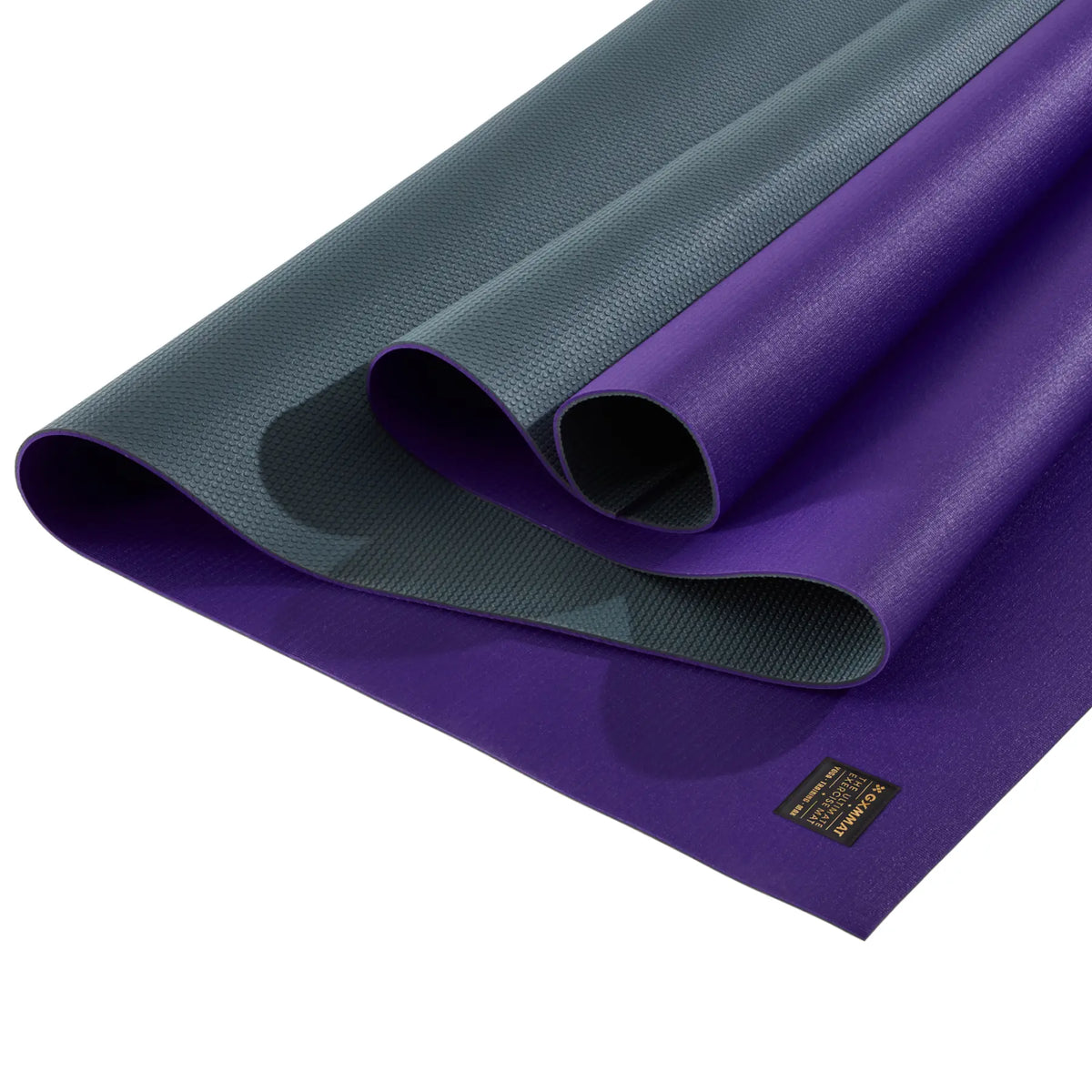
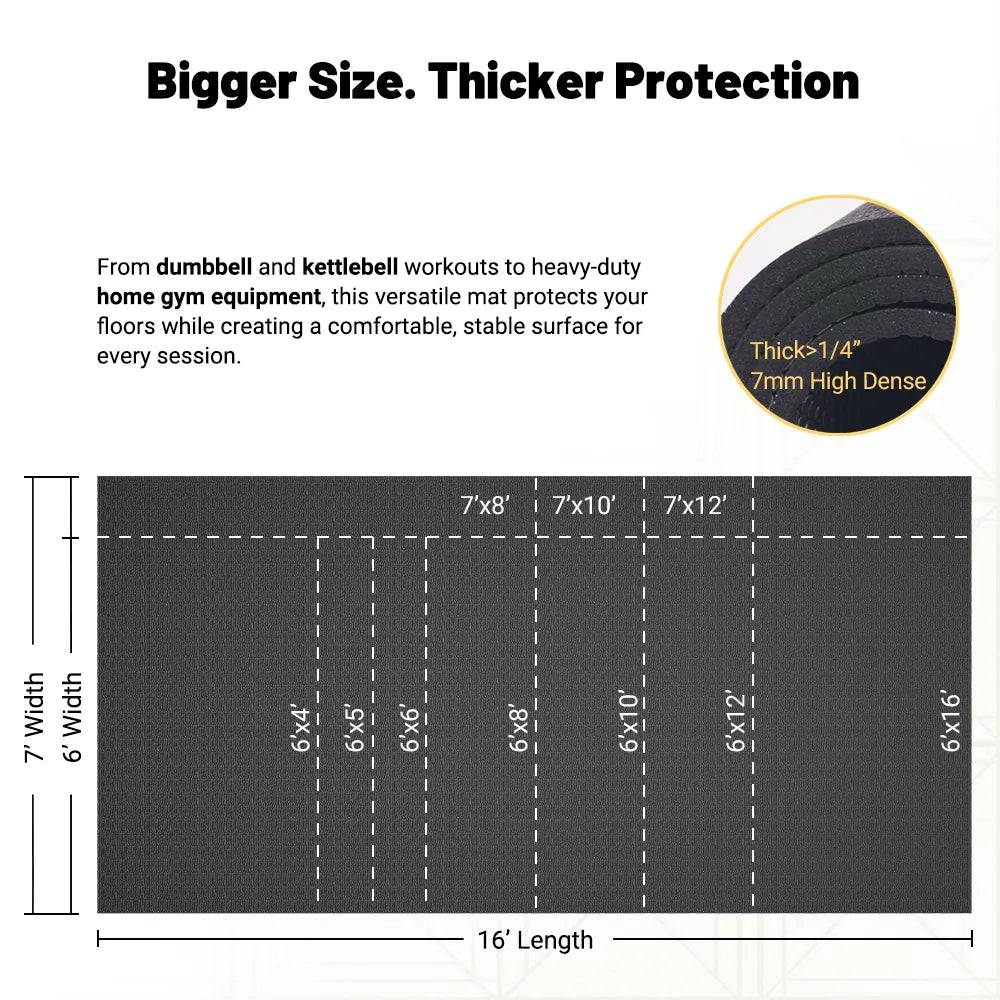
A broad jump can cover 5–8 feet, so you need a clear, non-slip landing area. Jumping on bare floors is hard on joints and loud. A GXMMAT 6'x12' extra large exercise mat gives a full 12 feet of cushioned, non-slip landing space, made of 7 mm high-density foam that also reduces noise. See all large exercise mats.
FAQ
What does the broad jump work?
The glutes, hamstrings, quads, calves and core, with a focus on explosive horizontal power.
What is a good broad jump distance?
It varies widely by height, age and training, and trained athletes jump much farther than most people starting out. Rather than comparing, track your own distance every few weeks.
How many broad jumps should I do?
3–5 sets of 3–5 jumps with full rest between sets.
Is the broad jump the same as a standing long jump?
Yes. Both terms describe jumping forward from a standing start with both feet.
How can I improve my broad jump?
Build strength with squats and deadlifts, train power with swings and cleans, and practice the arm swing and landing.
Written by Yuvien Royer for GXMMAT. This article is general fitness information, not medical advice.