Hang Clean: How to Do It, Muscles Worked and Variations
Quick answer: To do a hang clean, deadlift a barbell to a standing position, then lower it to the hang position just above the knees (or mid thigh level) by pushing your hips back with your knees slightly bent, shoulders over the bar and arms long. From there, jump: drive through your feet into full hip extension, shrug, and pull yourself under the bar with your elbows high. Rotate your elbows forward fast and catch the bar in the front rack position on your shoulders in a quarter squat position (hang power clean) or full squat (hang squat clean), then stand. Start with an empty bar and do 4–6 sets of 2–3 reps. The hang clean builds explosive power for athletes and is a great way to learn the clean.
Key takeaways
- Start from the hang: no floor pull, so it's easier to learn than a full clean.
- Jump, then pull under: the legs and hips make the bar fly; the arms guide it.
- Keep the bar close to your thighs and body.
- Fast elbows into the front rack.
- Low reps, perfect form. Use bumper plates so you can drop the bar.
Muscles worked
| Muscle groups | Role |
|---|---|
| Glutes and hamstrings (posterior chain) | Explosive hip extension |
| Quads | Leg drive and catching the bar |
| Calves | Final part of triple extension |
| Traps and upper back | Shrug and pull under |
| Core | Keeps the spine rigid while the bar moves fast |
| Forearms and grip | Hold the bar through the pull |
Benefits of the hang clean exercise
- Power and force development: trains fast triple extension of the ankles, knees and hips, the same pattern used in jumping and sprinting.
- Easier to learn than a full clean from the floor, because you start in the power position.
- Full-body strength from the posterior chain to the upper body.
- Efficient: a few heavy, fast reps train a lot of muscle.
- Builds toward the full clean and the clean and jerk in Olympic weightlifting.
Hang positions: high hang, hang and low hang
| Position | Where the bar starts | Use |
|---|---|---|
| High hang | Upper thigh / hip crease | Teaches speed under the bar; least range |
| Hang (mid thigh) | Mid thigh level | Classic power position |
| Low hang | Just above or below the knees | Longer pull; closer to the full clean |
How to do a hang clean
- Grip: hands just outside shoulder width, with a hook grip (thumb wrapped under the fingers) if comfortable.
- Standing position: deadlift the bar to the top. Feet hip width, arms straight.
- Hang: push the hips back with knees slightly bent and lower the bar along your thighs to the hang. Shoulders stay over or slightly in front of the bar. This is your starting position.
- Jump: drive hard through the whole foot and extend the hips, knees and ankles. The bar stays close and brushes your upper thigh.
- Shrug and pull: at full extension, shrug and pull your body down with the elbows high and out, like a fast upright row with the bar close.
- Catch: rotate the elbows forward quickly so the bar lands on your shoulders in the front rack, fingertips under the bar, elbows high. Land with feet flat in a quarter squat.
- Stand: stand tall with the bar in the rack position. Then lower it back to the hang for the next rep, or drop it with bumper plates.
Hang power clean vs hang squat clean vs muscle clean
| Variation | Catch | Best for |
|---|---|---|
| Hang power clean | Above parallel, quarter squat | Power training, most athletes |
| Hang squat clean | Full front squat | Lifting more weight; Olympic lifting |
| Hang muscle clean | No re-bend of the knees; arms turn the bar over | Teaching the turnover and upper body strength |
From the floor, see the power clean guide. The squat clean catch relies on a strong front squat.
Common mistakes
| Mistake | Fix |
|---|---|
| Pulling early with the arms | Keep arms long like ropes until full hip extension |
| Bar swinging away from the body | Keep the bar close; brush the thighs |
| Not finishing the hip extension | Jump tall before pulling under |
| Slow elbows; catching on the hands | Fast elbows forward; relaxed fingertips in the rack |
| Landing on the toes or with a jump forward | Land flat-footed in the same spot |
| Hang position with knees forward and hips low | Hips back, shoulders over the bar, like a short RDL |
Drills to learn the hang clean
- Hang position RDL: 5 reps to groove the hinge (see the deadlift guide).
- Jump shrug: from the hang, jump and shrug without pulling under.
- High pull: jump, shrug and pull the bar to the chest with elbows high.
- Muscle clean: turn the bar over into the front rack without dropping.
- Hang power clean: put it together.
Sets, reps and weight
| Goal | Sets × reps | Load |
|---|---|---|
| Learning technique | 5–6 × 2–3 | Empty bar to light |
| Power | 5 × 2–3 | 60–75% of your best clean |
| Strength | 4–5 × 1–2 | 80%+ with good form |
Do hang cleans first in a workout when you're fresh, 1–2 times per week. Add more weight only when the bar path, timing and catch stay the same rep to rep. Afterward, try a push press from the same front rack.
Who should be careful
- Wrist or elbow pain in the front rack: work on mobility and use a slightly wider grip or fingertip grip.
- Lower back pain: stick with the high hang and lighter weights, and get advice from a coach or professional.
- New lifters: a few sessions with a qualified coach speeds up learning and reduces injury risk.
Hang cleans at home
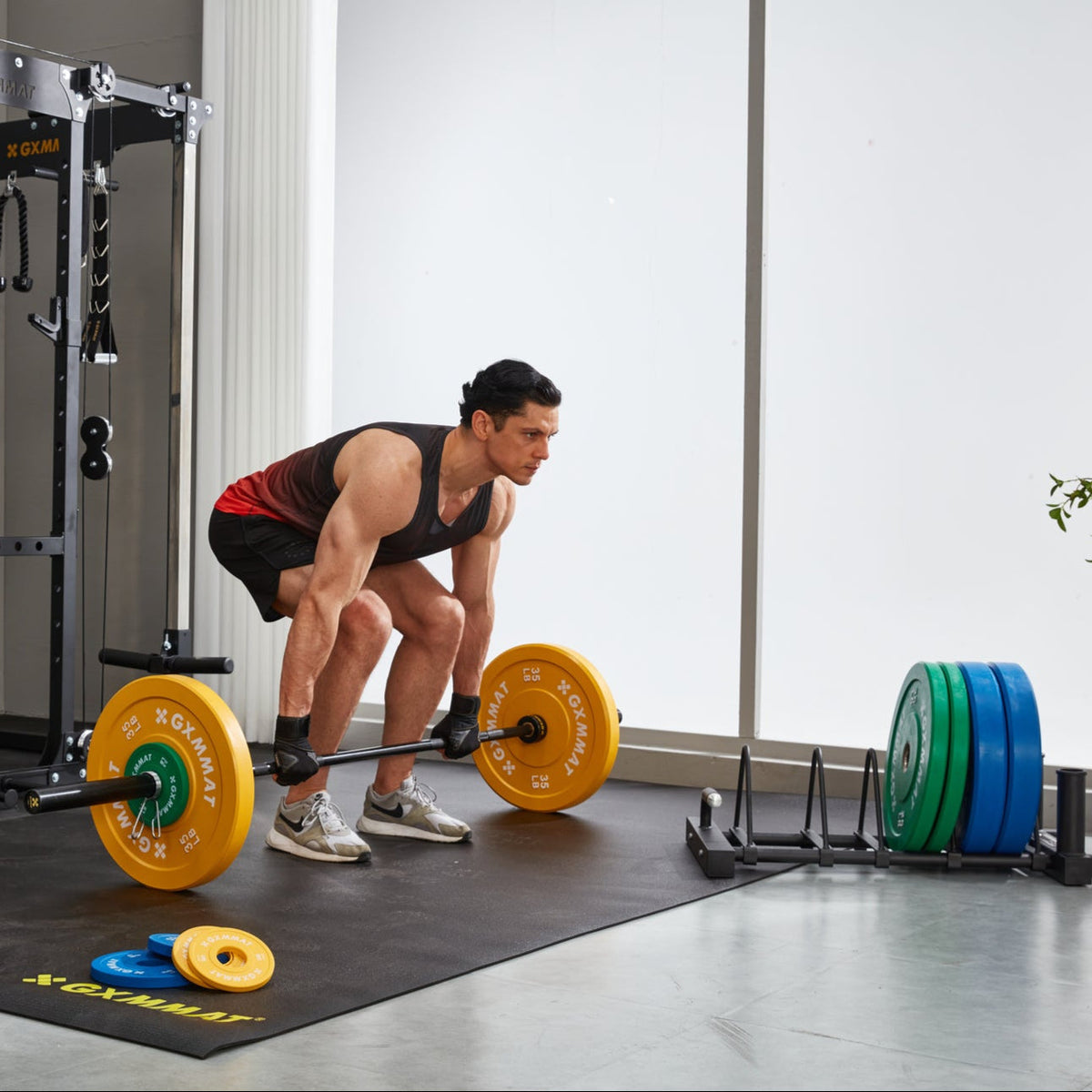
- Bumper plates: GXMMAT bumper plates let you drop a missed rep safely and protect the floor.
- Bar: the 20 kg Olympic bar has rotating sleeves, which help the bar turn over smoothly into the rack.
- Small jumps: change plates and collars.
- Platform: lift on a flat, solid surface with a large exercise mat under it, away from walls and furniture.
- Rack: a power rack isn't needed for the clean itself, but it's where you'll do your front squats and presses.
FAQ
What is a hang clean?
A clean that starts with the bar above the knees instead of on the floor. You jump the bar up and catch it on your shoulders in the front rack position.
What's the difference between a hang clean and a power clean?
A power clean starts from the floor; a hang clean starts from the thighs. Both are caught above parallel, so a hang clean caught high is a "hang power clean."
Is the hang clean good for beginners?
It's one of the best ways to start learning the clean, with an empty bar and good coaching cues.
What muscles does the hang clean work?
Glutes, hamstrings, quads, calves, traps, upper back, core and grip.
How heavy should my hang clean be?
Light enough to keep good form on every rep. Many lifters work at 60–80% of their best clean for sets of 2–3.
Written by Yuvien Royer for GXMMAT. This article is general fitness information, not medical advice.