Tuck Jumps: How to Do Them Safely for Explosive Power
Quick answer: To do tuck jumps, stand with your feet shoulder width apart and arms by your sides. Bend your knees into a quarter squat, swing your arms back, then jump straight up as high as you can, driving your knees toward your chest at the peak. Release the tuck before you come down, and land softly on the balls of your feet, bending your knees to absorb the impact. Reset and jump again immediately, or pause between reps if you're new. Do 3–4 sets of 6–10 jumps with 60–90 seconds of rest. Tuck jumps are a high intensity exercise that builds explosive power in the leg muscles, raises your heart rate fast and improves agility for sports.
Key takeaways
- Jump first, tuck second: bring the knees up to the chest, not the chest down to the knees.
- Land soft and quiet on the balls of your feet, knees bending.
- Knees stay in line with the toes on landing.
- Quality over quantity: stop the set when height drops or landings get loud.
- A cushioned surface makes landings easier on joints and floors.
Muscles worked
| Muscle groups | Role |
|---|---|
| Quadriceps and glutes | Explosive takeoff |
| Calves | Push off and absorb landing |
| Hamstrings | Hip extension and landing control |
| Hip flexors and core | Pull the knees up to the chest |
| Shoulders | Arm swing for height |
Benefits of tuck jumps
- Explosive power for jumping and sprinting.
- Heart rate: a few sets turn into fast, intense cardio and burn calories.
- Agility and coordination for sports.
- Build strength in the legs and core without equipment.
- Landing skills that help protect the knees during sports.
How to do tuck jumps
- Stand with feet shoulder width apart, arms at your sides.
- Load: bend the knees into a quarter squat and swing the arms back.
- Jump: drive the arms up and extend the hips, knees and ankles to jump straight up.
- Tuck: at the peak, pull the knees toward your chest. Hands can reach toward the knees.
- Extend: straighten the legs before landing.
- Land: on the balls of your feet, then heels, bending the knees to absorb the force.
- Repeat: reset or go straight into the next jump.
Progressions and easier options
| Level | Exercise |
|---|---|
| Beginner | Squat jumps with a soft landing |
| Beginner, low impact | Standing knee drives (no jump) |
| Intermediate | Single tuck jumps with a reset between reps |
| Advanced | Continuous tuck jumps |
| Advanced | Tuck jump to broad jump |
Common mistakes
| Mistake | Fix |
|---|---|
| Bending the chest down to the knees | Stay tall; lift the knees up |
| Stiff-legged, loud landings | Bend the knees and hips; land quietly |
| Knees caving in on landing | Push the knees out over the toes |
| Too many reps with poor form | Short sets, full rest |
| Jumping on concrete | Use a cushioned mat |
Sample plyometric workout
| Exercise | Sets × reps |
|---|---|
| Squat jumps | 3 × 8 |
| Tuck jumps | 3 × 6 |
| Skater jumps | 3 × 10 per side |
| Jump lunges | 3 × 8 per side |
Rest 60–90 seconds between sets. Do plyometrics early in your fitness routine, when you're fresh, 1–2 times a week. New to jumping? Start with plyometric exercises for beginners.
Who should be careful
- Knee, ankle or back problems: high-impact jumps may aggravate them; try low-impact options and get professional advice.
- Pelvic floor concerns or pregnancy: jumping may not be suitable; follow your healthcare provider's guidance.
- Beginners: build basic leg strength with squats first.
Tuck jumps at home
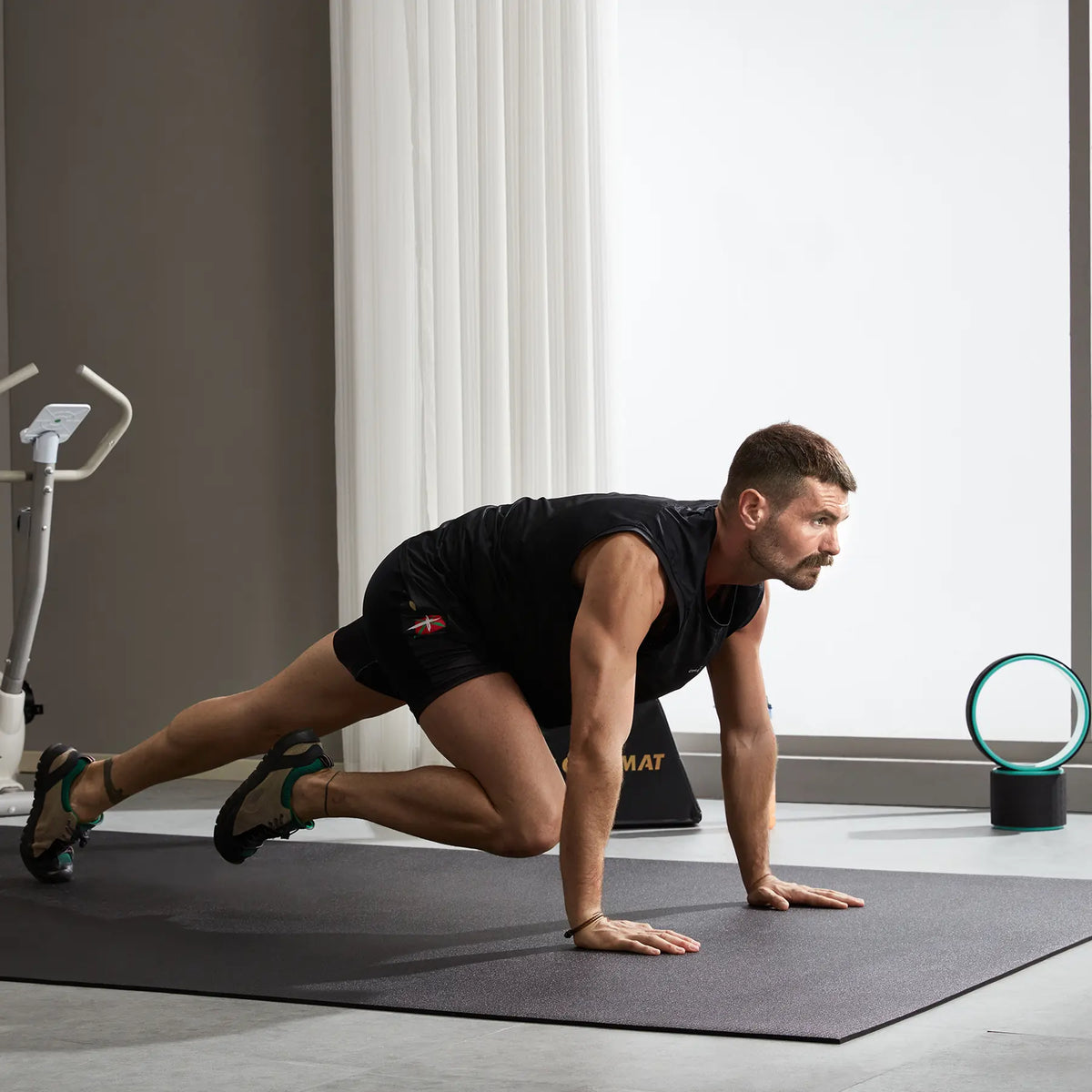
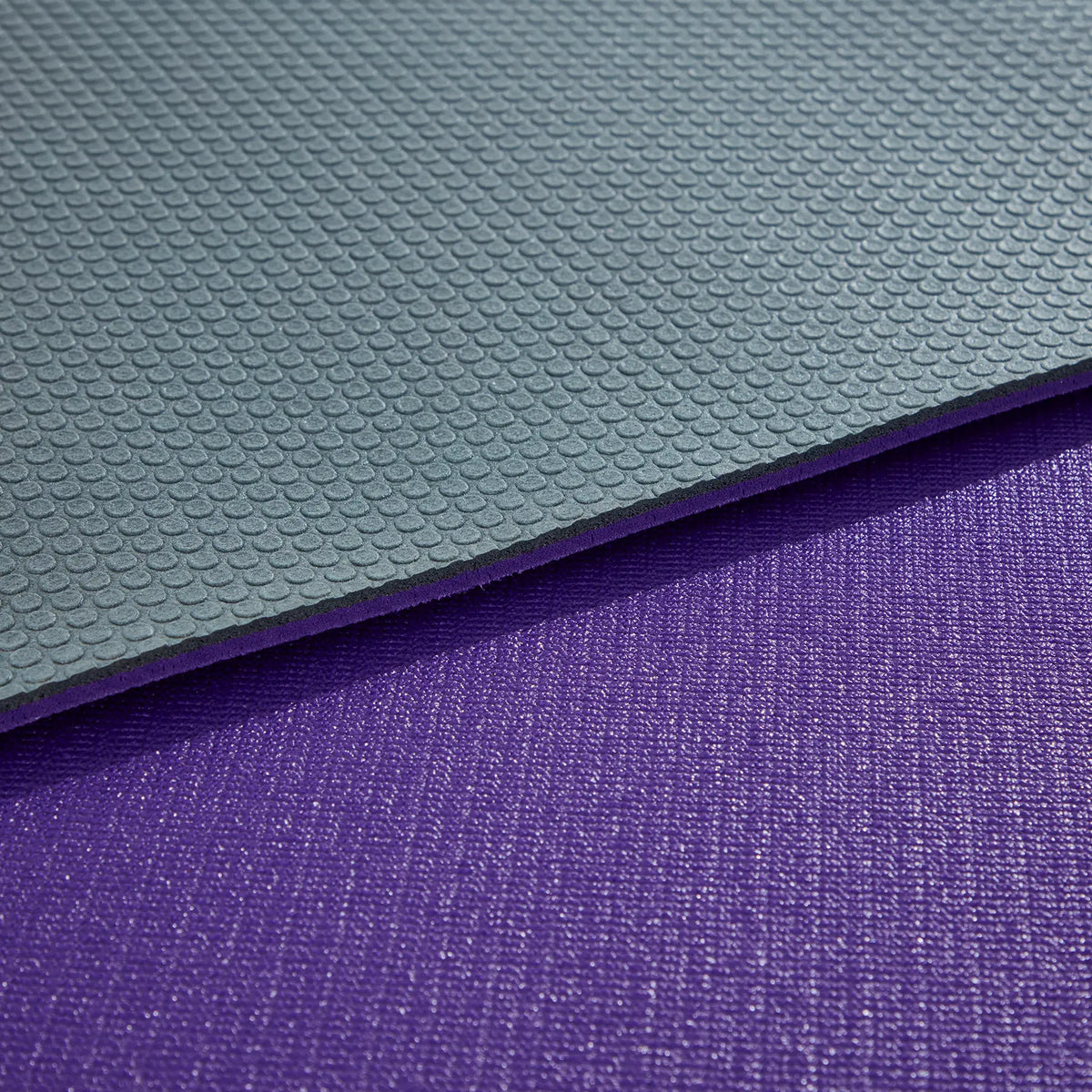
- Cushioned surface: a GXMMAT large exercise mat made of 7 mm high-density foam softens landings, reduces noise and vibration and protects floors. For a full HIIT space, the 6'x12' extra large exercise mat gives room for every jump.
- Compact option: the GXMMAT jump rope mat (48" × 36") with a rubber middle layer and anti-slip base works well for jumping in place.
- Ceiling: check you have enough headroom before jumping high indoors.
FAQ
What do tuck jumps work?
The quads, glutes, calves, hamstrings, hip flexors and core, with a big cardio effect.
How many tuck jumps should I do?
3–4 sets of 6–10 jumps with full rest between sets.
Are tuck jumps good for beginners?
They're advanced. Beginners should start with squat jumps and learn to land softly.
Do tuck jumps burn a lot of calories?
They're a high intensity exercise that raises the heart rate quickly, so they burn calories fast for the time spent, but sets are short.
How do I land tuck jumps safely?
Land on the balls of your feet, bend your knees and hips, keep the knees over the toes, and use a cushioned surface.
Written by Yuvien Royer for GXMMAT. This article is general fitness information, not medical advice.