How to Do a Kettlebell Swing: Proper Form and Workouts
Quick answer: The kettlebell swing is a hip hinge, not a squat or a front raise. Stand with feet slightly wider than shoulders, hike the kettlebell back between your thighs, then snap your hips forward and squeeze your glutes so the bell floats to about chest height. Let it fall back into the hinge and repeat. Your arms just guide the bell; your hips do the work. Beginners can start with 5 sets of 10 swings, resting as needed, 2–3 times a week.
Key takeaways
- Hinge, don't squat: hips back, shins nearly vertical.
- Power comes from a hip snap and glute squeeze.
- Arms are ropes; don't lift with your shoulders.
- Chest height is enough for a Russian swing.
- Stand tall at the top; don't lean back.
Kettlebell swing benefits
- Posterior chain strength: glutes, hamstrings and back.
- Power: fast hip extension carries over to jumping and sprinting.
- Conditioning: swings raise your heart rate quickly with no jumping.
- Grip and core strength.
- Time-efficient: a few minutes of swings is a solid finisher.
How to do a kettlebell swing: step by step
- Setup: place the bell about a foot in front of you. Feet slightly wider than shoulders.
- Hinge and grip: push your hips back, flat back, and grab the handle with both hands.
- Hike: tilt the bell toward you and hike it back between your thighs like a football snap, high on the thighs.
- Snap: drive your hips forward hard and squeeze your glutes. The bell floats up.
- Float: at the top, stand tall with arms straight and the bell around chest height.
- Fall: let the bell drop; hinge just before it reaches your hips.
- Repeat, breathing out sharply at the top.
- Park it: after the last rep, hike it back and set it down in front of you.
Practice the hinge first with kettlebell deadlifts in our beginner kettlebell workout.
Common mistakes
| Mistake | Fix |
|---|---|
| Squatting the swing | Keep shins nearly vertical; push hips back |
| Lifting with the arms | Relax your arms; drive with the hips |
| Leaning back at the top | Finish in a tall plank: glutes and abs tight |
| Rounded back | Shorter swings; keep chest proud and lats tight |
| Bell drops below the knees | Hike high between the thighs |
| Swinging overhead too soon | Master the Russian (chest-height) swing first |
Swing variations
| Variation | How | Level |
|---|---|---|
| Russian swing (two hands) | Bell to chest height | Beginner |
| Single-arm swing | One hand; resist rotation | Intermediate |
| Hand-to-hand swing | Switch hands at the top | Intermediate |
| American swing | Bell overhead | Advanced; needs good shoulder mobility |
What size kettlebell for swings?
| Experience | Starting weight |
|---|---|
| New to exercise | 10–15 lb |
| Some training experience | 15–25 lb |
| Experienced | 25 lb and up |
Pick a weight you can swing to chest height for 10 reps with crisp form. If it's too light, it will float up from arm effort; too heavy, and your back rounds.
Kettlebell swing workouts
1. Beginner swing ladder (10 minutes)
Swings 5, 10, 15, 10, 5 with 45–60 seconds rest between sets.
2. Swing EMOM (10 minutes)
Every minute on the minute: 10–15 swings, rest the remainder. See our EMOM guide.
3. Swing and get-up combo
10 swings + 1 Turkish get-up per side. Repeat 5 rounds.
4. Strength day finisher
5 × 10 swings after squats or deadlifts, then a set of farmer's carries.
Swinging safely at home
- Clear space: about 6 ft in front and behind you; keep kids and pets away.
- Ceiling and furniture: check clearance, especially for overhead swings.
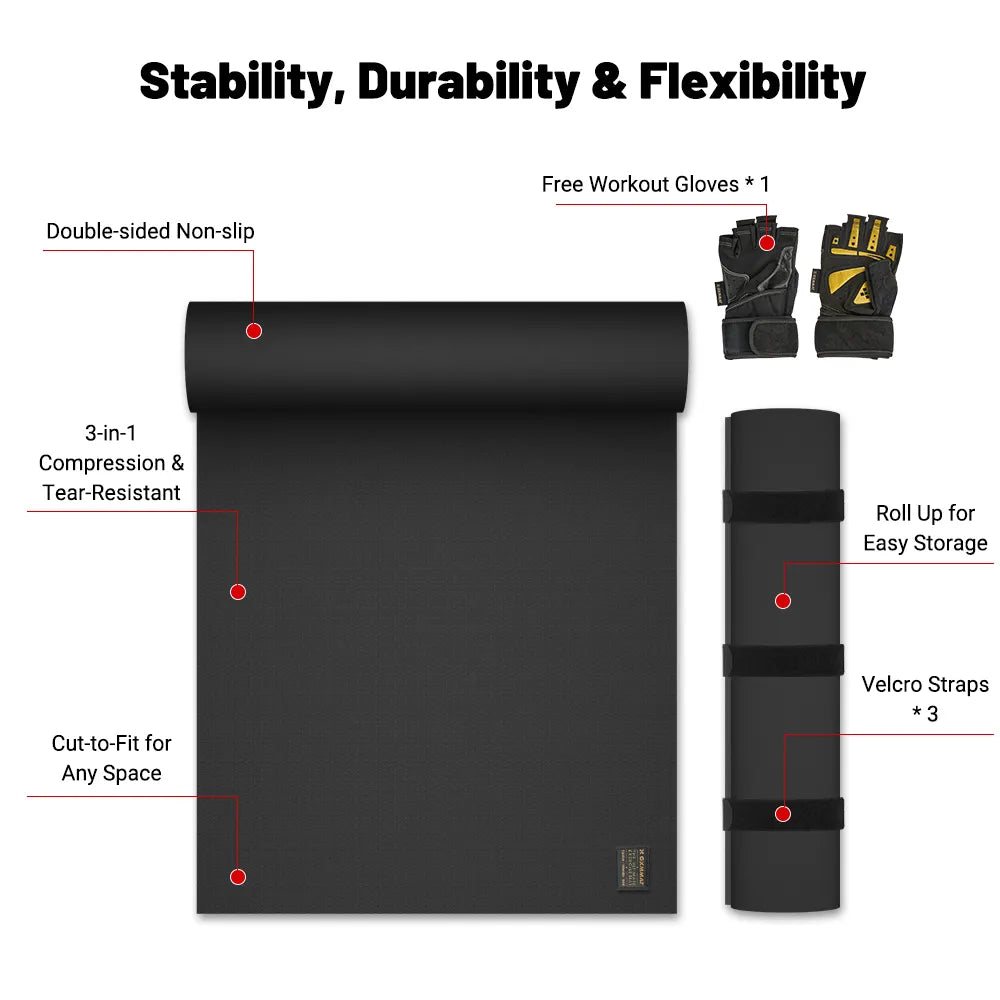
- Non-slip floor: a large exercise mat keeps your feet planted and protects the floor if you set the bell down.
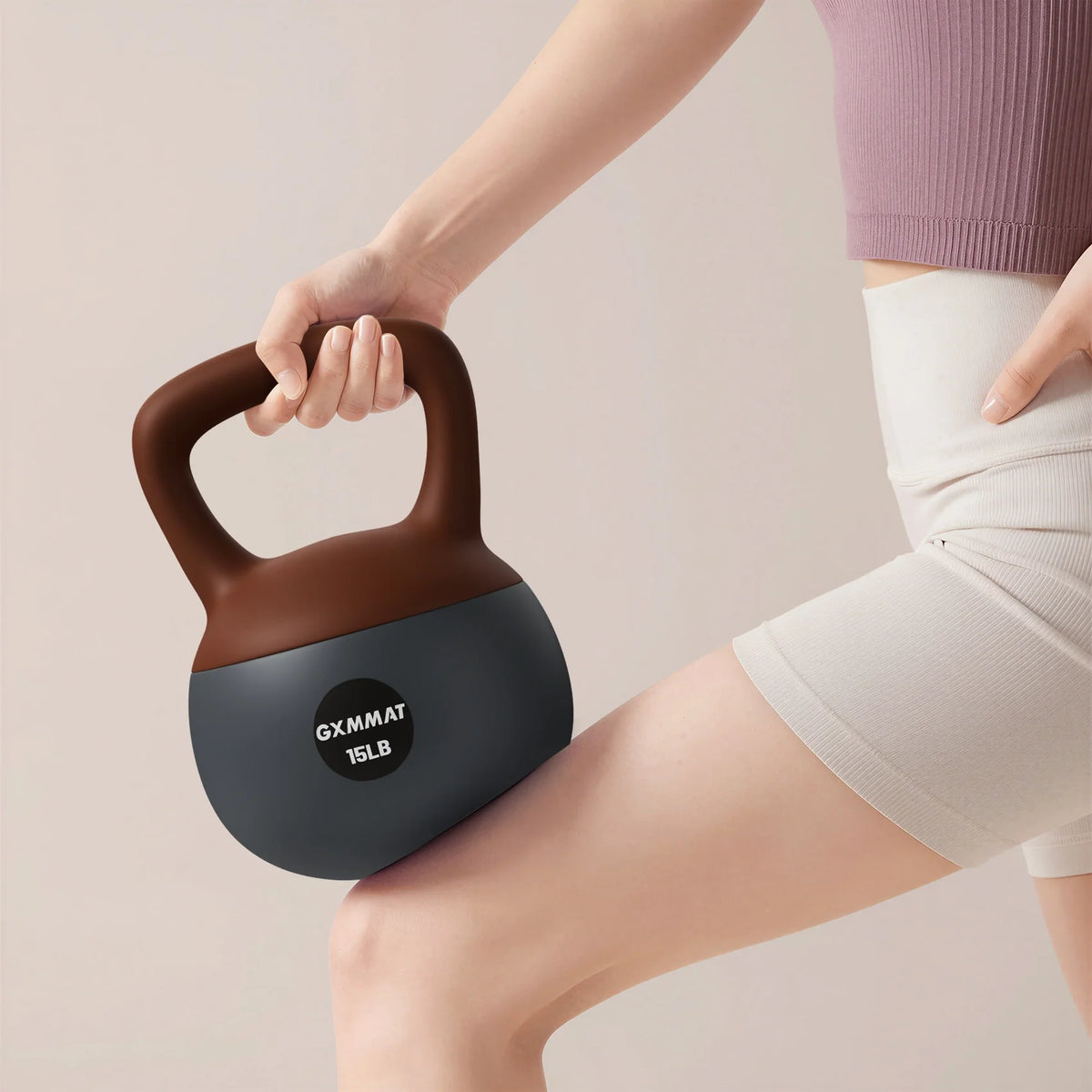
- Soft kettlebells: GXMMAT soft kettlebells (10, 15, 20, 25 lb, or a 10+15+20 lb set) have a soft shell, cushioned base and wide textured handle, which makes them quieter and more forgiving on home floors than cast iron.
- Grip: sweaty hands? workout gloves help on high-rep sets.
FAQ
What muscles do kettlebell swings work?
Mainly the glutes and hamstrings, plus the back, core, shoulders and grip.
Are kettlebell swings cardio or strength?
Both. Heavy swings in short sets build strength and power; lighter swings in longer sets work as conditioning.
How many kettlebell swings should I do a day?
Beginners do well with 50–100 swings per session, 2–3 times a week. Build up gradually.
Are kettlebell swings bad for your back?
Not with good hinge technique. Back pain during swings usually means rounding, squatting or leaning back. Lighten the bell and fix your form.
Russian or American swing: which is better?
The Russian swing (to chest height) is safer and better for most people. The American swing needs excellent shoulder mobility.
Written by Yuvien Royer for GXMMAT. This article is general fitness information, not medical advice.