Decline Push-Ups: How to Do Them for Upper Chest
Quick answer: To do decline push-ups, place your feet on a sturdy elevated surface such as a step, box or bench, and your hands on the floor slightly wider than shoulder width. Form a straight line from head to heels, brace your core, then lower your chest toward the floor with your elbows at about 45 degrees. Push back up to straight arms. Do 3 sets of 6–15 reps. Raising your feet shifts more of your body weight onto your upper body, making decline push-ups harder than regular push-ups and putting more emphasis on the upper chest and front shoulders.
Key takeaways
- Higher feet = harder push-up and more shoulder work.
- Start low: a 12–18 inch step is plenty at first.
- Straight body line; don't let the hips pike or sag.
- Elbows at about 45 degrees.
- Master regular push-ups first.
Muscles worked
| Muscle | Role |
|---|---|
| Upper chest | More emphasis than flat push-ups |
| Front delts | Work harder as the feet get higher |
| Triceps | Straighten the elbows |
| Core and glutes | Hold the plank position |
Push-up difficulty ladder
| Variation | Approx. body weight lifted |
|---|---|
| Incline push-up (hands raised) | Least |
| Knee push-up | Less |
| Standard push-up | About two-thirds of body weight |
| Decline push-up (feet on a step) | More |
| High decline / pike push-up | Most, more shoulder-focused |
New to push-ups? See the push-up progression for beginners.
How to do a decline push-up
- Set up: feet on a stable step or box, hands on the floor slightly wider than the shoulders.
- Brace: squeeze the glutes and tighten the core so the body is straight.
- Lower: bend the elbows to about 45 degrees and bring the chest toward the floor.
- Push: press back up to straight arms.
- Repeat with control.
Variations
| Variation | Why |
|---|---|
| Low decline (12 in) | Gentle step up from regular push-ups |
| High decline (24 in+) | More shoulders and upper chest |
| Decline diamond push-up | More triceps |
| Single-leg decline push-up | More core challenge |
| Decline push-up on dip bars or handles | Deeper range; see dip bar exercises |
Common mistakes
| Mistake | Fix |
|---|---|
| Hips sagging | Squeeze the glutes and brace |
| Hips piking up | Keep a straight line |
| Elbows flared at 90 degrees | Tuck to about 45 degrees |
| Feet too high too soon | Start low, then progress |
| Half reps | Chest near the floor, arms straight at the top |
Sample upper body workout
| Exercise | Sets × reps |
|---|---|
| Decline push-ups | 3 × 8–12 |
| Inverted rows | 3 × 8–12 |
| Pike push-ups | 3 × 6–10 |
| Dips | 3 × 6–10 |
| Plank | 3 × 30–45 sec |
Who should be careful
- Shoulder pain: use a lower step or regular push-ups.
- Wrist pain: use push-up handles or fists; see wrist stretches.
- High blood pressure: head-down positions may not suit everyone; check with your doctor.
Decline push-ups at home
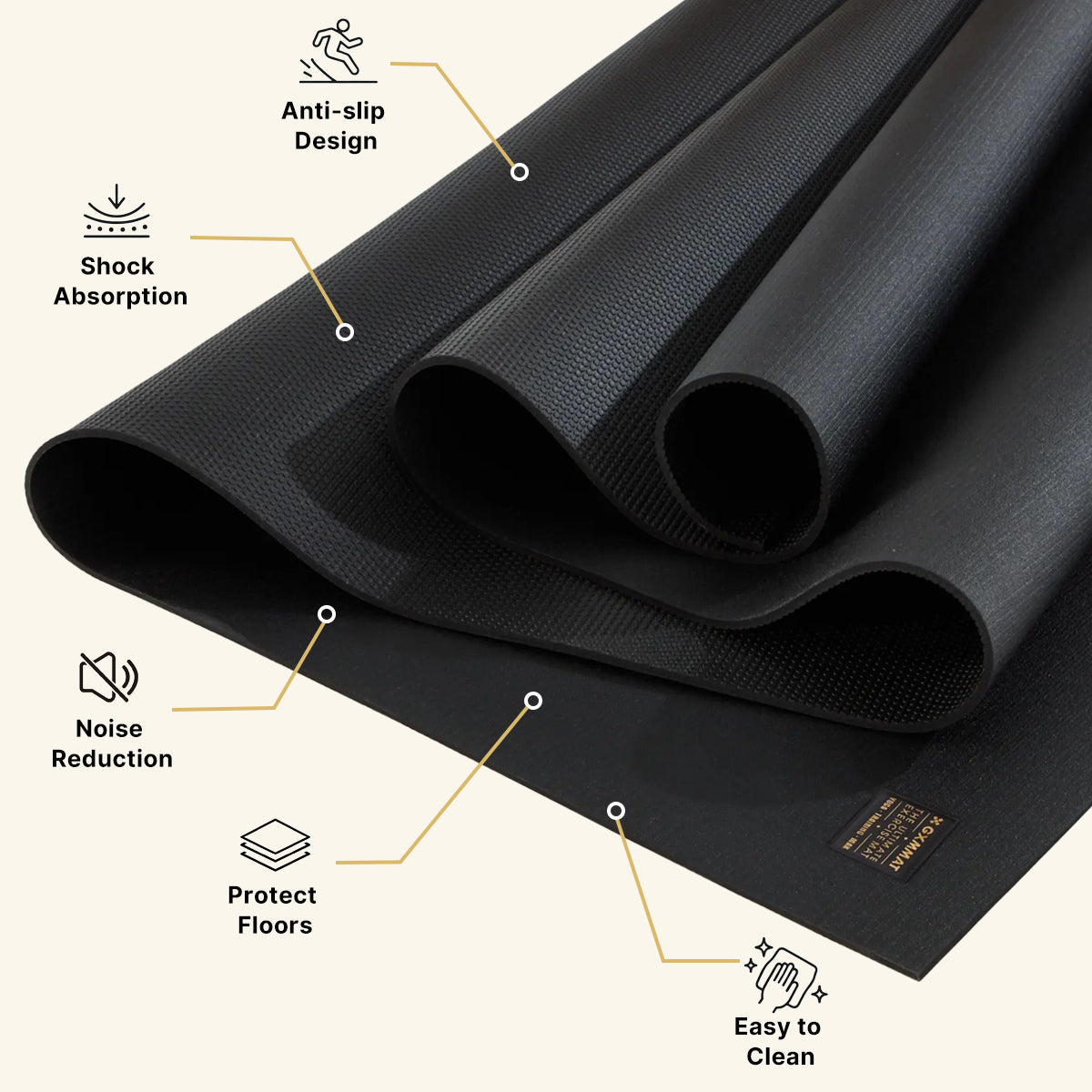
Use a stable, non-slip surface for your feet, never a rolling chair. A GXMMAT large exercise mat keeps your hands from slipping and cushions your wrists, and the mat's size gives room for your full body length. If you have a power rack, the bottom crossmember or safety bars at a low setting can also work as a foot rest. See power rack exercises.
FAQ
What do decline push-ups work?
The upper chest, front shoulders and triceps, with the core holding the body straight.
Are decline push-ups harder than regular push-ups?
Yes. Elevating the feet puts more of your body weight on your arms.
How high should my feet be?
Start around 12–18 inches; higher makes it harder and more shoulder-focused.
How many decline push-ups should I do?
3 sets of 6–15 reps.
Do decline push-ups build upper chest?
They place more emphasis on the upper chest and front delts than flat push-ups.
Written by Yuvien Royer for GXMMAT. This article is general fitness information, not medical advice.