Body Recomposition: How to Lose Fat and Gain Muscle at the Same Time
Quick answer: Body recomposition means losing fat and building muscle at the same time. It works best for beginners, people returning after a break, and people with more body fat to lose. The recipe is simple: lift weights 3–4 times a week with progressive overload, eat at maintenance or a small calorie deficit (about 10–20%), get 0.7–1 g of protein per pound of body weight daily, and sleep 7–9 hours. Expect slow, steady change over 3–6 months; the scale may barely move while your waist shrinks and your lifts go up.
Key takeaways
- Strength training is the driver; diet decides whether fat comes off.
- Small deficit, high protein: big deficits cost muscle.
- Track more than the scale: waist, photos and strength.
- Works best for beginners, returning lifters and people with higher body fat.
- Patience: think months, not weeks.
Who can recomp?
| You are… | Recomp potential | Best approach |
|---|---|---|
| New to lifting | High | Maintenance calories or a small deficit |
| Returning after a long break | High | Maintenance; muscle comes back quickly |
| Carrying more body fat | High | 10–20% deficit with high protein |
| Lean and trained for years | Low | Separate lean-gain and fat-loss phases usually work better |
Step 1: Set your calories
- Estimate maintenance: body weight in pounds × 14–16 for most moderately active adults.
- More fat to lose: eat about 10–20% below maintenance.
- Already fairly lean: eat at maintenance.
- Adjust every 2–3 weeks based on your waist and strength, not day-to-day scale changes.
Step 2: Hit your protein
| Body weight | Daily protein target (0.7–1 g per lb) |
|---|---|
| 130 lb | 90–130 g |
| 160 lb | 110–160 g |
| 190 lb | 135–190 g |
| 220 lb | 155–220 g |
Spread protein across 3–4 meals. If you have a lot of weight to lose, base the target on your goal weight. Fill the rest of your calories with carbs and fats you enjoy and can stick with.
Step 3: Lift with progressive overload
- Train 3–4 days a week, hitting each muscle group about twice.
- Build around compound lifts: squat, deadlift, bench press, overhead press, rows and pull-ups.
- Do about 10–20 hard sets per muscle per week: sets per week guide.
- Add weight or reps over time: progressive overload.
- Train close to failure, leaving 1–3 reps in reserve: RPE and RIR.
Sample 3-day recomp workout
| Day A | Day B | Day C |
|---|---|---|
| Squat 3 × 5–8 | Deadlift 3 × 5 | Squat 3 × 8–10 |
| Bench press 3 × 5–8 | Overhead press 3 × 6–8 | Bench press 3 × 8–10 |
| Barbell row 3 × 8 | Lat pulldown or pull-ups 3 × 8–10 | Seated cable row 3 × 10 |
| Tricep pushdown 2 × 12 | Cable curl 2 × 12 | Dips 2 × 8–10 |
| Plank 3 × 30–45 sec | Pallof press 3 × 10 per side | Farmer's carry 3 × 40 yd |
Train Monday, Wednesday and Friday, for example. Rest 2–3 minutes on the big lifts (rest guide). Want a full beginner plan? See the 3-day power rack workout plan.
Step 4: Add easy cardio and daily steps
- 7,000–10,000 steps a day does more for fat loss than most people expect.
- 1–2 sessions of zone 2 cardio a week for heart health.
- Keep hard intervals modest so they don't eat into recovery from lifting.
Step 5: Sleep and recover
- Sleep 7–9 hours; poor sleep makes it harder to keep muscle while losing fat.
- Take a deload week every 4–8 weeks.
- Consider creatine: see the creatine guide.
How to track a recomp
| Measure | How often | What you want to see |
|---|---|---|
| Waist at the navel | Every 2 weeks | Slowly shrinking |
| Progress photos | Every 2–4 weeks, same light | Visible change over months |
| Strength on main lifts | Every session | Reps or weight going up |
| Body weight | Weekly average | Stable or slowly dropping |
Common mistakes
| Mistake | Fix |
|---|---|
| Cutting calories too hard | Keep the deficit to 10–20% |
| Too little protein | Aim for 0.7–1 g per lb daily |
| Only doing cardio | Lift first; cardio is the supplement |
| Changing the program every week | Stick with the same lifts for 8–12 weeks |
| Judging by the scale alone | Use waist, photos and strength |
Recomp at home: equipment
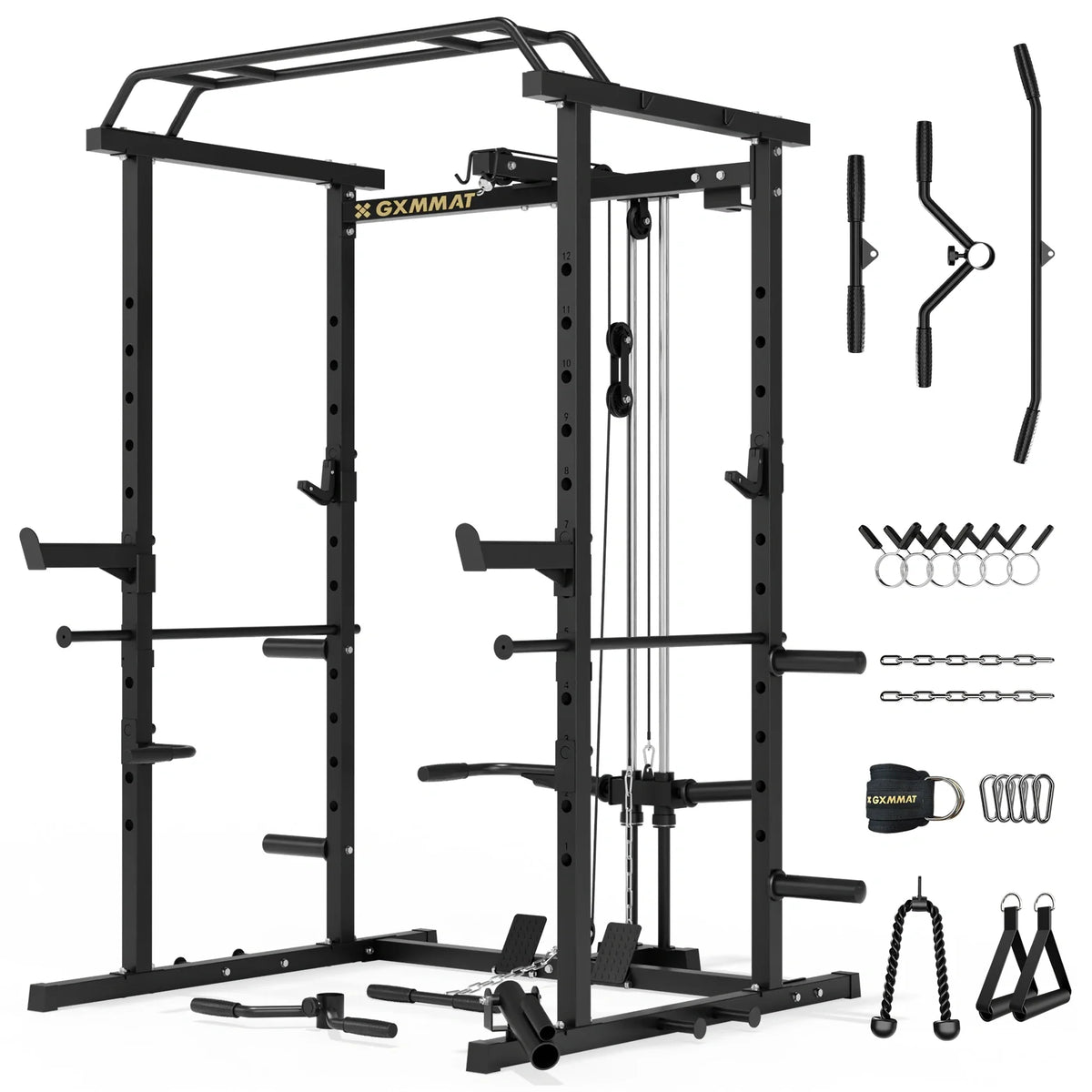
- Power rack with cables: the G5, V6 and X6 cover squats, presses, pull-ups, pulldowns and rows in one station.
- Bar and plates: Olympic bar, bumper plates and change plates for steady small increases.
- Kettlebells: soft kettlebells for carries, swings and goblet squats.
- Floor: a large exercise mat for core work and floor protection.
- Starting from scratch? See home gym packages.
FAQ
Can you lose fat and gain muscle at the same time?
Yes, especially if you are new to lifting, returning after a break, or have more body fat to lose. It gets harder the leaner and more experienced you are.
How long does body recomposition take?
Most people notice changes in 8–12 weeks and clear results in 3–6 months.
Should I eat in a deficit or at maintenance for recomp?
Use a small deficit of 10–20% if you have fat to lose. If you are already fairly lean, eat at maintenance.
How much protein do I need for body recomposition?
About 0.7–1 g per pound of body weight per day.
Why isn't the scale moving during recomp?
You may be losing fat and gaining muscle at a similar rate. Check your waist, photos and strength instead.
Written by Yuvien Royer for GXMMAT. This article is general fitness and nutrition information, not medical advice. Talk to a doctor or registered dietitian before changing your diet if you have a medical condition, are pregnant, or have a history of disordered eating.