Overhead Squat: How to Do It, Grip, Mobility and Progressions
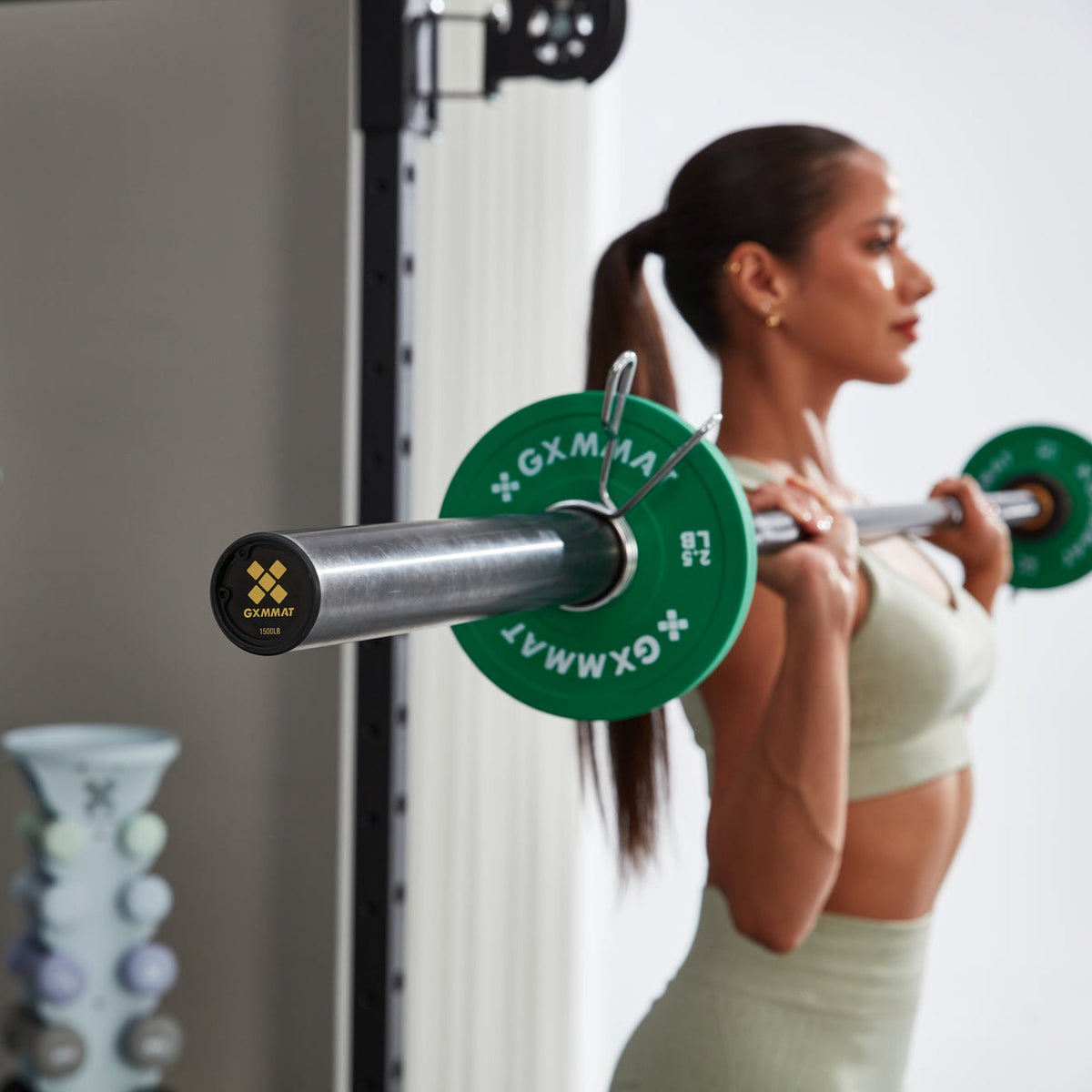
Quick answer: To do an overhead squat, hold a barbell (or a PVC pipe to start) overhead with a wide, snatch-width grip and locked elbows. Stand with your feet about shoulder width, toes turned out slightly. Push the bar up into your hands, brace your core, then sit your hips down between your heels while keeping the bar stacked over the middle of your feet. Squat as deep as you can with a tall chest, then drive up through your whole foot. The overhead squat tests shoulder, upper back, hip and ankle mobility at the same time and builds serious core strength and stability. Start light: 3–5 sets of 3–5 reps.
Key takeaways
- Wide grip: a snatch-width grip position makes the overhead squat easier on the shoulders.
- Bar over mid-foot the whole rep. If it drifts forward, you'll lose it.
- Push up into the bar: active shoulders, elbows locked.
- Mobility first: most people struggle with mobility before strength.
- Learn with a PVC pipe or empty bar and check your ceiling height before loading.
Muscles worked
| Area | Role in the overhead squat |
|---|---|
| Quads and glutes | Lower and lift you out of the squat |
| Shoulder muscles and upper back | Hold the bar locked out overhead |
| Triceps | Keep the elbows straight |
| Core | Keeps the torso upright under a load far from the hips |
| Ankles, hips and thoracic spine | Mobility to stay upright at depth |
Benefits of the overhead squat
- Core strength and stability: the weight is high above your body, so any lean has to be resisted.
- Mobility check: it shows where you're tight (ankles, hips, shoulders or upper back).
- Better squat position: forces an upright torso that carries over to the front squat.
- Overhead strength: stable shoulders help the overhead press and snatch.
- Balance and coordination through the whole body.
Grip position: how wide?
A wide grip shortens the distance the bar travels and puts the shoulders in a more stable position. A simple way to find it: stand tall with the bar, and slide your hands out until the bar sits at your hip crease when your arms hang straight. That's roughly a snatch grip. A narrower grip is possible but needs much better shoulder mobility. Use a full grip around the bar; on an Olympic bar, the knurl rings help you set the same hand position every time.
How to do an overhead squat
- Get the bar overhead: take the bar from a rack on your back, set a wide grip, and press or push press it overhead. Lock the elbows.
- Set the feet: about shoulder width, toes turned out 15–30 degrees, weight balanced between heels and toes.
- Active shoulders: push up into the bar as if trying to make your arms longer. Armpits face forward.
- Brace: big breath into the belly, ribs down.
- Descend: sit the hips straight down, knees tracking over the toes. Keep the chest tall and the bar over mid-foot; your head can come slightly forward through the arms.
- Bottom: go as deep as you can while keeping the heels down and the bar stable.
- Stand: drive through the whole foot, keep pushing up on the bar, and finish tall.
Common mistakes
| Mistake | Fix |
|---|---|
| Bar drifting forward | Push the bar slightly back as you descend; widen the grip |
| Elbows bending | Push up into the bar; lighten the load |
| Heels lifting | Work on ankle mobility; try a slightly wider stance or small plates under the heels |
| Chest dropping | Slow down; strengthen the upper back; squat to a shallower depth |
| Lower back arching to get the arms back | Ribs down; improve thoracic spine mobility |
| Too much weight too soon | Stay with a PVC pipe or empty bar until positions are solid |
Mobility drills that help
If you can't keep the bar over your feet, mobility is usually the limiter. Before training, try:
- Upper back: thoracic spine mobility exercises and wall angels.
- Hips and ankles: a goblet squat hold at the bottom, rocking side to side.
- Shoulders: PVC pass-throughs, 10–15 slow reps.
- Overhead hold: stand with the bar locked out overhead for 20–30 seconds.
Progressions
| Stage | Exercise | Goal |
|---|---|---|
| 1 | PVC pipe or broomstick overhead squat | Full depth, bar over mid-foot |
| 2 | Empty barbell overhead squat | Same positions with real load |
| 3 | Pause overhead squat | 2–3 sec at the bottom for control |
| 4 | Loaded overhead squat | Add small jumps; 3–5 reps |
| 5 | Snatch balance | Drop under the bar into the overhead squat |
Easier alternative: a single-arm kettlebell overhead squat takes less shoulder mobility on one side. Related lifts: back squat, pause squat and kettlebell snatch.
Sets and reps
| Use | Prescription |
|---|---|
| Warm up or mobility | 2–3 × 5 with a PVC pipe or empty bar |
| Strength and stability | 3–5 × 3–5, moderate weight |
| Before snatch practice | 3 × 3, light |
Who should be careful
- Shoulder pain or past shoulder injury: stay with a PVC pipe or use a kettlebell variation, and get advice from a professional.
- Lower back pain: squat to a shallower depth and keep the load light.
- Missing a rep: learn to drop the bar safely behind you (step forward and push it back) with bumper plates, in a clear area.
Overhead squats at home
- Ceiling height: with your arms locked out, the bar can sit 7 feet or more above the floor when you stand. Measure before you train; see how much ceiling height you need.
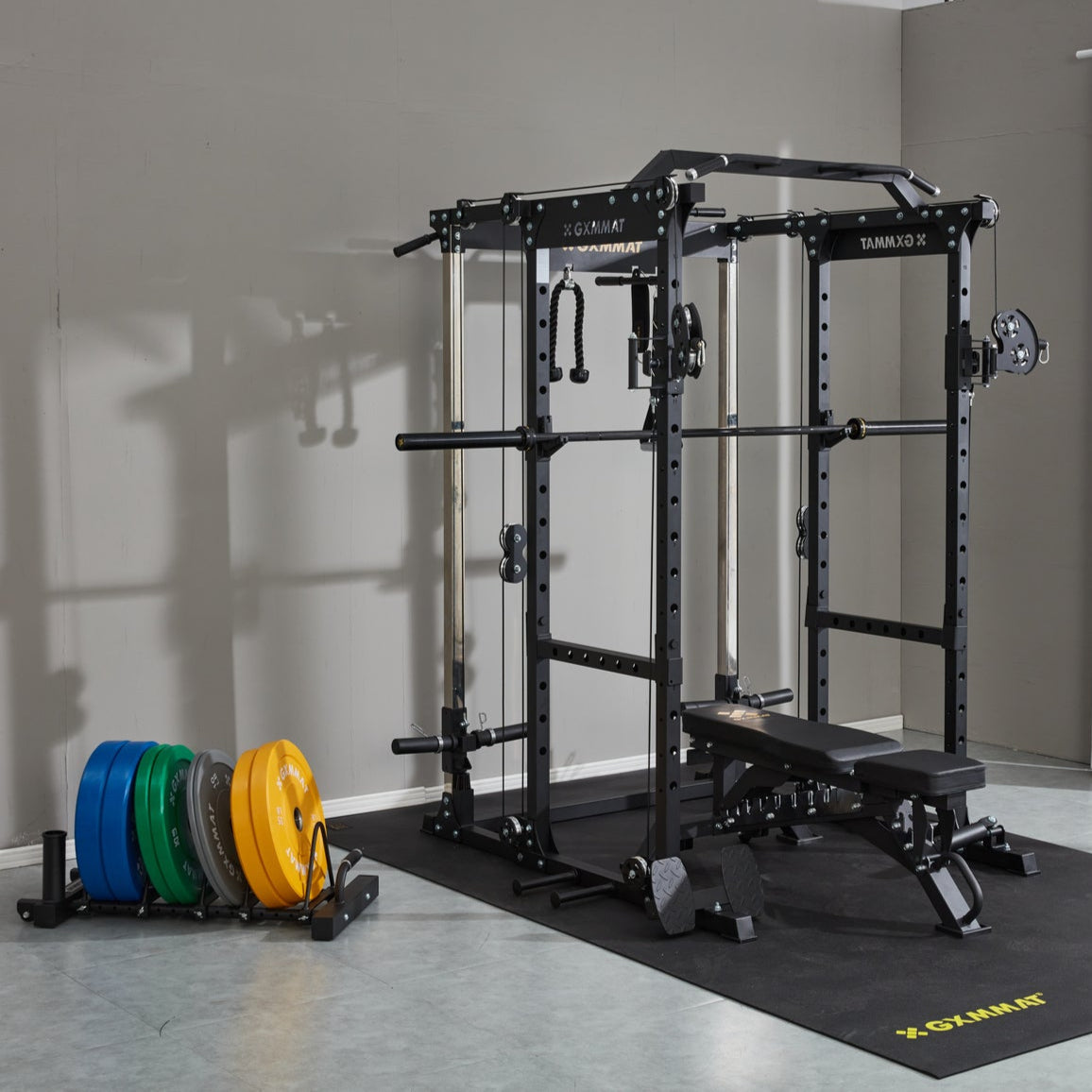
- Rack: a G5, V6 or X6 power rack lets you take the bar off the J-hooks on your back and press it overhead. Set the safety arms for back-squat days; for overhead squats, many lifters train just outside the rack so they can drop the bar backward.
- Bar and plates: a 20 kg Olympic bar with knurl rings for grip width, and bumper plates that are safer to drop than iron plates. Small change plates help with slow progress.
- Floor: a non-slip large exercise mat keeps your feet planted.
FAQ
What does the overhead squat work?
The quads, glutes, shoulders, upper back, triceps and core, plus mobility in the ankles, hips and thoracic spine.
Why is the overhead squat so hard?
It needs good mobility in several joints at once and a strong core to keep the bar balanced high over your feet. Most people are limited by mobility, not strength.
How wide should my grip be for an overhead squat?
Wide, roughly a snatch grip: when your arms hang straight, the bar sits near your hip crease.
Can beginners do overhead squats?
Yes, with a PVC pipe or broomstick first. Move to an empty barbell when you can hit full depth with the bar over your mid-foot.
How often should I do overhead squats?
1–2 times a week, as a warm up or a light strength exercise, is plenty for most people.
Written by Yuvien Royer for GXMMAT. This article is general fitness information, not medical advice.