How Much Weight Do I Need for a Home Gym?
Quick answer: For a barbell home gym, most beginners need a 45 lb barbell plus about 230–300 lb of plates, which covers squats, bench press and deadlifts for the first year or more. A practical starter set is a pair each of 45, 35, 25 and 10 lb bumper plates plus small change plates (2.5–5 lb) for small jumps. Stronger lifters who deadlift over 400 lb may need 400+ lb of plates. If you train mainly with kettlebells, 2–3 bells (for example 15, 20 and 25 lb) cover most beginner movements.
Key takeaways
- 230–300 lb of plates suits most beginners.
- Your deadlift sets the ceiling: it's usually your heaviest lift.
- Small plates matter for steady progress on presses.
- Bumper plates are quieter and safer to drop at home.
- Buy in stages as you get stronger.
How much weight by training level
| Level | Typical deadlift | Plates needed (plus 45 lb bar) |
|---|---|---|
| Beginner (0–1 year) | 135–275 lb | About 230 lb |
| Intermediate (1–3 years) | 275–405 lb | 300–400 lb |
| Advanced | 405+ lb | 400–600+ lb |
See where you stand with strength standards.
A good starter plate set
| Plates | Why |
|---|---|
| 2 × 45 lb | Standard loading; brings the bar to proper deadlift height |
| 2 × 35 lb | Fills gaps between jumps |
| 2 × 25 lb | Common increments |
| 2 × 10 lb | Smaller jumps |
| Change plates (2.5–5 lb) | Small jumps for bench and overhead press |
Use our plate math chart to plan loads, and see how to load a barbell.
Bumper plates vs iron plates
Bumper plates are rubber, quieter and safer to drop, and every plate is the same diameter, so even lighter plates keep the bar at deadlift height. Iron plates are thinner, so more weight fits on the bar. For home gyms, especially apartments and upstairs rooms, bumpers are usually the better choice. See bumper vs iron plates and types of weight plates.
How much weight for kettlebell training?
| Goal | Suggested kettlebells |
|---|---|
| Beginner full body | 10–15 lb and 20–25 lb |
| Swings and deadlifts | 20–25 lb to start |
| Presses, halos, Turkish get-ups | 10–15 lb |
| Two-bell moves (gorilla rows, floor press) | A matching pair |
See what size kettlebell should I get.
Tips for buying weight
- Start with what you need for 6–12 months.
- Prioritize pairs so both sides of the bar match.
- Get change plates early to keep progressing on presses; see progressive overload.
- Plan storage: plates on the floor are a trip hazard.
- Check your floor before loading up; see can your floor hold a home gym.
GXMMAT weights and storage
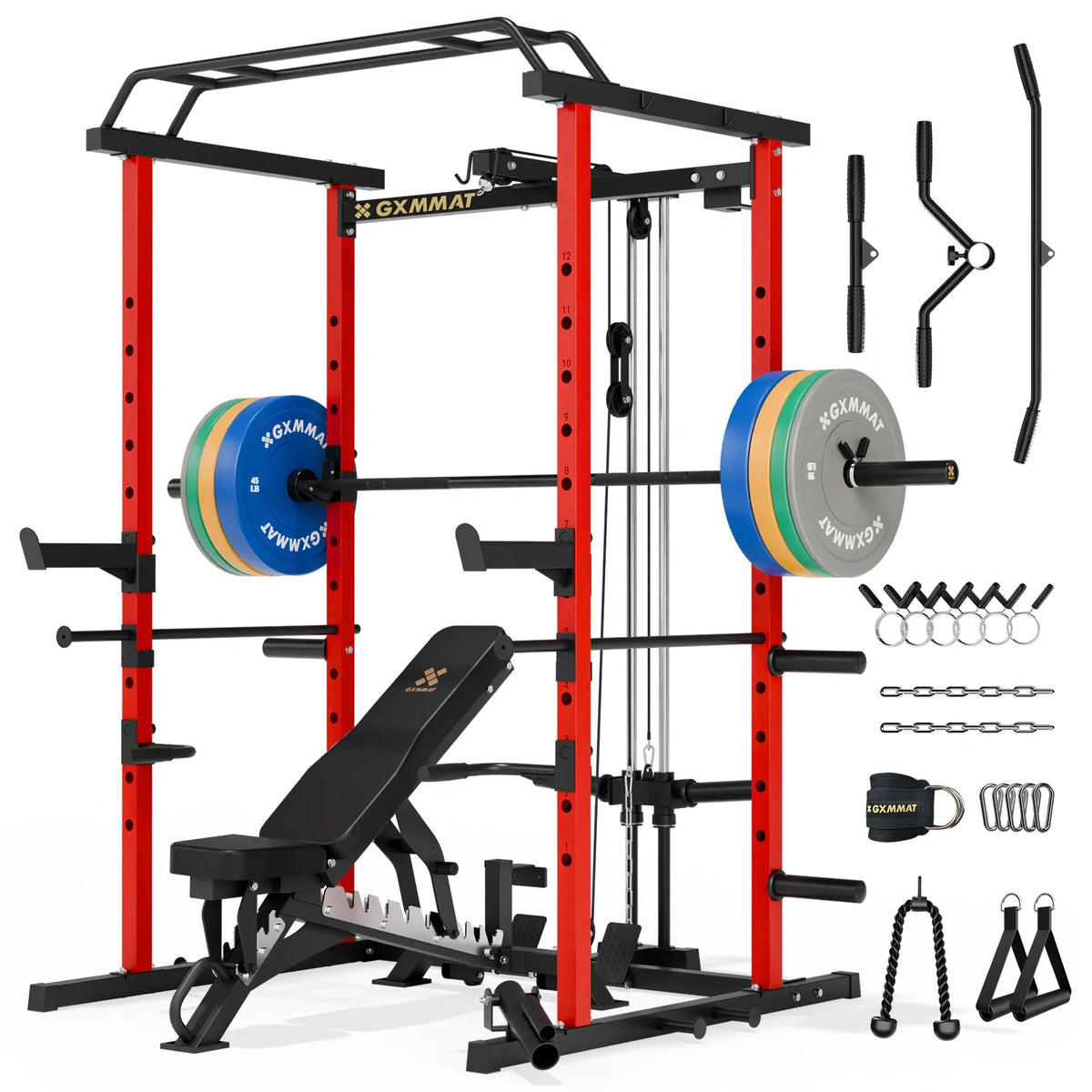
- Bumper plate set (230 lb): a complete starter set for squats, bench and deadlifts.
- Change plates set (17.5 lb): small plates for small jumps.
- Horizontal plate rack with wheels: keeps bumpers organized and mobile.
- Soft kettlebells in 10, 15, 20 and 25 lb.
- Rack, bench, barbell and bumper plate packages: everything in one order.
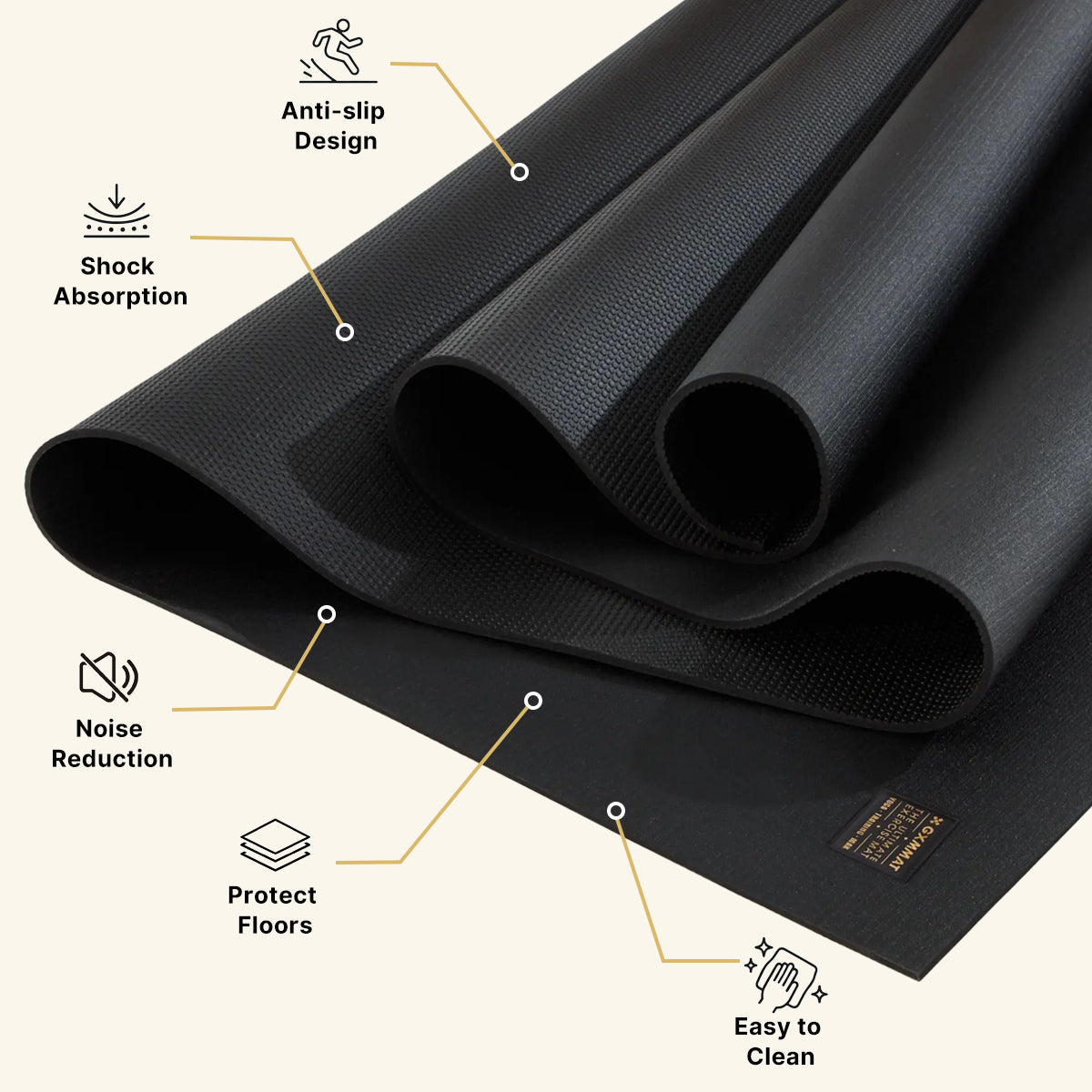
Put a large exercise mat under your lifting area to protect the floor. Comparing costs? See home gym vs gym membership cost.
FAQ
How much weight do I need for a home gym?
Most beginners do well with a 45 lb barbell and about 230–300 lb of plates.
Is 230 lb of plates enough?
For most beginners, yes. With a 45 lb bar that's 275 lb total, enough for a year or more of progress for many lifters.
Should I buy bumper or iron plates?
Bumpers are better for most home gyms because they're quieter and safer to drop.
Do I need small plates?
Yes. Change plates let you add 5 lb or less to presses, which helps steady progress.
How many kettlebells do I need?
Two or three in different sizes cover most beginner training.
Written by Yuvien Royer for GXMMAT. This article is general fitness information, not medical advice.