How to Load a Barbell: Plate Order, Collars and Safety
Quick answer: To load a barbell, place it on the J-hooks of a rack (or on the floor), then add plates heaviest first, sliding each one all the way to the inner collar of the sleeve. Alternate sides one plate at a time so the bar stays balanced, and secure each side with a collar. To unload, remove plates evenly from both sides, lightest first. Always double-check that both sides match. A standard Olympic barbell weighs 45 lb (20 kg), so "135" means the bar plus one 45 lb plate on each side.
Key takeaways
- Heaviest plates on first, closest to the center.
- Alternate sides to avoid tipping the bar off the hooks.
- Push plates flush against the inner collar.
- Always use collars.
- Unload evenly, never one whole side at a time.
Barbell and plate basics
| Item | Common weight |
|---|---|
| Standard Olympic men's barbell | 45 lb (20 kg) |
| Women's Olympic barbell | 33 lb (15 kg) |
| Plates | 2.5, 5, 10, 25, 35, 45 lb |
| Change plates | Small plates for smaller jumps |
Use our barbell plate math chart to quickly calculate your total.
How to load a barbell step by step
- Set the bar on the J-hooks at a comfortable height, or on the floor for deadlifts.
- Plan the load: subtract the bar weight, divide by two, and pick plates for each side.
- Add the heaviest plate to one side, sliding it all the way in.
- Add the matching plate to the other side.
- Continue alternating, heaviest to lightest.
- Add collars on both sides, tight against the plates.
- Check both sides match before lifting.
Loading a barbell for deadlifts on the floor
Lifting a bar with only one plate on can be awkward. Roll the bar onto a small plate or a plate wedge to lift one end, slide the plate on, then repeat on the other side. Use the same "heaviest first, alternate sides" rule. See how to deadlift.
How to unload a barbell safely
- Remove the collars.
- Take off the lightest plates first, alternating sides.
- Never strip one side completely while the bar is on J-hooks; it can flip off.
- Store plates on the rack's plate holders or a plate tree.
Common mistakes
| Mistake | Fix |
|---|---|
| Loading one side fully first | Alternate sides |
| Light plates on before heavy ones | Heaviest closest to the center |
| No collars | Always clip on collars |
| Plates not pushed all the way in | Slide flush to the inner collar |
| Miscounting | Check both sides; use the plate math chart |
Bumper plates vs iron plates
Bumper plates are thick rubber plates that are safer to drop and quieter on home floors; iron plates are thinner, so you can fit more weight on the bar. See bumper vs iron plates. For small jumps between sets, GXMMAT change plates let you add weight in smaller increments; see progressive overload.
Where to load and store plates
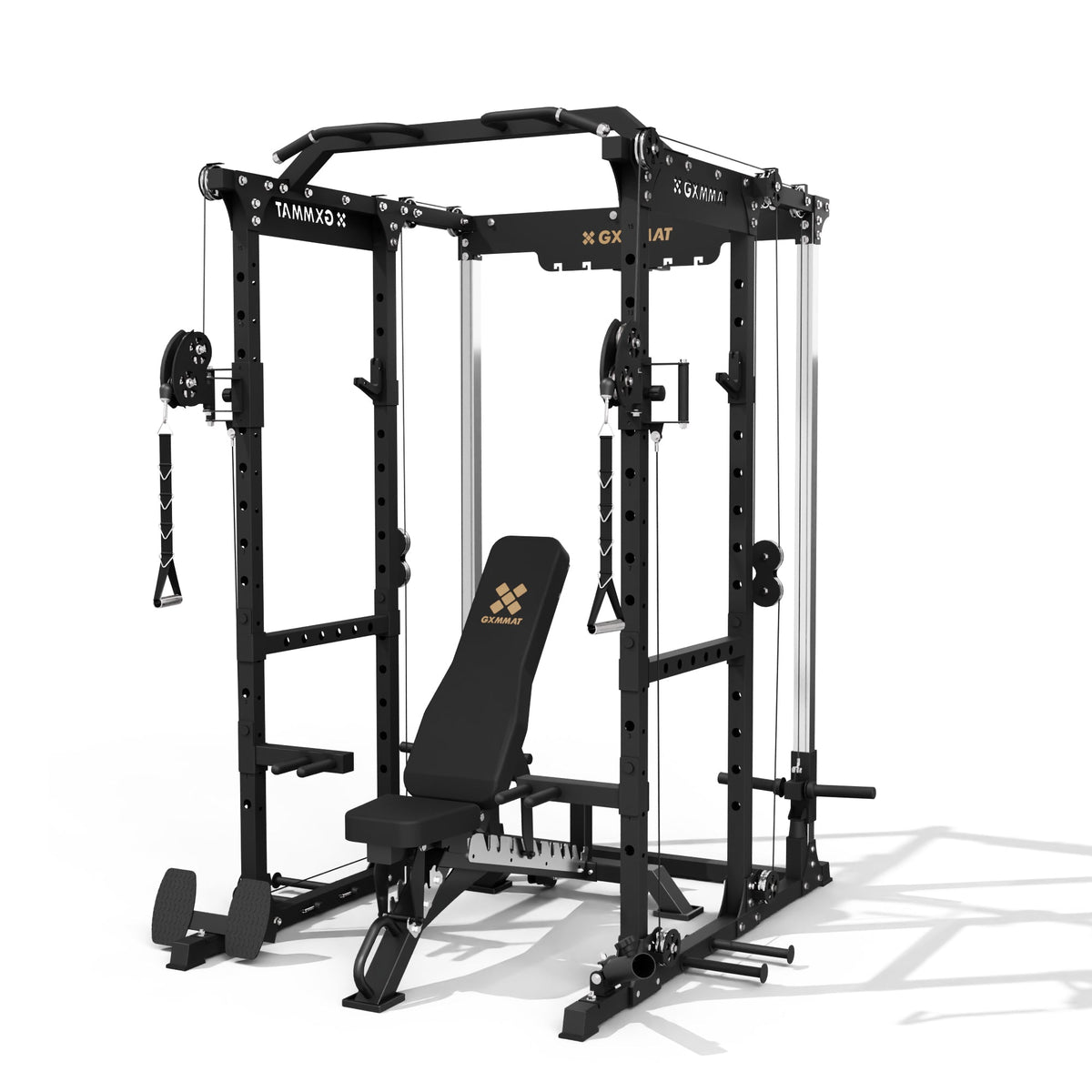
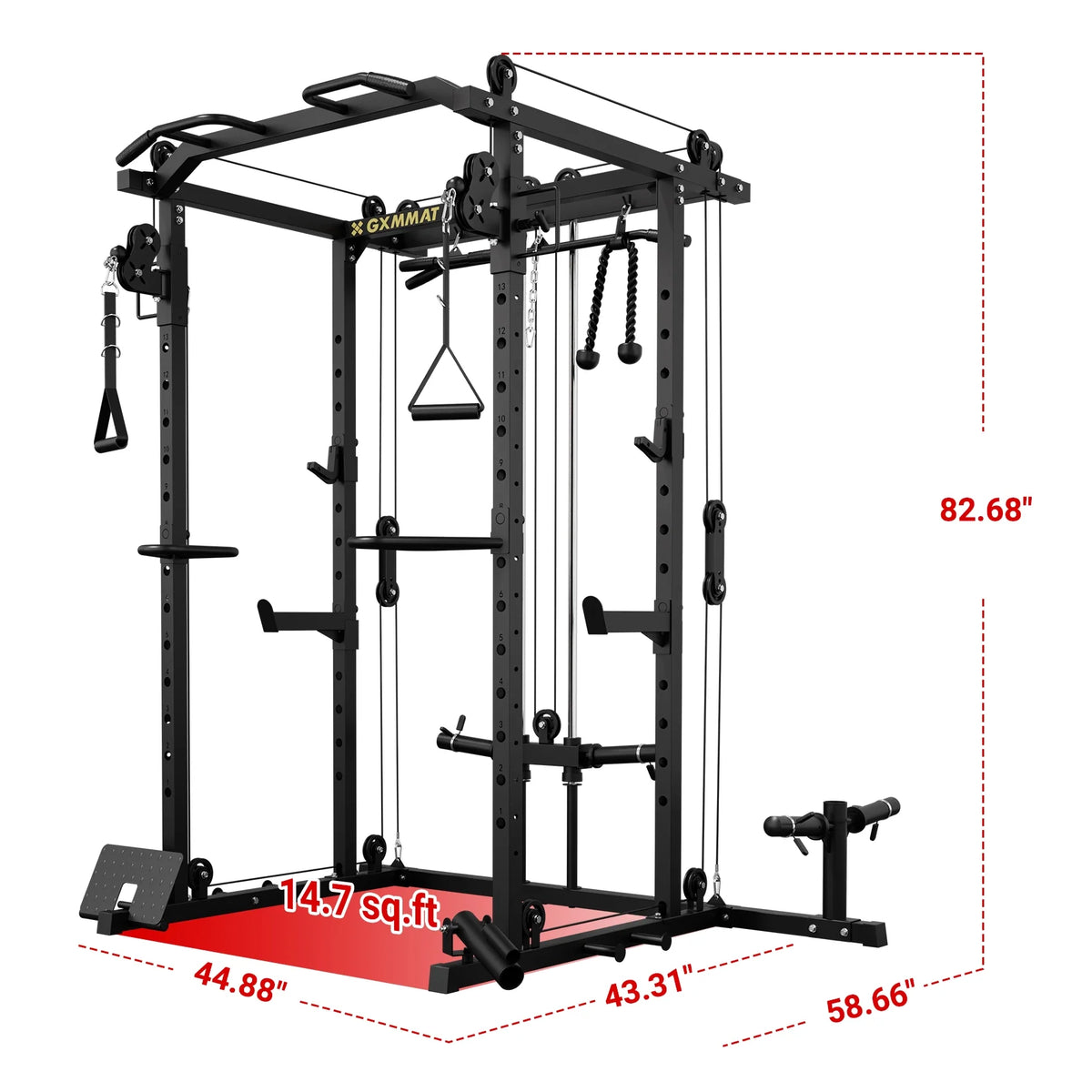
Loading on a rack keeps the bar at waist height so you don't have to bend over. GXMMAT power racks, the G5, V6 and X6, come with J-hooks that hold the bar securely while you load, and safety bars for lifting. Place a large exercise mat under the rack to protect your floor from dropped plates. Learn more in how to use a power rack.
FAQ
Which plate goes on first?
The heaviest plate, closest to the center of the bar.
Do I have to alternate sides?
Yes, especially on J-hooks. Loading one side fully can tip the bar off.
How much does a barbell weigh?
A standard Olympic barbell weighs 45 lb (20 kg); women's bars are usually 33 lb (15 kg).
Are collars necessary?
Yes. They stop plates from sliding off during a lift.
How do I calculate the total weight?
Add the bar weight to the plates on both sides, or use the plate math chart.
Written by Yuvien Royer for GXMMAT. This article is general fitness information, not medical advice.