How to Bail Out of a Squat Safely (Alone at Home)
Quick answer: The safest way to bail out of a squat is to squat inside a power rack with the safety bars set just below your bottom position. If you can't stand up, keep your chest up and sit down into a deep squat, letting the bar settle onto the safety bars, then crawl out underneath. Without safeties, the backup option is the back dump: release the bar, push it backward off your back and jump forward, which needs bumper plates, clear space and practice with an empty bar. Practice your bail before you need it.
Key takeaways
- Best option: squat in a rack with properly set safety bars.
- Bail by sitting down, not by folding forward.
- Practice with an empty bar so it feels automatic.
- Back dump only with bumper plates, clear space behind you and practice.
- Never try to "save" a rep by twisting or rounding.
Method 1: Bail onto the safety bars (recommended)
- Set the safeties 1–2 holes below the bar's lowest point at full depth. Test with an empty bar.
- Squat inside the rack so the safeties are under the bar.
- If a rep stalls, stay tight and sit straight down into the bottom of the squat.
- Lower the bar onto the safeties, keeping your chest up.
- Slide out from under the bar once it's resting on the safeties.
- Unload evenly, then reset the bar into the J-hooks.
See how to set safety arm height and how to use a power rack.
Method 2: The back dump (no safeties)
Used by weightlifters and in open areas with bumper plates.
- As you fail, let go of the bar.
- Push your hips and chest forward while the bar rolls off your back.
- Step or jump forward and away from the bar.
This requires bumper plates, a clear area behind you, a solid floor and practice. It's not appropriate in small rooms or with iron plates.
What not to do
| Don't | Why |
|---|---|
| Fold forward and dump the bar over your head | Risks the neck and shoulders |
| Twist to one side | Plates can slide; risk to the spine |
| Grind with a rounded back | High injury risk |
| Squat outside the rack with heavy weight | Safeties can't help you |
| Skip practice | You'll panic when it matters |
Bailing on bench press
With safety bars set just below your chest, simply lower the bar onto them and slide out. Without safeties, the "roll of shame" (rolling the bar down to your hips) is a last resort; benching alone without safeties is not recommended. See how to bench press.
How to practice bailing
- Set the safeties correctly.
- With an empty bar, squat down and deliberately set the bar on the safeties.
- Repeat with light weight until it's comfortable.
- Check that the bar clears the safeties at your normal depth.
Ways to reduce failed reps
- Use smart progression; see progressive overload.
- Warm up properly; see warm up sets.
- Brace well; see how to breathe and brace.
- Train bottom strength with pin squats and pause squats.
Gear for safe squatting at home
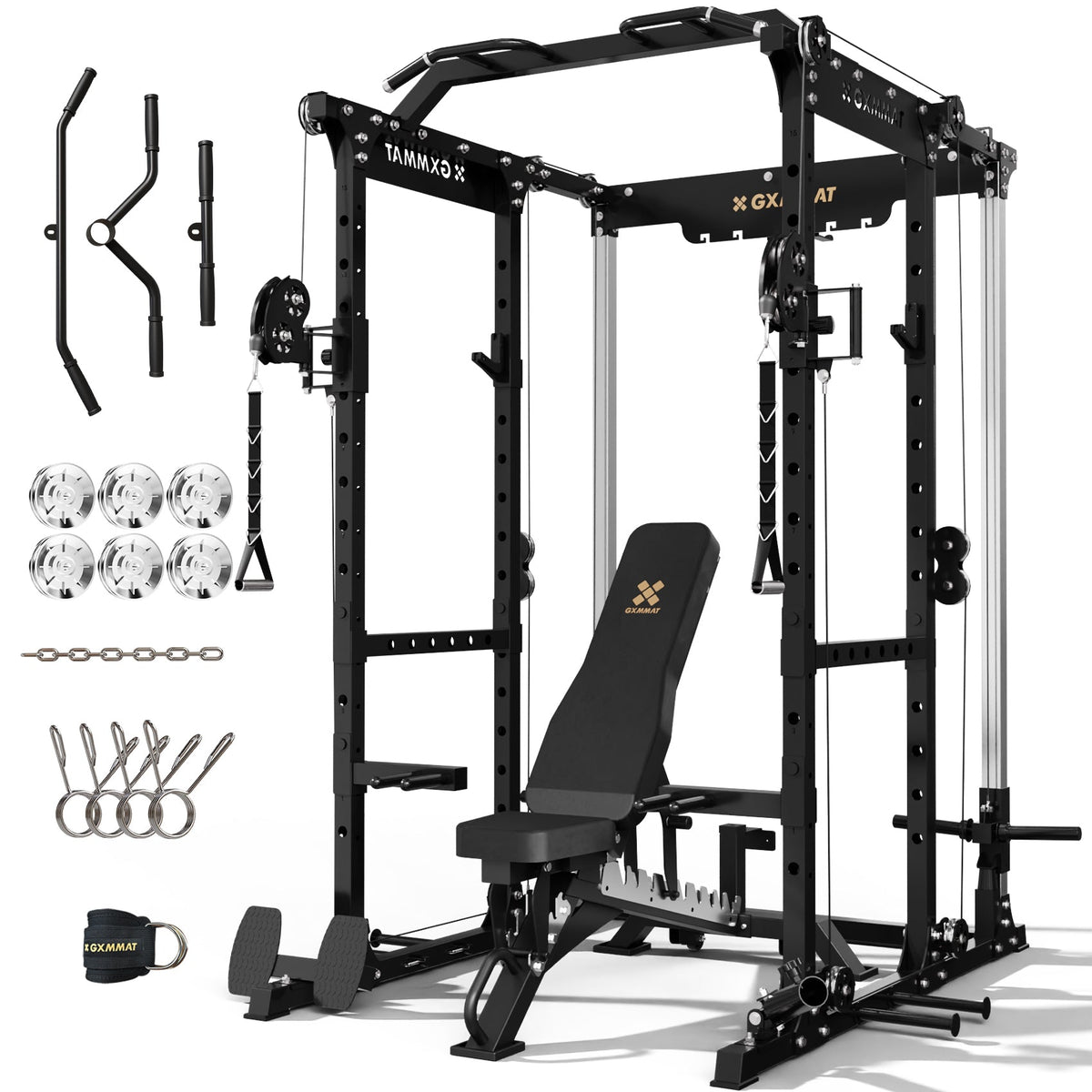
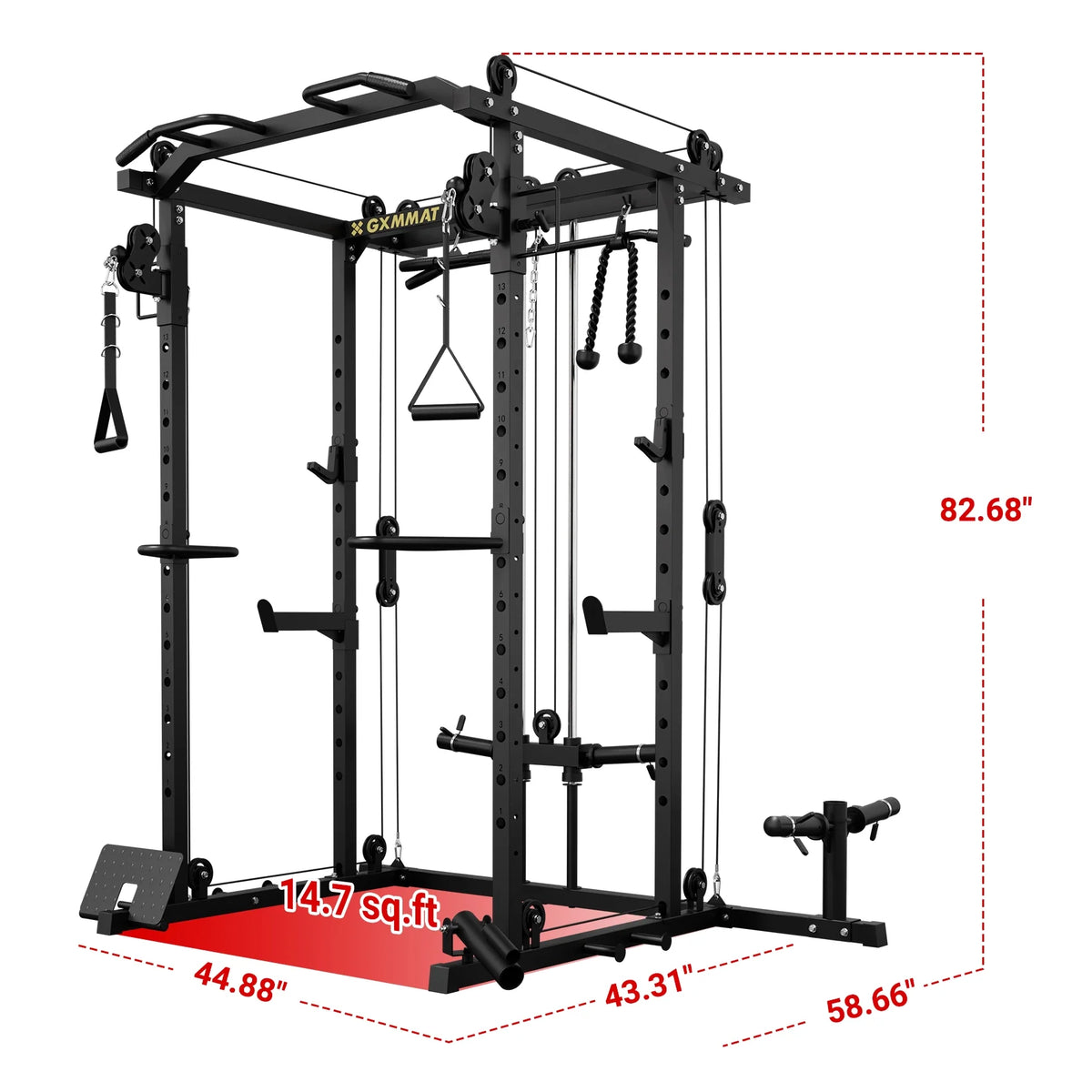
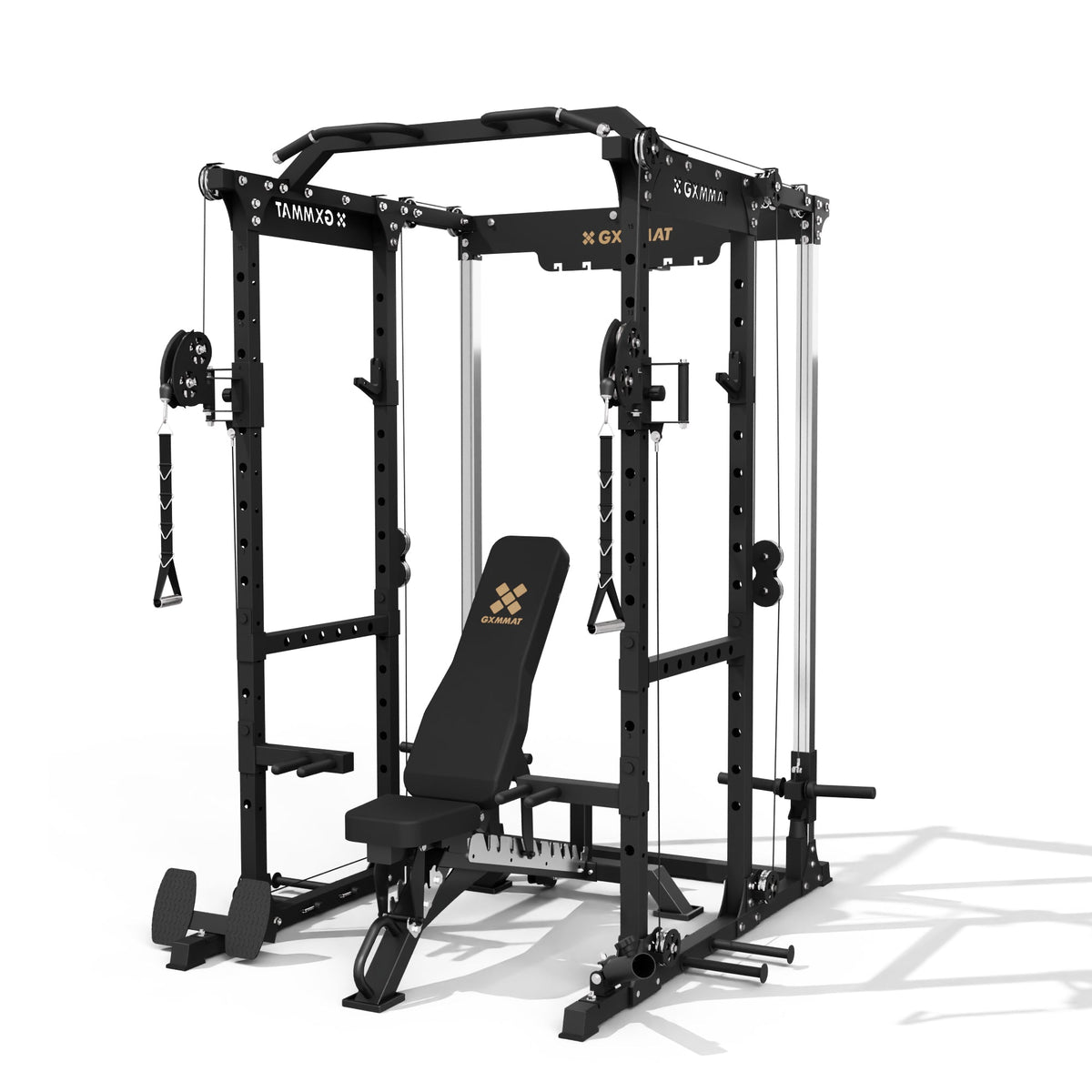
A power rack with adjustable safety bars is the single best safety tool for lifting alone. The GXMMAT G5, V6 and X6 all include safety bars and J-hooks with multiple height settings. Bumper plates and a large exercise mat help protect the floor and the bar if it drops onto the safeties. Read bumper vs iron plates.
FAQ
What is the safest way to fail a squat?
Squat in a rack with safety bars set just below your depth and sit the bar down onto them.
Should I use collars when squatting?
Yes when using safeties, so plates don't slide. Some lifters leave them off when dumping in open areas with bumper plates.
Can I squat heavy alone?
Yes, with a power rack and properly set safety bars.
Where should the safeties be for squats?
1–2 holes below the bar's lowest point at full depth.
Is the back dump safe?
It can be with practice, bumper plates and space, but bailing onto safety bars is safer for home gyms.
Written by Yuvien Royer for GXMMAT. This article is general fitness information, not medical advice.