How to Bench Press Alone Safely (Setup and Reracking)
Quick answer: To bench press alone safely, bench inside a power rack with the safety bars set just below your chest when your back is arched on the bench. Set the J-hooks so you can unrack with nearly straight arms, use collars, and when you finish (or fail), press the bar back to the uprights before lowering it into the J-hooks. If a rep fails, lower the bar to your chest, then onto the safeties, and slide out. Without a rack or safeties, use lighter weights and stop well short of failure.
Key takeaways
- Bench in a power rack with safety bars.
- Safeties just below the chest, high enough to catch the bar.
- Rerack by pressing into the uprights, then down into the hooks.
- Collars on when using safeties.
- Leave reps in reserve if you have no safeties.
Setting up to bench alone
- Center the bench in the rack so your eyes are under the bar when lying down.
- Set the J-hooks so you can lift the bar off with arms nearly straight.
- Lie down and arch as you would for a set, then set the safety bars just below your chest. Test with an empty bar: it should touch your chest without hitting the safeties.
- Load evenly and add collars; see how to load a barbell.
How to rerack a bench press safely
- Finish your last rep at full lockout.
- Move the bar back toward the uprights until it touches them.
- Lower the bar straight down into the J-hooks.
- Don't aim for the hooks directly from a mid-press position; it's easy to miss.
What to do if you fail a rep
- Lower the bar under control to your chest.
- Arch down (flatten your back) so the bar settles onto the safety bars.
- Slide out toward the head of the bench.
- Unload evenly and reset.
Practice this with an empty bar so it's automatic. For squats, see how to bail out of a squat.
If you don't have safety bars
- Use lighter weight and stop 2–3 reps before failure.
- Skip collars only if you might need to tilt plates off in an emergency, and only with light loads.
- The roll of shame: lowering the bar to the chest and rolling it down to the hips is a last resort.
- Consider alternatives: floor press or kettlebell floor press.
Common mistakes
| Mistake | Fix |
|---|---|
| Safeties too low | Set them just below your chest so they can catch the bar |
| Safeties too high | The bar hits them before touching the chest; lower one hole |
| J-hooks too high | You shouldn't have to reach or shrug to unrack |
| Bench not centered | Align the bench so the bar stays over the safeties |
| Grinding to failure without safeties | Leave reps in reserve |
Tips for stronger, safer benching
- Learn proper technique: how to bench press.
- Warm up with warm up sets.
- Build lockout strength with pin presses and close-grip bench.
- Use small jumps with change plates.
The safest bench setup at home
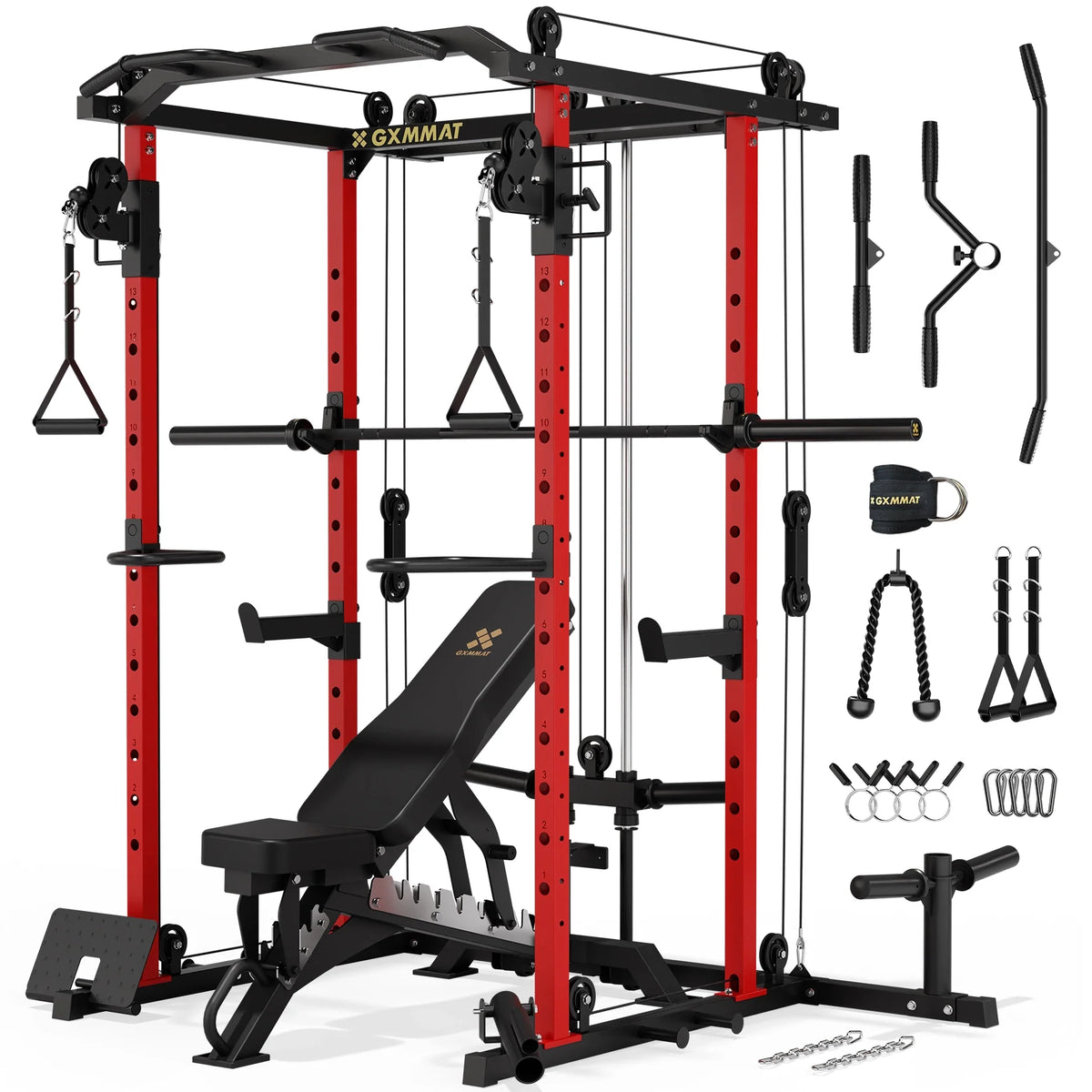
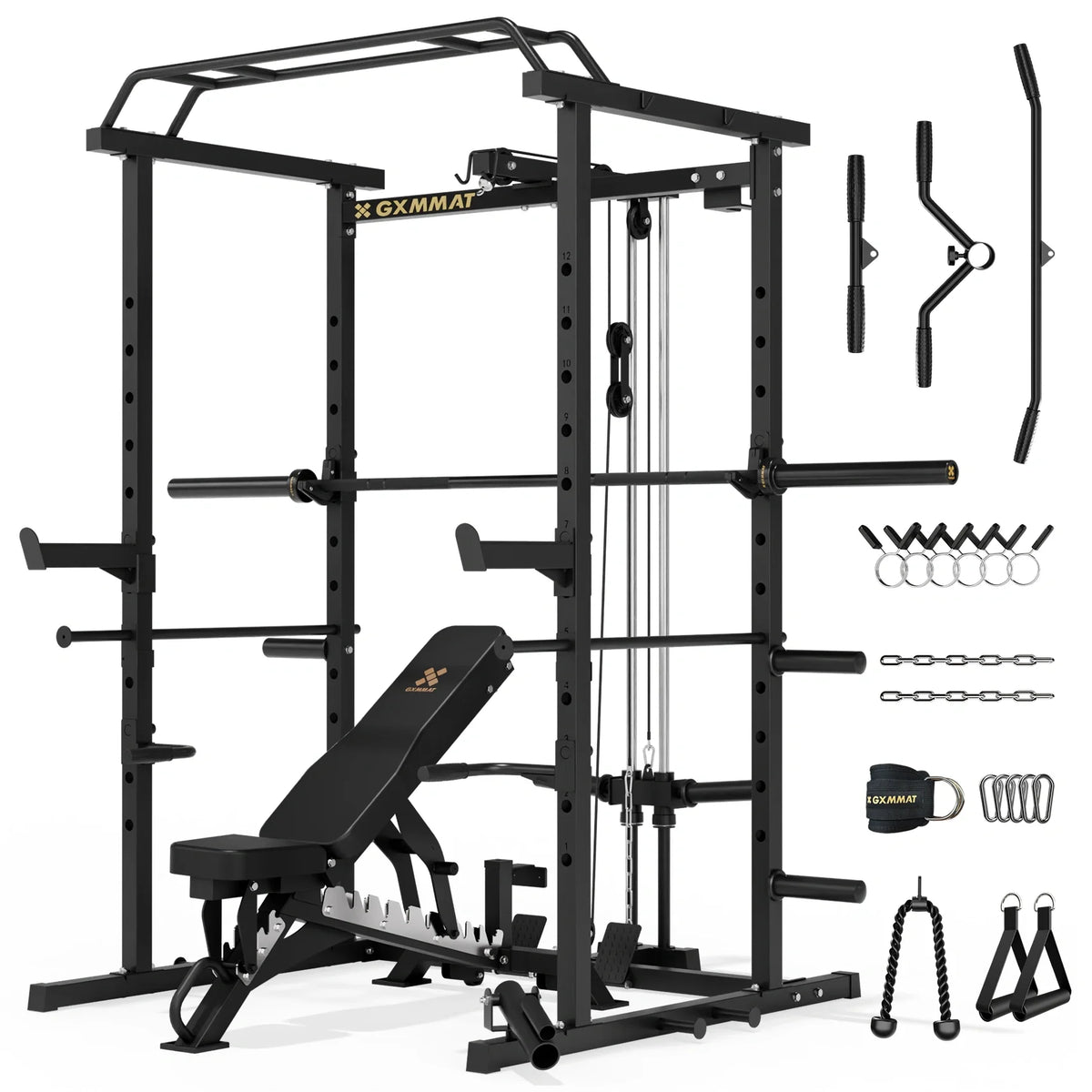
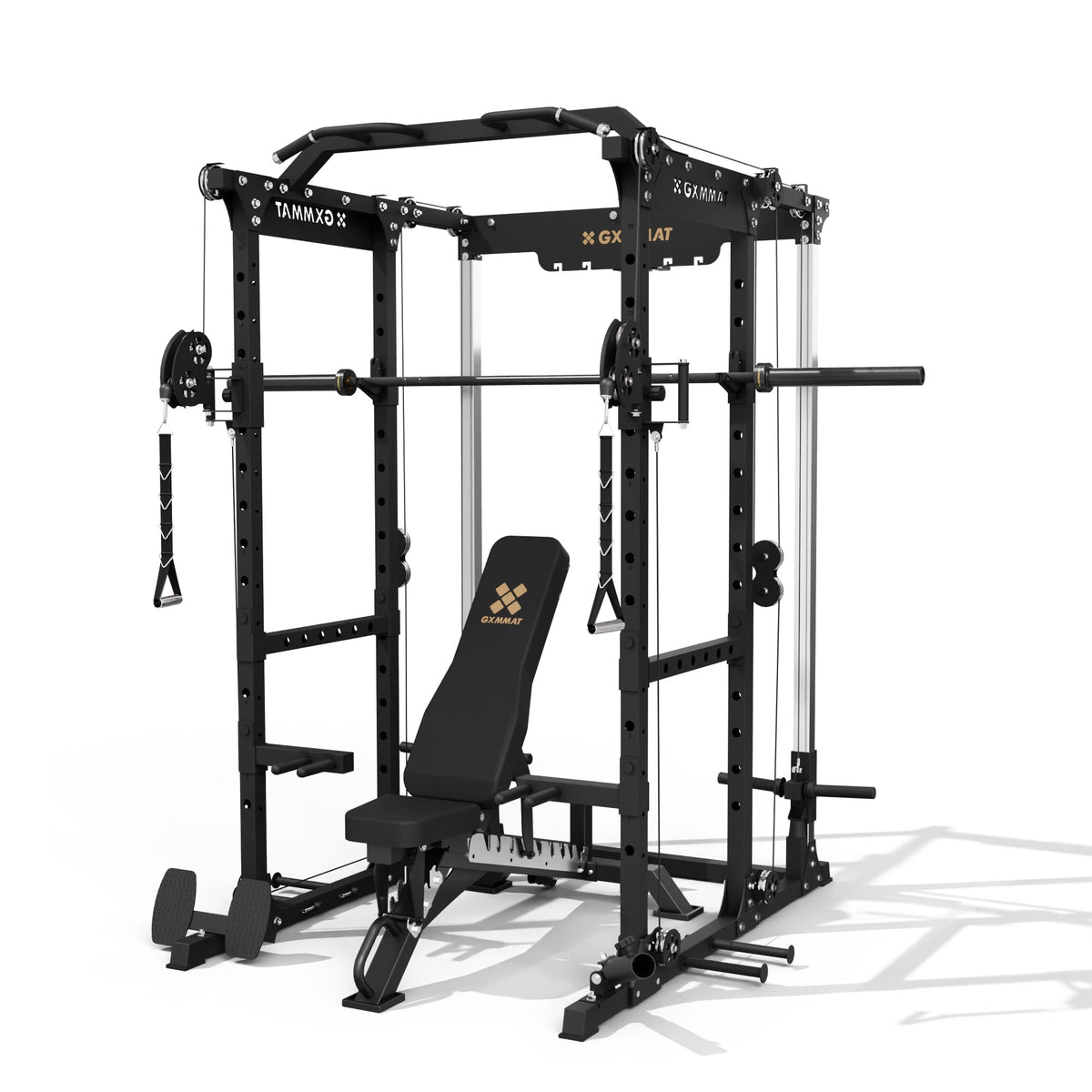
A power rack with safety bars plus a sturdy bench is the safest way to bench alone. The GXMMAT rack, bench and barbell packages pair a G5, V6 or X6 power rack, each with J-hooks and adjustable safety bars, with a weight bench and barbell, and some packages add a 230 lb bumper plate set. Put a large exercise mat under the rack and bench to keep everything from sliding.
FAQ
Is it safe to bench press alone?
Yes, in a power rack with properly set safety bars.
Where should safety bars be for bench press?
Just below your chest with your back arched on the bench.
How do I rerack the bar safely?
Press the bar back to the uprights, then lower it into the J-hooks.
Should I use collars when benching alone?
Yes with safety bars. Without safeties, some lifters skip collars on light sets as a last-resort option.
What if I don't have a rack?
Use lighter weights, avoid failure, or choose floor presses.
Written by Yuvien Royer for GXMMAT. This article is general fitness information, not medical advice.