Pin Press: How to Bench From the Pins and Break Sticking Points
Quick answer: A pin press (pin press bench) is a bench press done from a dead stop off the safety pins of a power rack. Set a flat bench inside the rack and put the pins (safety arms) at the height you want to start, usually 1–4 inches above your chest, right at your sticking point. Lie on the bench, grip the bar where you would for a normal bench press, set your shoulder blades and brace. Press the bar off the pins to full lockout, then lower it under control until it rests completely on the pins. Pause for a second so all momentum is gone, then press the next rep. Do 4–6 sets of 1–5 reps. Pin presses build lockout and triceps strength and help you push through a weak point in your bench press.
Key takeaways
- Dead stop every rep: no bounce, no stretch reflex.
- Pin height matches your sticking point.
- Same setup as your normal bench: grip, arch, leg drive.
- Heavier than your full bench is possible from high pins, but go up gradually.
- Needs a power rack with adjustable safeties.
Muscles worked
| Muscle | Role |
|---|---|
| Triceps | Main focus, especially from higher pins (lockout) |
| Chest (pecs) | More involved from lower pins |
| Front shoulders | Assist the press |
| Upper back and lats | Stabilize the setup |
Benefits of the pin press
- Break through a sticking point: train the exact range where your bench press fails.
- Triceps strength and lockout power.
- Starting strength: pressing from a dead stop teaches you to generate force without momentum.
- Overload: handle more weight in a shorter range of motion.
- Safer heavy work at home: the pins catch the bar every rep.
- Carries over to the overhead press lockout too.
How to set pin height
| Pin position | Focus |
|---|---|
| Low (1–2 inches off the chest) | Off-the-chest strength; chest and shoulders |
| Middle (3–4 inches) | Most common sticking point |
| High (a few inches below lockout) | Lockout and triceps strength; heaviest loads |
Not sure where you stall? Film a heavy set of your normal bench and see where the bar slows down.
How to do a pin press
- Set the rack: slide a flat bench into the rack. Set the safety arms at your chosen height and put the bar on them.
- Lie down with your eyes under the bar.
- Grip the bar the same as your normal bench.
- Set up: squeeze the shoulder blades together and down, plant your feet, and create full-body tension.
- Press: drive the bar off the pins to lockout, keeping the elbows tucked about 45–60 degrees.
- Lower: control the bar back down until it rests on the pins.
- Pause: let the bar settle for a second; stay tight.
- Next rep: press again from the dead stop.
Pin press vs other bench variations
| Variation | Range | Best for |
|---|---|---|
| Pin press | Partial, from a dead stop | Sticking points, lockout |
| Floor press | Partial; upper arms touch the floor | Triceps; no bench needed |
| Close-grip bench | Full | Triceps |
| Paused bench | Full, pause on chest | Off-the-chest strength |
Common mistakes
| Mistake | Fix |
|---|---|
| Bouncing the bar off the pins | Lower slowly and pause fully |
| Losing tightness at the bottom | Keep the shoulder blades set between reps |
| Bar path off the pins changes | Line the bar up over the same spot on your chest as your normal bench |
| Jumping weight too fast | Small jumps; partial range can still strain joints |
| Elbows flaring | Tuck to 45–60 degrees |
Programming
| Goal | Sets × reps | Load |
|---|---|---|
| Strength | 4–6 × 2–3 | Heavy |
| Max effort | Work up to a heavy single | Near max |
| Muscle | 3 × 6–8 | Moderate, low pins |
Use pin presses once a week as a secondary bench press movement, for 3–4 weeks at a time, then change pin height. You can also add accommodating resistance with bands or chains if you have them. See how to bench press and average bench press.
Who should be careful
- Shoulder or elbow pain: heavy partials stress the joints; start lighter.
- Beginners: build a solid full bench press first.
- Safety: always check the pins are locked and level on both sides.
Pin presses at home
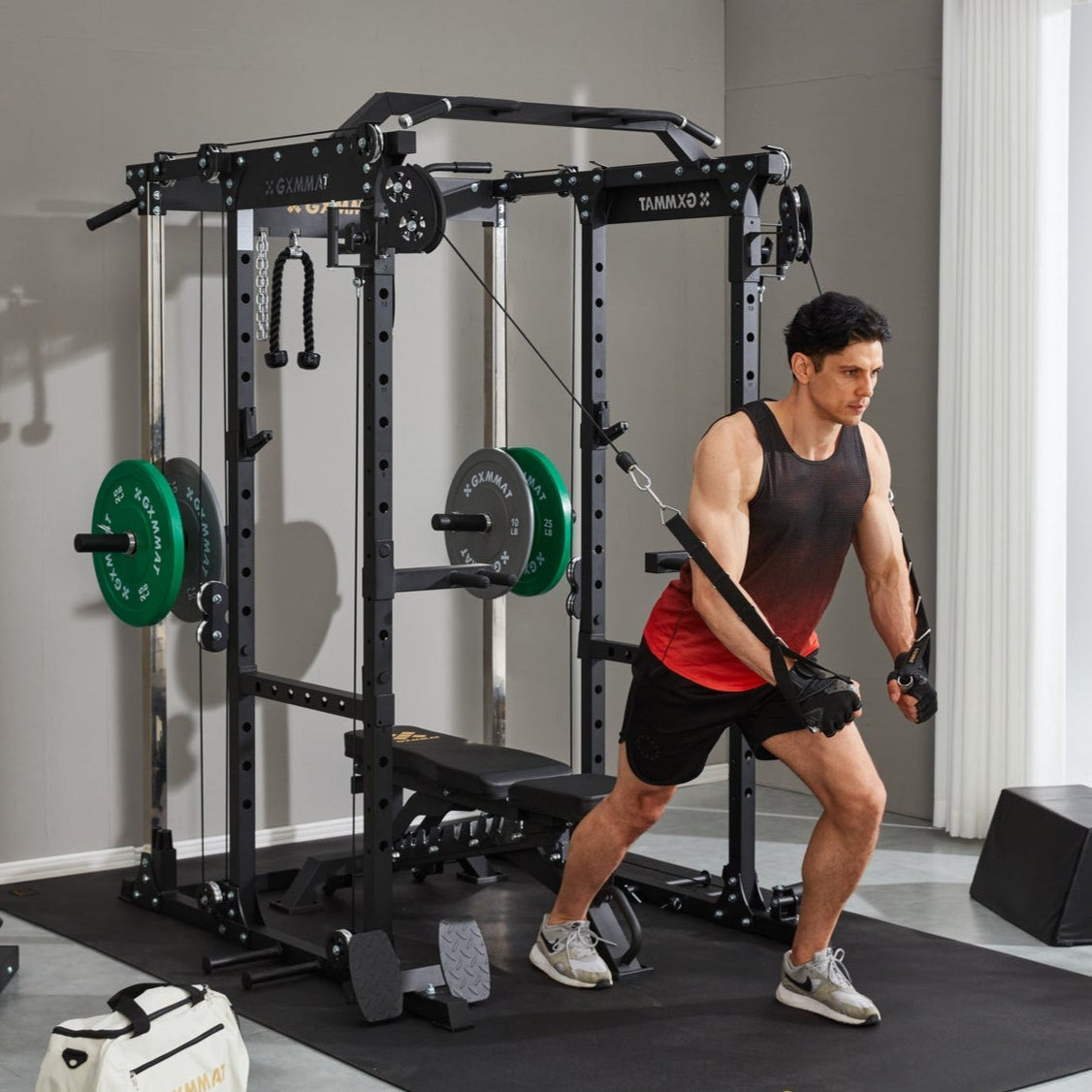
- Power rack: the G5, V6 and X6 have adjustable safety arms you can use as pins. Compare them in X6 vs V6 vs G5.
- Bench: rack-and-bench bundles such as the G5 power rack and weight bench package give you everything to start. See all home gym packages.
- Bar and plates: 20 kg Olympic bar, bumper plates and change plates for small jumps.
- Floor: a large exercise mat under the rack and bench.
FAQ
What is a pin press?
A bench press that starts and ends on the safety pins of a power rack, from a dead stop.
What does the pin press help with?
Breaking through bench press sticking points, building lockout and triceps strength, and pressing without momentum.
How high should the pins be for a pin press?
At your sticking point, usually 1–4 inches above the chest.
Can you pin press more than you bench?
Often yes from higher pins, because the range of motion is shorter. From low pins, it may be less than your normal bench.
Do I need a power rack for pin presses?
Yes, or a rack with adjustable safety arms that can hold the bar at the right height.
Written by Yuvien Royer for GXMMAT. This article is general fitness information, not medical advice.