Floor Press: The Best Bench Press Alternative Without a Bench
Quick answer: The floor press is a bench press done lying on the floor. Lie under a barbell set low in your power rack (or hold dumbbells or kettlebells), knees bent or legs straight, and lower the weight until your upper arms touch the floor, pause briefly, then press back up. Because the floor stops your elbows, the range is shorter, so it's great for triceps and lockout strength, easier on many people's shoulders, and a smart way to keep pressing when you don't have a bench. Start with 3–4 sets of 5–8 reps.
Key takeaways
- No bench needed: just the floor, a bar or weights and a mat.
- Pause when your elbows touch; don't bounce off the floor.
- Elbows at about 45° from your body.
- Set up in a rack with J-hooks low so you can unrack safely.
- Shorter range, no leg drive: most people floor press a little less than they bench.
Muscles worked
| Muscle | Role |
|---|---|
| Triceps | Main focus in the top half |
| Chest | Pushes from the bottom position |
| Front delts | Assist the press |
| Upper back | Keeps the shoulders stable |
How to do a barbell floor press in a power rack
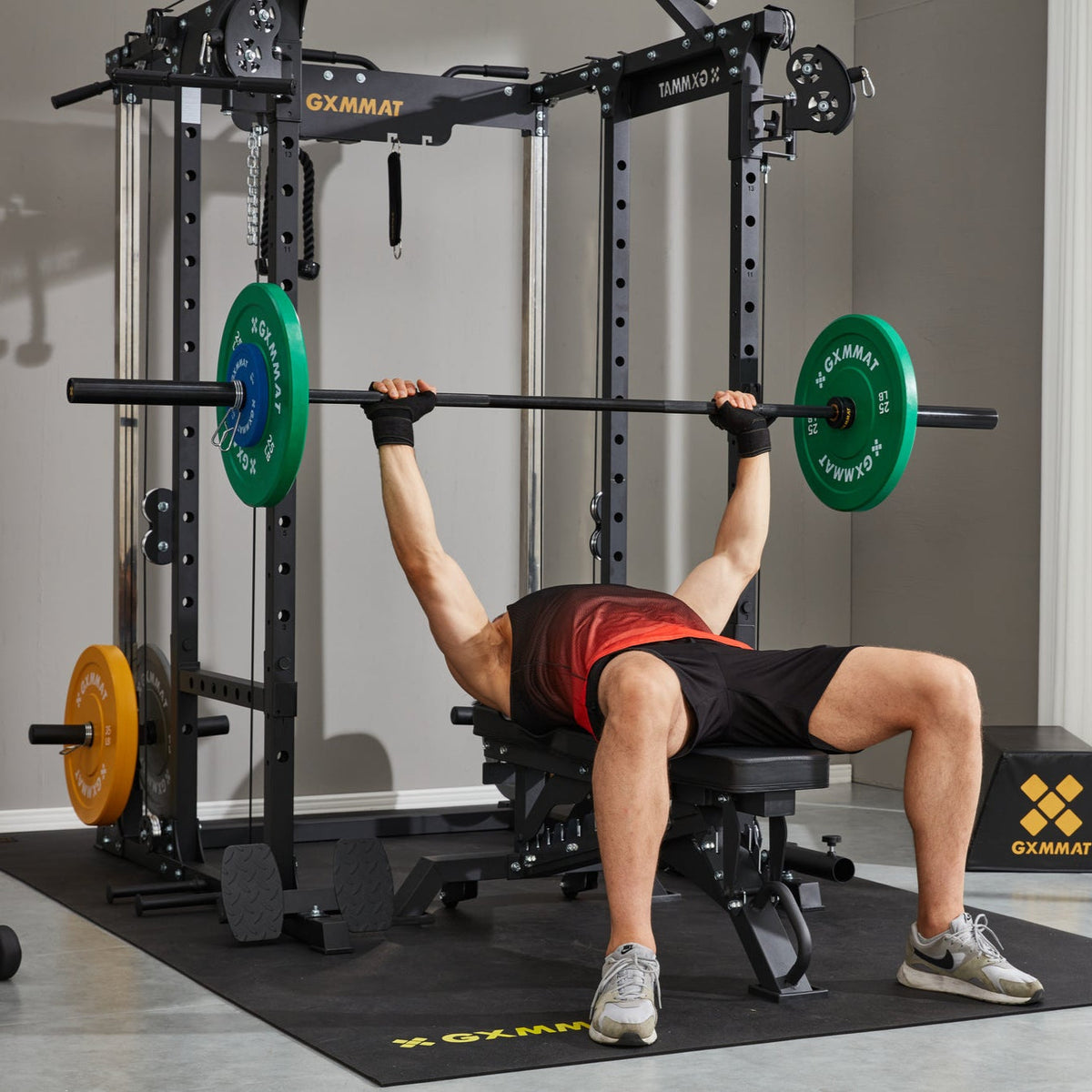
- Set J-hooks low enough that you can reach the bar with nearly straight arms while lying on the floor.
- Set safety arms just above your chest height while lying down, so a missed rep lands on them rather than on you. See safety arm setup.
- Lie down with your eyes under the bar on a mat.
- Grip slightly wider than shoulder width; squeeze shoulder blades together.
- Unrack and bring the bar over your shoulders.
- Lower under control until your upper arms rest on the floor.
- Pause for one second, then press back up.
Legs: bent knees with feet flat feels more stable; straight legs makes it stricter.
Floor press vs bench press
| Floor press | Bench press | |
|---|---|---|
| Equipment | Floor, bar or weights | Bench, rack, bar |
| Range of motion | Shorter (elbows stop at the floor) | Full |
| Leg drive | Little to none | Yes |
| Main focus | Triceps, lockout | Chest, shoulders, triceps |
| Shoulder stress | Usually lower | Higher at the bottom |
Want the full bench? See our bench press form guide.
Variations
- Dumbbell or kettlebell floor press: each arm works independently. GXMMAT soft kettlebells are comfortable here thanks to their soft shell.
- Single-arm floor press: adds core anti-rotation.
- Close-grip floor press: even more triceps. See close-grip bench press.
- Paused floor press: 2–3 second pause for strength off the bottom.
- Landmine floor press: see landmine exercises.
Common mistakes
| Mistake | Fix |
|---|---|
| Slamming elbows into the floor | Lower slowly; touch, pause, press |
| Elbows flared at 90° | Tuck to about 45° |
| J-hooks too high to reach | Lower them; you should unrack with nearly straight arms |
| No safety plan | Use safety arms or dumbbells you can roll away |
| Bare hard floor | Use a mat for your elbows and back |
Programming the floor press
| Use | Sets × reps |
|---|---|
| Main press without a bench | 4 × 5–8 |
| Bench accessory for lockout | 3 × 5 |
| Shoulder-friendly pressing | 3 × 8–10 with dumbbells or kettlebells |
Add small amounts with change plates; see progressive overload.
No-bench push workout
| Exercise | Sets × reps |
|---|---|
| Barbell floor press | 4 × 6 |
| Standing overhead press | 3 × 8 |
| Dips on the rack's dip bars | 3 × 8–10 |
| Cable chest fly | 3 × 12 |
| Tricep pushdown | 2 × 15 |
Guides: overhead press, dips, cable flys and pushdowns.
Equipment
- Rack: G5, V6 or X6, with J-hooks and safety arms.
- Bar and plates: 20 kg Olympic bar, bumper plates, collars.
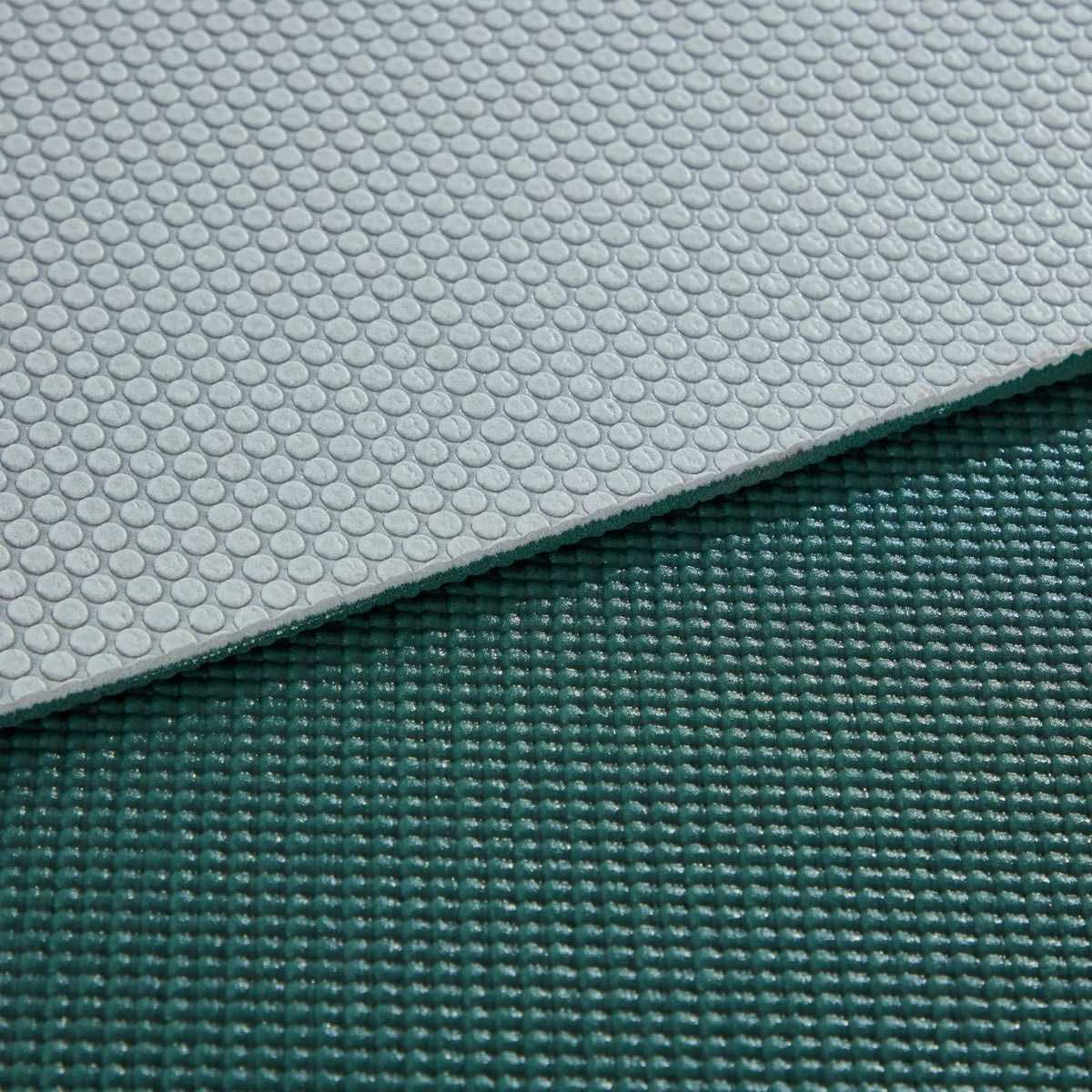
- Mat: a 7 mm large exercise mat under you and the rack.
- Bench later: the GXMMAT adjustable bench is restocking in December, or get one bundled in a home gym package.
FAQ
Is the floor press as good as the bench press?
It's a great alternative, especially for triceps and lockout, but the shorter range and lack of leg drive make it different. Use it when you don't have a bench or as an accessory.
What does the floor press work?
Mainly the triceps and chest, with help from the front shoulders.
Is the floor press safer for shoulders?
Many lifters find it more comfortable because the floor limits how far the elbows travel. If pressing hurts, check with a professional.
How do I get the barbell into position for a floor press?
Set the J-hooks low in a power rack so you can unrack it while lying down. Without a rack, use dumbbells or kettlebells instead.
Should my legs be bent or straight?
Either. Bent knees feel more stable; straight legs make the lift stricter.
Written by Yuvien Royer for GXMMAT. This article is general fitness information, not medical advice. Follow your rack's manual for J-hook and safety arm setup.