Close-Grip Bench Press: How to Do It and Why It Works
Quick answer: The close-grip bench press is a bench press with your hands about shoulder-width apart (index fingers roughly over the edge of your chest), instead of a wider grip. Keep your elbows tucked close to your body, lower the bar to your lower chest, then press it back up. It shifts more work to the triceps while still training the chest and shoulders, and many lifters find it easier on their shoulders. Try 3–4 sets of 6–10 reps after your regular bench press, or as your main press on a second bench day.
Key takeaways
- Shoulder-width grip, not hands touching; too narrow strains the wrists.
- Elbows tucked close to your sides.
- Touch the lower chest, slightly lower than a regular bench.
- Great triceps builder and bench press accessory.
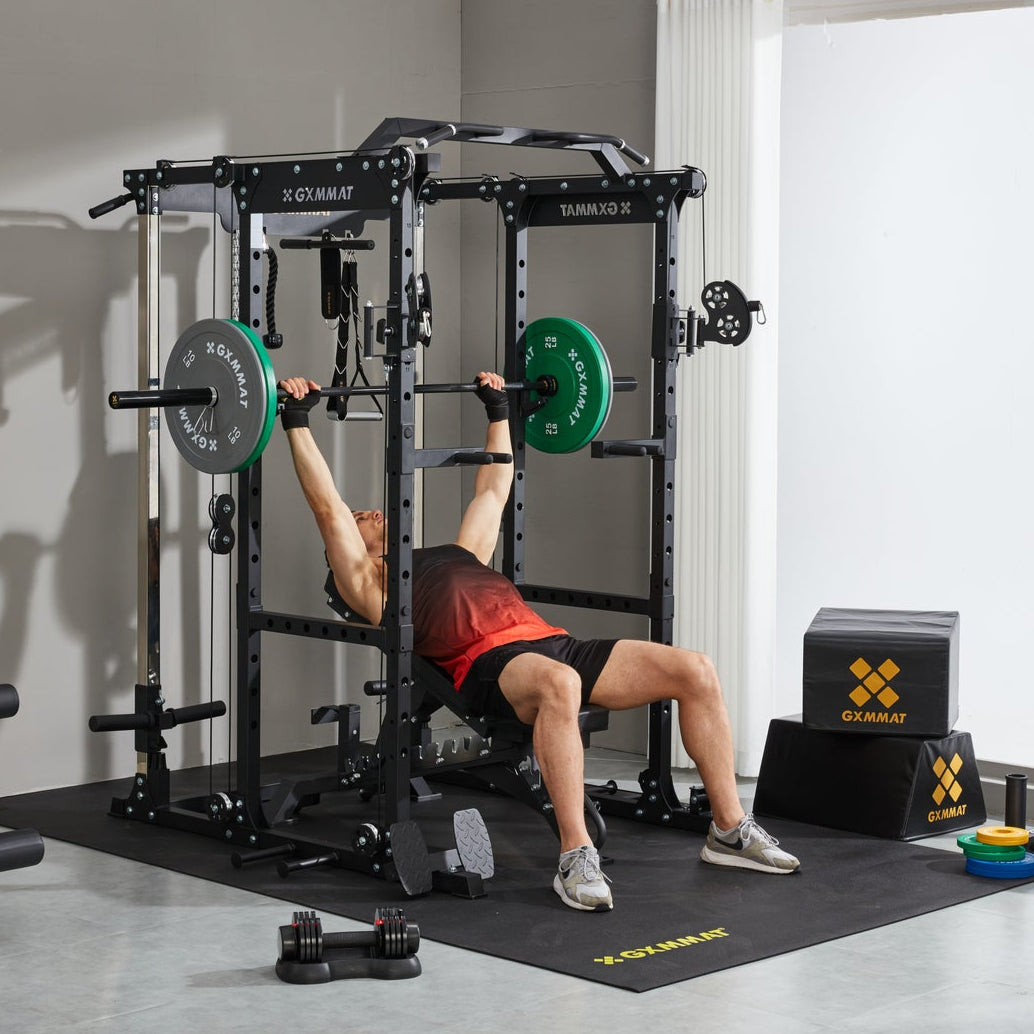
- Bench inside a rack with safety arms when training alone.
Muscles worked
| Muscle | Role |
|---|---|
| Triceps | Main focus; lock out the elbows |
| Chest | Still a major mover, especially off the chest |
| Front delts | Assist the press |
| Upper back | Stabilize the shoulders |
How to do a close-grip bench press
- Set the rack: J-hooks at unracking height; safety arms just below chest height when lying down.
- Lie down with eyes under the bar, feet flat.
- Grip about shoulder-width: forearms vertical when the bar is on your chest.
- Set your shoulder blades back and down.
- Unrack and bring the bar over your shoulders.
- Lower with elbows close to your sides to your lower chest.
- Press up and slightly back, locking out with your triceps.
Basic bench setup is covered in detail in our bench press form guide.
Close-grip vs regular bench press
| Close-grip | Regular | |
|---|---|---|
| Grip | About shoulder-width | Slightly wider than shoulders |
| Elbows | Tucked close | About 45–70° |
| Main focus | Triceps, chest | Chest, triceps, shoulders |
| Load | Often about 80–90% of your regular bench | Your full bench |
| Range of motion | Slightly longer | Standard |
Common mistakes
| Mistake | Fix |
|---|---|
| Hands too close (touching) | Widen to shoulder width to protect your wrists |
| Elbows flaring out | Keep them close to your torso |
| Bar touching too high | Aim for the lower chest |
| Bent-back wrists | Stack wrists over elbows, bar low in the palm |
| Bouncing off the chest | Touch lightly and press |
How to program close-grip bench
| Use | Sets × reps | Where |
|---|---|---|
| Triceps builder | 3 × 8–10 | After regular bench |
| Strength accessory | 4 × 5–6 | Second bench day |
| Shoulder-friendly main press | 4 × 6–8 | Instead of wide-grip bench |
Sample push day: bench press 4 × 5, close-grip bench 3 × 8, overhead press 3 × 8, dips 2 × 10, tricep pushdowns 2 × 15. Plan your weekly sets with how many sets per muscle.
Variations
- Close-grip floor press: lying on the floor; shorter range, very triceps-focused. Use a mat under you.
- Close-grip incline press: more upper chest and front delts.
- Close-grip push-ups: bodyweight version.
- Pause close-grip bench: 1–2 second pause on the chest for strength.
Close-grip bench at home
- Rack with safety arms: G5, V6 or X6. Set the safety arms before every heavy set.
- Bench: the GXMMAT adjustable bench (restocking in December) or a bench from a home gym package.
- Bar and plates: 20 kg Olympic bar, bumper plates, collars.
- Small increases: change plates for 2.5 lb jumps. See progressive overload.
FAQ
What does the close-grip bench press work?
Mainly the triceps and chest, with help from the front shoulders.
How close should my grip be?
About shoulder-width, so your forearms are vertical at the bottom. Hands touching is too narrow and strains the wrists.
Is close-grip bench easier on the shoulders?
Many lifters find it more comfortable because the elbows stay tucked. If any pressing hurts, check with a professional.
How much weight should I use?
Most people use about 80–90% of their regular bench weight for similar reps.
Can close-grip bench replace tricep isolation work?
It can be your main triceps exercise. Adding a lighter isolation move like pushdowns can help round things out.
Written by Yuvien Royer for GXMMAT. This article is general fitness information, not medical advice.