Why Do You Lift? 6 Fundamental Reasons to Train with Heavy Weights and How to Stage Your Space
When stepping onto a training floor, every lifter eventually encounters a simple question: why do you lift? Whether the goal is building functional capacity for daily chores, supporting joint resilience, or establishing a consistent routine, resistance training provides a structured stimulus for total-body development.
Understanding the Core Driver: Why Do You Lift in Modern Strength Training?
People often ask: why should i lift weights if general movement or bodyweight training is already part of the week? While calisthenics and aerobic conditioning serve vital roles, external resistance introduces measurable, progressive mechanical tension across muscles and connective tissues. Reviewing a good weights guide can show how progressive loading complements foundational floor work.
When beginners ask is doing weights good for you, the answer centers on functional movement adaptation. Loading fundamental movement patterns—such as the squat, hinge, push, pull, and carry—teaches the body to coordinate complex muscle groups under controlled stress. This coordination translates directly into better physical mechanics outside the training environment.
6 Foundational Reasons Why You Should Lift Weights
If you are debating do i need to lift weights, exploring the primary physiological and functional adaptations helps clarify the rationale behind picking up a barbell, kettlebell, or dumbbell. Here is why you should lift weights to establish lasting physical capacity.
1. Multi-Planar Functional Strength and Kinetic Control
Compound resistance exercises demand synchronized action across ankles, knees, hips, spine, and shoulders. Moving an external implement forces stabilizer muscles to maintain alignment throughout the range of motion, reinforcing total kinetic chain control.
2. Structural Loading for Joint and Bone Integrity
Axial and bilateral loading applies controlled mechanical compression to the skeletal frame. This regular stimulus encourages bone density support and strengthens surrounding tendons and ligaments, providing joint socket stability during dynamic daily activities.
3. Muscle Retention and Metabolic Readiness
Challenging resistance sends an unambiguous signal to preserve active skeletal muscle tissue. Maintaining active lean mass supports efficient energy utilization and helps sustain physical output across diverse daily demands.
4. Postural Correction and Anti-Rotational Stability
Modern desk work often encourages forward-slumped shoulders and passive core recruitment. Dedicated pulling exercises, deadlifts, and loaded carries engage the posterior chain, reinforcing spinal bracing and anti-rotational core rigidity.
5. Neuromuscular Efficiency and Rate of Force Development
Heavier resistance requires the nervous system to recruit higher-threshold motor units and fire them in rapid coordination. This neuromuscular refinement enhances mind-muscle connection and physical responsiveness.
6. Psychological Resilience and Daily Physical Confidence
Progressive overload requires focus, patience, and deliberate execution. Regularly managing heavy resistance builds mental discipline and self-efficacy, providing the confidence to navigate physical tasks with ease.
When Should I Lift Weights? Structuring Frequency and Rest
A frequent follow-up question is when should i lift weights for sustainable progress. Structuring a training calendar depends on individual recovery capacity, overall volume, and lifestyle factors. For varied stimulus, integrating a good weights guide can help balance symmetrical and asymmetrical loading patterns.
- Full-Body Frequency: Training the entire body two to three times weekly with at least one rest day between sessions allows adequate muscular and neurological recovery.
- Upper and Lower Splits: Lifters training four days weekly often alternate between upper-body and lower-body sessions to manage localized fatigue.
- Session Timing: Train when energy levels and focus are highest, ensuring a proper dynamic warm-up precedes heavy loading.
Home Training Staging: Flooring, Equipment Placement, and Subfloor Protection
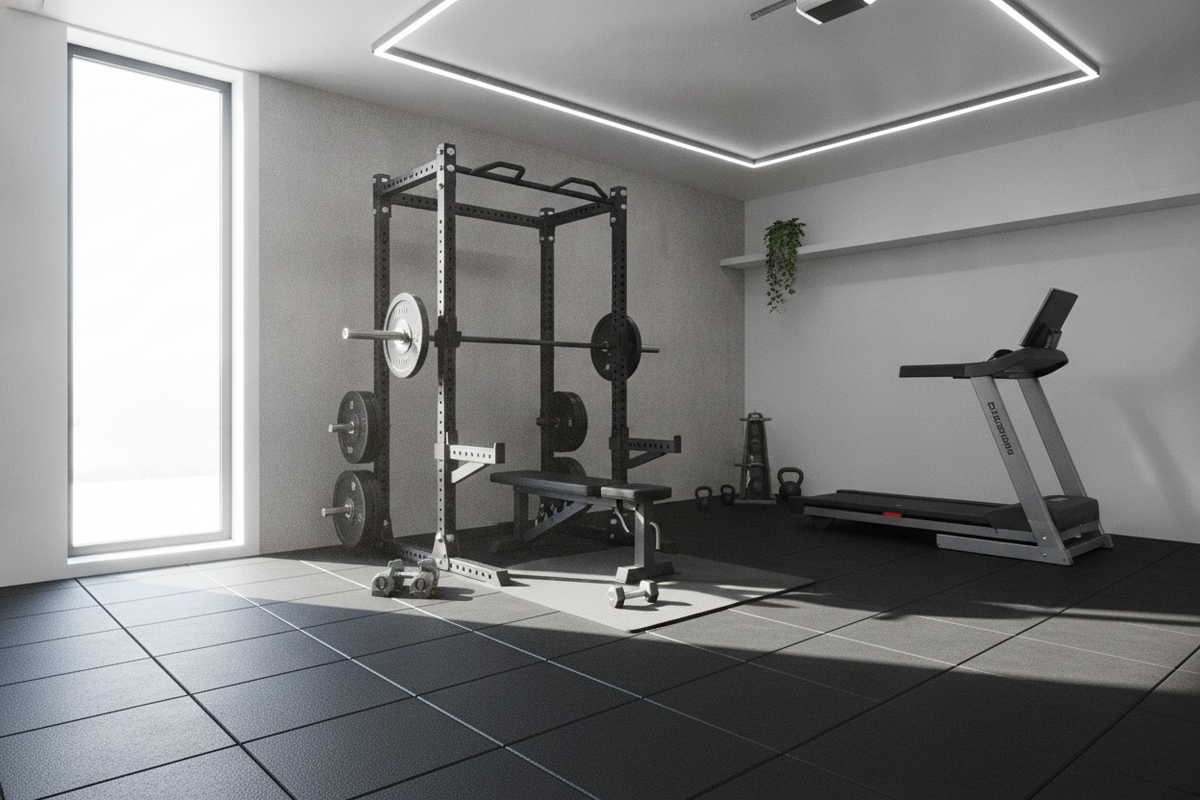
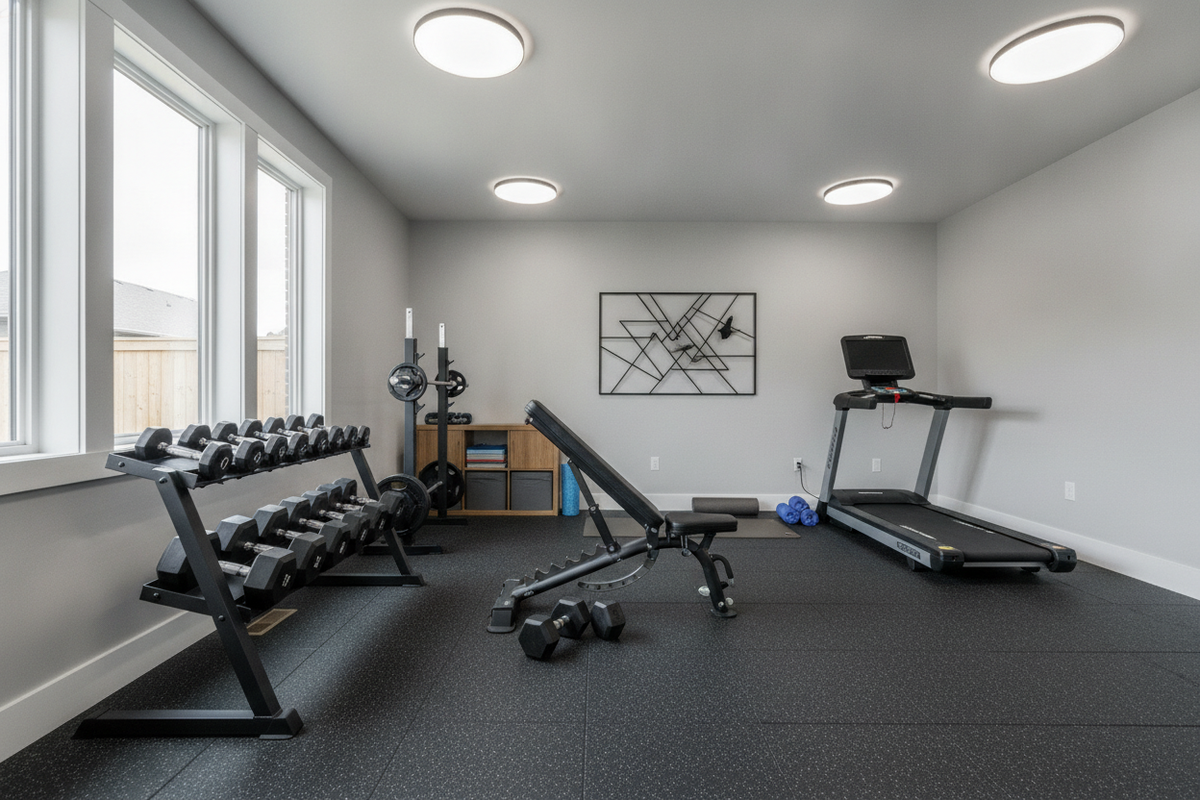
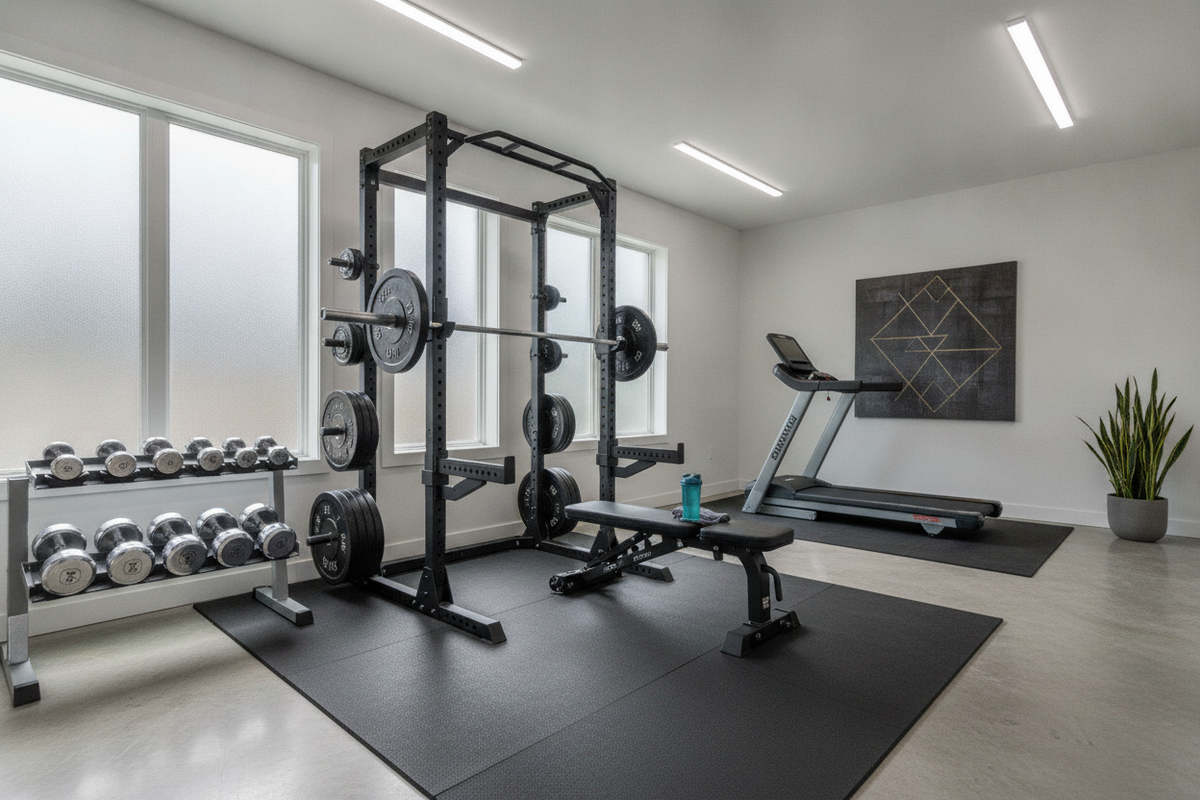
Understanding why should you lift weights at home also requires understanding the physical training environment. Dedicated free-weight training places concentrated static and dynamic loads on domestic floors. Consulting a comprehensive weights need guide assists in selecting suitable equipment and appropriate protective surfaces.
High-density rubber matting serves several essential functions in a home gym:
- Subfloor Protection: Heavy dumbbells and barbells create high point-load forces. Dense rubber surfaces distribute this force across a broader surface area, protecting concrete, hardwood, or tile underneath.
- Traction and Ground Feedback: Performing squats or presses demands a firm, non-slip base. Firm rubber prevents foot slipping and maintains stable ground contact during peak force production.
- Acoustic and Vibration Dampening: Setting down iron weights produces vibrations that travel through building frames. Quality flooring dampens sound transmission and minor impact shocks.
- Moisture Management: High-density mats with water-resistant surfaces prevent sweat accumulation from reaching subfloors and make post-workout wipe-downs straightforward.
Common Lifting Pitfalls and Form Fundamentals
Reaping the benefits of weight training depends on disciplined movement mechanics. Reviewing a detailed doing weights guide helps prevent common technique breakdowns that limit training efficiency.
- Rushing the Setup: Set your foot stance, grip width, and core brace before initiating any lift.
- Prioritizing Load Over Range: Move through full, controlled ranges of motion rather than overloading the bar with shortened repetitions.
- Ignoring Floor Grip: Lifting in soft, heavily cushioned running shoes reduces stability. Train on firm rubber flooring in flat-soled shoes or stable footwear.
- Inconsistent Tempo: Control the eccentric lowering phase to maximize muscle tension and joint safety.