
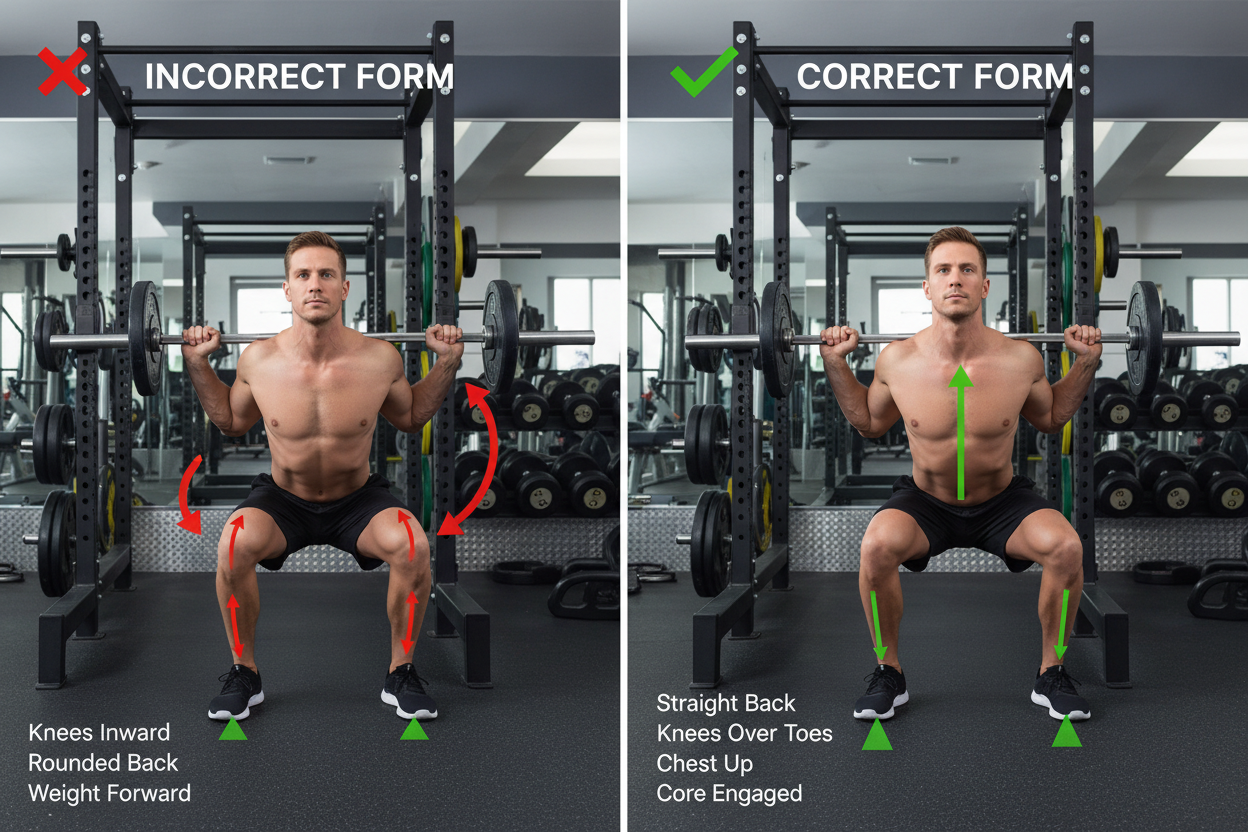
Stop Doing Beginner Squats With Weights Like This (Read First)
You have mastered the bodyweight squat. You can hit full depth, your knees aren't caving, and you are ready for the next step. But walking up to the dumbbell rack or the barbell cage can be intimidating. Adding load changes the mechanics of the movement entirely. If you rush this transition, you risk turning a strength-building exercise into a lower-back injury.
This guide cuts through the noise. We aren't just going to tell you to put a bar on your back; we are going to look at the biomechanics of beginner squats with weights to ensure you build muscle without wrecking your joints.
Key Takeaways: Quick Guide to Weighted Squats
- Start with the Goblet Squat: Holding a single weight at chest height acts as a counterbalance, automatically fixing poor posture.
- Master the "Tripod" Foot: Distribute weight evenly between your big toe, little toe, and heel before descending.
- Brace, Don't Just Suck In: Take a breath into your belly (not chest) and tighten your core like you're about to take a punch.
- Control the Eccentric: Lower yourself for a count of 3 seconds; never drop quickly into the hole.
- Progression Order: Bodyweight → Goblet Squat → Dual Dumbbells → Barbell Back Squat.
Why You Need to Add Weight (The Science of Adaptation)
Doing hundreds of air squats will eventually stop building strength. This is the law of diminishing returns. To force your muscles to grow, you need a stimulus called progressive overload.
When you start squatting with weights for beginners, you increase the mechanical tension on the quadriceps and glutes. This tension causes microscopic tears in the muscle fibers, which then repair thicker and stronger. However, weight also changes your center of gravity. This is why your form might feel perfect without weight but falls apart the moment you hold a dumbbell.
The Golden Progression: How to Do Squats With Weights for Beginners
Do not jump straight to the barbell back squat. The barbell requires significant shoulder mobility and core stability that most beginners lack. Follow this hierarchy.
1. The Goblet Squat (The Best Starting Point)
This is the absolute best way to learn. You hold a dumbbell or kettlebell against your chest with both hands.
Why it works: The weight is in front of you. This acts as a counterweight, forcing you to sit back and keep your torso upright. It is almost impossible to round your back during a goblet squat because the weight would pull you forward onto your face.
2. The Dual Dumbbell Squat
Once you max out the heaviest dumbbell your gym has for goblet squats, switch to holding two dumbbells at your sides (suitcase style) or racked on your shoulders.
The nuance: This challenges your stability. Each side of your body has to work independently, exposing any strength imbalances between your left and right leg.
3. The Barbell Back Squat
Only graduate to this when you have mastered the previous two. The load is now on your spine (axial loading). This requires a rigid torso and precise hip mechanics.
Technical Cues for Safe Movement
Regardless of the tool you use, the mechanics of squats with weights for beginners remain consistent.
The Hip Hinge vs. The Knee Bend
A common mistake is breaking at the knees first. This shoots your knees forward and puts shear force on the joint. Instead, initiate the movement by pushing your hips back slightly, as if you are trying to close a car door with your butt. Once the hips unlock, the knees follow.
Eye Gaze and Neck Position
Don't look at the ceiling, and don't look at your feet. Pick a spot on the floor about six feet in front of you. This keeps your cervical spine neutral. If you look up, you tend to hyperextend your lower back.
My Training Log: Real Talk
I want to share a specific detail about my first month of weighted squatting that tutorials usually skip. I started with the Goblet Squat, just like I'm recommending to you. I grabbed a 35lb dumbbell.
The issue wasn't my legs; it was my palms. I remember the specific, slick feeling of the chrome handle slipping because my hands were sweating. I spent more mental energy trying to keep the dumbbell from sliding down my shirt than I did focusing on my glutes. I learned the hard way that if you hold the dumbbell too far away from your body, your biceps burn out before your legs do.
The fix was tucking my elbows in tight against my ribcage, creating a literal shelf for the weight. It felt awkward at first—like I was restricting my breathing—but instantly, the weight felt 10lbs lighter. If you feel your arms trembling before your quads burn, pull that weight tighter to your chest. Trust me, it makes all the difference.
Conclusion
Transitioning to weighted movements is the most exciting phase of training. You will see rapid strength gains in the first 12 weeks. Respect the progression, start with the goblet squat, and listen to your body. Strength is a marathon, not a sprint.
Frequently Asked Questions
How much weight should I start with?
Start with a weight that allows you to perform 10-12 repetitions with perfect form, leaving 2 reps "in the tank." For many men, this is a 25-35lb dumbbell; for many women, a 15-20lb dumbbell is a great starting point.
How often should beginners squat with weights?
Frequency drives proficiency. Aim for 2 to 3 times per week, with at least 48 hours of rest between sessions to allow your central nervous system and muscle fibers to recover.
Why does my lower back hurt after squatting?
Lower back pain usually indicates that your core isn't braced or you are rounding your spine (butt wink) at the bottom of the movement. Reduce the weight immediately and focus on bracing your abs as if you are about to be punched.


