6 Knee and Hip Mobility Exercises: Biomechanical Cues, Joint Cushioning, and Floor Staging
Understanding the Lower Kinetic Chain: The Hip-Knee Dynamic
The lower body operates as an integrated kinetic chain where the hip and knee joints continually influence one another during movement. The hip is a multi-axial ball-and-socket joint built for three-dimensional freedom, including flexion, extension, abduction, adduction, internal rotation, and external rotation. Directly below it, the knee operates primarily as a modified hinge joint, engineered to provide stable flexion and extension with subtle degrees of rotational play. Developing good flexibility in the hips and knees requires addressing both mobility at the hip capsule and stable tracking at the knee.
When hip motion becomes restricted through sedentary habits or repetitive movement patterns, the knee frequently absorbs excess rotational torque and lateral stress. Establishing a structured routine that couples multi-planar hip expansion with controlled knee alignment allows both joints to distribute loads evenly. For a broader look at lower-body foundational routines, exploring a comprehensive hip mobility exercise guide offers valuable context for designing balanced mobility sequences.
6 Essential Knee and Hip Mobility Exercises
Integrating targeted knee and hip mobility exercises into your weekly routine helps open restricted capsules, improves joint lubrication, and reinforces active control through full ranges of motion. Below are six foundational drills designed for floor-based execution.
1. 90/90 Hip Switch with Controlled Torso Hinge
The 90/90 position places the lead leg in ninety degrees of hip flexion and external rotation while the trailing leg sits in ninety degrees of hip abduction and internal rotation. Begin seated on a supportive surface with tall posture and hands lightly resting behind the hips for stability.
- Execution: Inhale to lengthen the spine, then hinge forward slightly over the front shin from the hip crease, maintaining a flat back. Hold briefly, return upright, and actively open the back knee while keeping both heels anchored to the floor. Transition smoothly across the center until the leg positions reverse.
- Biomechanical Focus: Emphasizes active internal and external rotation of the hip capsules without rounding the lumbar spine.
2. Half-Kneeling Hip Flexor Glide with Overhead Reach
Ground contact can place direct pressure on the patella, making adequate surface cushioning essential during half-kneeling drills. Reviewing a dedicated knees exercise guide can provide additional perspective on balancing load distribution around the patellar tendon.
- Execution: Set up with one knee grounded beneath the hip and the forward foot planted flat. Engage the glute on the grounded side to establish a neutral or slight posterior pelvic tilt. Glide the hips forward a few inches while driving the front knee directly along the line of the second toe, reaching the same-side arm overhead with a gentle lateral bend.
- Biomechanical Focus: Lengthens the psoas and rectus femoris while teaching proper knee tracking over the midfoot under active hip extension.
3. Deep Squat Prying Drill with Active Knee Abduction
The deep squat prying drill challenges ankle dorsiflexion, hip flexion, and knee flexion simultaneously.
- Execution: Stand with feet slightly wider than shoulder-width, toes angled outward comfortably. Descend into a deep squat, keeping heels flat on the mat. Place elbows inside the knees with hands clasped in front of the chest. Gently press the knees outward with the elbows while shifting weight subtly from side to side to explore the bottom position.
- Biomechanical Focus: Opens the adductors and deep hip rotators while encouraging symmetric loading across the knee joints in maximal flexion.
4. Quadruped Rock-Back with Extended Adductor Sweep
Targeting the inner thigh muscles supports lateral pelvic stability and reduces inward knee collapse during compound movements. Pairing this drill with cues from a hips hip guide can reinforce balanced strength across the adductor and abductor complexes.
- Execution: Start on hands and knees. Extend one leg straight out to the side with the entire sole of the foot or the inside edge resting on the mat. Keep the hands planted under the shoulders and slowly rock the hips backward toward the grounded heel while maintaining a neutral spine. Return to the starting position in a controlled rhythm.
- Biomechanical Focus: Dynamically stretches the adductor magnus and gracilis while maintaining stable knee extension on the reaching leg.
5. Seated Tibial Internal and External Rotation Drills
While the knee is primarily a hinge, the tibia naturally rotates relative to the femur during flexion and extension. Restoring this rotational capacity improves overall knee joint function and movement tracking.
- Execution: Sit on the floor or the edge of a bench with one knee bent at ninety degrees and the heel resting lightly on the ground. Grasp the thigh with both hands to prevent the femur from moving. Without moving the thigh, rotate the foot and shin inward, then rotate them outward, focusing movement exclusively at the knee joint.
- Biomechanical Focus: Enhances isolated tibial rotation, promoting healthy meniscus tracking and joint coordination throughout active knee flexion.
6. Dynamic Cossack Squat Glide for Multi-Planar Hip Expansion
The Cossack squat glide transitions the lower body through frontal and transverse planes, challenging both hip mobility and unilateral knee stability.
- Execution: Assume a wide stance with feet pointing forward or slightly flared. Shift body weight to one side, bending that knee deeply while keeping the trailing leg straight with the foot either flat or rotating onto the heel as depth increases. Stay low and glide across the floor to the opposite side without standing fully upright between repetitions.
- Biomechanical Focus: Demands high levels of active hip abduction, ankle mobility, and deep knee flexion control on the working limb.
Home Mat Staging: Cushioning Knees and Securing Floor Friction
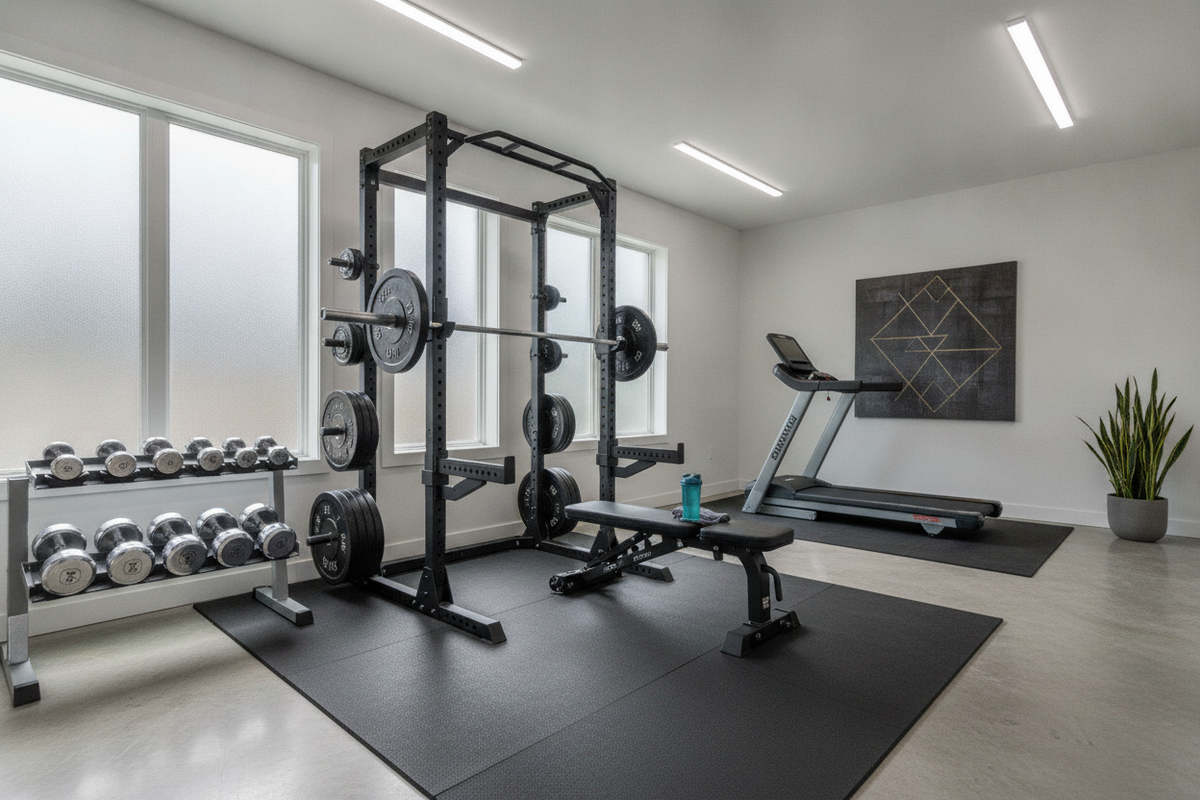
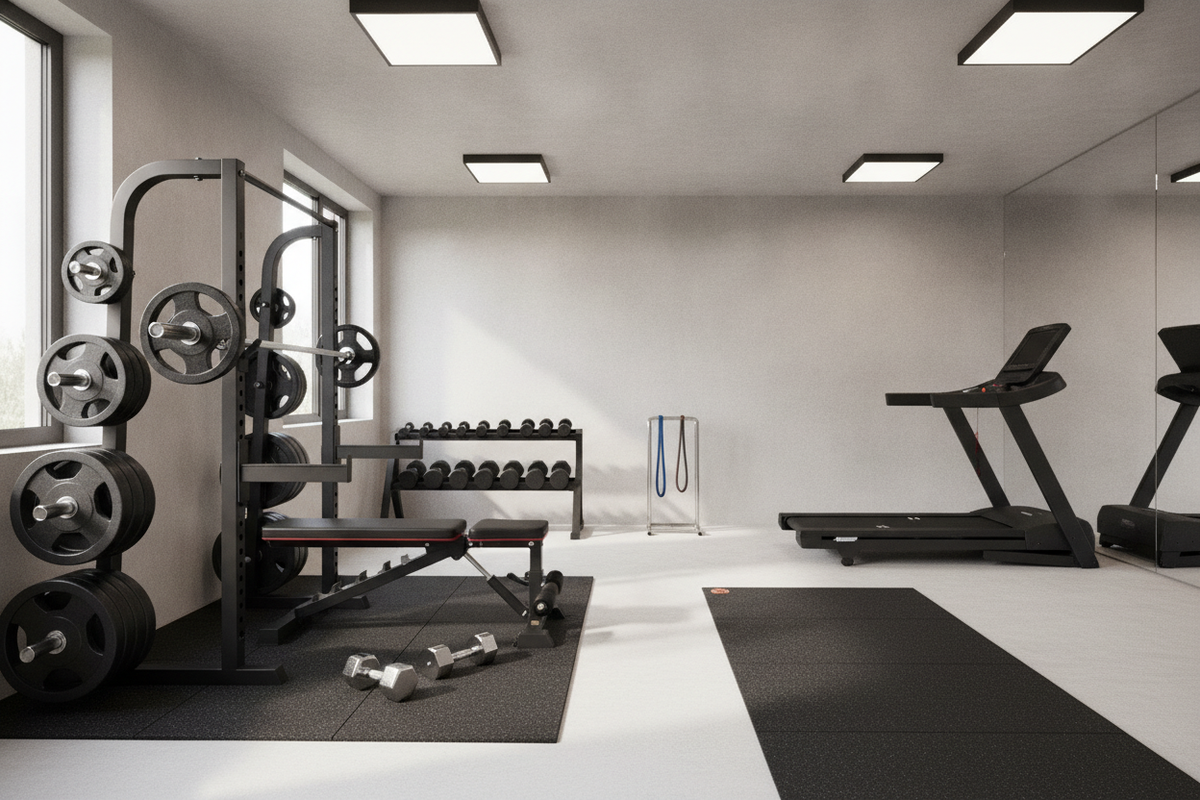
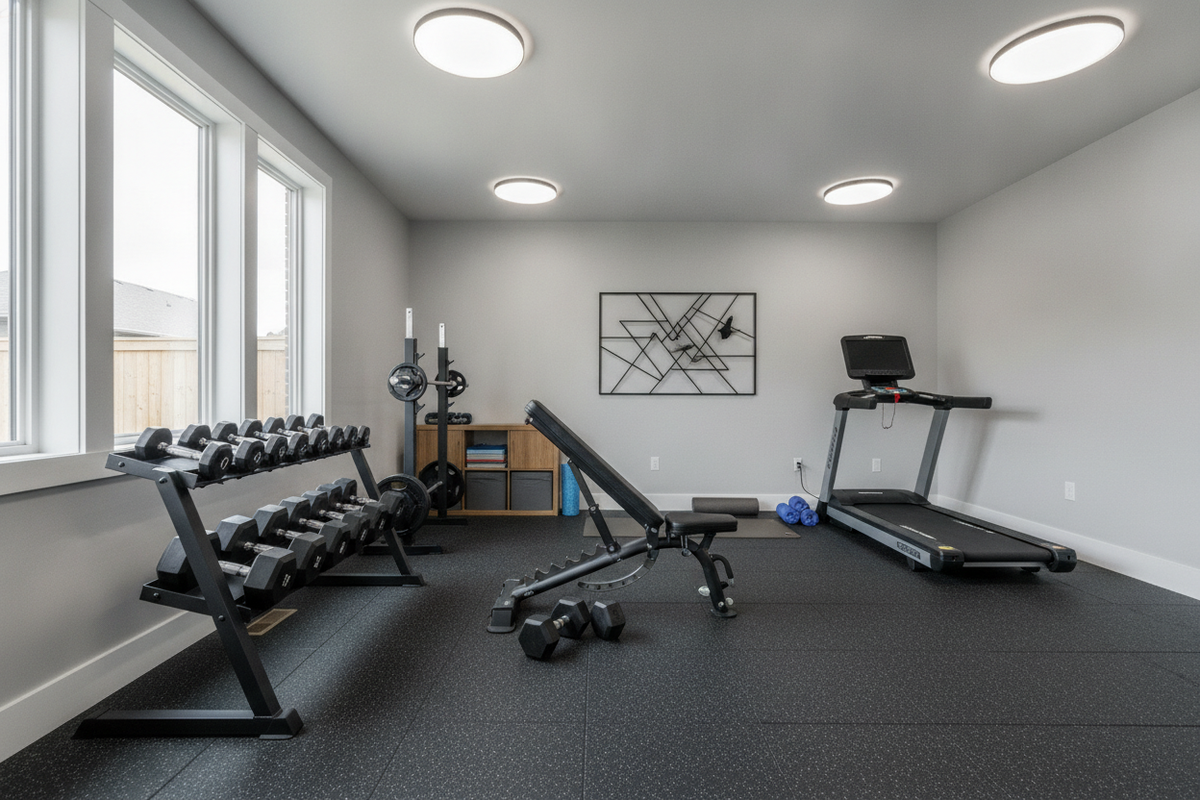
Executing ground-based knee and hip mobility exercises requires deliberate floor staging. Direct contact between the patella or pelvic bones and hard flooring can create discomfort that prompts compensatory movement patterns. Utilizing high-density exercise mats provides balanced joint cushioning without causing excessive instability underfoot.
A supportive mobility mat should offer firm foam or rubber composition that protects pressure points during half-kneeling and quadruped drills. At the same time, the mat must feature a non-slip base and textured top surface. Drills like the Cossack squat glide and 90/90 hip switch rely on predictable ground friction so feet and knees do not slide unintentionally during lateral transitions.
Structuring Your Mobility Flow: Warm-Up vs. Post-Session Protocols
How you sequence knee and hip mobility work depends on training objectives and session timing:
- Pre-Workout Dynamic Preparation: Focus on dynamic transitions such as the 90/90 hip switch, adductor rock-backs, and Cossack glides. Perform 6 to 10 controlled repetitions per side using continuous motion to elevate tissue temperature and prime joint capsules before lifting or running.
- Post-Session and Active Recovery: Emphasize longer isometric holds and deeper end-range positions, such as the deep squat prying drill and half-kneeling flexor stretches. Spend 30 to 60 seconds per position while focusing on steady diaphragmatic breathing to encourage tissue relaxation.
Mat Care and Long-Term Flooring Maintenance for Ground Work
Maintaining a clean, grippy surface ensures consistent traction during ground-based mobility routines. Perspiration and dust can reduce mat friction, leading to slipping during dynamic transitions.
Wipe down your exercise mat after mobility sessions using a mild soap solution or dedicated mat cleaner. Avoid harsh chemical agents that can degrade dense foam surfaces or leave slick residues. Allow the surface to dry completely before rolling or storing flat, preserving both material integrity and floor grip over extended training cycles.