6 Standing Hip Opener Movements: Biomechanical Alignment, Balance Cues, and Floor Mat Staging
Prolonged sitting and repetitive daily movement patterns often lead to restricted hip mechanics. While floor-based stretches remain popular, incorporating a dynamic standing hip opener routine provides unique functional advantages. Upright hip mobility challenges the neuromuscular system by requiring active stabilization, single-leg grounding, and continuous core control under gravitational load.
Biomechanical Foundations of Standing Hip Openers
Practicing hip openers standing upright changes the mechanical demands placed on the pelvis and spine. Floor-based mobility drills often isolate joint angles in passive positions, whereas standing variations require the foot, ankle, knee, and hip to work together as a cohesive kinetic chain. While dedicated resistance machines provide isolated loading as detailed in a comprehensive hip exercise guide, bodyweight standing flows cultivate active range of motion, proprioception, and balance.
Maintaining a neutral pelvis is central to upright hip articulation. When hip flexors or adductors tighten, the pelvis often tilts anteriorly, increasing arching through the lower back. Upright flows encourage reciprocal inhibition—activating the glutes and core to allow opposing muscle groups to lengthen naturally without joint compression.
The 6-Movement Standing Hip Opener Flow
This sequential standing hip opener exercise series transitions through multiple planes of motion, targeting the external rotators, adductors, hip flexors, and posterior capsule.
1. Standing Figure-Four Chair
Begin by balancing on your left leg with a micro-bend in the knee. Cross the right ankle over the left thigh above the knee joint. Hinge at the hips and lower your hips down and back as if sitting into an imaginary chair. Keep the chest lifted and right foot flexed to protect the knee joint. This movement addresses external rotation and opens the piriformis and gluteal complex while challenging base-leg balance.
2. Dynamic High Crescent Lunge with Pelvic Tuck
Step one foot back into a long split stance with the back heel elevated. Rather than allowing the lumbar spine to arch, gently tuck the tailbone under to maintain a neutral or slightly posterior pelvic tilt. Squeeze the rear glute to open the front of the rear hip, particularly the psoas and rectus femoris. Reach both arms upward to lengthen the anterior fascia.
3. Standing Hip Controlled Articular Rotations
Stand tall on one leg, driving the foot firmly into the floor. Lift the opposite knee toward the chest in flexion, rotate the thigh outward into abduction, rotate the heel upward into internal rotation, and drive the leg backward into extension before returning to the start. Move through this circular path with controlled cadence, isolating movement strictly to the hip socket without twisting the torso.
4. Wide-Stance Lateral Shift and Cossack Transition
Take a wide stance with feet pointed slightly outward. Shift your body weight to one side, bending the working knee while keeping the trailing leg straight. Sit the hips back to open the medial adductor chain. For deeper mobility, rotate the toes of the straight leg upward toward the ceiling, keeping your torso upright and heel grounded.
5. Standing Knee-to-Chest with Active Glute Squeeze
Root through your standing leg, squeezing that side glute to establish an upright posture. Draw the opposite knee directly toward your chest with both hands. Focus on vertical spine alignment rather than rounding the shoulders forward. This movement creates space through the posterior hip capsule while training end-range standing hip flexion.
6. Extended Triangle Stance with Torso Reach
Step feet wide apart, turning the lead foot forward and the back foot outward at a slight angle. Extend arms parallel to the floor, hinge sideways at the hip crease, and lower your lead hand toward your shin or ankle while extending the opposite hand upward. This multi-planar movement lengthens the inner thighs and hamstrings while engaging the lateral core.
Kinetic Alignment Cues for Stability and Balance
Executing standing mobility movements requires active awareness of ground contact and posture. Proper execution depends on three primary alignment factors:
- Tripod Foot Engagement: Distribute weight evenly across the base of the big toe, pinky toe, and center of the heel. Active arch engagement prevents inward knee collapse during single-leg drills.
- Lumbo-Pelvic Bracing: Prevent rib flare by drawing the lower ribs inward toward the pelvis. Pairing hip movement with midsection bracing creates total-body control, similar to principles outlined in an exercise standing guide.
- Joint Stacking: Ensure the standing knee tracks over the middle toes during hinged or bent-knee movements to avoid unwanted torque on connective tissue.
- Assisted Scaling: If balance restricts joint range of motion, place one hand lightly on a wall or sturdy bar to steady your balance while maintaining movement depth.
Home Floor Staging and Subfloor Protection for Standing Mobility
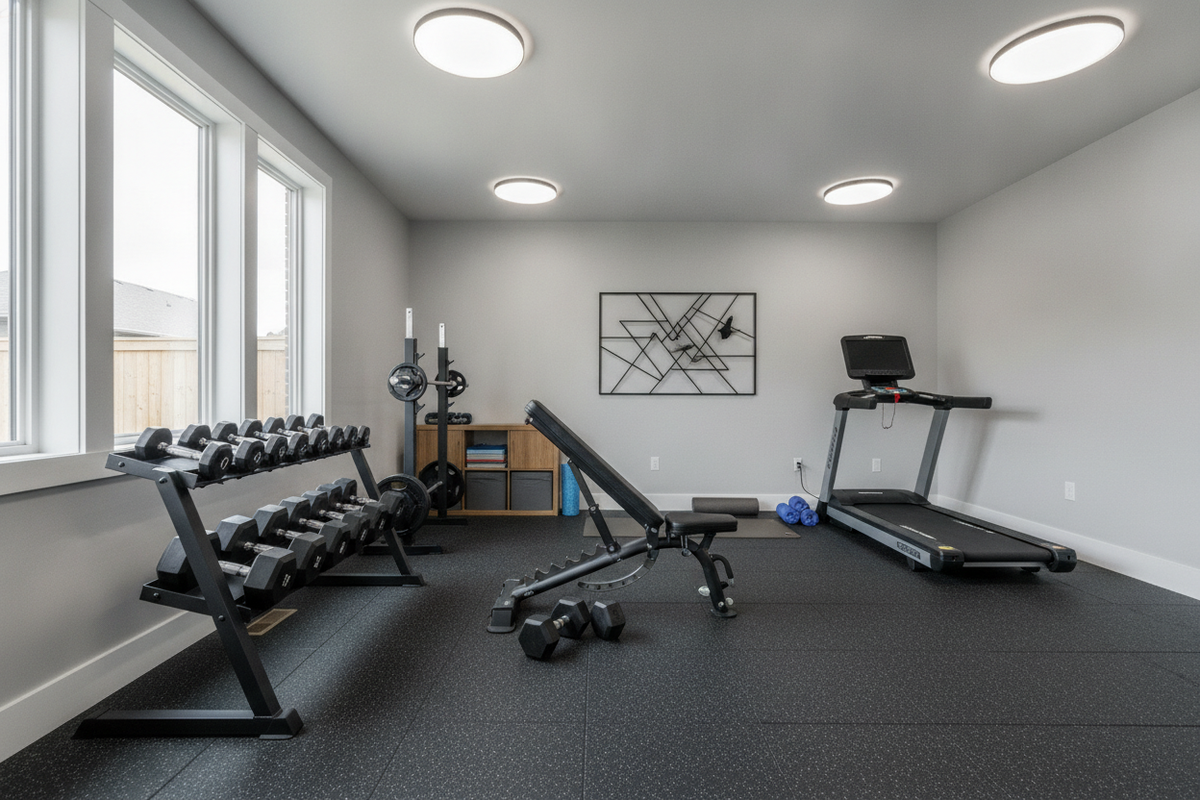
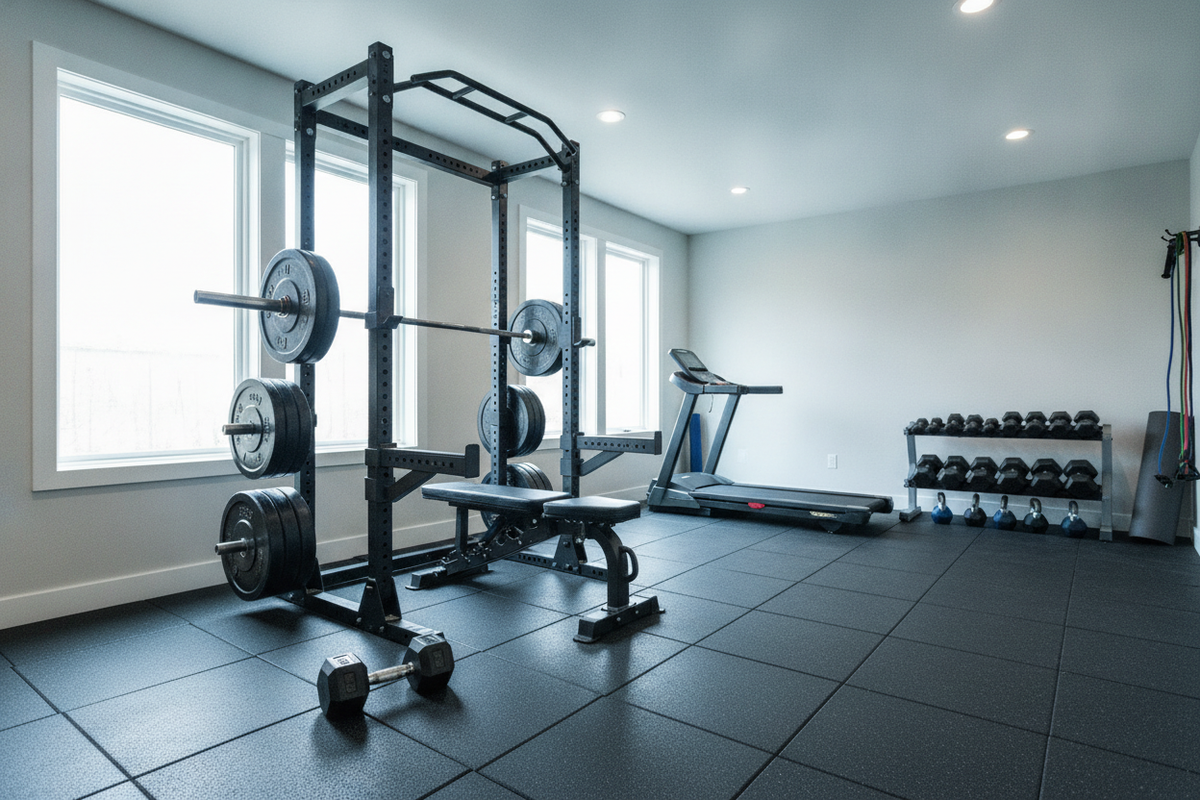
Floor surface quality directly affects stability, balance confidence, and joint comfort during standing routines. Performing dynamic wide shifts and single-leg balance work on slick hardwood or thin rugs can lead to slipping or awkward compensations.
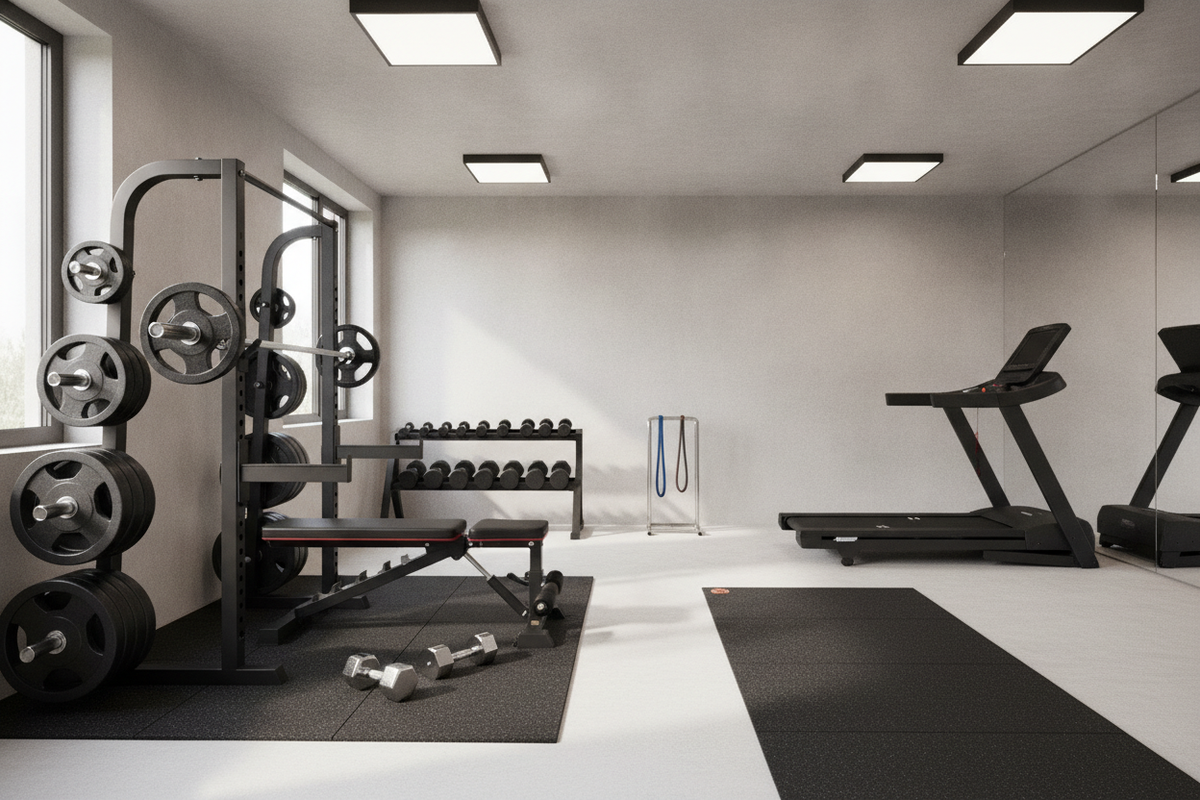
A dedicated mat setup from a supportive exercise collection offers the surface traction needed for lateral transitions and rotational drills. High-density materials provide a firm base that allows the foot to anchor securely without sinking unevenly, protecting both balance and underlying subfloors from sudden impact or scuffing.
For routines requiring multi-directional foot placement, selecting gear from a spacious exercise collection ensures you can step freely without stepping off the padded boundary. Utilizing a versatile exercise product creates an expansive, slip-resistant foundation suited for transitioning seamlessly from upright lunges to wide Cossack shifts.
Programming Frameworks: Warm-Up, Midday Break, and Cooldown
Standing hip openers adapt easily to various daily and training routines:
- Pre-Workout Dynamic Warm-Up: Perform each movement for continuous fluid repetitions (around 5 to 8 per side) to prime the nervous system and lubricate joints before squats or running.
- Midday Desk Break: Complete 3 to 4 movements standing next to your workstation to relieve tension from prolonged sitting without needing to change clothes or lay on the floor.
- Post-Workout Downregulation: Hold end-range positions statically for several deep, diaphragmatic breaths to encourage tissue relaxation and restore resting length.