Hip Machine Exercise: The Definitive Guide for Glute Growth
You have likely walked past that bulky apparatus in the corner of the gym, unsure if it’s worth your time. Or perhaps you use it, but you're just going through the motions while scrolling on your phone. Here is the reality: the hip machine exercise is one of the most misunderstood yet effective tools for targeted lower body development.
It isn't just about aesthetics. Weak hips are the silent killer of heavy squats and pain-free running. If your glute medius is asleep at the wheel, your knees cave in, and your lower back takes the load. This guide cuts through the noise to show you exactly how to use these machines for performance and hypertrophy.
Key Takeaways
- Isolation is Key: Unlike squats, hip machines isolate the gluteus medius and minimus without spinal loading.
- Control Over Load: Momentum kills gains here. Use a 2-second concentric and 3-second eccentric tempo.
- Placement Matters: Adjust the pads so they rest on your thigh, not your knee joint, to prevent leverage issues.
- Volume: These muscles respond best to higher repetition ranges (12–20 reps) near failure.
Why the Hip Machine is Not "Cheating"
There is a pervasive myth in strength culture that if you aren't using a barbell, you aren't training hard. That is nonsense. Compound movements are great for systemic strength, but they are terrible at isolating specific hip abductors.
When you squat, your quads and glute maximus do the heavy lifting. The smaller stabilizers often get neglected. The hip machine forces these smaller muscles to work by removing the stability requirement. You can take the muscle to absolute failure safely, without worrying about a bar crushing you.
Mastering the Variations
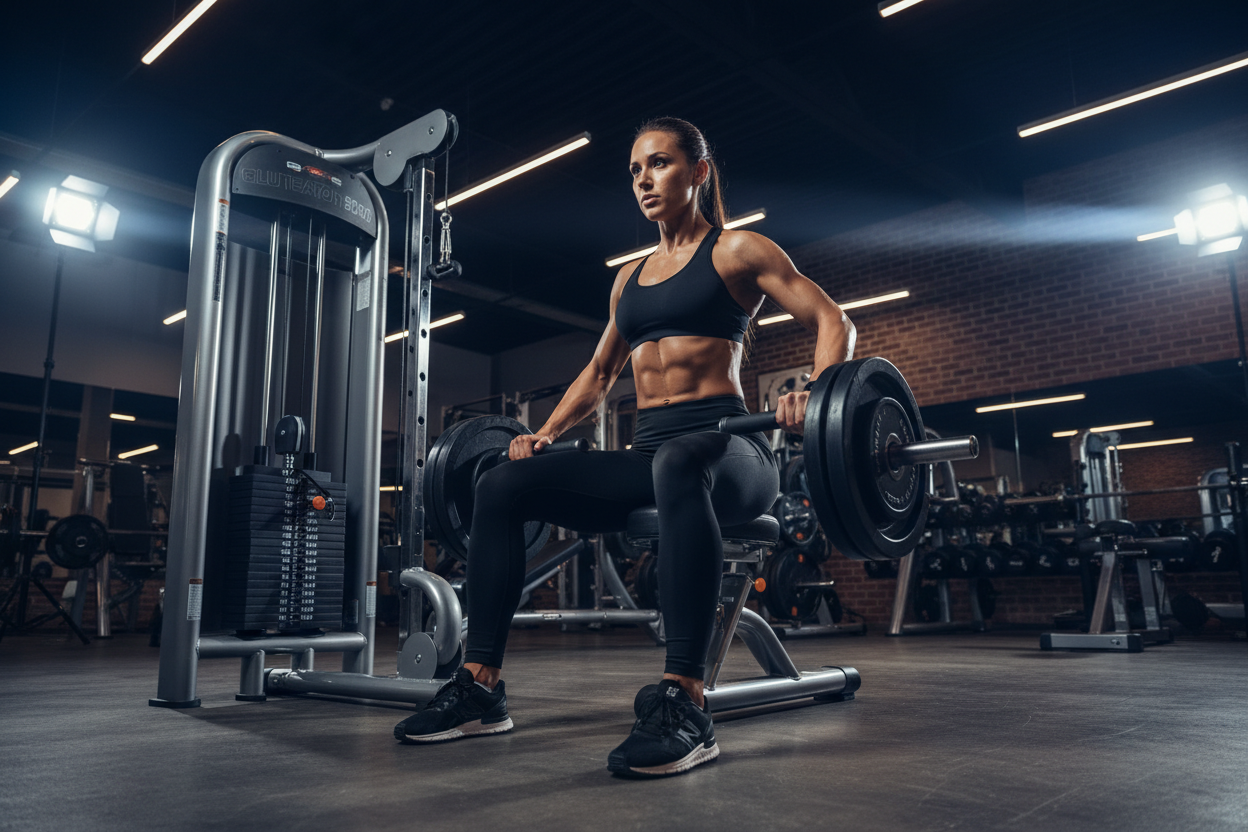
The Seated Abduction (The "Outer" Hip)
This targets the gluteus medius. The biggest mistake here is range of motion. Many lifters load the whole stack and move their knees three inches.
Drop the weight. Lean forward slightly to put the glutes in a stretched position. drive your knees out as wide as the machine allows, pause for a full second, and resist the weight on the way back in. If the plates slam down, you went too fast.
The Seated Adduction (The "Inner" Thigh)
Often skipped by men, which is a mistake. Your adductors are massive stabilizers for the squat. Weak adductors lead to knee instability.
Sit back firmly. Keep your spine neutral. Squeeze your legs together and hold the contraction. Think about crushing a soda can between your knees.
The Standing Multi-Hip Extension
This mimics the kickback. It targets the glute max. The trick here is keeping your torso rigid. If you swing your upper body forward to kick the leg back, you are using your lower back, not your hip. Brace your core like someone is about to punch you, then extend the leg.
Structuring Hip Machine Workouts
You shouldn't build an entire day around these machines, but they are potent accessories. They work best as "finishers" or pre-exhaust movements.
The Pre-Exhaust Method: Do 3 sets of hip abductions before you squat. This wakes up the glute medius, ensuring it fires during your heavy compound lifts.
The Burnout Method: Save hip machine workouts for the end of leg day. Do 3 sets of 15–20 reps with limited rest (30 seconds) to flush blood into the muscle and induce metabolic stress.
Common Mistakes That Kill Progress
Ego Lifting
The hip joint is a ball-and-socket mechanism designed for mobility and stability, not infinite load bearing in isolation. Using excessive weight forces you to recruit your lower back and hip flexors to jerk the weight moving. If your butt lifts off the seat, the weight is too heavy.
Ignoring the Eccentric
The magic happens on the return phase. Letting the weight stack crash down removes the tension from the muscle. You need to fight the machine on the way back to the starting position.
My Personal Experience with Hip Machine Exercise
I used to avoid the abduction machine because I thought it wasn't "functional." Then I stalled on my deadlift for six months because my knees kept caving in off the floor.
I started incorporating heavy, high-rep abductor work, and I’ll be honest about the reality of it: it’s uncomfortable in a very specific way. It’s not just the muscle burn. It’s the way the vinyl pads dig into your outer thigh when you’re sweaty. There's a specific spot about three inches above the knee where the skin gets raw if you're wearing shorts that are too short.
And let's talk about the standing multi-hip machine. The axis of rotation never seems to line up perfectly with my hip joint. I remember spending more time adjusting the lever arm height than actually lifting. But once I found that sweet spot—where the roller pad hit the meat of my hamstring rather than the back of my knee—the glute pump was unlike anything I got from lunges. It’s gritty, unglamorous accessory work, but that raw friction feeling on the pads became a signal that I was actually fixing my weak points.
Conclusion
The hip machine isn't a place to rest; it's a place to refine. By isolating the hips, you build the structural integrity needed for massive compound lifts and injury prevention. Stop worrying about how it looks and start focusing on how it feels. Control the tempo, drop the ego, and watch your lower body strength skyrocket.
Frequently Asked Questions
How often should I perform hip machine exercises?
Since these act as accessory movements targeting smaller muscle groups, they recover relatively quickly. You can safely perform them 2 to 3 times per week, ideally on lower body or full-body training days.
Can hip machine exercises replace squats?
No. Squats are a compound movement involving the entire central nervous system and multiple joint complexes. Hip machines are isolation movements. They complement squats by strengthening weak links but cannot replicate the systemic stress of a heavy squat.
Should I lean forward or sit back on the abduction machine?
Leaning forward slightly (hinging at the hips) tends to place more tension on the gluteus muscles rather than the piriformis. However, keep your back straight while leaning; do not round your spine. Experiment with both to feel where you get the best activation.