Padded Foam Play Mat: A Hidden Home Gym Upgrade
If you have ever tried doing burpees on a cold, concrete basement floor, you already know the toll it takes on your joints. Building a home gym often means prioritizing big-ticket items like power racks and barbells, leaving the flooring as an expensive afterthought. But what if you could protect your knees, dampen noise, and save your budget all at once?
Enter the padded foam play mat. While traditionally marketed for kids' playrooms, these interlocking EVA foam tiles have become a massive trend in the North American home gym community. In this guide, we will break down exactly how to use these mats effectively, what workouts they support, and when you need to upgrade to commercial rubber.
Key Takeaways
- Cost-Effective: Foam mats offer excellent shock absorption for a fraction of the price of commercial gym rubber.
- Easy Installation: Interlocking edges allow for custom sizing in tight or irregularly shaped rooms.
- Best For: Bodyweight exercises, yoga, mobility work, and light dumbbell routines.
- The Catch: They will permanently compress under heavy, stationary equipment like squat racks or treadmills.
Why Gym Owners Are Repurposing Play Mats
A padded foam play mat is essentially high-density EVA foam. It is lightweight, water-resistant, and provides a surprising amount of cushion. Here is what to look for when adapting them for fitness.
Thickness and Density Matter
Not all foam is created equal. For a home gym environment, you want to aim for a minimum thickness of 0.5 inches (1/2 inch), though 0.75 inches is the sweet spot for maximum joint protection during plyometrics. Look for high-density EVA foam, which resists tearing and provides a firmer base for balancing exercises compared to ultra-soft nursery mats.
Space Planning and Expansion
One of the biggest advantages of interlocking foam tiles is their modularity. Whether you have a sprawling two-car garage or a cramped apartment corner, you can build a custom footprint. Most standard tiles are 24x24 inches (4 square feet). A standard 6x8 foot stretching area will only require 12 tiles, making it incredibly easy to pack up if you move.
What Workouts Work Best on Foam?
Matching your flooring to your training style is critical for safety and performance.
Ideal for Bodyweight and Mobility
If your routine consists of HIIT, calisthenics, yoga, or kettlebell flows, foam mats are exceptional. They absorb the impact of jump squats and provide a comfortable barrier for floor presses and core work. The textured surface on most high-quality mats also provides decent grip for barefoot training.
When to Avoid Foam Flooring
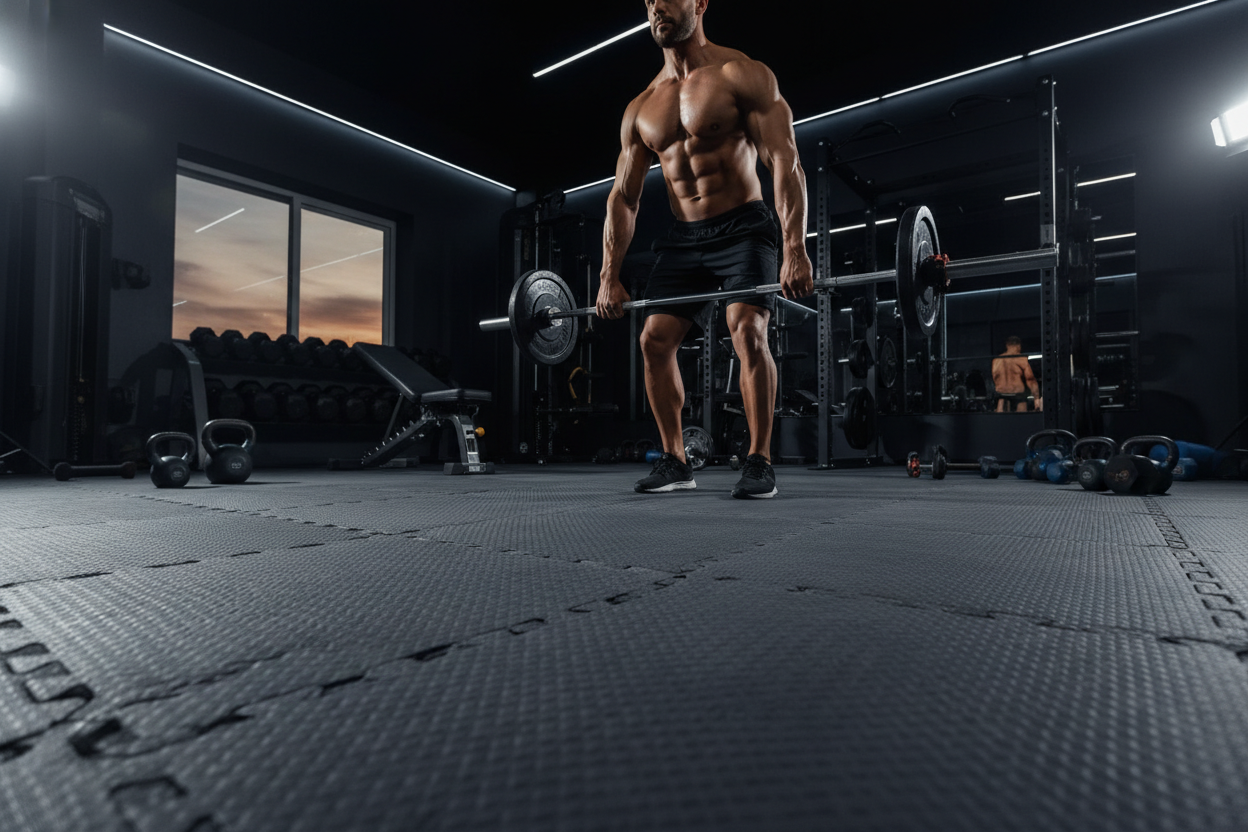
Heavy strength training is the kryptonite of the padded foam play mat. If you are deadlifting heavy barbells or dropping bumper plates, foam will not protect your concrete subfloor. Furthermore, placing a 500-pound power rack on EVA foam will cause permanent indentations and make the rack unstable. For heavy lifting zones, stick to 3/4-inch vulcanized rubber stall mats.
From Our Gym: Honest Take
We tested a highly-rated, 3/4-inch thick interlocking foam mat system in our secondary garage gym space over the last six months. I specifically used it for my morning mobility routines and kettlebell circuits. At 210 pounds, I found the cushioning perfect for kneeling exercises that usually aggravate my patellar tendon.
However, I made the mistake of leaving a 70-pound dumbbell resting on the mat over the weekend. By Monday, there was a deep, permanent crater in the foam. The takeaway? They are fantastic for active movement and stretching zones, but you absolutely cannot treat them like dense commercial rubber. Keep your heavy cast-iron weights stored on a proper rack.
Frequently Asked Questions
Can I drop weights on a padded foam play mat?
No. While foam provides comfort for your joints, it lacks the density to absorb the shock of dropped dumbbells or barbells. Dropping heavy weights will puncture the foam and potentially crack the floor underneath.
How do you clean EVA foam gym mats?
Maintenance is incredibly simple. Because the foam is closed-cell and water-resistant, sweat will not soak in. Simply wipe them down with a damp mop using a mixture of warm water and a few drops of mild dish soap. Avoid harsh bleach, which can degrade the foam over time.
Can I put foam interlocking mats over carpet?
Yes, but with a caveat. While they will protect your carpet from sweat, placing foam mats on top of plush or high-pile carpet can create a slightly unstable, shifting surface. They work best over hard, flat surfaces like concrete, tile, or hardwood.