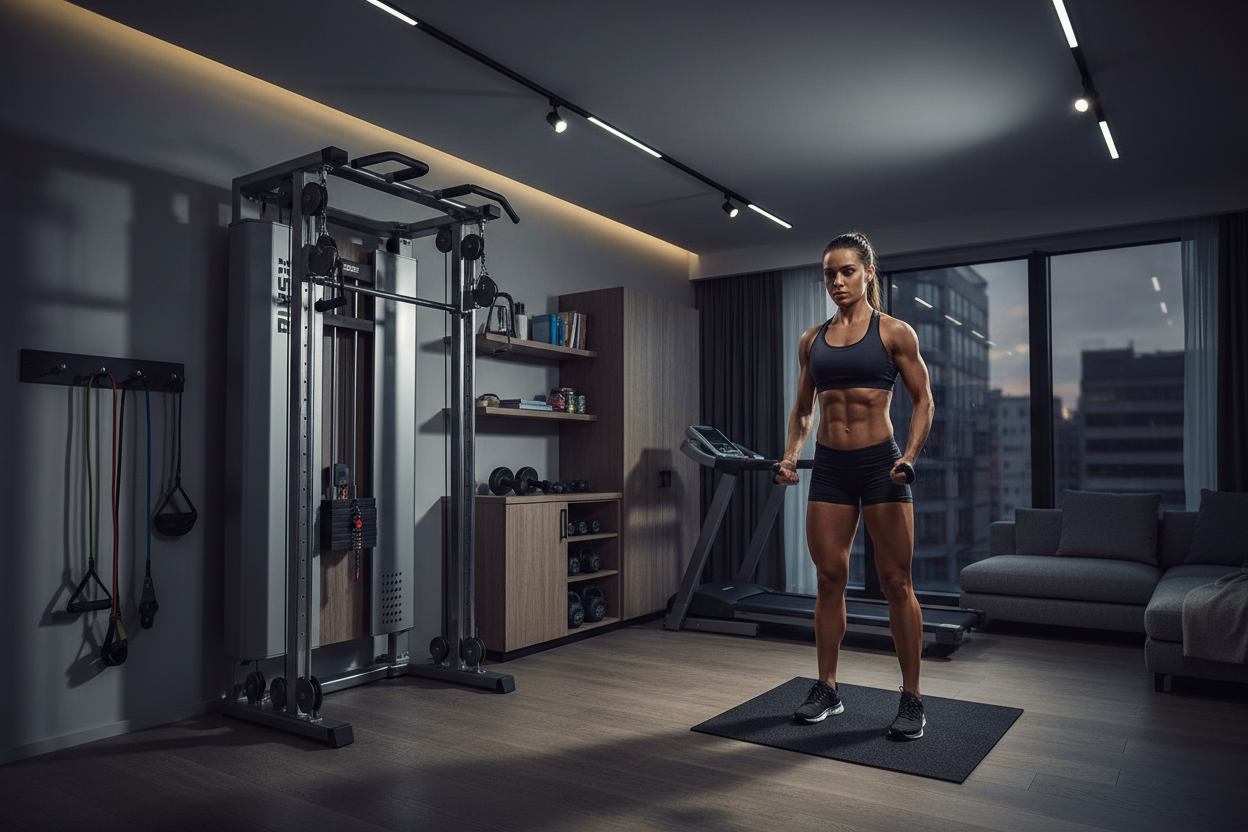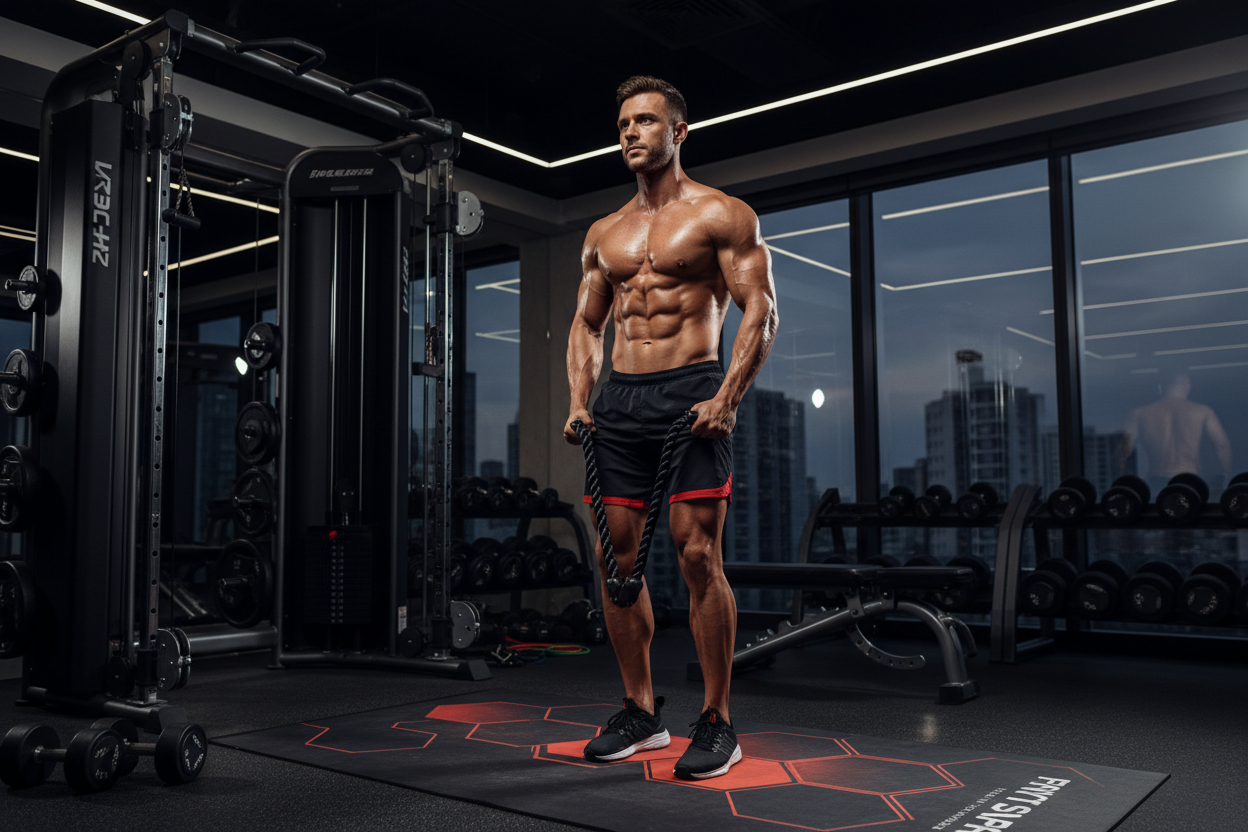
Standing Core Exercises: Build Abdominal Strength
Dropping down onto a hard gym floor at the end of a demanding workout is rarely inviting. If your training area is compact or you simply dislike floor-based crunches, switching to standing core exercises offers an efficient alternative. Training upright challenges your balance, reinforces your posture, and integrates your midsection with your hips and shoulders in a way that replicates real-world movement.
Upright training turns basic abdominal work into functional conditioning. By learning proper alignment and bracing mechanics, you can target your midsection without placing unnecessary strain on your neck or lumbar spine.
Why Choose Standing Ab Exercises Over Floor Work?
Traditional floor setups can crowd small spaces and often turn into repetitive flexion movements. Incorporating standing ab exercises into your weekly routine provides several distinct benefits for lifters of all levels.
- Better Postural Support: Performing an upright exercise standing core guide movement pattern trains your torso to stabilize the spine against gravity, building practical core stability.
- Space Efficiency: When floor room is limited by benches and racks, upright movements require only enough surface area to position your feet firmly.
- Spinal Comfort: Lifters who experience stiffness from repeated floor sit-ups often find that upright trunk control reduces uncomfortable spinal rounding.
For those interested in foundational upright patterns, exploring a comprehensive standing exercise guide helps clarify how lower-body stability directly supports midsection strength.
Essential Standing Core Exercises for Total Torso Control
1. Standing Bicycle Crunches for Rotational Control
To begin, stand tall in an athletic standing position with your feet hip width apart. Place your fingertips lightly behind your head without pulling on your neck. Keep your standing leg steady, lift your right knee toward your chest, and rotate your left elbow across your torso toward the knee. Lower your leg back down to the starting position with steady control, then switch to lift your left knee toward your right elbow.
Alternating between sides forces your internal and external obliques to coordinate with your hip flexors. Aim to keep your upper body tall rather than collapsing through your lower back during each repetition.
2. Cross-Body Knee Drives
To set up, stand with your feet arranged at feet shoulder width apart. Reach your hands diagonally overhead toward your right side with both arms straight. From this stretch, pull your hands down while driving your left knee upward across your midline. Return your left foot to the floor with deliberate pacing, maintaining an engaged midsection.
After completing your repetitions on that side, switch and pull toward the opposite side, bringing your hands down as your right knee lifts and your right foot leaves the ground. This motion activates the deep core muscles and conditions your hips to work synchronously with your torso.
3. The Standing Straight-Leg March
Set your stance with feet hip width and extend both arms out in front of your chest with arms extended. Keeping your right leg straight or with just a soft knee bent, hinge slightly at the hip to lift your right leg toward your outstretched left hand. Tap your toes gently toward your fingers, lower under control to the starting position, and alternate by driving your left leg upward toward your right arm.
Focus on maintaining an upright spine throughout the movement. If you find your shoulders rounding forward to meet your foot, limit the height of your leg raise to preserve clean alignment across your entire midsection.
Engaging Abdominal Muscles and Obliques Correctly
Bracing the Abdominal Muscles While Upright
Many lifters find it harder to isolate their midsection while on their feet because the hips and quads naturally assist. To properly engage your abdominal muscles, stand tall with your shoulder width stance, tuck your pelvis slightly into a neutral position, and exhale to draw your ribs downward toward your pelvis. This tension establishes genuine trunk rigidity before any limb moves.
Targeting Internal and External Obliques
Rotational and anti-rotational drills are central to any complete standing ab workout. Movements that resist sideways bending or twisting demand substantial engagement from the internal and external obliques. Maintaining a stable base with feet shoulder width ensures that torque is absorbed through your torso rather than twisting through the knees.
If you prefer guided visual cadences for upright routines, our detailed standing exercise core guide walks through tempo variations and balance adjustments.
Designing a Balanced Standing Ab Workout Routine
You can structure upright ab exercises into quick daily circuits or place them as finishers at the end of strength sessions. When planning your program, balance anterior flexion drills, rotational drives, and anti-lateral flexion holds.
- Warm-Up: Spend a couple of minutes moving through unweighted marches and trunk rotations to loosen the hips and wake up the postural chain.
- Work Intervals: Perform each movement for controlled repetitions rather than rushing for speed. Quality of contraction matters far more than volume.
- Progression: Start with bodyweight drills. As your balance and trunk tension improve, you can introduce light resistance bands or handheld weights.
While floor training has its place, as covered in our comparison in the exercise core guide, upright core routines deliver practical, athletic stability that translates directly into everyday lifting and sports performance.
Common Mistakes in Standing Core Training
The most frequent error during upright core work is relying on momentum. Swinging the legs or aggressively twisting the spine reduces muscle activation and places undue stress on the lower back. Always initiate movement by contracting your midsection first.
Another issue is stance instability. If your feet are too narrow, balance becomes the limiting factor rather than muscular exertion. Keeping your feet spaced at either shoulder width apart or hip width provides the solid base necessary to brace effectively.
Frequently Asked Questions
Does standing improve core strength?
Yes. Upright positions recruit stabilizing muscle groups through the hips, back, and torso to maintain balance against gravity, making standing drills highly functional for everyday tasks and compound lifts.
Can core workouts help with back pain?
Targeted core strengthening often helps support the spine and improves posture. However, anyone experiencing persistent back discomfort should consult a qualified healthcare provider for personalized medical evaluation.
What are some good unilateral core exercises?
Single-leg marches, asymmetrical band presses, and cross-body knee drives are excellent unilateral choices. They challenge stability on one side while the opposite side stabilizes your posture.
What are some good ab exercises for men and women in small home gyms?
Standing rotational marches, standing bicycle crunches, and overhead bracing drills are ideal. They require minimal floor space, eliminate the need for extra benches, and deliver a comprehensive midsection workout.