The Smart Guide to Exercise Equipment for Small Spaces (No Clutter)
Living in a city apartment or a home with limited square footage often feels like a choice between having a living room or having a gym. Most people assume they need a dedicated garage or basement to get a serious workout, but that mindset limits your potential. You do not need a power rack to build muscle, nor do you need a commercial treadmill to improve cardiovascular health.
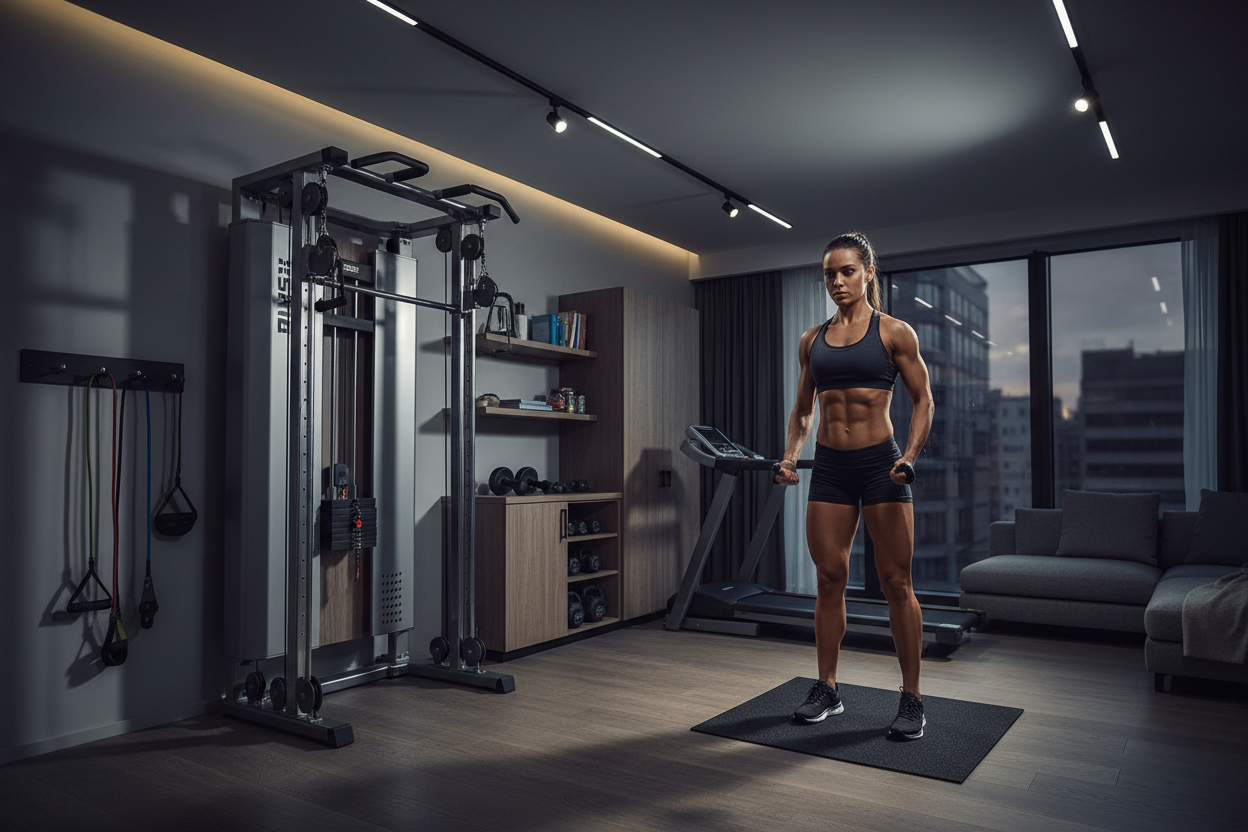
The solution lies in selecting high-density exercise equipment for small spaces that offers maximum versatility with a minimal footprint. This guide focuses on gear that earns its rent by serving multiple functions or vanishing when not in use.
Key Takeaways
- Prioritize Vertical Storage: Look for gear that hangs on doors or slides under beds (e.g., suspension trainers, resistance bands).
- The "One-Item" Rule: Choose adjustable dumbbells over fixed sets to replace 15 pairs of weights with two blocks.
- Foldable Cardio: Magnetic rowers and under-desk treadmills offer the best cardio-to-space ratio.
- Ceiling Height Matters: Always measure vertical clearance before buying cardio machines or overhead press gear.
The Philosophy of Compact Training
Before buying anything, you must adopt a "density" mindset. In a commercial gym, machines are spread out because space is abundant. In your home, every square inch counts. The best small space exercise equipment is defined by its ability to facilitate compound movements—squats, hinges, pushes, and pulls—without dominating the room.
If a piece of equipment only allows for one movement (like a dedicated ab cruncher), it is a waste of space. We are looking for high-utility tools.
Strength Training: The Heavy Hitters
Adjustable Dumbbells
If you only buy one thing, make it a high-quality pair of adjustable dumbbells. Fixed dumbbells are a luxury for large gyms. A selectorized set allows you to toggle between 5 lbs and 50+ lbs in seconds. This provides the progressive overload necessary for muscle growth without requiring a massive rack against your wall.
Suspension Trainers (TRX)
Suspension trainers utilize gravity and body weight. They are arguably the most efficient exercise machines for small spaces because they aren't machines at all—they are straps. You can anchor them to a sturdy door, perform a full-body workout, and then toss them into a drawer. They are particularly effective for back development (rows) which is often hard to train at home without a barbell.
Cardio Without the Footprint
Cardio equipment is usually the biggest offender when it comes to clutter. A standard elliptical is a massive coat rack waiting to happen.
Foldable Rowers and Walking Pads
Modern engineering has solved the bulk issue. Hydraulic or magnetic rowers can now stand vertically, taking up no more floor space than a dining chair. Similarly, "walking pads" (treadmills without the bulky handrails and console) can slide directly under a sofa. These allow you to get your steps in without sacrificing your living area.
The Kettlebell
Do not underestimate the kettlebell as a cardio tool. High-repetition kettlebell swings spike your heart rate faster than a jog, require only a 4x4 foot area, and build posterior chain strength simultaneously.
Common Mistakes When Buying Compact Gear
The most frequent error is ignoring ceiling height. You might measure the floor area for a treadmill, but forget that the machine elevates you by 6-8 inches. If you have low ceilings, you might bang your head while running. Similarly, standing overhead presses with dumbbells might be impossible in a basement with low clearance. Always measure up, not just across.
My Personal Experience with exercise equipment for small spaces
I want to be real about the trade-offs here. I spent three years training in a 400-square-foot studio apartment, and while the marketing photos look clean, the reality is grittier.
I used a popular brand of selectorized dumbbells, and while they saved space, nobody warns you about the "rattle." When you are doing goblet squats, the plates shift slightly, making a clicking noise that feels unnerving until you trust the mechanism. Furthermore, because I didn't have a bench, I did floor presses. I quickly learned that without a yoga mat, the knurling on the dumbbells would scratch the laminate flooring the second I set them down too hard after a failure set.
Another detail people miss: storage dust. I kept my foldable rower under the bed. Every time I pulled it out, I had to wipe off dust bunnies from the rail, or the seat rollers would bump and stutter during the slide. It’s a small annoyance, but it’s the reality of gym gear living in your sleeping quarters.
Conclusion
Building a physique in a tight quarter is entirely possible. It requires smarter purchasing decisions and a commitment to tidiness. By investing in adjustable resistance and foldable cardio options, you turn your limitations into a focused, distraction-free environment. Start with the essentials, measure your space, and get to work.
Frequently Asked Questions
What is the absolute best piece of equipment for a small apartment?
Adjustable dumbbells are generally the best investment. They cover the widest range of exercises (legs, chest, back, arms) and take up less than two square feet of floor space.
Can I build muscle without a bench or rack?
Yes. You can perform floor presses instead of bench presses, and goblet squats or lunges instead of barbell squats. While a rack is optimal for powerlifting, it is not strictly necessary for hypertrophy (muscle growth).
How do I protect my floors from heavy equipment?
Always use high-density interlocking foam mats or a thick horse stall mat. Yoga mats are often too thin to prevent heavy metal dumbbells from denting wood floors or cracking tiles.