Build Bulletproof Hips With the Hip Adduction Abduction Machine
Walk into any commercial gym, and you will likely see a row of seated equipment. Among them sits the often misunderstood hip adduction abduction machine. For years, gym-goers have jokingly referred to this as the "good girl/bad girl" machine or simply a place to sit and scroll through Instagram while doing casual reps. That is a massive mistake.
If you treat this equipment as a serious accessory tool, it becomes a powerhouse for pelvic stability, injury prevention, and glute aesthetics. It targets muscles that squats and deadlifts often miss. This guide cuts through the noise and explains exactly how to utilize this dual-function machine for actual performance gains.
Key Takeaways: Quick Summary
- Dual Functionality: Most modern units are a combined hip abduction and adduction machine, meaning they target both the outer glutes (abductors) and inner thighs (adductors) by swiveling the pads.
- Primary Benefit: Enhances hip stability, which directly translates to stronger squats and safer running mechanics.
- Form Cue: Control the eccentric (lowering) phase. Letting the weight stack slam destroys tension and risks injury.
- Volume: These muscles respond well to higher repetition ranges (12–20 reps) rather than heavy, low-rep maxes.
Understanding the Mechanics: Two Machines in One
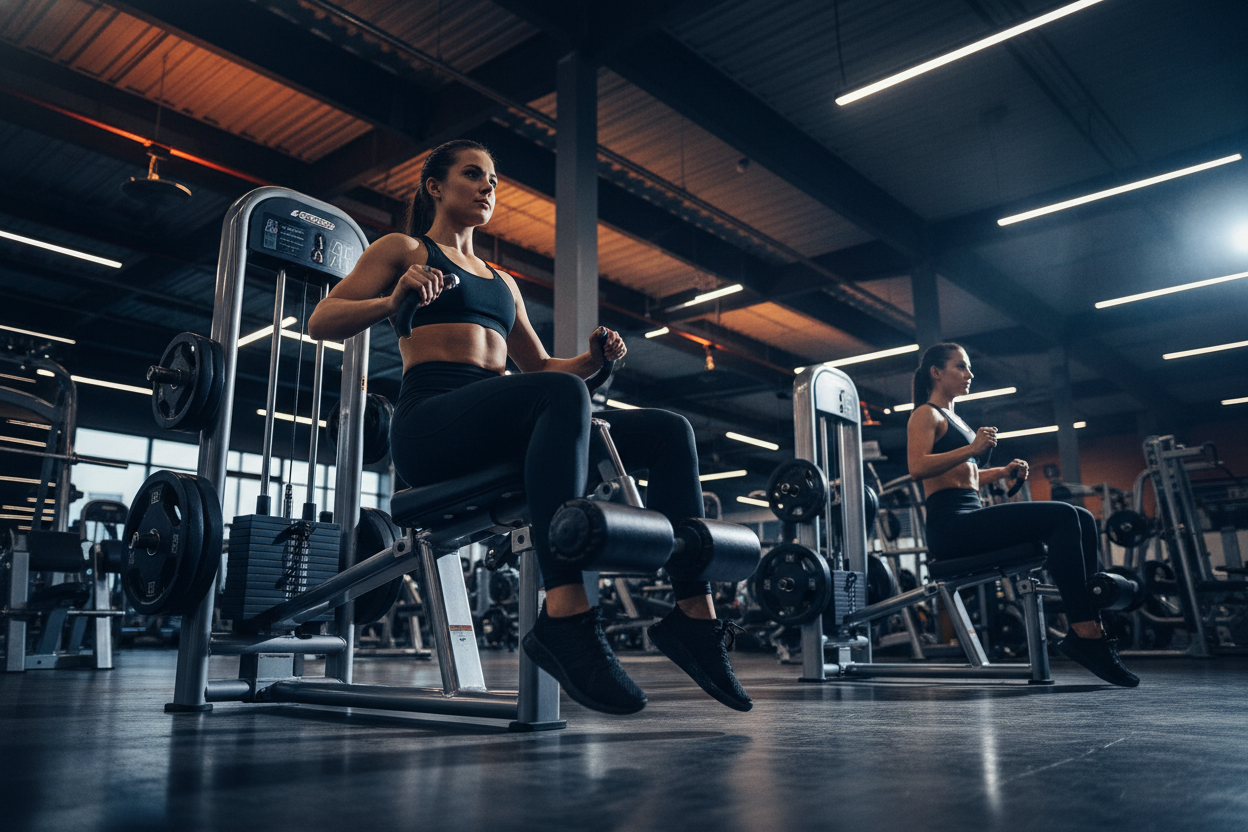
The beauty of the abductor abductor machine lies in its versatility. To get the most out of it, you need to understand that you are training two opposing muscle groups that work in concert to stabilize your pelvis.
The Abduction Phase (Pushing Out)
When you set the pads against the outside of your knees and push outward, you are using the abductor muscle machine function. This primarily targets the Gluteus Medius and Minimus.
These muscles are responsible for preventing your knees from caving inward (valgus collapse) during heavy squats. If you have trouble keeping your knees out when you lift, this movement is non-negotiable.
The Adduction Phase (Squeezing In)
By rotating the pads to the inside of your knees, you transform the unit into an ab adductor machine. This targets the adductor magnus, longus, and brevis—the inner thigh muscles.
Many lifters neglect this motion, but strong adductors act as a "second hamstring," aiding in hip extension at the bottom of a squat. Neglecting them creates a strength imbalance that often leads to groin strains.
How to Execute With Precision
Using a hip abduction adduction machine seems intuitive, but subtle adjustments change the recruitment pattern entirely.
1. Adjusting the Start Position
For the leg abductor and adductor machine to work, range of motion is key. When setting up for abduction (pushing out), set the pads so your knees are as close together as possible to start. This ensures you are working through the full stretch of the glute.
2. Torso Angle Matters
Here is a technique nuance: When performing the abduction movement, try leaning your torso forward slightly (hinging at the hips) while keeping a flat back. This pre-stretches the glutes and often allows for a stronger contraction in the Glute Medius compared to sitting bolt upright.
3. Tempo Control
The hip abductor and adductor exercise machine uses a cable or cam system. If you kick the weight out using momentum, you lose tension at the peak contraction. Push out explosively for one second, hold for a split second, and take three seconds to return to the starting position.
Common Mistakes to Avoid
Even on a guided machine, things can go wrong. Watch out for these errors on the leg abductor/adductor machine.
Using the "Short Range"
I often see people loading the whole stack on the ab abduction machine but only moving their knees three inches. This is ego lifting. Drop the weight by 30% and aim for maximum width. The growth happens at the extremes of the movement range.
Ignoring the Adductors
It is common to see people hammering the abductor leg machine (outer) for glute gains while skipping the adduction (inner) phase. This creates an imbalance. Your hips need stability from both sides. If you do 3 sets of pushing out, do 3 sets of squeezing in.
My Training Log: Real Talk
I have a love-hate relationship with the abductors and adductors machine. I used to skip it entirely, thinking compound lifts were enough. That changed when I developed a nagging hip impingement during deep squats.
The first time I took this machine seriously, I remember the specific, humbling awkwardness of the setup. On the specific hip adduction and abduction machine at my gym, the swivel pin for the pads is always a bit sticky. You have to really yank it to switch from inner to outer thigh mode.
But the real reality check was the "waddle." After doing 4 sets of 20 reps on the adduction setting with a slow tempo, I stood up and felt like my legs were glued together. It wasn't the same exhaustion as a deadlift; it was a sharp, localized burn deep in the groin that made walking to the water fountain feel unstable. That specific feeling—where your stabilizers are shot—was proof I had been neglecting those muscles for years. Now, I don't leave the gym on leg day without feeling that specific shakiness.
Conclusion
The hip adduction abduction machine isn't just for killing time. It is a specialized tool for targeting the lateral and medial stabilizers of the hip complex. Whether you are a bodybuilder looking to fill out your legs or a powerlifter trying to protect your knees, this machine deserves a slot in your program. Stop worrying about how it looks to use it, and start focusing on the stability it provides.
Frequently Asked Questions
Does the hip abduction machine burn hip fat?
No. Spot reduction is a myth. While the ab abduction machine strengthens and builds the muscles underneath, it will not specifically burn the fat covering your hips. Fat loss occurs through a caloric deficit, not targeted exercises.
How often should I use the abductor adductor machine?
Since these are smaller muscle groups used for stability, they recover relatively quickly. You can safely use the ab adductor machine 2 to 3 times per week, ideally at the end of your lower-body workouts.
Should I go heavy or light on these machines?
Moderate weight with higher reps is usually best. Because the hip abduction/adduction machine places torque on the hip socket, going extremely heavy can be uncomfortable for the joints. Focus on the 12–20 rep range with perfect control.