Secret Muscle Building Blueprint: Core Hypertrophy Principles, Mechanical Tension, and Floor Mat Staging
Demystifying Muscle Growth: Real Drivers vs. Fitness Myths
In fitness culture, the search for a secret muscle building routine often leads to complex workout splits, unconventional movements, and confusing advice. In reality, the true secret of muscle building lies in understanding the foundational mechanics of how human muscle fibers respond to physical demand. Hypertrophy is an adaptive biological response to consistent mechanical tension, progressive overload, and adequate rest.
Rather than jumping between disparate training fads, long-term muscular development depends on executing fundamental movement patterns with disciplined form. When lifters shift their focus from looking for shortcuts to mastering the core secrets to muscle gain, results become predictable and repeatable. Establishing this foundation requires balancing workout programming with a dependable training environment.
The Core Hypertrophy Pillars: Progressive Overload, Tension, and Recovery
The primary mechanism underlying all muscle growth is mechanical tension. When muscles contract against external resistance through a controlled range of motion, mechanical sensors within the muscle fibers trigger signaling cascades that promote protein synthesis. To sustain this stimulus over months and years, lifters rely on progressive overload—systematically increasing training stimulus through added resistance, refined execution, higher repetitions, or controlled repetition tempo.
A well-structured training plan also balances training stress with sufficient recuperation. Without planned recovery intervals, the muscular and nervous systems cannot adapt fully. Selecting dependable training gear, as outlined in this comprehensive muscle building guide, helps lifters create structured resistance progressions that reinforce steady development without unnecessary complexity.
Biomechanical Stability: How Solid Ground Contact Amplifies Force Output
One of the less discussed secrets to building muscle mass is biomechanical stability. The human body generates force from the ground up. Whether pressing overhead, executing a barbell row, or performing a heavy deadlift, your feet serve as the primary interface with the training surface. If that base of support shifts, squishes, or slips, neural drive decreases to protect joint structures, diminishing the tension placed directly on target muscles.
High-demand lower-body movements clearly illustrate this principle. When performing squats, lunges, or Romanian deadlifts, a dense, non-yielding floor surface allows for firm heel and forefoot contact, ensuring balanced kinetic chain alignment. Lifters looking to maximize lower-body training tension can review detailed exercise mechanics in this muscle building mass guide to understand how footing directly impacts force output.
Home Gym Floor Staging: Foundation Setup, Impact Management, and Equipment Placement
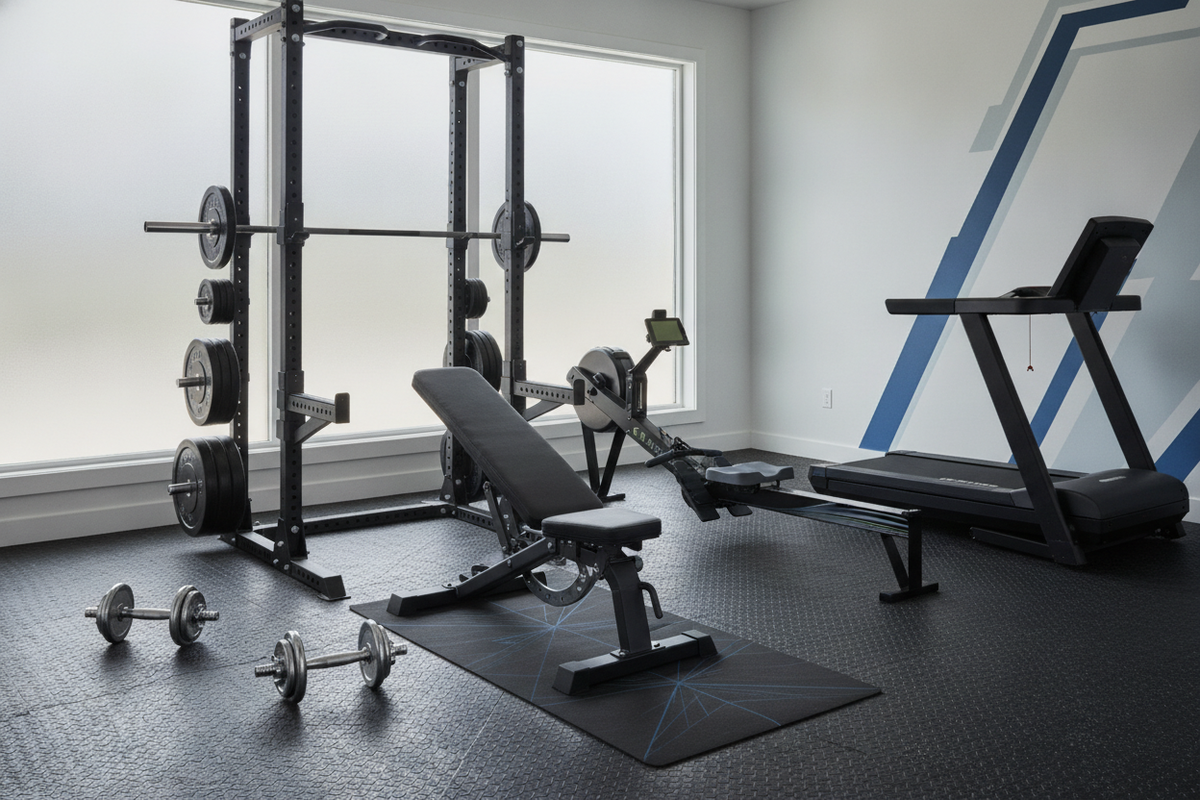
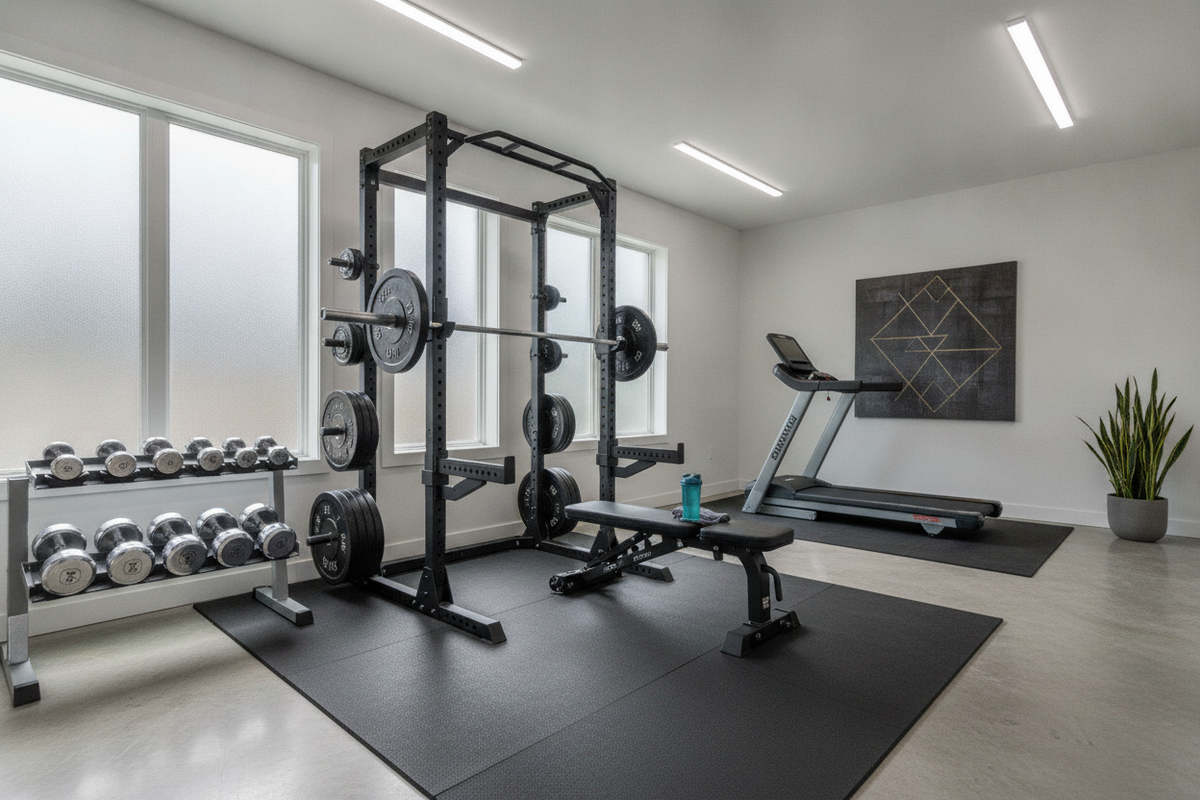
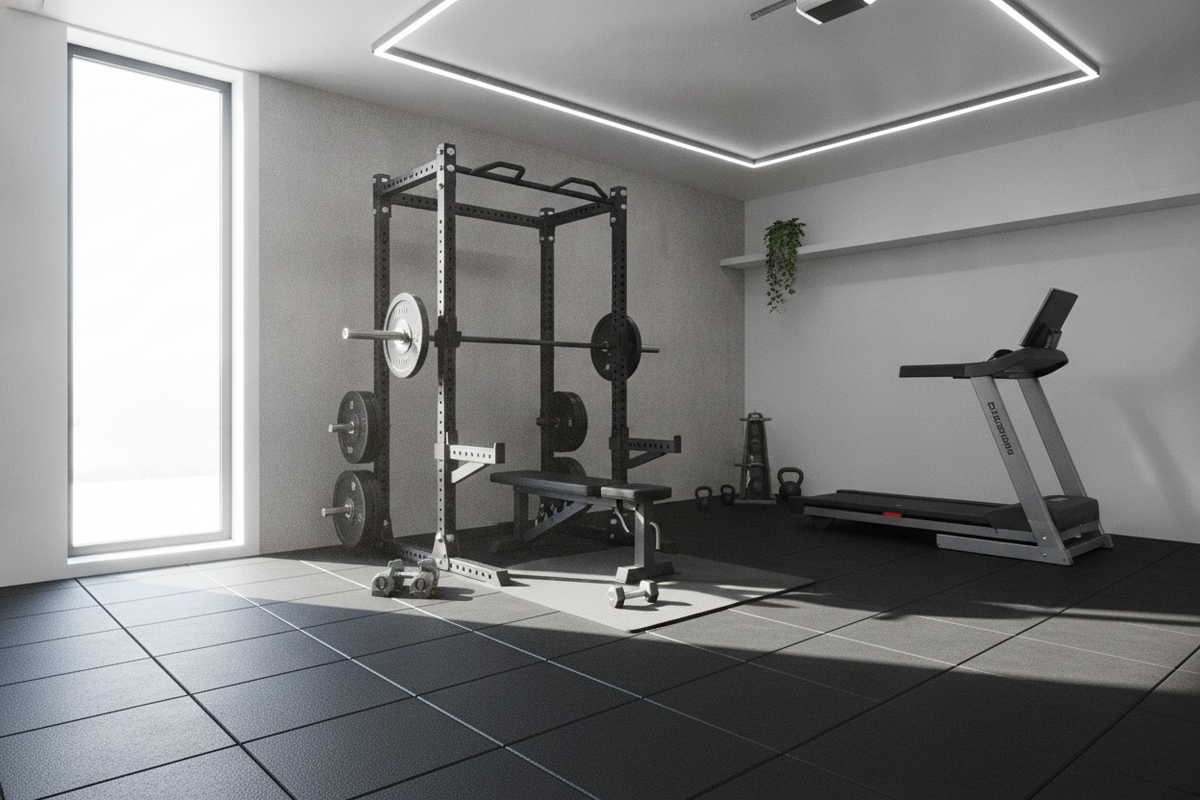
Creating an effective muscle-building environment requires deliberate planning of your training area. A dedicated layout not only protects underlying floors from heavy free weights but also establishes a secure, distraction-free space for focused lifting sessions.
- Base Layer Selection: High-density rubber or dense foam workout mats provide a firm, even surface that resists compression under heavy loads, ensuring lifters maintain stable footing during compound lifts.
- Equipment Anchoring and Spacing: Position power racks, weight benches, and dumbbell racks with ample clearance around all sides to allow unrestricted movement through full ranges of motion.
- Subfloor and Surface Protection: Distribute heavier equipment evenly across the floor footprint to manage surface wear and prevent localized indentations on domestic flooring materials.
- Traction and Moisture Control: Choose textured, non-porous mat surfaces that maintain grip even when exposed to sweat during intense hypertrophy workouts.
Exercise Selection and Execution: Balancing Free Weights, Machines, and Movement Planes
A balanced physique requires thoughtful exercise selection that targets muscle groups across multiple movement planes. Multi-joint compound exercises, such as bench presses, overhead presses, squats, and rows, form the backbone of mass-building routines because they allow for substantial loading and engage multiple major muscle groups simultaneously.
Complementing free weights with guided resistance tools is another key aspect of smart programming. Examining movement mechanics in a dedicated building muscle guide reveals how machines can provide steady mechanical tension at peak muscle contraction without requiring extensive stabilization. Similarly, lifters focusing on upper-body development can structure their horizontal pushing exercises using the principles in this mass growth guide to balance multi-angle dumbbell and barbell presses with targeted isolation movements.
Workout Mat Care and Training Area Maintenance
Maintaining your home gym floor setup ensures consistent traction, hygiene, and durability over extended training cycles. Regular care keeps surfaces clean and free of chalk buildup, sweat residues, and dust that could compromise grip during heavy lifts.
- Routine Cleaning: Wipe down mat surfaces regularly with mild, pH-neutral soap and warm water using a microfiber mop or cloth. Avoid harsh chemical solvents that can degrade mat elasticity or leave slippery films.
- Ventilation and Drying: Allow flooring surfaces to air-dry completely after cleaning or intense workouts to prevent moisture accumulation beneath the mats.
- Inspection of Seams and Edges: Periodically inspect interlocking seams or mat borders to ensure they lie completely flat without curling edges that could create tripping hazards.
Frequently Asked Questions About Muscle Building Principles
What is the most fundamental secret to muscle growth?
The core foundation of hypertrophy is consistent mechanical tension applied through progressive overload, supported by adequate nutrition, hydration, and restorative sleep. Complex workout gimmicks rarely replace these fundamental biological drivers.
Why does floor stability matter for muscle building?
A firm, non-slip training surface creates a solid base of support. When your feet or bench remain completely stable, your nervous system can recruit motor units fully, transferring maximum tension to the working muscles rather than dissipating energy to maintain balance.
How do I balance compound and isolation exercises?
Compound exercises recruit large amounts of muscle mass and should typically be performed early in a session when physical energy is highest. Isolation movements can then be used to target specific muscle groups and accumulate volume without placing excessive fatigue on the entire body.