6 Moves to Wake Up Glutes and Hamstrings: Activation Blueprints, Mind-Muscle Cues, and Floor Mat Staging
Long hours spent seated often cause the posterior chain to become sluggish, making deliberate activation an essential part of any lower-body workout. When training at home, establishing a strong neuromuscular connection between the pelvis, hips, and knees ensures that your primary drivers do the heavy lifting rather than secondary stabilizers. Preparing the glutes hamstrings complex before handling external resistance creates better movement patterns across compound lifts.
Understanding the Glute Hamstring Connection and Posterior Chain Dynamics
The posterior chain relies on coordinated action between several major muscle groups. The glute and hamstring muscles share responsibility for hip extension, pelvis positioning, and knee stability. When you initiate a movement such as a deadlift or a step-up, the gluteus maximus acts as the primary hip extensor, while the hamstrings provide secondary extension and dynamic knee control.
A strong glute hamstring connection allows these muscle groups to share load smoothly rather than forcing the lower back or quadriceps to compensate. When the hamstring glute muscles fall out of sync, movements can feel disjointed or unstable. Exploring a structured glute hamstring guide provides comprehensive insight into how balanced posterior chain mechanics support balanced training progression over time.
6 Activation Moves to Wake Up Glutes and Hamstrings
Waking up the hamstring and glute network does not require heavy weights. Instead, low-load bodyweight drills with focused mind-muscle connection help recruit dormant muscle fibers before transitioning to intense compound sets.
1. Supine Single-Leg Glute Bridges with Pelvic Tuck
Lie on your back with your knees bent and feet flat on your workout mat. Pull one knee slightly toward your chest while pressing the heel of the working leg firmly downward into the floor. Before elevating your hips, perform a gentle posterior pelvic tilt to flatten your lower back against the surface.
Drive through the working heel to lift your hips until your torso and thigh form a straight line. Hold the top contraction for a brief pause, actively squeezing the glute on the working side before lowering with control. This unilateral setup isolates the working side and teaches the glute and hamstring muscles to extend the hip without overarching the lumbar spine.
2. High-Traction Mat Hamstring Heel Walkouts
Beginning in a standard double-leg glute bridge position, lift your hips so your glutes are fully engaged. From this elevated posture, slowly take small steps forward with your heels, alternating feet while keeping your hips lifted above the floor.
Walk your feet outward until your legs are nearly extended, maintaining active isometric tension across the hamstring and glute muscles. Step your heels back to the starting bridge position with deliberate control. A textured, high-traction mat surface is critical here to prevent your heels from slipping as you extend your lever length.
3. Quadruped Bent-Knee Hip Extensions (Donkey Kicks)
Position yourself on hands and knees with your wrists under your shoulders and your knees under your hips. Maintain a neutral spine and brace your core. Keeping the working knee bent at a ninety-degree angle, press the sole of your foot upward toward the ceiling.
Focus entirely on initiating the lift from the glute rather than shifting your pelvis or arching your lower back. Keeping the knee bent shortens the hamstring, reducing passive cramping while reinforcing the targeted glute hamstring connection at peak extension.
4. Standing Bodyweight Good Mornings and Hinge Primers
Stand with feet hip-width apart, knees soft, and fingertips lightly touching the sides of your head. Initiate the movement by sending your hips backward while maintaining a flat back and proud chest.
As your hips travel rearward, feel the tension load into the hamstring and glute muscles through a full stretch. Once your torso approaches parallel to the floor, drive your hips forward to return to standing, finishing with a firm glute contraction at the top. This exercise establishes the hinge pattern needed for heavier posterior chain training.
5. Tempo Squats for Glutes and Hamstrings Engagement
While squats naturally recruit the anterior chain, adopting a hip-dominant stance and deliberate pacing turns squats for glutes and hamstrings into an effective activation tool. Stand with feet slightly wider than shoulder-width and toes flared comfortably outward.
Descend slowly by sitting the hips back and down over a controlled descent, keeping your weight balanced through the midfoot and heel. Pause at the bottom without losing spinal tension, then push the floor away to rise smoothly. Practicing these deliberate tempos helps you maintain posterior tension. For alternative movement patterns, reviewing a dedicated squats glute muscles guide can help broaden your exercise variety.
6. Half-Kneeling Hinge to Dynamic Glute Squeeze
Adopt a half-kneeling position on your mat with one knee down and the front foot planted securely ahead of you. From this stable base, hinge your torso forward slightly over the front hip, loading the front hamstring while maintaining spinal alignment.
From the hinged posture, drive the hips forward and squeeze the glute of the trailing down-knee leg to achieve a complete hip extension. This asymmetrical drill refines pelvic balance and ensures both sides of the hamstring and glute chain are awake and firing symmetrically.
Floor Mat Staging and Room Protection for Floor and Hinge Drills
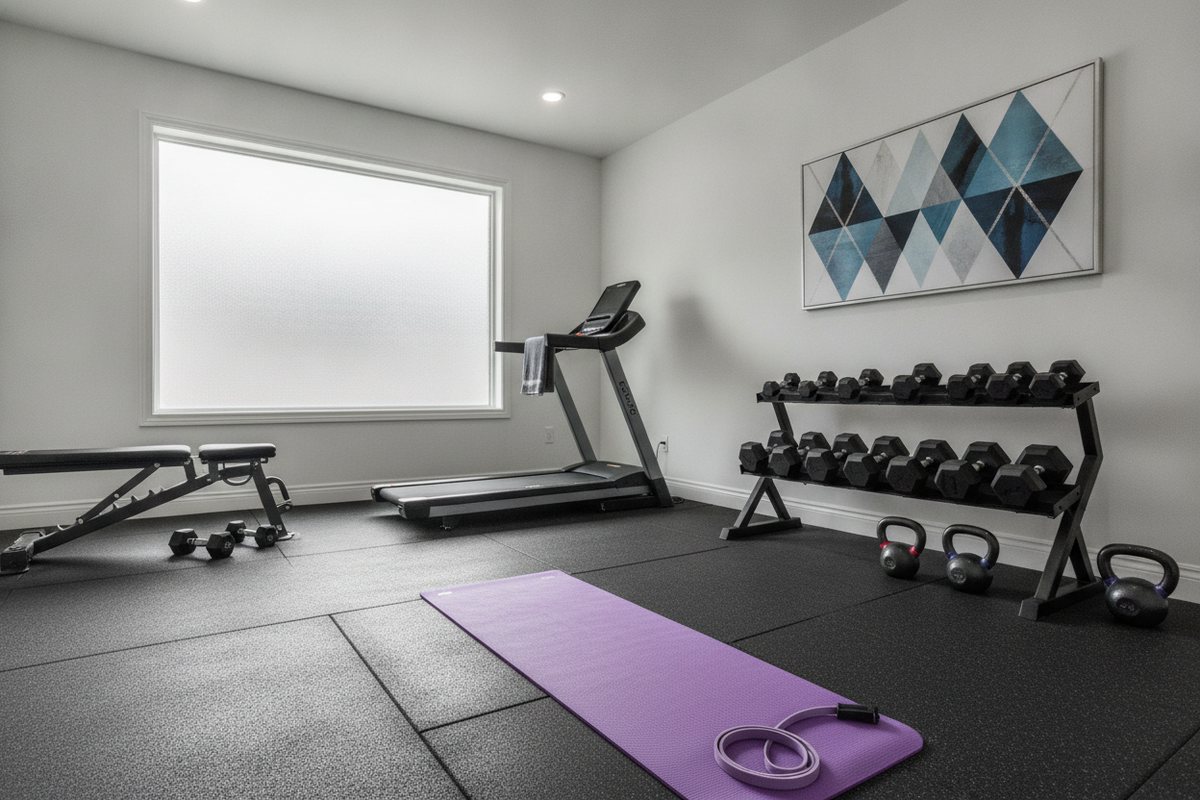
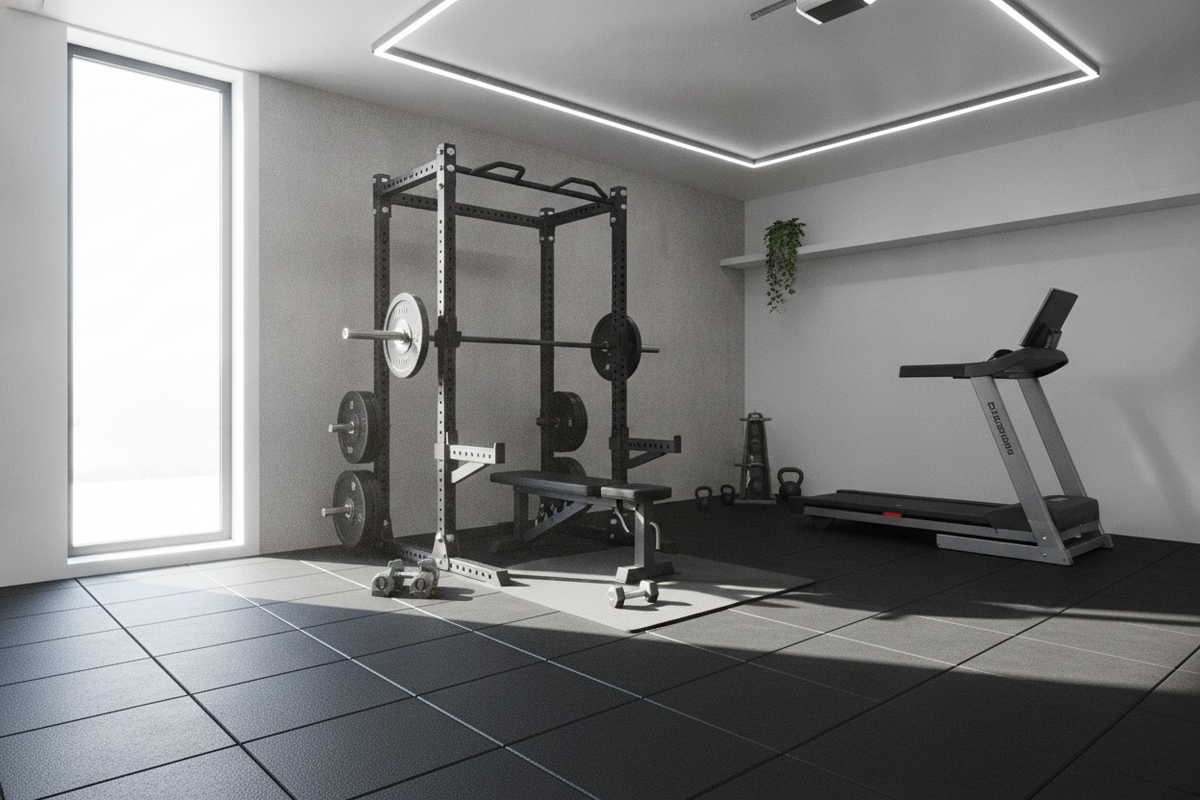
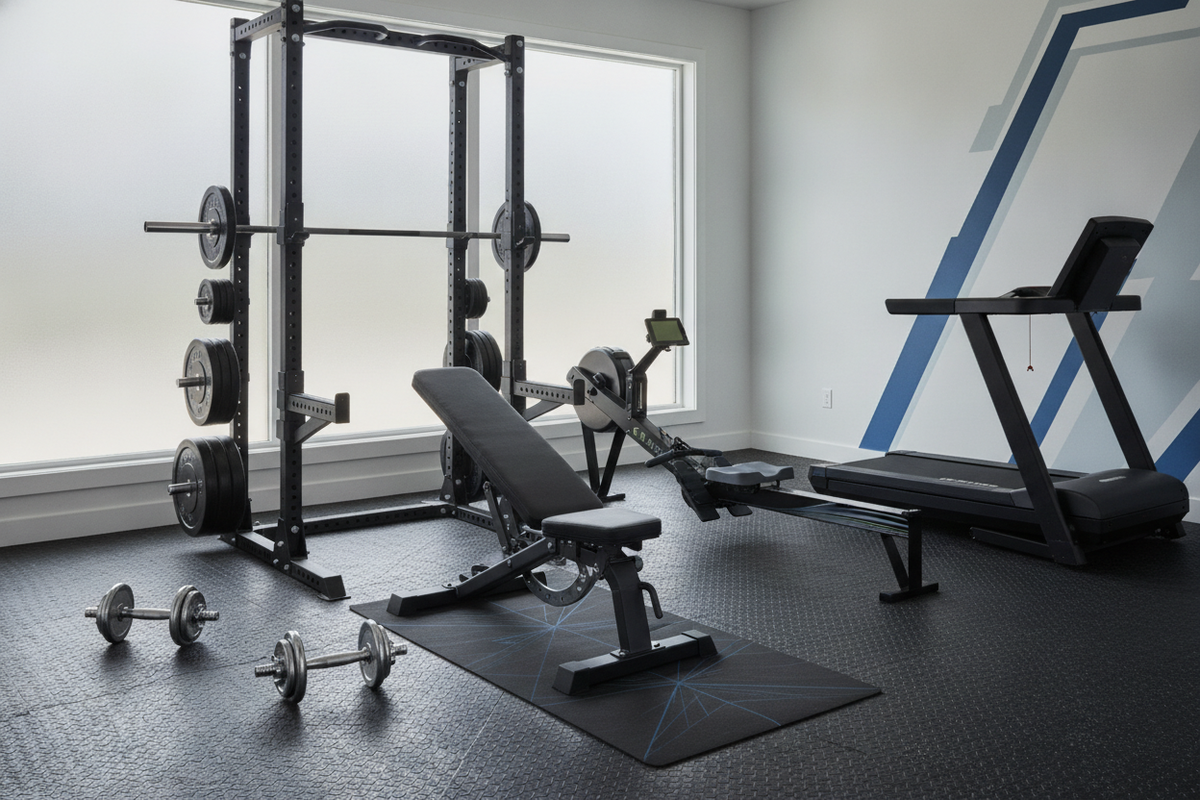
Executing floor-based activation drills and standing hinge patterns requires a dedicated home gym setup. Flooring stability directly impacts your ability to generate force and maintain proper joint alignment during exercise.
- Surface Traction: Dynamic drills like heel walkouts and single-leg bridges require non-slip mat surfaces so your feet stay anchored without sliding.
- High-Density Cushioning: Quadruped and kneeling movements place focused pressure on wrists and knees. A firm, high-density exercise mat cushions sensitive joints without bottoming out.
- Subfloor and Equipment Protection: As you transition from bodyweight activation to loading the glutes hamstrings with free weights, dense flooring absorbs equipment contact and protects underlying floors.
Setting up your floor space thoughtfully ensures seamless movement between supine, quadruped, and standing drills. For additional loaded programming ideas, consult a complementary glutes hamstrings guide to see how floor staging supports long-term strength work.
Structuring Posterior Chain Warm-Ups and Routine Integration
Incorporating these activation drills into your weekly routine requires minimal time while delivering consistent benefits for movement quality. Use this straightforward framework before lower-body workouts or during active recovery sessions:
- Select Three to Four Drills: Combine one supine drill, one quadruped drill, and one standing drill to prime the posterior chain across multiple planes.
- Perform Controlled Repetitions: Execute 8 to 12 repetitions per movement at a slow tempo, prioritizing tension and peak contraction over speed.
- Maintain Pelvic Control: Keep your core braced throughout every drill to avoid lumbar compensation and keep the focus on the hamstring and glute muscles.
Taking a few minutes to engage the glute hamstring connection on a stable training surface sets the stage for productive, comfortable, and balanced lower-body workouts at home.