Build a Powerful Posterior Chain: The Only Dumbbell Routine You Need for Glutes and Hamstrings
Many lifters operate under the misconception that building an impressive backside requires heavy barbells or specialized machines like the seated leg curl. While those tools are useful, they aren't mandatory. You can develop significant strength and size in your posterior chain using nothing but a pair of dumbbells. The secret isn't the equipment itself, but how you manipulate mechanics, tension, and range of motion. By focusing on hip-hinge movements and strict isolation, a glute and hamstring workout with dumbbells can be just as grueling and effective as a full gym session.
I learned this lesson the hard way a few years ago. I was stuck in a hotel gym for three weeks that had no barbells and a leg curl machine that was perpetually out of order. I was convinced my legs would shrink. Forced to improvise, I focused entirely on tempo and unilateral work with the dumbbells available. To my surprise, my hamstrings were more sore—and eventually more defined—than they had been in months. The instability of the dumbbells forced my stabilizers to work overtime, creating a stimulus my body wasn't used to. That experience completely shifted how I view free weight training.
Why Dumbbells Work for the Posterior Chain
Your glutes and hamstrings are primarily fast-twitch muscle fibers designed for explosive power and stabilization. Dumbbells allow for a greater range of motion than a straight bar, letting you stretch the muscle fibers deeply under load. This deep stretch is crucial for hypertrophy. Furthermore, dumbbell exercises for glutes and hamstrings often require you to balance the weight independently on each side, which corrects muscle imbalances that a barbell might hide.
The King of Hinge Movements: Romanian Deadlifts
If you only do one movement, make it the Dumbbell Romanian Deadlift (RDL). This is widely considered one of the best free weight hamstring exercises because it places the muscle under immense tension while it lengthens. Unlike a standard deadlift where you bend your knees to drop the hips, the RDL keeps the hips high and pushes them backward.
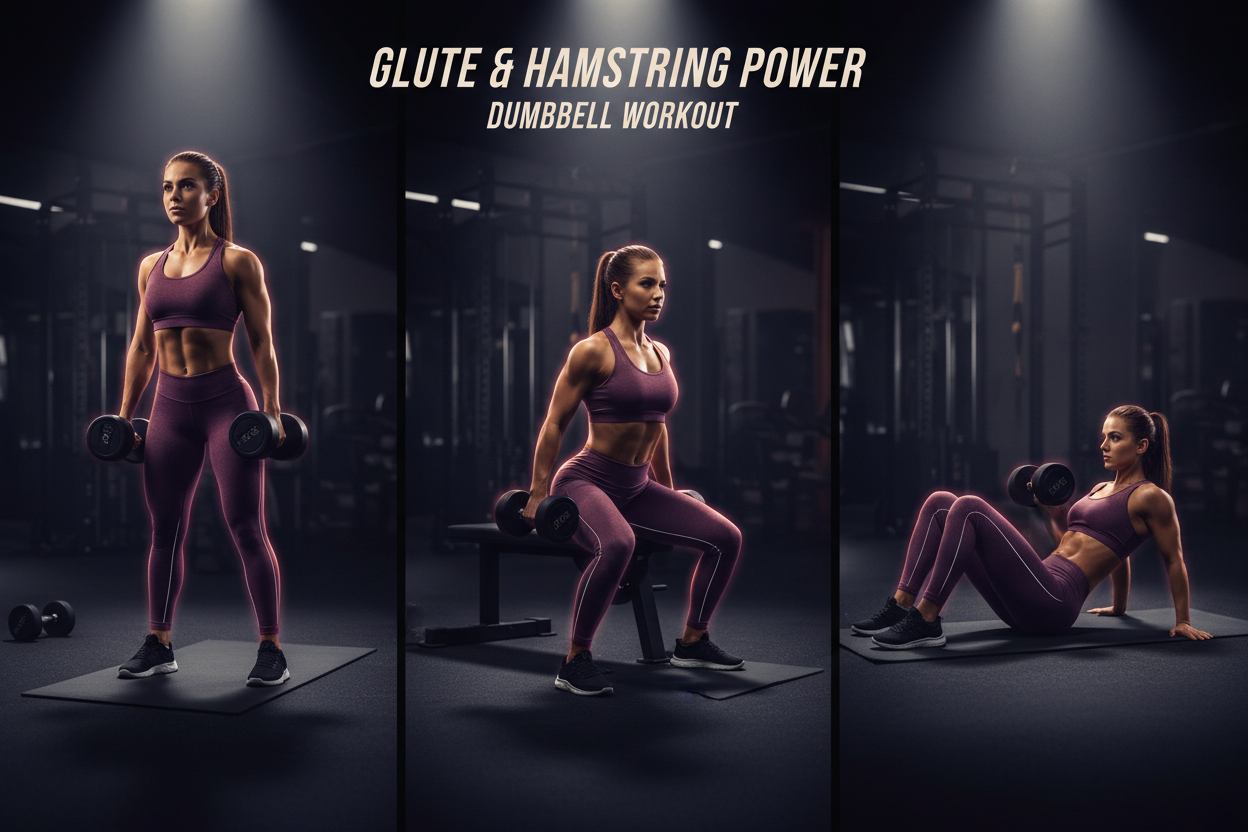
To execute this perfectly, stand with feet hip-width apart, holding dumbbells in front of your thighs. Keep a slight bend in your knees—just enough so they aren't locked out—and freeze that knee angle. Push your hips back as if you are trying to close a car door with your butt. Lower the weights toward your shins, keeping them close to your body. You should feel a deep stretch down the back of your legs. Once you feel your hamstrings run out of flexibility, squeeze your glutes to drive your hips forward and return to the top.
Isolation Without Machines: The Dumbbell Leg Curl
Finding a way to isolate the knee flexion function of the hamstring without a machine is tricky, but the dumbbell hamstring extension (often called a lying dumbbell leg curl) is a fantastic solution. This move targets the short head of the biceps femoris, which is often neglected in hip-hinge movements.
Lie flat on your stomach on a bench or the floor. Place a dumbbell vertically between your feet and clamp it tight. This setup can be awkward at first, so start with a light weight. Once secured, curl your heels up toward your glutes, squeezing hard at the top. Lower the weight slowly, taking three to four seconds to reach the bottom. The control required to keep the dumbbell from slipping adds a layer of intensity that machines simply can't replicate. This is a staple in any effective hamstrings workout with dumbbells.
Unilateral Power: Single-Leg Deadlifts and Lunges
Bilateral movements are great for moving load, but single-leg work is where you sculpt detail and build athletic stability. The Single-Leg RDL is a premier choice among dumbbell exercises for hamstring development. It challenges your balance and forces the glute medius to fire to keep your hips level. Hold a dumbbell in the hand opposite to the working leg. Hinge at the hips, extending the non-working leg behind you for counterbalance. The focus should be on the stretch of the standing leg.
Complement this with Reverse Lunges. While often seen as a quad exercise, taking a longer step back shifts the emphasis significantly. A long-stride reverse lunge puts the front glute into a deep stretch. Lean your torso forward slightly (about 45 degrees) over your front thigh to further engage the posterior chain. This variation turns a standard lunge into a potent glutes and hamstrings workout dumbbell move.
The Sumo Stance for Glute Activation
To round out the routine, you need to hit the glutes from a different angle. The Dumbbell Sumo Squat is excellent for this. Take a stance wider than shoulder-width with your toes pointed out at 45 degrees. Hold a single heavy dumbbell with both hands (or one in each hand) hanging between your legs. As you descend, drive your knees out to track over your toes. This wide stance minimizes quad involvement and maximizes adductor and glute recruitment. It serves as a great compound movement to pair with your isolation work.
Structuring Your Glute and Hamstring Dumbbell Workout
Knowing the exercises is only half the battle; programming them correctly ensures progress. A well-structured routine should start with heavy compound movements when you are fresh and finish with lighter isolation work. Here is a sample plan designed to maximize hypertrophy:
- Dumbbell Romanian Deadlift: 4 sets of 8-10 reps (Focus on a 3-second negative)
- Dumbbell Sumo Squat: 3 sets of 10-12 reps (Squeeze glutes hard at the top)
- Walking Lunges or Reverse Lunges: 3 sets of 12 steps per leg
- Lying Dumbbell Hamstring Curl: 3 sets of 15 reps (Focus on high reps and metabolic stress)
This sequence covers all functions of the posterior chain: hip extension, knee flexion, and stabilization. It serves as a comprehensive dumbbell glute and hamstring exercises list that covers all your bases without needing a gym membership.
Common Mistakes to Avoid
When performing a glute and hamstring workout with dumbbells, the most common error is rounding the lower back. This usually happens during RDLs when a lifter tries to lower the weight all the way to the floor. Range of motion is determined by your hamstring flexibility, not by the dumbbell touching the ground. Stop as soon as your hips stop moving back. Going lower than that transfers the load from your legs to your lumbar spine, increasing injury risk.
Another issue is grip fatigue. Your legs are likely stronger than your hands. If you find your grip failing before your hamstrings do, invest in a pair of lifting straps. This allows you to continue overloading the target muscles without being limited by forearm strength.
Final Thoughts on Free Weight Training
You do not need a seated curl machine or a leg press to build legs that are both strong and aesthetic. By mastering the hip hinge and utilizing the instability of free weights, you can create a stimulus that forces growth. Consistency with these dumbbell exercises for glutes and hamstrings will yield results that rival any machine-based program. Grab the iron, focus on your form, and let the tension do the work.
Frequently Asked Questions
Can I really build mass with just dumbbells?
Yes, absolutely. Muscle growth is driven by mechanical tension and metabolic stress. As long as you are progressively overloading—either by increasing the weight, reps, or slowing down the tempo—your muscles will grow regardless of whether you use a barbell or dumbbells.
How often should I perform this workout?
For most lifters, training the posterior chain twice a week is optimal. This frequency allows for sufficient recovery while providing enough stimulus to spark growth. Ensure you have at least two days of rest between these sessions to prevent overtraining.
What if the dumbbell slips during lying leg curls?
This is a common issue. Try wearing shoes with a flat sole or a distinct heel ridge, as this gives the dumbbell handle a better shelf to rest on. Alternatively, you can have a training partner place the weight between your feet once you are in position.