A Good At Home Exercise Routine: The Power of Uneven Weights
I remember staring at my living room floor in a cramped 400-square-foot apartment a few years back. I had exactly one 35-pound kettlebell and a whole lot of frustration. I thought I needed a full rack of matched dumbbells to get any real work done. But that single, lonely weight forced me into a style of training that completely rewired my core. If you want a good at home exercise routine, you do not need a perfectly symmetrical setup. You just need to learn the power of offset loading.
- Offset loading forces your core to stabilize against uneven weight, burning more calories and engaging deep abdominal muscles.
- Training one side at a time exposes and fixes left-to-right muscle imbalances that bilateral exercises hide.
- You can get away with owning half the equipment compared to traditional, matched-weight training.
- A solid, non-slip floor is critical when your center of gravity is constantly shifting during asymmetrical lifts.
Why Symmetrical Training Fails the Home Athlete
When I design programs for clients, I often see them trying to replicate commercial gym setups in their basements. They want two perfectly matched 50-pound dumbbells for chest presses and squats. While symmetry feels safe, it actually limits your functional strength. In daily life, you rarely pick up two perfectly balanced objects simultaneously. You grab a heavy bag of groceries in one hand or wrestle a squirming toddler with one arm.
Relying strictly on matched weights often mimics the rigid movement patterns of the best at home exercise machines. Machines are great for isolating muscle groups because they do the stabilizing for you. But when you train at home, space and budget usually dictate free weights. If you only use matched pairs, your deep core muscles—the obliques, transversus abdominis, and quadratus lumborum—get a free ride.
This is why many good at home workout routines fall flat. They do not challenge your body's ability to resist rotation. By intentionally unbalancing the load, you force every stabilizing muscle to fire just to keep your spine straight.
The Core of a Good At Home Exercise Routine: Offset Loading
So, what exactly is offset or asymmetrical loading? It simply means holding a weight on one side of your body while the other side holds nothing (or a significantly lighter weight). Imagine doing a walking lunge holding a 40-pound dumbbell in your right hand and nothing in your left. Your torso desperately wants to tip to the right. Your left obliques have to contract fiercely just to keep you upright.
Building a good home workout routine around this principle means you can get away with minimal gear. If you only have one heavy kettlebell, that is actually an advantage. You do not need a massive rack of pairs. This minimalist approach is why a single adjustable dumbbell or kettlebell is often considered the top equipment to enhance your routine.
When I test home setups, I find that clients get a better cardiovascular and muscular response from a 30-pound offset squat than a 60-pound symmetrical goblet squat. The central nervous system has to work overtime to manage the unbalanced load, making your workouts shorter and much more intense.
Unilateral Leg Work: The Offset Squat and Lunge
Let us look at the biomechanics of lower body training with uneven weights. The suitcase squat is a prime example. You hold one weight by your side and squat down as if you are setting down a heavy suitcase. Because the weight pulls you laterally, your gluteus medius on the opposite side has to fire hard to keep your knees tracking properly over your toes.
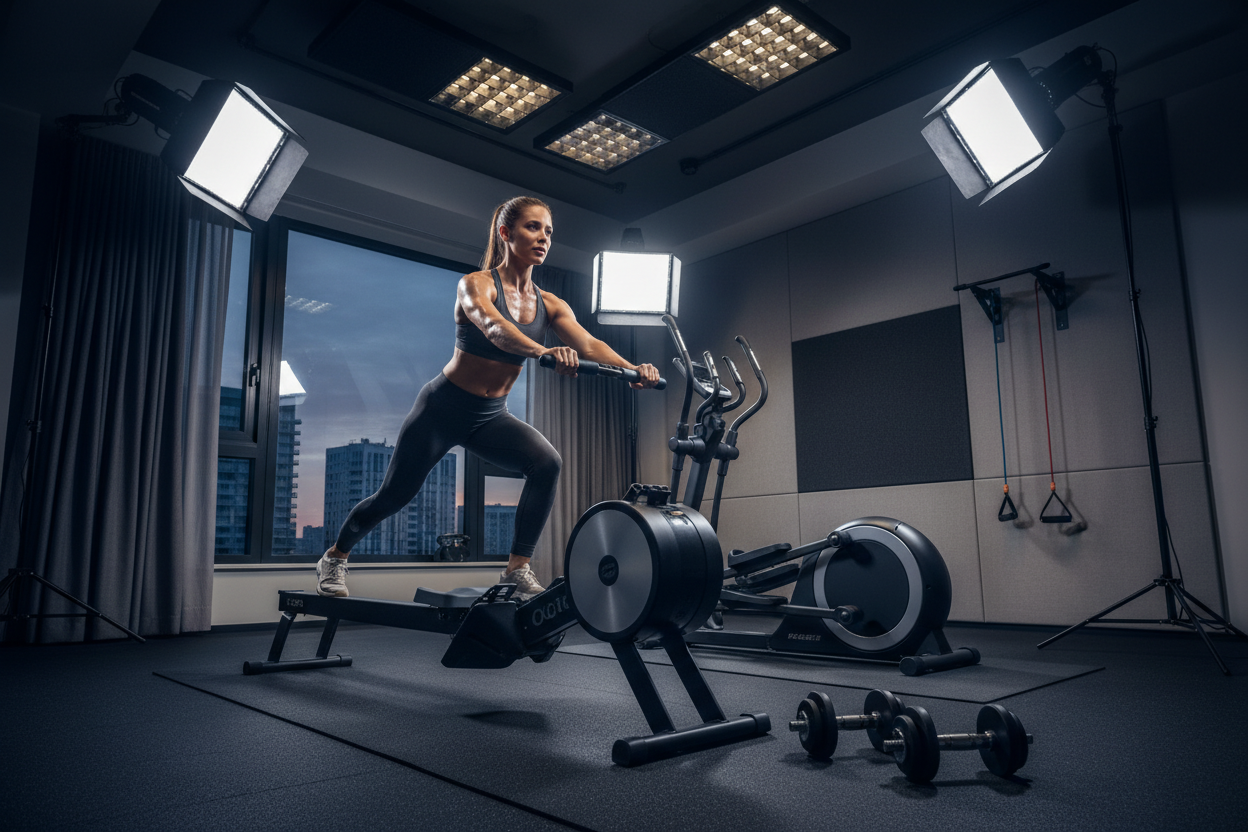
Offset lunges take this a step further. Stepping forward while holding a weight on just one side challenges your balance dynamically. I have found this to be the best home exercise routine modification for clients with stubborn hip shifts. However, this shifting center of gravity means your feet need absolute traction.
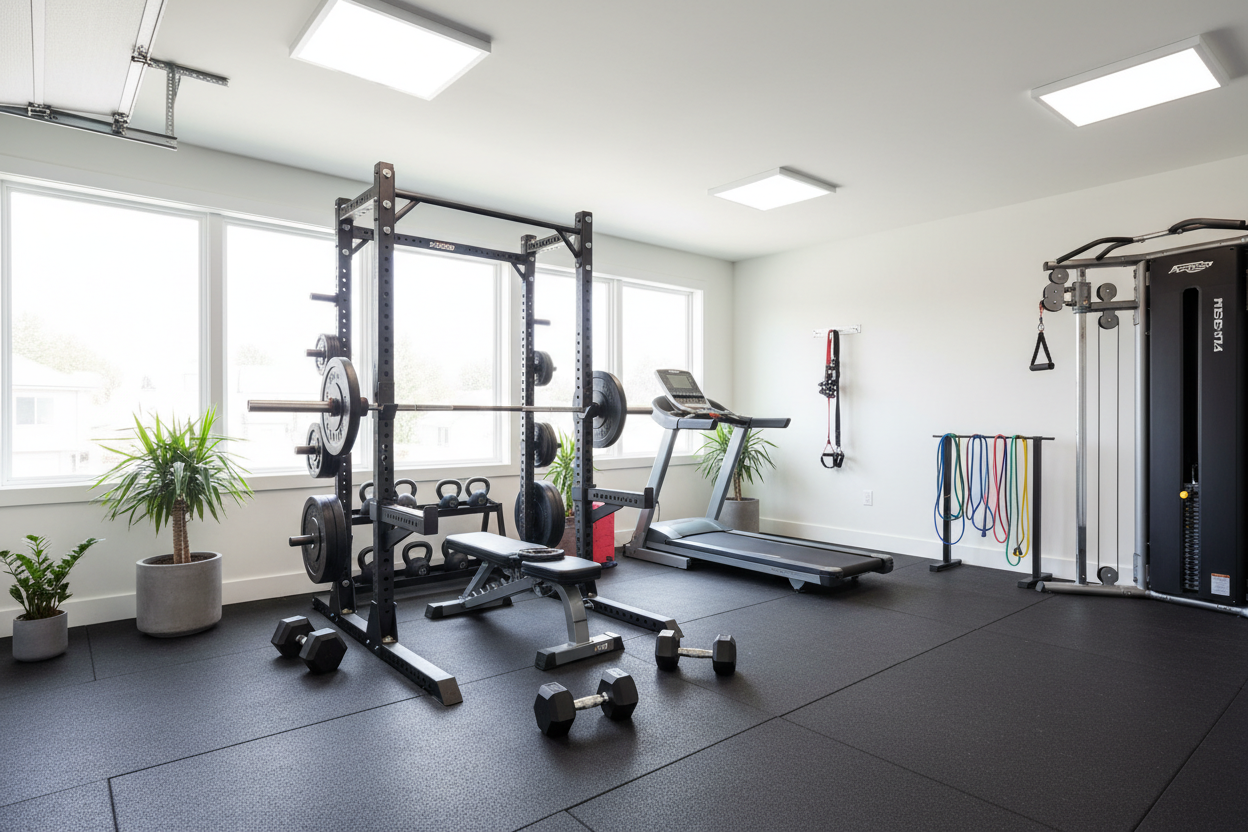
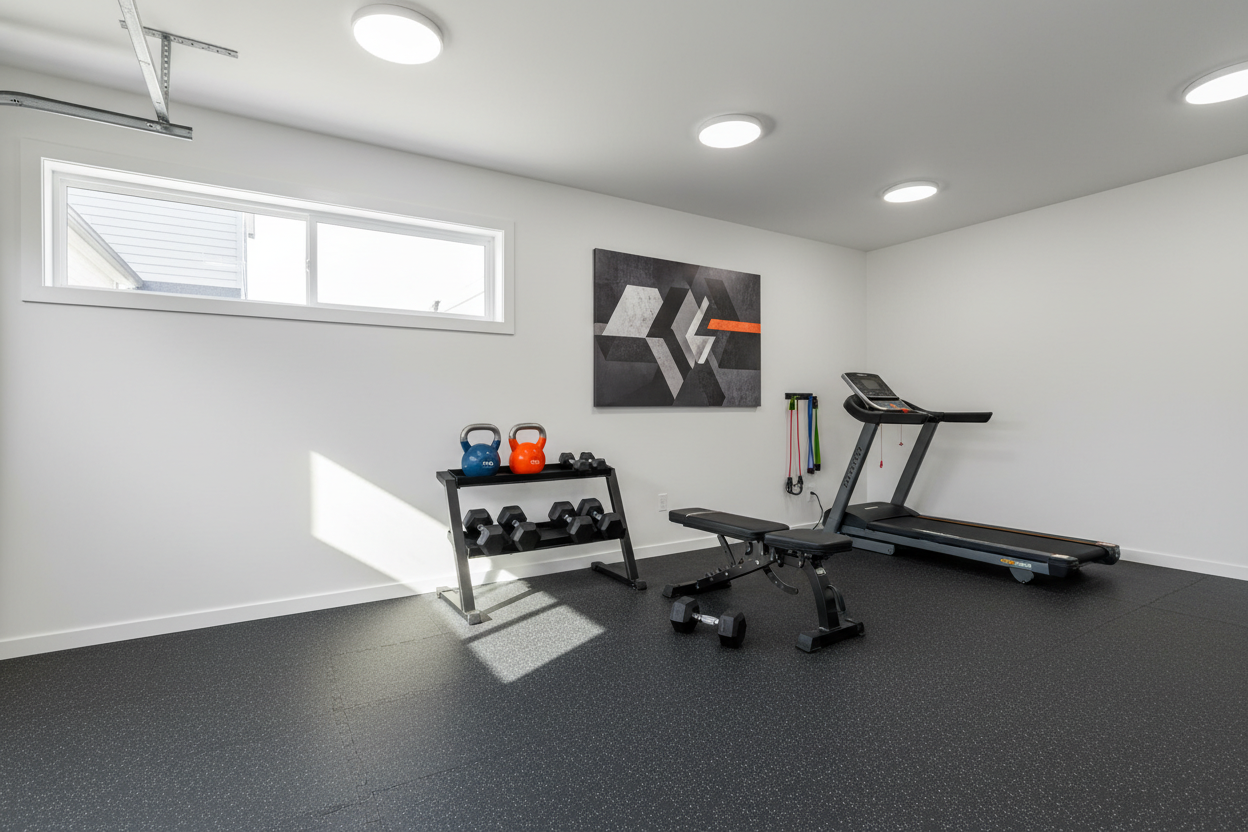
A slippery hardwood floor is a recipe for a pulled groin. Investing in proper gym flooring for home workout spaces is non-negotiable here. You need a surface that grips your shoes and provides a slight cushion for your joints when you inevitably lose your balance on that last, shaky rep.
Upper Body Imbalances: The Single-Arm Press and Row
Most people have a dominant side. If you only do barbell rows or two-handed push-ups, your strong side will naturally take over, masking the weakness of the other side. Offset upper body work forces the weak side to pull its own weight.
Take the single-arm overhead press. When you press a 25-pound dumbbell over your right shoulder, your left core muscles engage to prevent your ribcage from flaring out. I usually have clients perform 8 to 10 reps on their weaker side first. Then, they match that exact number of reps on their stronger side, even if they feel they could do more. This is how you close the strength gap.
The single-arm bent-over row works similarly. Supporting yourself on a bench or your own knee while rowing a heavy load forces your anti-rotation muscles to lock down your lumbar spine, building a back that is as resilient as it is strong.
Structuring Your Best Daily Workout Routine At Home
Putting this all together requires a smart good at home workout schedule. You cannot just do offset training every single day; it is highly taxing on your central nervous system. I recommend a four-day split. Two days focused on lower body and core, and two days focused on upper body.
This setup is arguably the best daily workout routine at home because it balances intensity with recovery. For a lower body day, you might do 3 sets of 8-10 reps per side of suitcase squats, followed by offset reverse lunges, and single-leg Romanian deadlifts.
Rest periods need to be slightly longer than standard bilateral training. Since you are working the left side, then the right side, your cardiovascular system is working continuously. I suggest resting 60 to 90 seconds after you complete both sides before starting the next set. Always start your sets with your non-dominant side. If your left arm fails at 8 reps, stop the right arm at 8 reps to maintain balance.
Creating the Right Environment for Stabilization
When you train asymmetrically, your environment matters immensely. You are intentionally throwing your body off balance. If your floor is uneven, too soft, or slick, you risk rolling an ankle or tweaking your lower back. I learned this the hard way testing a routine on a plush living room rug—my foot slid during an offset lunge, and I tweaked my knee.
After that, I upgraded my space with a large exercise mat for home gym use. The high-density foam provided the exact grip I needed without being dangerously squishy. As a personal trainer who tests gear constantly, I will give you an honest downside to these heavy-duty mats: they are heavy and awkward to roll up if you need to store them away daily.
They are best left unrolled in a dedicated 6x6 foot space. But the stability they provide for offset loading makes them worth the footprint. You cannot build a strong, stabilized core on a shaky foundation.
Frequently Asked Questions
Do I need heavy weights for offset training?
No. Because your core is working overtime to stabilize, you can use significantly lighter weights than you would for bilateral exercises. A 20-pound dumbbell feels like 40 pounds when it is pulling you to one side.
Will asymmetrical loading make my muscles uneven?
Actually, it does the opposite. By forcing each side to work independently, you expose and correct existing imbalances, leading to a more symmetrical physique.
How often should I incorporate offset exercises?
I recommend swapping out 1-2 bilateral exercises for their offset variations in your current routine, or dedicating two full workouts a week to asymmetrical training to avoid central nervous system fatigue.
Conclusion: Embrace the Imbalance
Stop worrying about building a perfectly symmetrical home gym. The human body is designed to move, twist, and carry awkward loads in unpredictable ways. By integrating offset loading into your weekly schedule, you will build a resilient core and fix those nagging strength imbalances. Grab that single kettlebell, clear some space on the floor, and let the imbalance make you stronger.