Mats for Gym Spaces: Complete Selection Framework for Strength, Cardio, and Floor Workouts
Introduction: Why Dedicated Gym Mats Define Workout Performance and Floor Safety
Setting up an effective training area requires more than arranging weights and machines. The surface beneath your feet serves as the foundation for balance, traction, and physical structure protection. When selecting gym mats for home workouts, lifters and fitness enthusiasts must consider how different materials interact with concrete, subfloors, and dynamic movement. Standard residential surfaces such as hardwood or carpet can suffer from localized crushing, moisture intrusion, and abrasive wear when subjected to routine exercise routines.
A well-planned fitness area incorporates surfaces suited to distinct training zones. Whether anchoring stationary cardio equipment, positioning power racks, or carving out a dedicated zone for calisthenics, choosing appropriate flooring prevents unnecessary structural wear while creating a stable footing. Understanding the mechanical differences among protective coverings allows you to balance firm footing with vibration dampening across your entire training area.
Material Mechanics: Comparing Rubber Gym Mats, Foam Tiles, and Composite Surfaces
When outfitting a workout area, one of the most frequent dilemmas is whether EVA foam or rubber is better suited for athletic use. Each material behaves differently under load, impact, and shear forces.
Rubber Flooring and Dense Compounds
Dense rubber gym mats represent the standard for durability in strength environments. High-density vulcanized rubber mats and crumb rubber tiles offer remarkable resilience against compression. When heavy items rest on dense rubber, the material resists permanent indentation and returns to its original form once the load shifts. Furthermore, rubber provides consistent grip underfoot, even when ambient humidity or perspiration introduces moisture to the floor surface. For anyone seeking longevity across multi-use gym spaces, vulcanized rubber or repurposed agricultural stall mats deliver solid resistance against surface gouging.
EVA Foam Tiles
Interlocking EVA foam tiles provide a lightweight and affordable entry point for general fitness areas. They offer a comfortable, cushioned feel that works well for light bodyweight movements, mobility drills, and basic stretching. However, foam lacks the shear strength and point-load resistance of solid rubber. Under sustained pressure from heavy benches, iron dumbbells, or aggressive lateral footwork, foam compresses permanently and can tear or separate at the interlocking seams. While foam serves well for low-impact floor work, dense rubber mats remain the preferred choice for free weight and barbell stations.
Zone-Based Selection: Matching Heavy Duty Gym Floor Mats to Your Training Style
Different forms of exercise exert distinct mechanical demands on a floor. Organizing your space into targeted training zones helps optimize budget, thickness, and functional stability.
Heavy Strength and Free Weight Stations
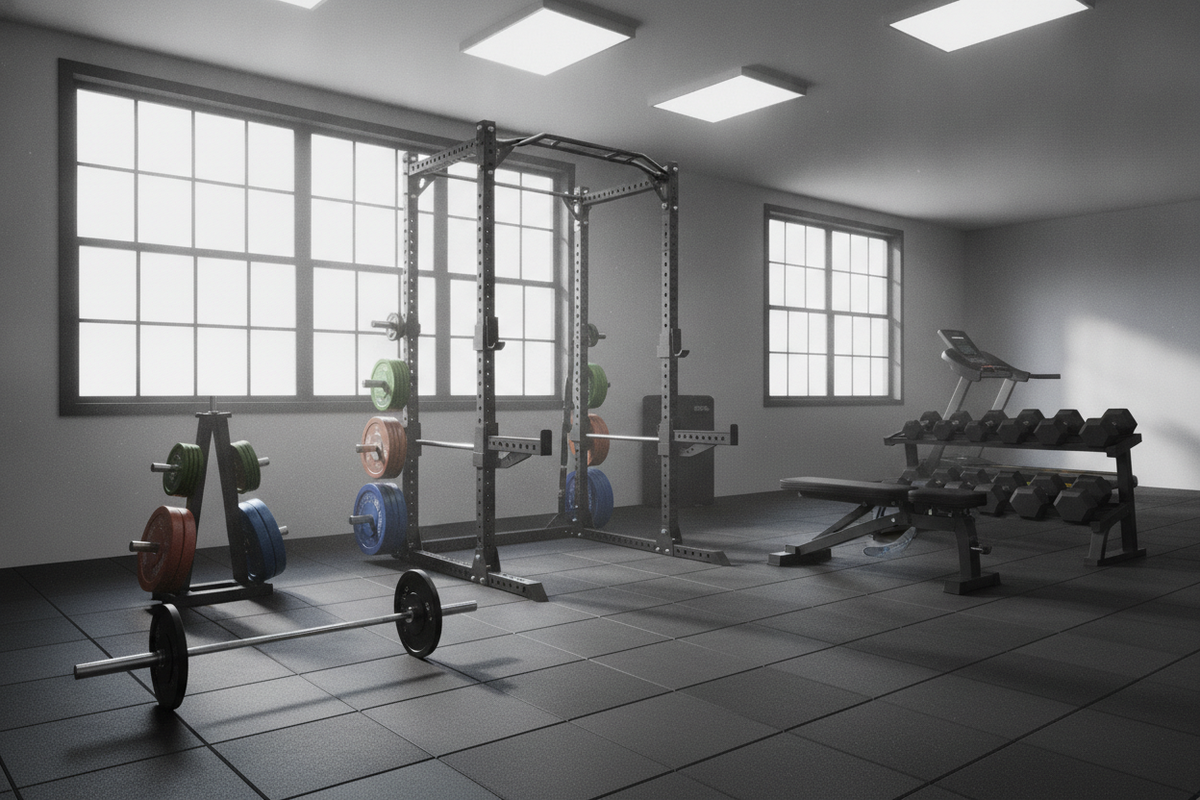
Free weight areas demand maximum density and durability. Dropping heavy bumper plates, resting dumbbells between sets, and supporting heavy power racks create extreme pressure points. Dedicated heavy-duty gym floor mats help distribute concentrated downward loads over a broader surface area, sparing the underlying slab from chipping or stress fractures. In these zones, firm rubber ensures that your feet remain planted without spongy deflection during heavy squats or deadlifts.
Functional Movement, Calisthenics, and Stretching
Areas dedicated to warm-ups, core conditioning, and yoga require a surface that cushions direct contact with wrists, knees, and spines. In these multi-use spaces, ultra-dense lifting mats might feel uncomfortably hard against bare joints. Incorporating medium-density rubber workout mats or dedicated exercise pads provides the right mix of joint comfort and surface traction, keeping you stable during dynamic intervals without sinking into squishy foam.
Vibration Control and Cardio Gear: Choosing Exercise Equipment Mats
Cardio machines present a different set of challenges than free weights. Treadmills, stationary bikes, and rowing machines combine substantial deadweight with continuous mechanical vibration and cyclic motion.
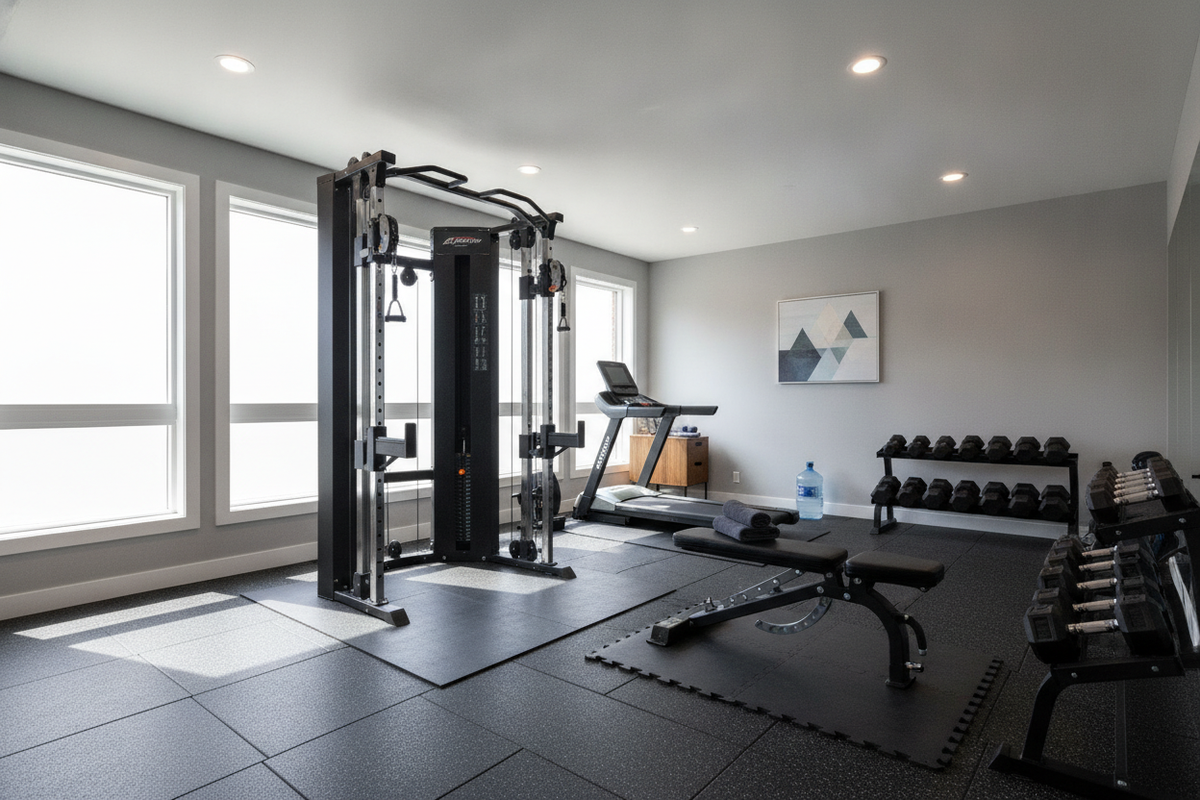
A common operational question is whether rubber mats absorb vibration from high-impact motors and treadmills. Dense rubber acts as a mechanical barrier that helps isolate rhythmic motor hum and footfall impact from traveling directly into the subfloor structure. Using a dedicated protective mat for gym equipment under a treadmill or elliptical also accomplishes several secondary tasks:
- Prevents mechanical equipment from slowly shifting or "walking" across slick floors during high-speed intervals.
- Creates a barrier against sweat droplets, lubricant drips, and belt dust that can stain delicate flooring.
- Stops equipment feet from gouging depressions into hardwood or decorative tile.
Determining the Right Thickness: From Lightweight Fitness Pads to Commercial Rubber Tiles
Choosing the thickness of rubber flooring requires evaluating both the type of training performed and the structural considerations of the room. Thicker material generally offers higher resilience against direct impacts, but excessive bulk can create unwanted trip hazards and interfere with door clearance.
High-Impact Lifting Zones
In areas where barbells and heavy iron weights are routinely handled, thicker rubber tiles or dense rolled rubber provide the structural mass needed to handle repetitive surface contact. The extra bulk ensures that point loads dissipate before reaching underlying concrete or framing.
General Fitness and Cardio Footprints
For cardio gear, light strength training, and functional conditioning, moderate-thickness rubber gym mats provide ample floor protection without adding excessive weight or bulk. These mats keep equipment level, provide firm standing traction, and sit flat against the ground to minimize edge lifting.
Individual Floor Exercise Pads
Dedicated personal mats used for Pilates, core training, and mobility often feature thicker, softer construction than structural gym flooring. These portable mats are designed to be unrolled on top of existing rubber or wood surfaces for temporary cushioning during direct body-to-floor contact, then rolled up and stored out of the way when lifting begins.
Installation, Seam Management, and Subfloor Protection Strategies
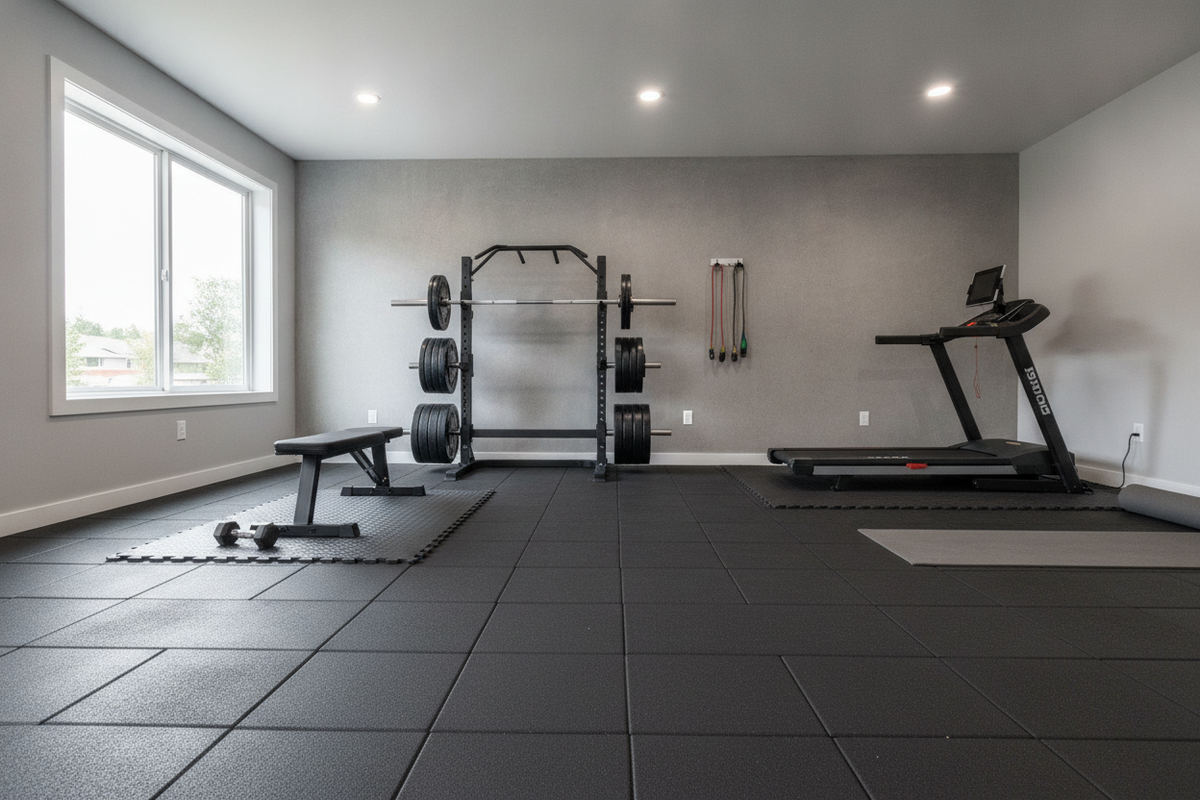
How you install and secure your gym mats dictates how cleanly your gym space performs over time. Whether outfitting an entire garage or laying down an expansive multi-purpose area with a large exercise mat for home workouts, careful preparation ensures a stable result.
Evaluating the Subfloor
Before laying down rubber gym mats, thoroughly inspect and clean the foundation. On concrete slabs, check for residual moisture or efflorescence, as trapped moisture beneath non-breathable rubber can cause odors over time. On residential subfloors or suspended wood framing, distributing heavy barbell loads across wide mats helps protect the structural integrity of the subfloor joists.
Managing Seams and Transitions
Free-floating mats can drift during explosive footwork or dynamic plyometrics. Interlocking rubber tiles eliminate gap formation by mechanically joining adjacent pieces. For straight-edge mats or rolled rubber, heavy-duty floor tape applied underneath the joints keeps adjacent edges flush, preventing dirt accumulation and trip points along seams.
Maintenance and Hygiene: Extending the Life of Your Gym Flooring
Proper maintenance protects your investment and maintains a hygienic workout environment. Rubber mats and composite surfaces require simple yet consistent cleaning practices to prevent material degradation.
- Routine Debris Removal: Sweep or vacuum the floor regularly to eliminate abrasive grit, chalk, and dirt that can cause premature surface wear under shoe traction.
- pH-Neutral Mopping: Clean rubber surfaces with warm water and mild, neutral-pH cleaners. Avoid harsh solvents, bleach, or oil-based detergents, which can break down rubber binders and leave slippery residues.
- Managing Off-Gassing: Freshly manufactured rubber mats, particularly recycled crumb rubber or stall mats, often carry a noticeable aroma upon arrival. In my experience, setting new rubber mats in an open, well-ventilated area for several days allows initial off-gassing to dissipate before indoor placement.
- Seam Inspections: Periodically lift mat edges to verify that no spilled sweat or cleaning moisture has collected underneath, keeping the subfloor clean and dry.
Conclusion: Building a Resilient Foundation for Long-Term Training Success
Selecting appropriate mats for gym setups is an essential step in designing a functional, durable workout space. By aligning material density, mat thickness, and layout strategies with your specific training modalities—from heavy barbell stations to cardio equipment and joint-friendly stretching areas—you protect both your facility and your training longevity. Investing time in proper layout and regular surface care ensures your training area remains supportive, clean, and ready for every workout.